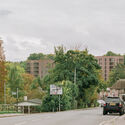
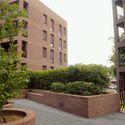
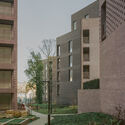
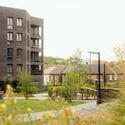
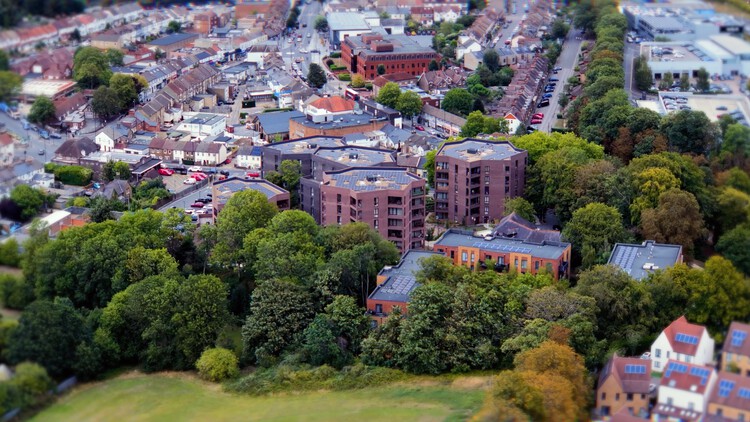
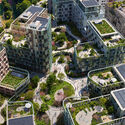
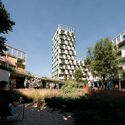
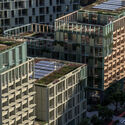
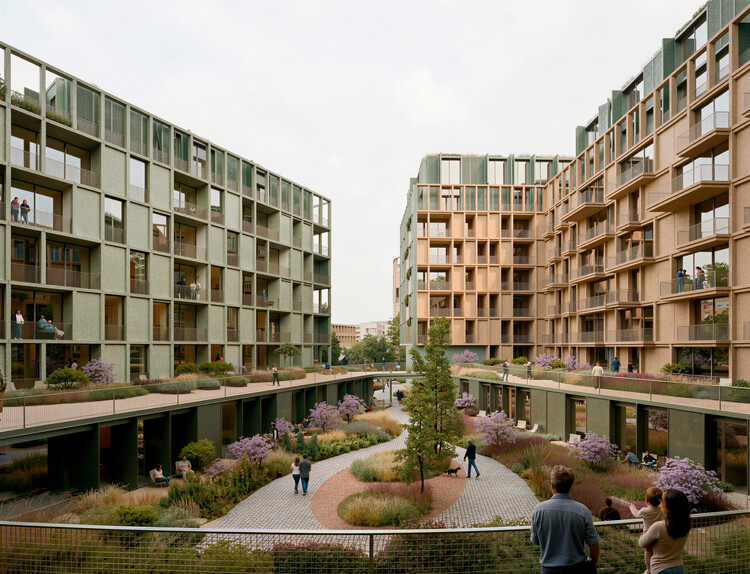
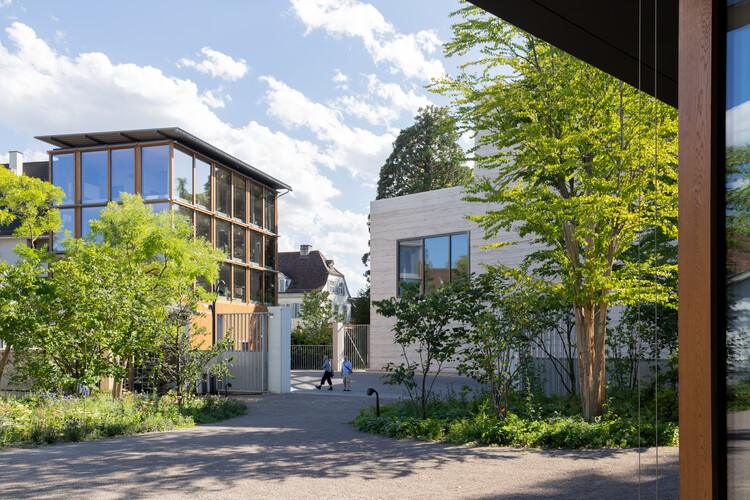
The RIBA Stirling Prize 2026 has been awarded to Lion Green Road, a housing development in Coulsdon, South London, designed by Mary Duggan Architects with RUFFARCHITECTS for Croydon Council. Comprising 157 homes across five residential blocks, the project combines privately owned and socially rented housing on a former car park. Presented annually by the Royal Institute of British Architects (RIBA), the Stirling Prize recognizes a building considered to make a significant contribution to the evolution of architecture and the built environment. The 2026 winner was announced at a ceremony at Old Billingsgate in London on October 15, marking the prize's 30th anniversary.
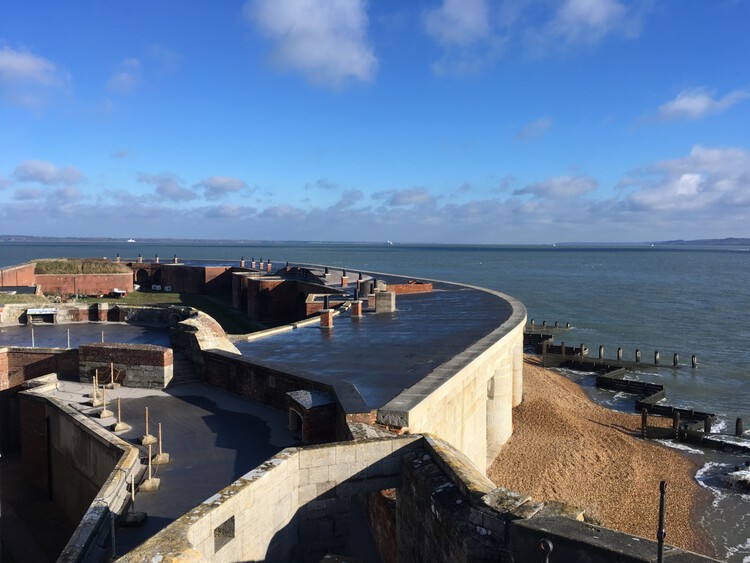
Hurst Castle in Hampshire, England. A fortress built by Henry VIII that suffered partial collapse in 2021. Image via World Monuments Fund
The World Monuments Fund (WMF), an independent nonprofit organization dedicated to the preservation of historic architecture and cultural heritage since 1965, receives nominations through the World Monuments Watch, a flagship advocacy and conservation program. Every two years, the Watch selects 25 sites from the nominations received from individuals and community-based organizations worldwide. Nominations for the 2027 World Monuments Watch closed on March 20, 2026, with a total of 372 public nominations from 84 countries and territories. Before announcing the selected sites in early 2027, the WMF offers an analysis of the nominations. Global data shows three main causes of heritage endangerment worldwide: government austerity, intensifying climate impact, and lack of access to specialized skills and expertise. At a time when political priorities tend to stray from history, the call is to recognize heritage sites as an area of shared opportunity rather than a burden.
This week, questions about housing, safety, and the future of cities came into focus, from the impact of natural hazards to architecture's role in shaping more inclusive urban environments. The International Day for Disaster Risk Reduction, observed on October 13 under the theme "Resilience Starts at Home," highlighted these questions just days after a magnitude 7.7 earthquake struck Panama, damaging buildings and prompting evacuations nationwide. Beyond disaster preparedness, the week's developments also reflect broader efforts to address housing needs, give existing buildings new purposes, and create spaces that support education, culture, and public life.
Portuguese architecture and urbanism practice OODA has released new images of an urban design project in Prague, Czech Republic. The design transforms an existing building block into a permeable site with municipal social housing, commercial units, and a landscaped central plaza. The project, titled Kodaňská 1441, prioritizes walkability, green mobility and public space. In addition to opening new connections between the existing building and the urban fabric, it includes a landscape design by LJ-Group and a water management system that increases the permeable surfaces of the courtyard by 21.5%. The project is an example of urban renewal that incorporates contemporary concerns such as communal spaces, a regulated relationship with public space, planted environments, and the sustainable use of natural resources.
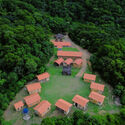
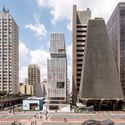
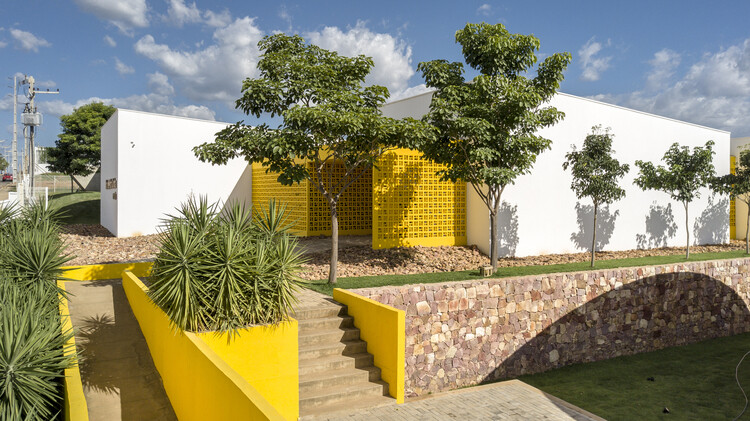
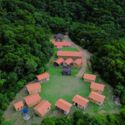
This month's Brazil in Focus looks at how architecture and urban development intersect with questions of housing, education, public space, and mobility across the country. This month's selection includes an indigenous settlement in Maricá recognized by UN-Habitat for its approach to adequate housing, editorials examining university campuses and planned cities as frameworks for collective life, and projects ranging from a timber-structured airport expansion to a commercial building that engages São Paulo's public realm and a residence shaped by its landscape. Also on the radar are the winning proposal for Itaú Cultural's new headquarters on Avenida Paulista, international recognition for two Brazilian landscape architecture projects, and a national diagnosis highlighting persistent gaps in pedestrian infrastructure and road safety.
On October 11, 2026, Donald Insall Associates announced the passing of its founder, Sir Donald Insall. Describing him as "a man of great tact, charm and humour," the practice recognized his contribution to the structures, institutions, and tools of heritage preservation in England, as well as his practical knowledge and application of the craft of restoration. An architect, conservationist, planning consultant, author, and teacher, he led one of Britain's leading conservation practices for four decades after founding it in 1958. His practice undertook the renovation of William Morris's Kelmscott Manor in Oxfordshire and Robert Adam's Kedleston Hall in Derbyshire, the conservation of Chester's historic center, and the restoration of Windsor Castle following the 1992 fire, among other British landmarks.
Every year on October 13, the International Day for Disaster Risk Reduction (IDDRR) draws attention to the ways communities can reduce exposure and vulnerability to hazards. Established by the United Nations in 1989, the day provides an opportunity to consider how governments, communities, and professionals can strengthen preparedness and resilience before disasters occur. For its 2026 edition, the United Nations Office for Disaster Risk Reduction (UNDRR) has selected "Resilience Starts at Home" as its theme, placing housing at the center of this year's campaign.
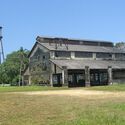
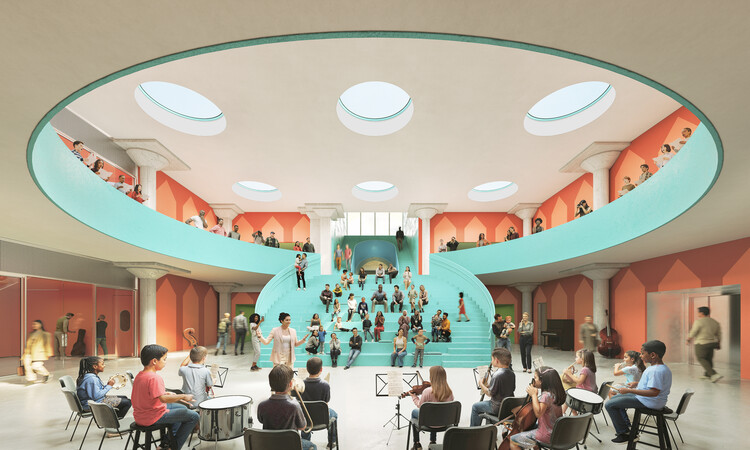
Construction has begun on the Frank Liu Jr. Academy for Music and Arts (FLAMA) in Houston, Texas, designed by OMA, led by partner Jason Long, with RDLR Architects as architect of record and SWA Group for landscape design. The project is an adaptive reuse of Houston's historic 1930s J. A. Folger & Co. coffee plant, converted into an educational space for the arts. The 6,050 m² facility will be an open-enrollment, tuition-free public charter school for pre-kindergarten through eighth-grade students. The building is located along Houston's Buffalo Bayou East corridor, directly across from Turkey Bend, a landscape project by Reed Hilderbrand with NADAAA and Rogers Partners that reimagines the former industrial waterfront as a network of public spaces and flood-adapted landscapes. The conversion of the former coffee plant is part of a larger transformation of the area and is expected to open in August 2027.
Tsuyoshi Tane is a Japanese architect born in 1979 in Tokyo and based in Paris, where he founded ATTA – Atelier Tsuyoshi Tane Architects in 2006. Working across cultural, institutional, and landscape-related projects, Tane has developed an architectural approach that positions memory as a fundamental design driver. In his interview with Louisiana Channel, filmed in his Paris studio, Tane reflects on architecture as a discipline of observation and thought, arguing that meaningful design emerges from carefully reading the traces embedded within a site. For him, architecture is not produced on a blank slate but begins with an inquiry into what already exists, physically, culturally, and emotionally, beneath the surface of a place.
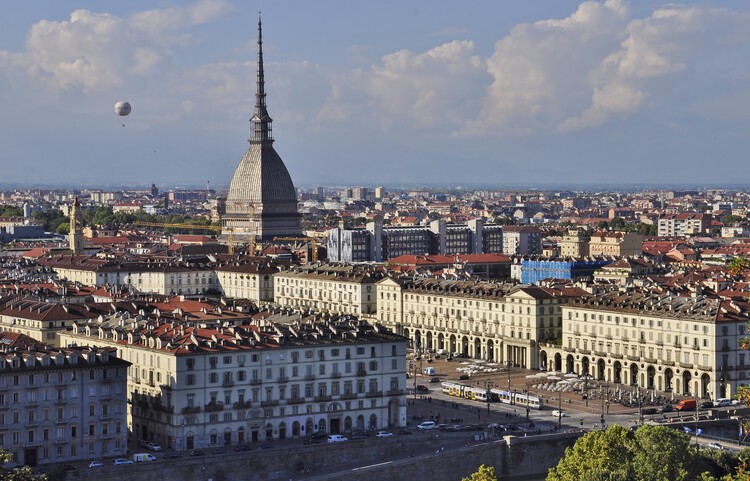
The second part of the Utopian Hours 2026 international city-making festival will be held in Turin on October 16 and 17. After a first chapter in Rotterdam, the festival is marking its tenth anniversary edition by returning to its hometown in Italy. The event's lineup and cultural program are designed to explore how cities can respond creatively to the social, environmental, and political challenges of the 21st century. The Utopian Hours festival has been organized since 2017 by Stratosferica, a nonprofit cultural association dedicated to producing and sharing urban knowledge through content on the evolution of cities, urban communication strategies, events, community building and placemaking.
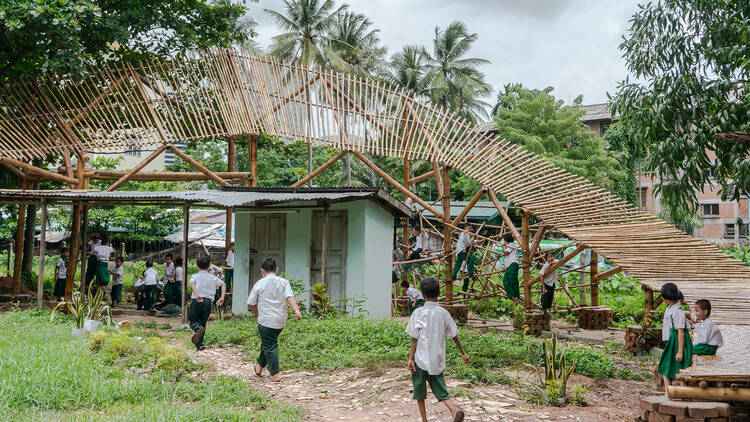
UN-Habitat has announced the five recipients of the 2026 Scroll of Honour Award, recognizing contributions to adequate housing and sustainable urban development in Brazil, Myanmar, Pakistan, Tunisia, and the United Kingdom. This year's winners include a housing organization working with communities affected by conflict and displacement, a researcher developing building materials from local and mining residues, an Indigenous village in Brazil, a public housing agency in Pakistan, and London Mayor Sadiq Khan. Selected from 101 nominations submitted across Africa, Asia, Europe, and the Americas, the recipients represent a range of approaches to addressing housing and urban development challenges.
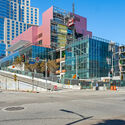
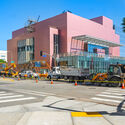
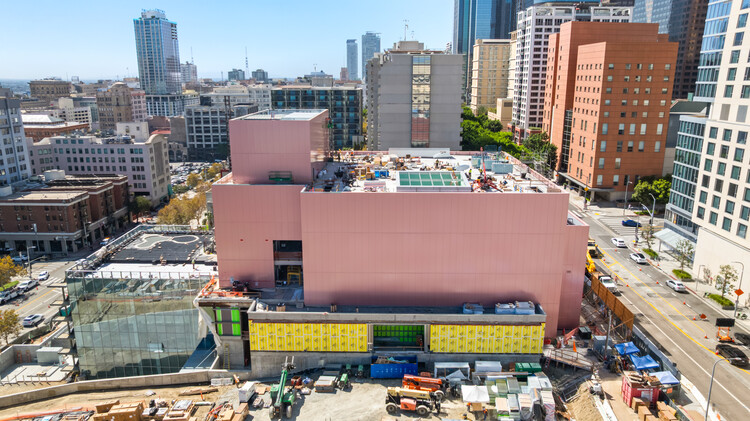
Colburn's 100,000-square-foot campus expansion, designed by Frank Gehry, will open on September 25, 2027, with an event in the new 1,000-seat Terri and Jerry Kohl Hall, a round concert hall. Colburn is a school of music and dance in Los Angeles, on a downtown campus that welcomes an estimated 10,000 people weekly. The institution provides performing arts education, and more than 500 music and dance performances open to the public each year. The first images of the design were released in 2022. The expansion triples the facilities currently dedicated to dance and will house Colburn's Trudl Zipper Dance Institute. The building, finished in a metallic pink coating, is located adjacent to Colburn's Grand Avenue campus in downtown Los Angeles and is expected to reach substantial completion in summer 2027.
In addition to photographing the studios, Goodwin asked each practice the same question: "What makes for a good office space and office culture for you?" Their responses accompany the images, offering insight into how architects define the atmosphere of their workplaces. Studio Okami describes its workplace as a "home office away from home," while Brut highlights the role of shared meals and greenery in softening their penthouse space.
The week began with World Architecture Day, drawing attention to the global housing crisis as a fundamental element of human dignity, inclusion, and well-being. In a joint message between the UIA and the United Nations, this year's call is to focus disciplinary efforts on building not only residential structures but also systems to better distribute and use what already exists, proposals that enable new ways of living and alternatives for a more sustainable industry. Aligned with this concept, we featured three projects where reuse and representation converge, and three others that help establish a dialogue between what we consider old and what we can expect from the new. On this week's radar, we find another instance to reexamine the canons of modern architecture in Switzerland, the start of construction on a translucent yet hurricane-resistant building in the United States, and a winning entry for a mixed-use urban complex in Austria.
Architecture firm HENN has launched CarbonBudget, a digital tool that calculates project-specific CO2 budgets for buildings. The new platform, free of charge, is a contribution for designers to help reach the 1.5°C target, a global goal from the Paris Agreement to limit long-term global warming to 1.5°C above pre-industrial levels. As the construction industry is responsible for around one-third of global CO2 emissions, architectural design decisions can effectively contribute to containing global warming. The tool is designed to calculate whether the emissions of a building project located in Europe are compatible with the Paris Agreement target, based on specific inputs such as location and building area. The new platform joins other projects from international offices such as MVRDV NEXT's CarbonSpace, Grimshaw's Minoro, and Henning Larsen's OpenDetail, addressing decarbonization through shared digital information.
Ammodo Architecture will launch the first edition of Ammodo Architecture Days in Amsterdam on November 9 and 10, 2026. Organized by Ammodo Architecture, a programme of the Ammodo Foundation, the event will bring together architects, landscape architects, urban planners, artists, communities, collectives and multidisciplinary design teams, alongside recipients of the 2024 and 2025 Ammodo Architecture Award. Taking place at Westergas, a former industrial complex now used as a cultural and public venue, the invitation-only two-day programme will combine a symposium, exhibition, publication launch and award ceremony, creating a setting for exchange between practices working across different geographic, cultural and disciplinary contexts.
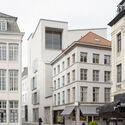
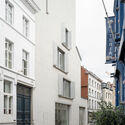
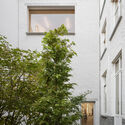
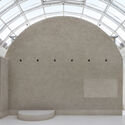
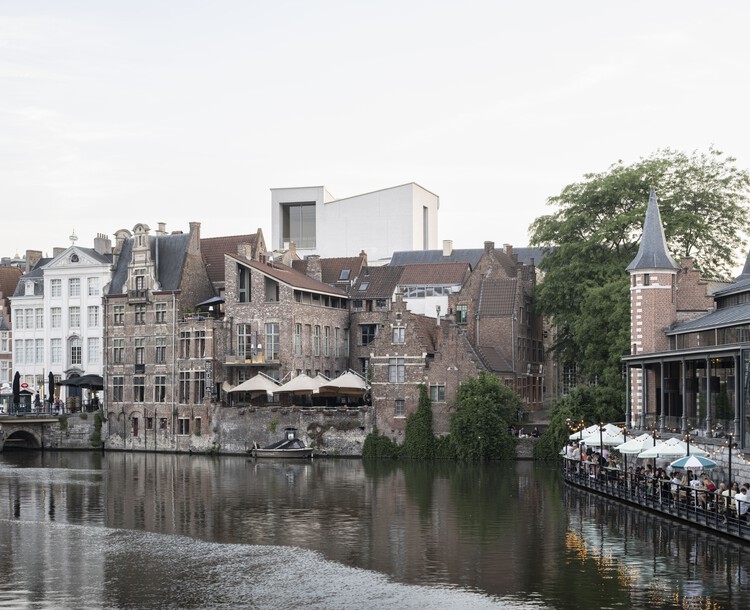
In November 2019, London-based Carmody Groarke and Ghent firm TRANS architectuur | stedenbouw, now known as ATAMA, won the Baumeister international competition to design an extension for Design Museum Gent, Belgium's largest design museum, located in Ghent's historic center. At the time, the museum comprised three buildings: the eighteenth-century Hotel de Coninck, the Leten House, with a sixteenth-century core, and a 1992 wing. After four years of renovation and expansion, the museum reopened on October 3, 2026, within the UNESCO World Heritage city center. The project combines the restoration of these historic buildings with a new wing designed by Carmody Groarke and ATAMA, alongside the restoration work led by RE-ST architectenvennootschap. The museum's collection spans design objects from the fourteenth century to the present, and the renewed building adds spaces for lectures, workshops, exhibitions and events, framing design as something visitors can use and engage with directly rather than only view.
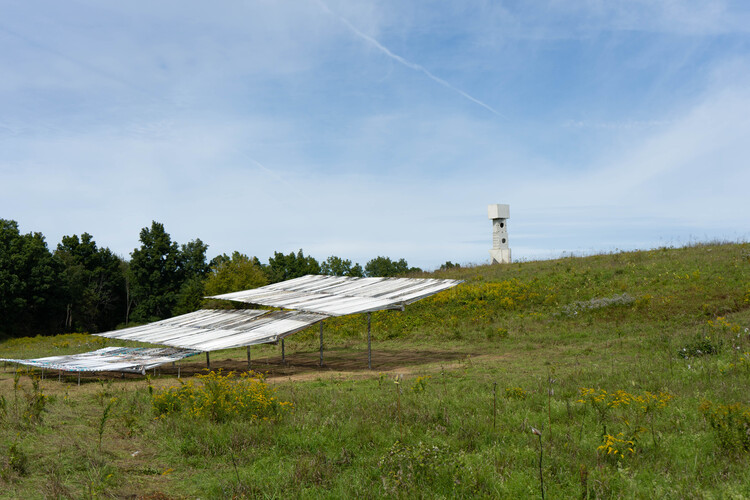
Limbo Engawa, 2026. Steel, salvaged billboard tarpaulin. Co-commissioned by Art Omi and Limbo Museum. Image Courtesy of Art Omi. Photo: Nadia Boyea
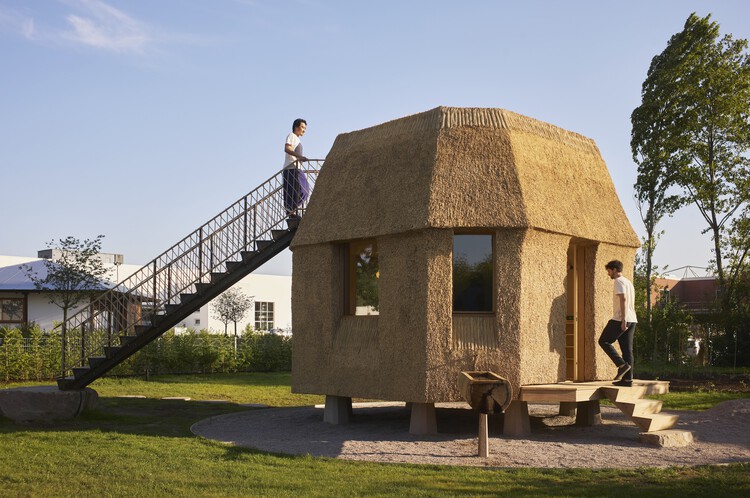
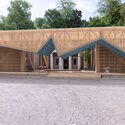
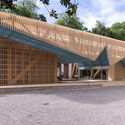
Art Omi and Limbo Museum have presented Limbo Engawa, a two-part site-specific installation by TAELON7, led by architect Juergen Benson-Strohmayer. First presented at Limbo Museum in Accra, Ghana, on March 12, 2026, the project was reconfigured for Art Omi's Sculpture & Architecture Park in Ghent, New York, where it opened on September 19, 2026. Developed as a joint commission between the two institutions, the project uses a modular architectural system to explore how spaces for gathering and exchange can respond to different landscapes, climates, and cultural contexts.
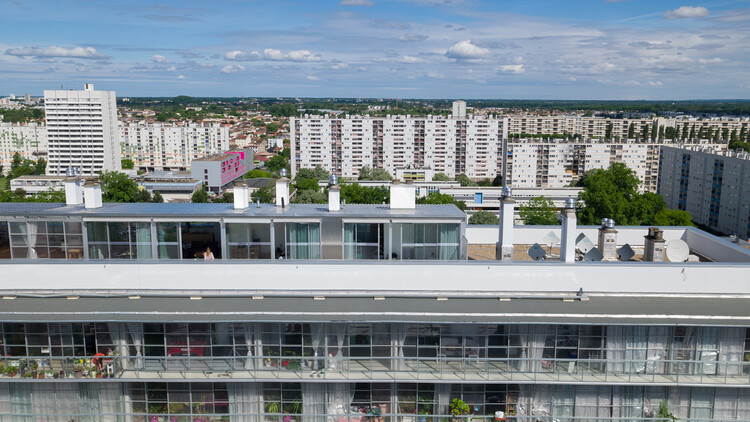
Transformation of 530 dwellings / Lacaton & Vassal + Frédéric Druot + Christophe Hutin architecture. Image Courtesy of Philippe Ruault
The International Union of Architects designates the first Monday of October as World Architecture Day each year, aligning it with the United Nations' World Habitat Day. This year, both occasions are drawing attention to the global housing crisis as a fundamental element of human dignity, inclusion, and well-being. The UIA's motto reads: "Housing is a Human Right. Build It." The organization calls on architects to contribute to advancing equitable access to housing through design, research, and advocacy. From a holistic perspective, the crisis consists not only of a shortage of residential buildings, but of multiple, interconnected barriers to accessing an adequate place to live. The challenge calls on the dual nature of the architect's work: the capacity for abstract design thinking, and the practical knowledge to transform material reality. For architecture to make the right to housing a reality, both capacities must be put into practice: building new governance structures, different models of shared ownership, designs for alternative forms of cohabitation, and new, environmentally sustainable construction systems.
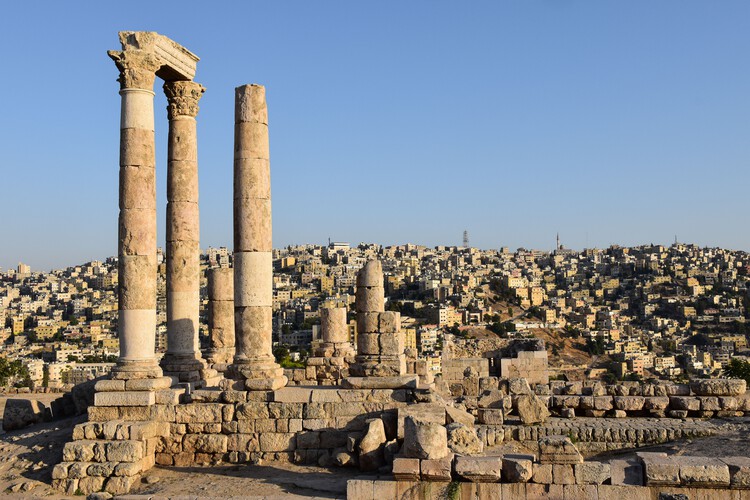
Following its last edition in 2019, Amman Design Week returns from October 2-17, 2026, bringing more than 220 designers and participants together across exhibitions, installations, public-space projects, talks, workshops, and performances in Jordan. The fourth edition unfolds across Ras El Ain, Jabal Al Lweibdeh, Jabal Amman, Iraq Al Amir, and, for the first time, Aqaba. Founded by Her Majesty Queen Rania Al Abdullah in 2016, the event returns under the theme "Accumulations," looking at how materials, memories, knowledge, labor, and everyday practices gather over time and become part of the places people inhabit. The theme also gives the 2026 edition a clear relationship with the city itself.
Xu Tiantian is the founding principal of DnA_Design and Architecture, an interdisciplinary practice that addresses both the physical and social dimensions of the contemporary living environment, across scales. Born in 1975 in Fujian, China, she received a Master of Architecture in Urban Design from the Harvard Graduate School of Design and a bachelor's degree in architecture from Tsinghua University in Beijing. Her recent work focuses on rural revitalization through a strategy she describes as "architectural acupuncture," understood as small-scale, site-specific interventions designed to activate local culture, agriculture, and tourism. These interventions, primarily concentrated in China's rural regions, have been recognized by UN-Habitat as a global model for urban–rural integration. In this interview with Louisiana Channel, she reflects on the role of the architect, questions architecture itself and the concept of beauty, explains her working methodology, and emphasizes the spatial dimension of nature.
Architecture this week reflects on how buildings and cities adapt to changing cultural, social, and environmental conditions. From the expansion of established institutions and the preservation of architectural archives to new approaches to housing and the use of domestic space, several stories consider how architecture negotiates between existing contexts and future needs. These questions extend beyond individual buildings, touching on the role of public space, infrastructure, energy, and collective memory in shaping the built environment. At the same time, new projects and cultural programs across different contexts demonstrate how architecture can respond to local histories, urban transformation, and resource constraints while establishing new relationships between buildings, landscapes, and the communities that use them.
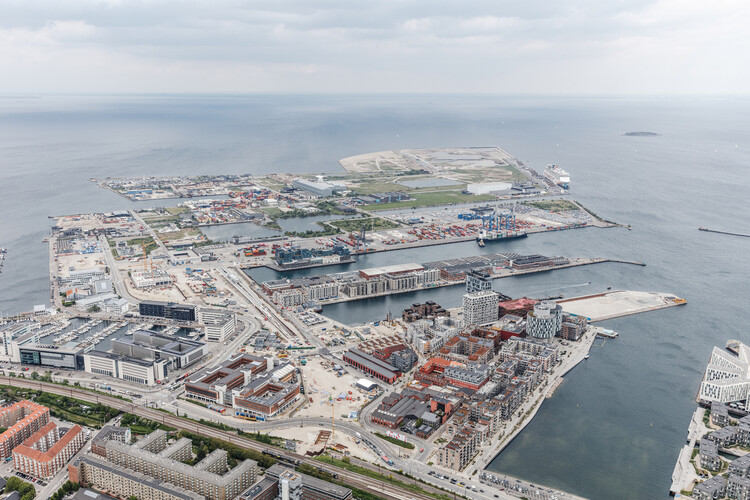
The origins of the Copenhagen Architecture Biennial trace back to the establishment of the CAFx yearly festival in 2014, which was renamed Copenhagen Architecture Forum in 2024 to lead new projects focused on architecture and urbanism, such as the shift from festival to biennial, with a first edition in 2025. Today, the details of the second edition are being announced: it will take place from September 9 to October 15, 2027, under the theme "Elements." After the Biennial's inaugural call to Slow Down, the event is turning its attention to the planetary elemental forces that architecture has sought to master and prepare to inhabit, questioning one of modernity's most persistent promises: control over the environment. Activities will be dedicated to and organized around each of the four elements: fire, earth, air, and water, including an open call for pavilions, exhibitions, and a symposium.