1. ArchDaily
  2. Circular Design

Circular Design: The Latest Architecture and News

The Afterlife of Expo Osaka’s Grand Ring: How the Timber Structure Is Being Reused Across Japan

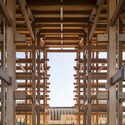
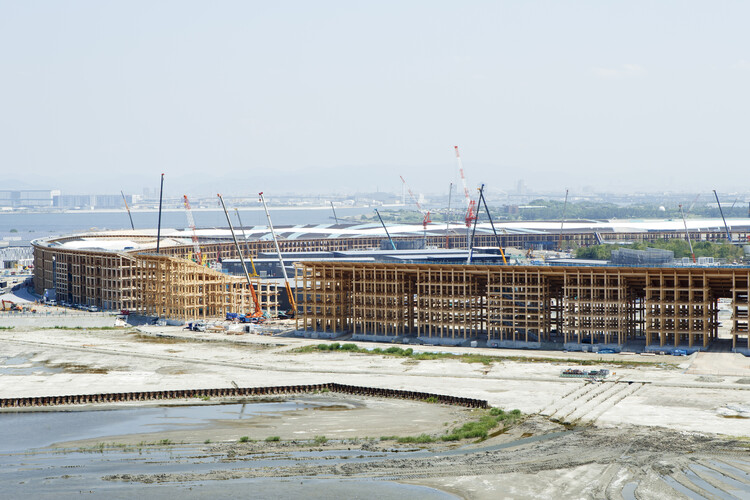
Exhibitions can be an opportunity to extend architectural discourse beyond professional circles, opening conversations with broader publics and serving as an interface between architecture and society. Within this concept, major international events such as the Osaka International Expo 2025 and the Venice Architecture Biennale have adopted the idea of the circular economy as one of their organizational objectives. The idea of circularity in events can be reflected in, for example, their energy consumption, the impact of the displacement they generate, their waste, or the useful life of their infrastructure. The site destined for the last World Expo, held in Osaka from 13 April to 13 October 2025, was surrounded by a massive timber structure designed by Sou Fujimoto Architects, one of the world's largest wooden constructions. The Japan Association for the 2025 World Exposition committed to reusing building materials "as much as possible," with concrete plans for their reuse to be finalized by March. In the meantime, some relocation alternatives are already emerging for the pieces of the World Expo structure.

The Afterlife of Expo Osaka’s Grand Ring: How the Timber Structure Is Being Reused Across Japan - Imagen 1 de 4The Afterlife of Expo Osaka’s Grand Ring: How the Timber Structure Is Being Reused Across Japan - Featured ImageThe Afterlife of Expo Osaka’s Grand Ring: How the Timber Structure Is Being Reused Across Japan - Imagen 2 de 4The Afterlife of Expo Osaka’s Grand Ring: How the Timber Structure Is Being Reused Across Japan - Imagen 4 de 4The Afterlife of Expo Osaka’s Grand Ring: How the Timber Structure Is Being Reused Across Japan - More Images+ 4

How to Modernize a Grand Hotel Without Erasing Its Memory: Lessons from Brenners

 | In Collaboration

During renovation projects, replacement is often preferred over refurbishment. Used fixtures are removed, new products specified, timelines secured. Particularly in hospitality projects, where closures are costly and operations are tightly scheduled, installing new components appears to be the most reliable solution. It is faster, easier to coordinate, and aligns with established workflows. Refurbishment operates differently. It requires careful dismantling instead of disposal, evaluation instead of substitution, and trust in the quality of what is already there. It introduces complexity into a process designed for efficiency.

The recent renovation of Brenners Park-Hotel & Spa in Baden-Baden demonstrates that under the right circumstances, this additional effort can become a deliberate architectural strategy for similar projects, especially when the original materials were never intended to be temporary. 

Designing with What Exists: Rieder’s HQ Expansion Turns Residual Materials into Facade Design

 | In Collaboration

What if industrial leftovers weren't waste, but the start of architectural design? At Rieder's headquarters in Maishofen, Austria, over 1,300 cubic meters of timber, 180 ceiling elements, and hundreds of upcycled glassfiber-reinforced concrete fragments come together in a building shaped as much by reuse as by planning. The new production hall, designed by Kessler² Architecture, treats material leftovers as a design resource. Developed as part of a long-term investment in sustainable manufacturing, the timber-concrete hybrid building introduces a facade technique that inverts conventional architectural workflows: instead of designing first and producing components afterward, the building envelope is generated from the material remnants already available on site establishing a new language for industrial architecture.

Buildner Announces Winners of Architect’s Chair #4 Competition and Launches #5 Edition

 | Sponsored Content

Buildner is pleased to announce the results of its Architect's Chair Competition Edition 4, an annual international competition that invites architects and designers worldwide to submit designs for a signature chair. Following in the footsteps of iconic figures like Charles and Ray Eames, Ludwig Mies van der Rohe, Marcel Breuer, and Arne Jacobsen, participants are tasked with creating custom chairs that reflect their unique design philosophies and visions.

Circular Composites: Designing for a Sustainable Future

 | In Collaboration

The pursuit of stronger, lighter, and more durable materials has guided architecture long before polymers or carbon fibers existed. One of the earliest large-scale examples of composite materials can be found in the Great Wall of China, where stone, clay bricks, and organic fibers such as reeds and willow branches were blended to create a resilient and lasting structure. These early techniques reveal a timeless intuition: distinct materials, when combined thoughtfully, produce properties unattainable by any single element. As the construction sector faces urgent ecological pressures, this intuition is being revisited through the lens of sustainability, with architects and engineers exploring bio-based, recycled, and hybrid composites designed not only for performance but also for circularity and environmental responsibility.

Extending the Lifespan of Materials: Circularity and Recyclability as Part of the Design

 | In Collaboration

What is the current global outlook on the recyclability of materials used in architecture? To what extent are contemporary societies truly committed to reducing environmental impact? In the effort to live in balance with nature, replacing fossil fuels with renewable energy sources is one of the key strategies for cutting greenhouse gas emissions and addressing global warming. Looking to nature for inspiration as a way to protect it means creating designs that incorporate sustainability, circularity, and recyclability from the very first sketch. From building systems to surface finishes, the use of biomaterials in architecture reflects a mindset rooted in long-term responsibility for a material's full life cycle.

Extending the Lifespan of Materials: Circularity and Recyclability as Part of the Design - Imagen 1 de 4Extending the Lifespan of Materials: Circularity and Recyclability as Part of the Design - Imagen 2 de 4Extending the Lifespan of Materials: Circularity and Recyclability as Part of the Design - Imagen 3 de 4Extending the Lifespan of Materials: Circularity and Recyclability as Part of the Design - Imagen 15 de 4Extending the Lifespan of Materials: Circularity and Recyclability as Part of the Design - More Images+ 25

The Future of Cities: How Can We Build Differently to Promote Resilient and Low-Impact Environments?

 | In Collaboration

How does the construction sector shape the future of cities? What challenges does it face? At the crossroads of demographic, social, energy, and climate pressures, the construction sector is changing fast. Professionals, institutions, and citizens are working together to build environments that improve health and well-being, encourages durable and place-responsive solutions, cut carbon emissions, withstand climate risks, and provide affordable, high-quality housing.

The Future of Cities: How Can We Build Differently to Promote Resilient and Low-Impact Environments? - Imagem 2 de 4The Future of Cities: How Can We Build Differently to Promote Resilient and Low-Impact Environments? - Imagem 3 de 4The Future of Cities: How Can We Build Differently to Promote Resilient and Low-Impact Environments? - Imagem 1 de 4The Future of Cities: How Can We Build Differently to Promote Resilient and Low-Impact Environments? - Imagem 4 de 4The Future of Cities: How Can We Build Differently to Promote Resilient and Low-Impact Environments? - More Images+ 1

A Look at the 45 Award-Winning Pavilions of Expo 2025 Osaka

About a month after the closing of Expo 2025 Osaka, the designs and constructions presented at the world's fair remain as a legacy. While the Bahrain Pavilion, designed by Lina Ghotmeh Architecture, drew particular attention this year for receiving double recognition, it was one among many awarded projects. During the awards ceremony held on the penultimate night of the event, a total of 45 awards were presented among 165 participating countries. The Official Participant Awards are granted according to pavilion size and type, recognizing excellence in Architecture and Landscape (for self-built pavilions only), External Design (for module pavilions only), Exhibition Design, Theme Development, and Sustainability. The recipients were selected by an international jury of nine experts who visited all national and thematic pavilions during two evaluation sessions in May and October 2025. The following overview presents all 45 pavilions distinguished in the five categories of the Official Participant Awards.

A Look at the 45 Award-Winning Pavilions of Expo 2025 Osaka - Image 1 of 4A Look at the 45 Award-Winning Pavilions of Expo 2025 Osaka - Image 2 of 4A Look at the 45 Award-Winning Pavilions of Expo 2025 Osaka - Image 3 of 4A Look at the 45 Award-Winning Pavilions of Expo 2025 Osaka - Image 4 of 4A Look at the 45 Award-Winning Pavilions of Expo 2025 Osaka - More Images+ 15

Small-Scale Solutions to Climate Challenges: 13 Highlighted Projects from the 19th Venice Architecture Biennale

With just a few days left before the six-and-a-half-month 19th Venice Architecture Biennale comes to an end, it is possible to look back on some of the most notable contributions within its thematic framework. Marked by the largest call for participants to date, the Biennale's diversity of topics and the range of installations on display go beyond easy recapitulation. As part of that reflection, several initiatives can be highlighted as illustrative of the principles reflected in the curatorial theme, "Intelligens. Natural. Artificial. Collective." The concepts interwoven in Carlo Ratti's title form a call to address the urgent need for substantial solutions amid the accelerating climate crisis, positioning the Biennale as a platform for diverse design proposals and experiments organized around three forms of intelligence: natural, artificial, and collective. Beyond the national pavilions and numerous collateral events held throughout Venice over the past six months, among the more than 700 participants are projects that, through practice, embody four shared intentions: opening conversations about the future, proposing systemic responses to local realities, placing technology at the center of design innovation, and pursuing material research rooted in local sensitivity.

Small-Scale Solutions to Climate Challenges: 13 Highlighted Projects from the 19th Venice Architecture Biennale - Image 1 of 4Small-Scale Solutions to Climate Challenges: 13 Highlighted Projects from the 19th Venice Architecture Biennale - Image 2 of 4Small-Scale Solutions to Climate Challenges: 13 Highlighted Projects from the 19th Venice Architecture Biennale - Image 3 of 4Small-Scale Solutions to Climate Challenges: 13 Highlighted Projects from the 19th Venice Architecture Biennale - Image 4 of 4Small-Scale Solutions to Climate Challenges: 13 Highlighted Projects from the 19th Venice Architecture Biennale - More Images+ 52

12 Pavilions at EXPO 2025 Osaka Highlight Immersive Spatial Experiences

 | Sponsored Content

Since its inauguration this spring, Expo 2025 Osaka has captured global attention from multiple perspectives, demonstrating how architecture can function as a laboratory for exploring solutions to pressing challenges. After 55 years, Osaka is once again hosting the World Expo, with each installation organized around the sub-themes Saving Lives, Empowering Lives, and Connecting Lives. These pavilions take forms that express the identity and values of their region through distinctive architectural languages, forming the central axis of their design. Building on this foundation, some installations serve as laboratories for the future society, utilizing technology to enhance experiences both inside and outside the spaces, transforming the visit through light, sound, visuals, and movement as part of the technological innovation showcased at the event.

12 Pavilions at EXPO 2025 Osaka Highlight Immersive Spatial Experiences - 1 的图像 412 Pavilions at EXPO 2025 Osaka Highlight Immersive Spatial Experiences - 2 的图像 412 Pavilions at EXPO 2025 Osaka Highlight Immersive Spatial Experiences - 3 的图像 412 Pavilions at EXPO 2025 Osaka Highlight Immersive Spatial Experiences - 4 的图像 412 Pavilions at EXPO 2025 Osaka Highlight Immersive Spatial Experiences - More Images+ 27

Slow Pavilions, Chapel Retold, and More: 6 Key Highlights From the First Copenhagen Architecture Biennial

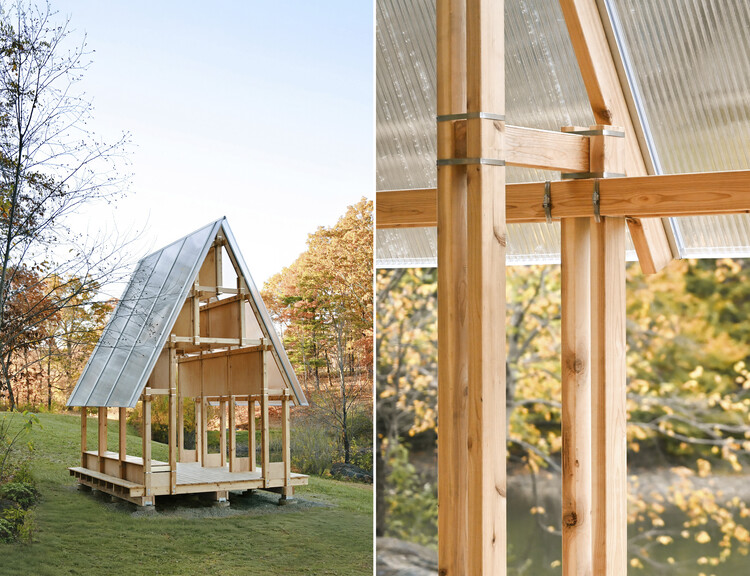
The first edition of the Copenhagen Architecture Biennial opened on September 18 and will run until October 19, under the theme "Slow Down." Organized by CAFx (Copenhagen Architecture Forum), the new platform evolves from the city's previous annual festival into a broader international biennial for architectural dialogue and exchange. Led by Josephine Michau, the event seeks to create space for reflection on architecture's role in shaping societies and the environment. The chosen theme, Slow Down, invites participants to reconsider the pace of transformation in the built environment in response to global pressures such as rapid urbanization, resource consumption, and climate change.

During the opening days, ArchDaily announced the 2025 Next Practices Awards, and throughout the month, the Biennial presents more than 250 events, ranging from exhibitions and talks to performances and guided tours. Highlights include contributions from Danish practices such as Adept with Fast City/Slow Architecture and Lendager with Living Lab, alongside international participants like Atelier Bow-Wow and Rem Koolhaas.

Slow Pavilions, Chapel Retold, and More: 6 Key Highlights From the First Copenhagen Architecture Biennial - 1 的图像 4Slow Pavilions, Chapel Retold, and More: 6 Key Highlights From the First Copenhagen Architecture Biennial - 2 的图像 4Slow Pavilions, Chapel Retold, and More: 6 Key Highlights From the First Copenhagen Architecture Biennial - 3 的图像 4Slow Pavilions, Chapel Retold, and More: 6 Key Highlights From the First Copenhagen Architecture Biennial - 4 的图像 4Slow Pavilions, Chapel Retold, and More: 6 Key Highlights From the First Copenhagen Architecture Biennial - More Images+ 55