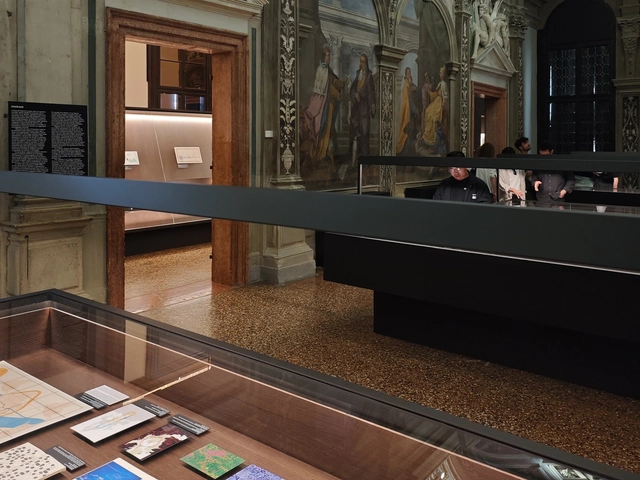
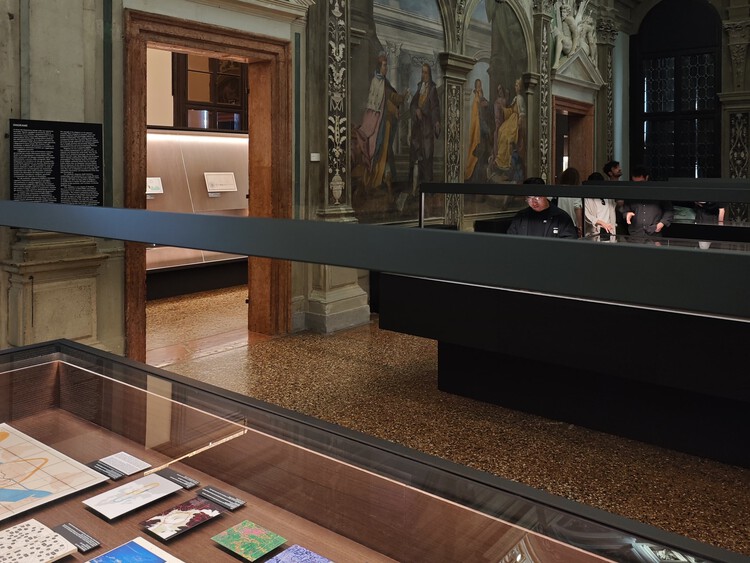
The prestigious BAUMunich, the world's leading trade fair for architecture, materials, and systems, served as the stage for Orama Minimal Frames' latest innovations in architectural frame technology. The exhibition offered a platform for industry connections and showcased advancements that challenge conventional boundaries in frame design.
About a month after the closing of Expo 2025 Osaka, the designs and constructions presented at the world's fair remain as a legacy. While the Bahrain Pavilion, designed by Lina Ghotmeh Architecture, drew particular attention this year for receiving double recognition, it was one among many awarded projects. During the awards ceremony held on the penultimate night of the event, a total of 45 awards were presented among 165 participating countries. The Official Participant Awards are granted according to pavilion size and type, recognizing excellence in Architecture and Landscape (for self-built pavilions only), External Design (for module pavilions only), Exhibition Design, Theme Development, and Sustainability. The recipients were selected by an international jury of nine experts who visited all national and thematic pavilions during two evaluation sessions in May and October 2025. The following overview presents all 45 pavilions distinguished in the five categories of the Official Participant Awards.
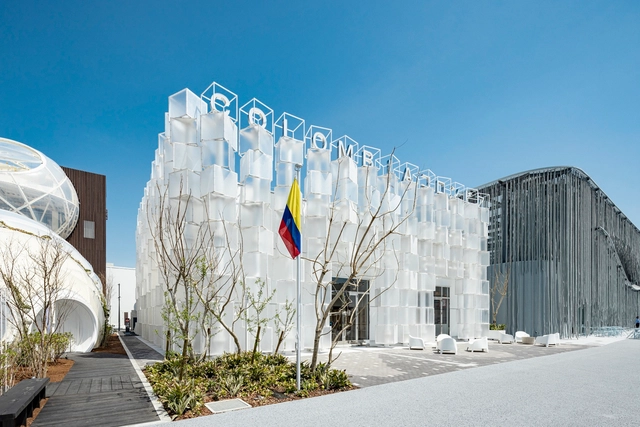
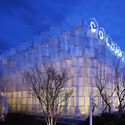
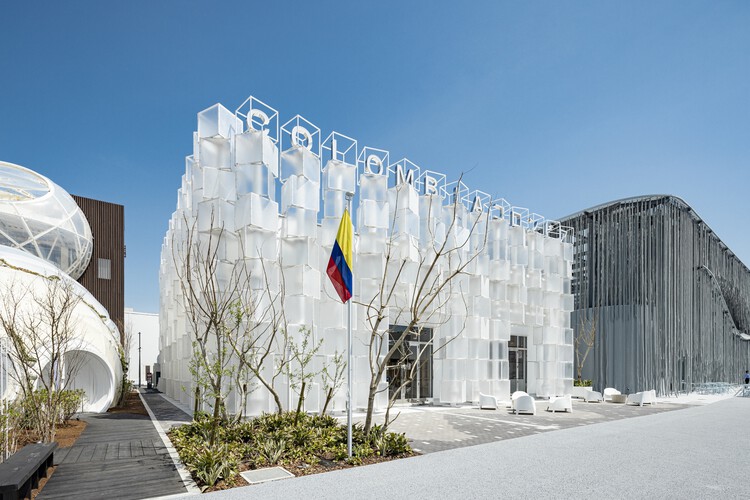
The Colombia Pavilion at the Expo Osaka 2025 adopts the theme "ICE CUBE," inspired by the scene in Gabriel García Márquez's One Hundred Years of Solitude where a young boy encounters ice for the first time. Translating this literary reference into built form, the pavilion presents a facade of translucent cubes set at varying angles, creating a sense of movement and articulation. Designed by MORF Inc., with Karim Chahal as Project Director and Ko Oono as Principal Architect, the exterior is composed of semi-transparent polycarbonate panels integrated with color-controlled lighting, allowing the facade to transform in appearance throughout the day and night.
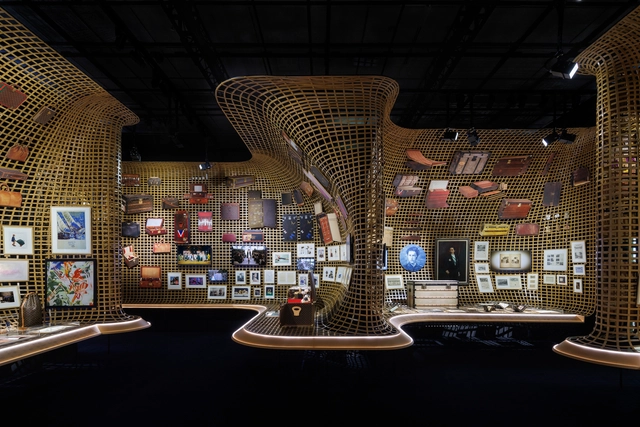
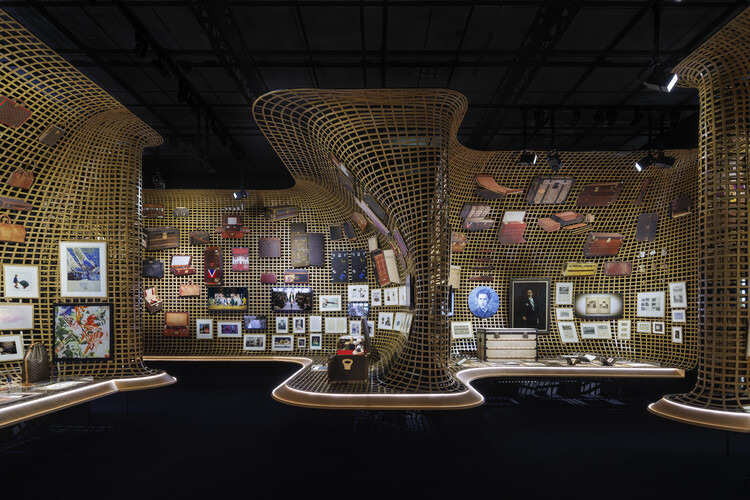
Louis Vuitton’s “Visionary Journeys” at the Nakanoshima Museum of Art. Image Courtesy of Louis Vuitton
Louis Vuitton: Visionary Journeys has opened to the public at the Nakanoshima Museum of Art in Osaka and will be open to visitors until September 17, 2025. Designed by OMA's New York office under the direction of Partner Shohei Shigematsu, the exhibition marks the first time the Visionary Journeys series has been staged in a cultural institution. Spanning 2,200 square meters across eleven thematic galleries, the project offers a comprehensive spatial narrative of the Maison's 170-year creative legacy, articulated through zones dedicated to history, craftsmanship, iconic design codes, and cultural exchange.
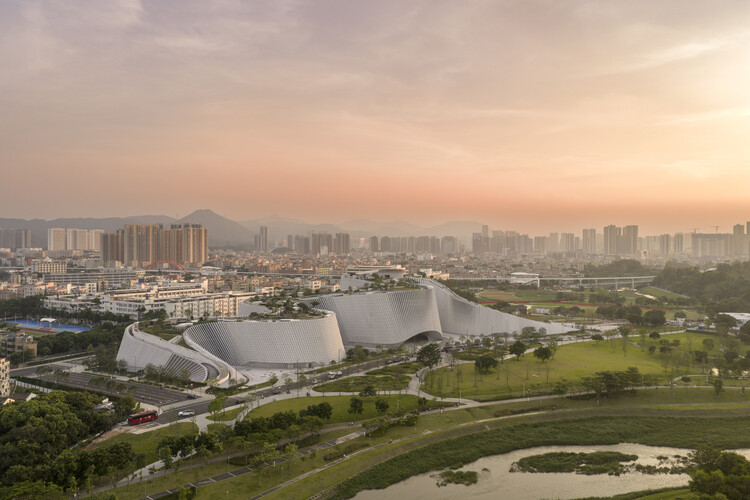
Situated in one of the fastest-developing regions over the past decade—the southern part of China, including Hong Kong and the Greater Bay Area—urban growth has been driven by an overwhelming wave of commercial ambition. Projects here are often designed for maximum density, height, and efficiency, resulting in developments of enormous scale that can easily span several acres. Prioritizing transit-oriented development, these complexes frequently take the form of sprawling malls built directly above major transportation hubs. Designed to disorient and prolong foot traffic to encourage economic activities, these mega-structures have become commonplace in cities like Hong Kong and Shenzhen.
While this typology of megastructures offers clear advantages—economic efficiency, high development returns, and convenience for transit users—it almost invariably ignores its urban context and environment. These developments often turn a blind eye, deliberately so, to their environmental footprint and the city's walkability. At such overwhelming scales, the human walking experience is diminished, if not outright neglected. Pedestrians become interiorized—trapped within the insulated world of these complexes.
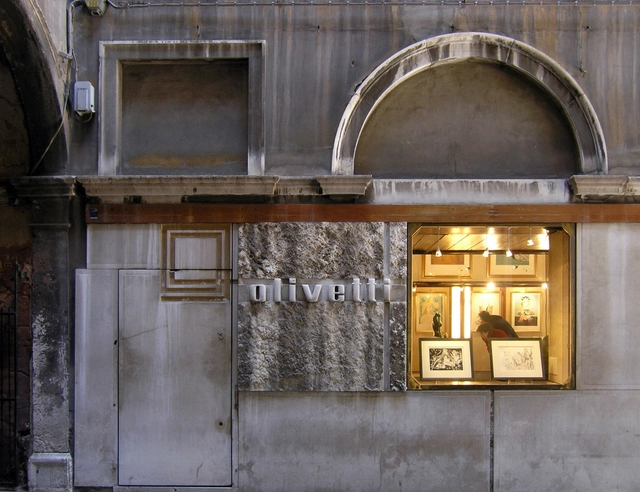
Tucked discreetly beneath the colonnade of Saint Mark's Square in Venice, Carlo Scarpa's Olivetti Showroom exerts a quiet yet unmistakable presence. Though often overshadowed by the grandeur of nearby landmarks—St. Mark's Basilica, the Clocktower, the Loggetta, and the Procuratie Vecchie—it attracts a particular kind of visitor: those who seek out one of Scarpa's architectural gems hidden in plain sight. Modest in scale but rich in detail, the showroom is meticulously maintained by FAI (Fondo Ambiente Italiano), the National Trust for Italy.
The 2025 Osaka Expo has captured widespread attention—not only for its architectural ambition and spectacle, but also for breaking records and generating controversy. Its most iconic feature, a monumental timber ring designed by Sou Fujimoto, has already made headlines as a Guinness World Record-breaking wooden structure. Built on the reclaimed island of Yumeshima, the site has attracted praise and critique in equal measure. Beyond its awe-inspiring 2-kilometer circumference—parts of which extend dramatically over the water—the structure has also drawn concerns, including questions about health & safety, extreme heat, and swarms of insects that may affect the visitor experience.
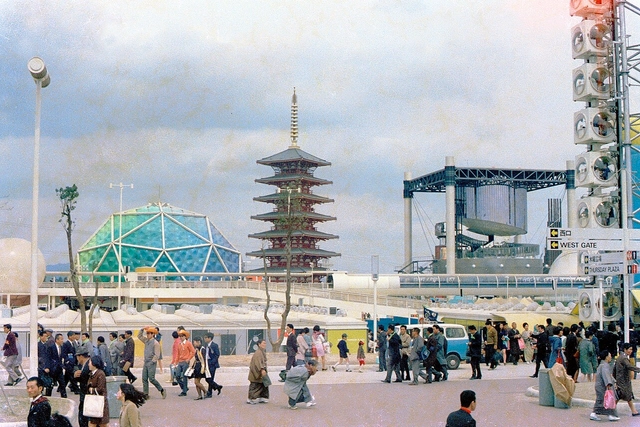
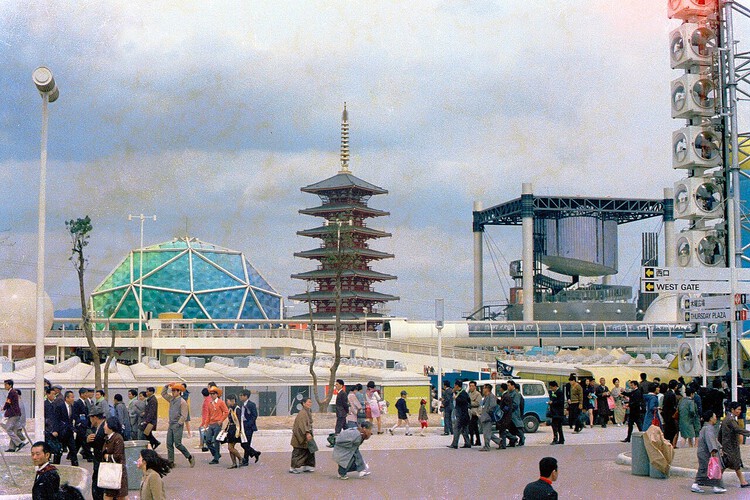
This year also marks a significant anniversary: the 55th year since the 1970 Osaka Expo, held under drastically different socio-economic conditions. Comparing these two expos—both hosted in the same city—offers a rare opportunity to reflect on how the rhetoric, curatorial themes, and architectural ambitions of world expos have evolved over time. From "Progress and Harmony for Mankind" in 1970 to "Designing Future Society for Our Lives" in 2025, the shift in thematic focus reveals changing global priorities. Meanwhile, the scale and nature of architectural involvement have also transformed, from the futuristic visions of Japanese Metabolism to a more internationally dispersed group of designers concerned with sustainability, technology, and civic engagement.

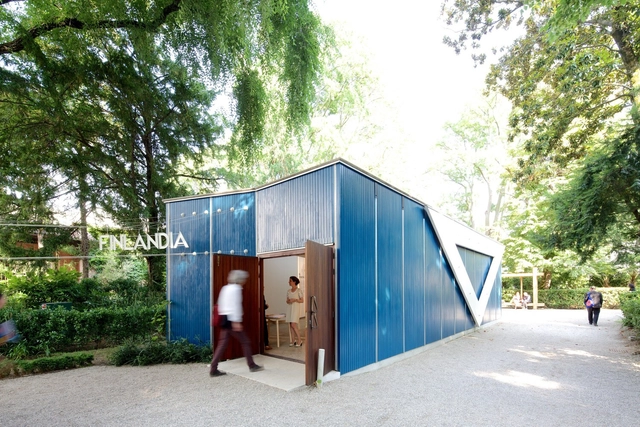
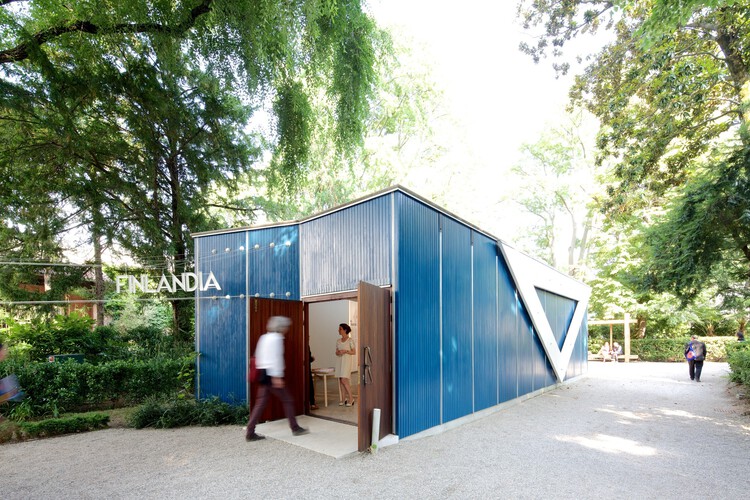
Tucked within the leafy confines of the Giardini della Biennale in Venice stands a structure modest in scale yet immense in quiet conviction: the Finland Pavilion, designed by Alvar and Elissa Aalto for the 1956 Venice Biennale. Unlike the monumental pavilions that surround it, Aalto's structure was conceived not as a permanent structure, but as a temporary exhibition space for a single exhibition season. And yet, nearly seventy years on, it remains—weathered, resilient, and quietly luminous.
When we speak of intelligence at the 2025 Venice Biennale, the main exhibition broadly categorizes it into three domains: natural, artificial, and collective. While much attention has been drawn to robotic performances, future-forward material experiments—such as Boonserm Premthada's elephant dung bricks, or Canada's display of mesmerizing picoplankton, one often overlooked yet critical form of collective intelligence lies in the act of archiving.
Several national pavilions showcase this collective intelligence through beautifully curated exhibitions—the Spanish Pavilion's witty play on scale, for instance, features meticulously crafted models that invite close reading and delight. These curated collections offer a snapshot of the present, and in some cases, gestures toward the future. But without critically engaging with the past, without documenting and making sense of our shared spatial and architectural knowledge, the potential of collective intelligence remains incomplete. Archiving is not simply an act of preservation; it is a generative tool for projecting new futures.
When we talk about the future intelligence of architecture, much of the historical effort has centered on pushing boundaries—challenging norms, exploring alternatives, and projecting bold visions of what architecture could become. The advent of modernism exemplified this approach: radical new materials and construction methods gave rise to a vastly reimagined architectural future. This momentum continues today, with research institutions and leading practices constantly exploring innovative techniques, materials, and systems of making.
Yet one method of imagining architectural futures often remains overlooked: the act of critically revisiting the past. Learning from, uncovering, and documenting lesser-known spatial and communal practices is just as essential. These quieter forms of knowledge—how spaces have been used, adapted, and inhabited—can reveal enduring insights that shape more grounded, culturally resonant futures. Rather than chasing novelty for novelty's sake, perhaps an equally meaningful path lies in building a cohesive architectural archive that bridges the past and future.
OMA has unveiled its latest exhibition design for "Christian Dior: Designer of Dreams" in Seoul, South Korea. Held at Dongdaemun Design Plaza (DDP), the exhibition marks the fifth collaboration between OMA and Dior. Previous designs include Dior: From Paris to the World at the Denver Art Museum (2018) and Dallas Museum of Art (2019), as well as Christian Dior: Designer of Dreams at the Museum of Contemporary Art Tokyo (2022). The Seoul exhibition presents over 80 years of Dior's creative history and the cultural heritage of Korea.
Axonometric drawing of the Granciclismo showroom (with Daniela Puppa), 1988. Image Courtesy of Archivio Franco Raggi
"Franco Raggi. Unstable Thoughts" (Franco Raggi. Pensieri Instabili) offers an in-depth exploration of the work of Italian architect, designer, and intellectual Franco Raggi. Curated by Marco Sammicheli and Francesca Pellicciari, the exhibition provides visitors with an experimental and immersive experience that traces Raggi's creative journey. Designed by the architecture studio Piovenefabi, the installation is hosted in the Design Platform space at the Museo del Design Italiano in Milan, a museum dedicated to key themes and figures in contemporary design. Held from February to April, the event is part of the prelude to the 24th edition of the Milan Triennale International Exhibition, titled Inequalities, which will run from May to November 2025.
In recent years, working from home has become increasingly common, creating a need for domestic spaces that accommodate both professional and personal life. This is especially true for artists, where the integration of living and working spaces is essential. Often, these spaces must also serve as areas for exhibiting artistic production, such as paintings, sculptures, ceramics, and more.
This fusion of work and living environments has influenced architectural and interior design trends, prioritizing flexibility, multifunctionality, and aesthetics that foster both creativity and comfort. Open-plan layouts, modular furniture, and adaptable lighting solutions are now key elements in designs that support the seamless coexistence of work and personal life.
Salone Satellite 2024. Image Courtesy of Salone del Mobile
The 2025 edition of Salone del Mobile.Milano has just announced its opening dates and events program. The 63rd edition is set to take place from April 8 to 13 at Fiera Milano, Rho. This year's event will bring together over 2,000 exhibitors from 37 countries, reinforcing its role as a strategic platform for the design industry. The fair will highlight industrial manufacturing, sustainable innovation, and emotional intelligence as key themes, aiming to shape the future of design.
French President Emmanuel Macron has announced a significant renovation plan for the Louvre, following concerns from the museum's director about the building's deteriorating condition. The project includes the creation of a new grand entrance and broader refurbishments across the historic site.
The renovation comes after a letter from Louvre director Laurence des Cars to the French Cultural Ministry highlighted serious maintenance issues affecting both visitors and staff. According to the letter, first published in Le Parisien, conditions inside the museum have become increasingly difficult, with visitors lacking space to rest, insufficient food and restroom facilities, and outdated signage in need of a complete redesign. The letter also pointed to climate control issues, describing a greenhouse effect inside the 36-year-old glass Pyramid designed by I.M. Pei, as well as hazardous temperature fluctuations and leaks in other parts of the building.
ane Drew and Maxwell Fry with a model of one of their many buildings for the Gold Coast, 1945. / Tropical Modernism - Architecture and Independence at the V&A South Kensington . Image Courtesy of RIBA
Reflecting on 2024, numerous architectural exhibitions have opened worldwide, addressing various themes, exhibition formats, and featured architects. Architectural design and architecture practice influence our daily lives in subtle and often unnoticed ways, where the end-users embrace built environments as they are. This reaction may arise from a combination of factors, such as a sense of powerlessness to enact significant change after a building is constructed or the experience of growing up in environments over which individuals had little or no agency in shaping. For these reasons, architectural exhibitions serve an essential purpose, offering society a chance to pause, reflect, and critically examine the myriad issues that surface during designing and building. These issues are often overlooked or need to be acknowledged, as practitioners may prioritize delivering projects within strict timelines over exploring more profound reflections.
In 2024, museums, galleries, and curators responded to the evolving challenges within the built environment with various approaches. Some exhibitions questioned the ethics of building materials and the practices behind supply chains, drawing attention to the broader implications of material choices. Others focused on documenting architectural movements worldwide, emphasizing their cultural and historical significance and the urgent need to preserve and adapt rather than replace them with entirely new builds. These efforts highlight the role of exhibitions in raising awareness about pressing issues while fostering a more critical dialogue about the architectural discipline.



The exhibitors' stands are one aspect of a trade fair. But what would the spectacle be without an informative supporting programme? And… which exhibition hall will you head for first when Heimtextil opens its doors in Frankfurt am Main from January 14 to 17, 2025? Admittedly: It's not easy to keep track of more than 2,900 exhibitors spread across 16 hall levels. But we have a few ideas. Use well-known brands as orientation anchors and be curious to discover new, young and innovative newcomers in the midst of it all. Mark your calendar for exciting talks and tours, and look out for certain signs on the stands. Which ones? We'll tell you now.
The redevelopment of the International Slavery Museum and Maritime Museum in Liverpool, UK, has been officially approved. Led by Feilden Clegg Bradley Studios, the project titled "Two Museums, One Vision" aims to transform the two venues on Liverpool's waterfront into engaging and welcoming spaces that properly address contemporary issues and reveal untold histories. aims to comprehensively narrate Britain's maritime history alongside its involvement in the transatlantic slave trade. Both venues are set to close early in 2025 for the redevelopment works to begin, according to the National Museums Liverpool. The completion date is scheduled for 2028.