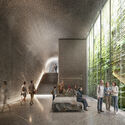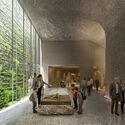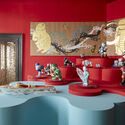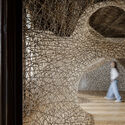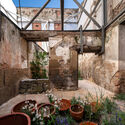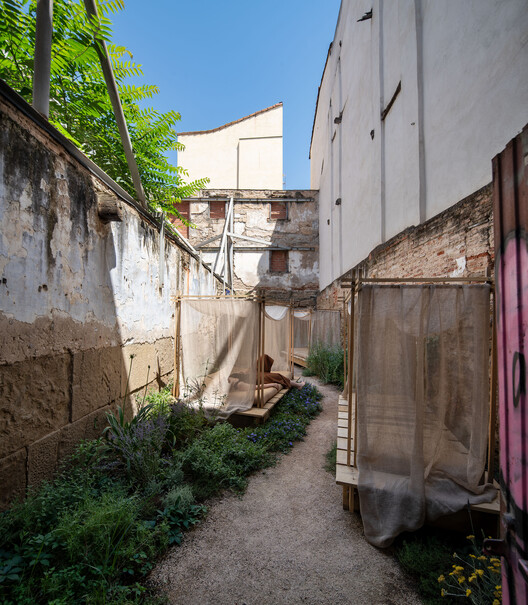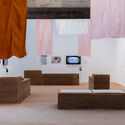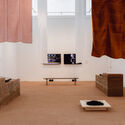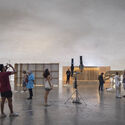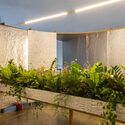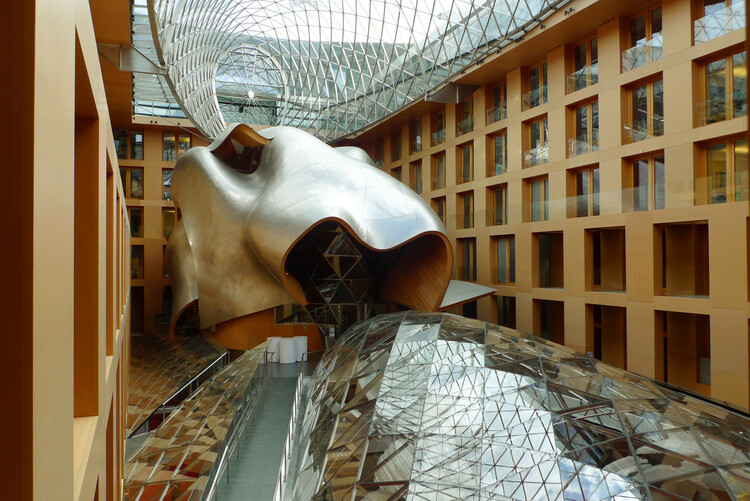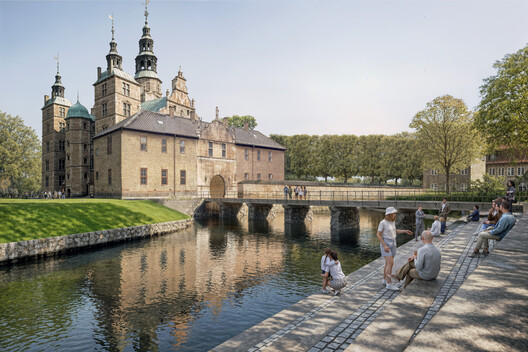
At Light + Building 2026 in Frankfurt, OPPLE Lighting marked its 30th anniversary with an architectural proposition rather than a retrospective. Presented under the theme "Hi Light!," the company unveiled Light as Cloud, a booth designed by OMA. The installation also served as the international debut platform for OLL, OPPLE's new high-end design brand. Rather than functioning as a conventional product display, the project positioned light as a spatial system—one that shapes architecture, circulation, and perception.
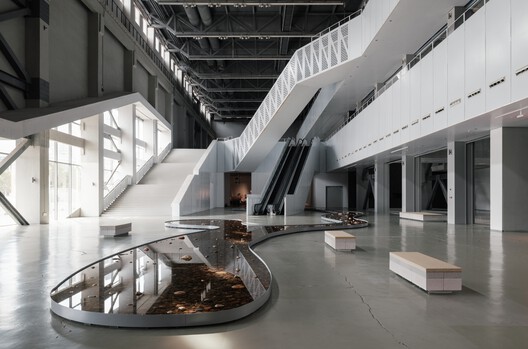
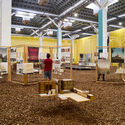
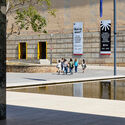
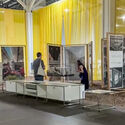
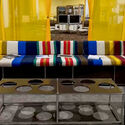
Far from the perception of the exhibition space as a sterile and untouchable, almost sacred place, the contemporary technology museum has emerged as a performative participant in the systems it seeks to document. The architecture of these institutions has become increasingly fluid and bold, often mirroring the velocity and complexity of the systems it houses. They operate as mediators between the human, the ecological, and the technological realms, transforming from encyclopedic warehouses into active educational engines. By spatializing complex scientific data through immersive rooms, these structures make the technological networks of our world accessible, engaging, and tangible.
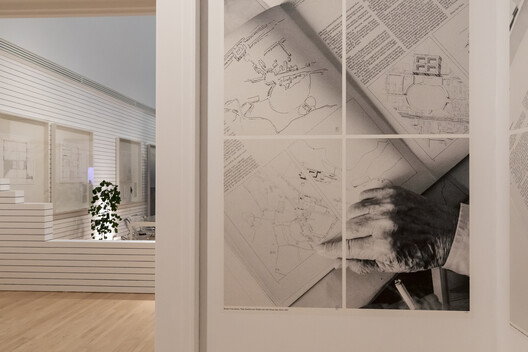
The Contemporary Art Museum of Kumamoto and the Shoei Yoh Archive at Kyushu University are honoring the late Japanese architect Shoei Yoh with an exhibition on view at the museum through March 9. The architect, who passed away on January 8, 2026, was born in Kumamoto in 1940 and, throughout his career, worked across product design, interiors, and architecture. He is recognized as a pioneer of contemporary timber construction and for his early contributions to computational design. The exhibition revisits his projects in Kumamoto through drawings and models from the Shoei Yoh Archive at Kyushu University.
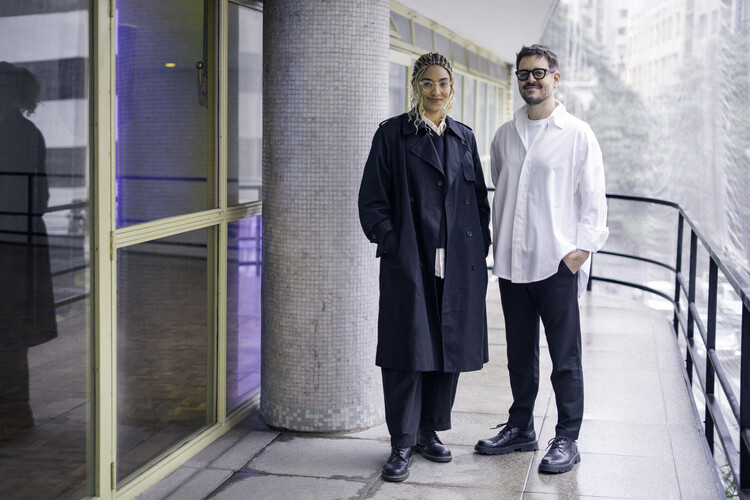
From 7 March to 31 May 2026, Brazilian architect Eduardo Longo's Casa Bola will open to the public for the first time. The futuristic ball-shaped house in São Paulo will host one of the two parts of the ABERTO5 exhibition, alongside a project on Faria Lima, a major avenue at the heart of the city featuring landmarks by architects such as Ruy Ohtake and Isay Weinfeld. Founded in 2022, ABERTO is an exhibition platform that promotes the encounter of architecture, art, and design in Brazil and internationally. After its first international exhibition at Maison La Roche in Paris, ABERTO returns to São Paulo for its fifth edition, presenting over 60 art and design pieces by 50 Brazilian and international artists. According to architect and curator Fernando Serapião, Casa Bola represents one of the most radical works of Brazilian architecture, challenging conventional domestic space and reflecting Eduardo Longo's experimental vision for housing.
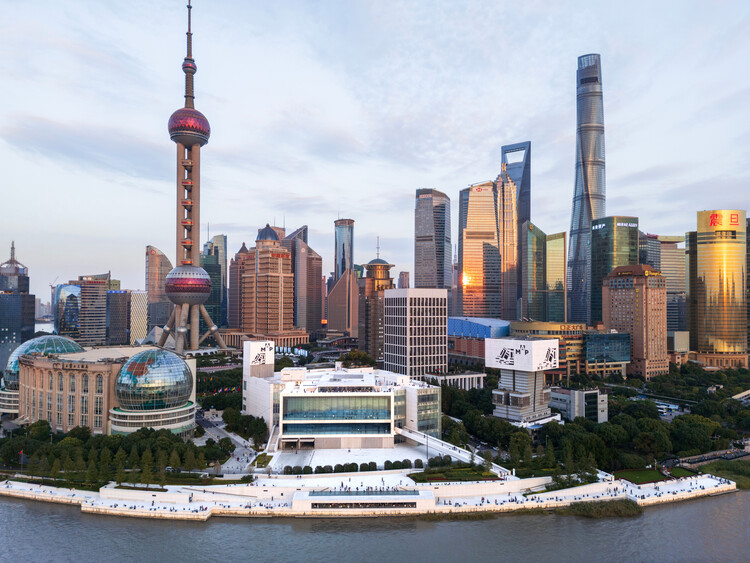
Does design guide usage, or does usage guide design? Students struggle to maintain focus, employees flinch under harsh lighting, and occupants withdraw from rigid spaces, often in response to environmental conditions that only become visible once a space is occupied. Light falling across a room, the resonance of sound, the texture of surfaces, or the rhythm of circulation can support focus, calm, or inspire creativity, but each can also inadvertently heighten stress and distraction. Architects and designers are exploring and questioning: how are design decisions informed, and whose knowledge is considered essential in shaping space?
The recently inaugurated exhibition matière en résonance ("resonant matter") brings together a wide range of models and a curated selection of photographs to present sauerbruch hutton's ongoing exploration of timber. The exhibition starts from the premise that while the age of concrete defined the twentieth century, the early twenty-first century has seen a worldwide resurgence of timber, a much older building material. Timber is presented as offering "a different version of modernity" and as the subject of renewed interest that reawakens long-standing collective imaginaries. Over more than two decades, the Berlin-based architecture practice has explored the possibilities of timber construction, from façade elements to load-bearing structures and modular systems. The exhibition reflects the results of this sustained investigation, reinforcing both technical innovation and the embodied qualities of timber across a diverse range of European contexts. The exhibition will be on view from 3 to 28 February 2026 at the Galerie d'Architecture de Paris.
Lu Wenyu—co-founder of Amateur Architecture Studio with Pritzker laureate Wang Shu—has shaped many of the practice's most emblematic works across China, including the Ningbo History Museum and the Xiangshan Campus of the China Academy of Art in Hangzhou. Often working outside the spotlight, her leadership is unmistakable in the discipline of execution and the roles she has assumed: in 2003, together with Wang Shu, she established the Architecture Department at the China Academy of Art, where she also serves as Director of the Sustainable Construction Center. Her practice and teaching form a reciprocal loop: research conducted in studios at the China Academy of Art continually folds back into construction strategies on site, while lessons learned in the field return to the classroom as material intelligence rather than abstract theory.
The Louisiana Museum of Modern Art will inaugurate, on January 22, 2026, the second exhibition in its Architecture Connecting series, focusing on the discipline's relationship with science and research across a wide range of fields, including biology, neuroscience, and anthropology. The first exhibition in the series, Living Structures (2024–2025), featured ecoLogicStudio, Atelier LUMA, and Jenny Sabin Studio, highlighting their work at the intersection of algorithms and nature and their development of methods that re-evaluate sustainable architecture and climate considerations. This second exhibition, titled Memoryscapes, explores the memories, stories, and traditions informing the working methodologies of Xu Tiantian's DnA_Design and Architecture (Beijing) and ATTA – Atelier Tsuyoshi Tane Architects (Paris).
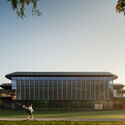
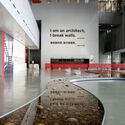
The High Museum of Art in Atlanta will present Isamu Noguchi: "I am not a designer" from April 10 to August 2, 2026. The exhibition examines the design work of Isamu Noguchi (1904–1988) across sculpture, furniture, lighting, landscape, and stage design, marking his first major design-focused retrospective in nearly 25 years. Following its presentation in Atlanta, the exhibition will travel to the Peabody Essex Museum in Salem, Massachusetts, from September 19, 2026, to January 3, 2027, and to the Memorial Art Gallery of the University of Rochester in spring 2027.
MVRDV and Delft University of Technology Release _Le Grand Puzzle_, an Urban Study of Marseille in the South of France. Image Courtesy of HÇläne Bossy, Manifesta
In architecture, most practices revolve around delivering projects to clients. Offices are shaped by deadlines, budgets, and clear briefs. While this structure produces buildings, it rarely leaves space for architects to question broader issues — about how we live, how cities are changing, or what the future demands of design. But alongside this production-focused system, a quieter movement has emerged: studios, collectives, and foundations that prioritize research, experimentation, and reflection. These are the architecture think tanks — spaces designed not to build immediately, but to think first.
The idea of a think tank is not new. Traditionally found in politics, economics, or science, think tanks bring together experts to study complex problems and propose solutions. In architecture, their rise reveals a tension at the heart of the discipline. If architecture is to remain socially and environmentally relevant, can it continue to rely only on client-driven practice? Or must it carve out space for slower, deeper inquiry?
The exhibition Coming Together: Reimagining America's Downtowns, held at Washington, D.C.'s National Building Museum, explores the transformations underway in the United States' downtowns and the ways communities have organized to shape alternative urban scenarios. Curated by Uwe S. Brandes, Professor at Georgetown University, and designed by Reddymade and MGMT., it is the first of three major exhibitions within the Museum's Future Cities initiative, an interdisciplinary project examining the city as a hub, catalyst, essential building block, and reflection of society. Coming Together features examples from more than 60 U.S. cities, both large and small, highlighting lessons learned and opportunities embraced in the wake of the COVID-19 pandemic as communities adapt to lasting changes in work, housing, mobility, entertainment, and recreation. The exhibition is currently open to the public and will remain on view through Fall 2026.
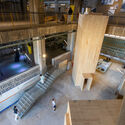
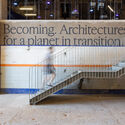
'Architecture of Possibility: Zaha Hadid Architects' at MOCAUP Shenzhen. December 2025 - April 2026. Image Courtesy of MOCAUP
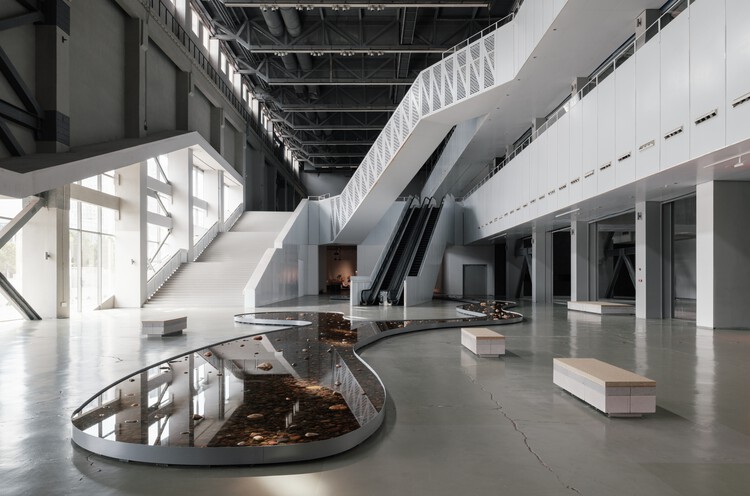
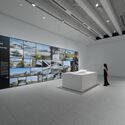
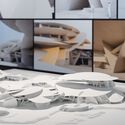
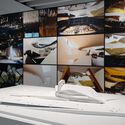
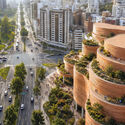
"Architecture of Possibility: Zaha Hadid Architects" at the Museum of Contemporary Art and Urban Planning (MOCAUP) in Shenzhen, China, presents a comprehensive overview of the evolution of Zaha Hadid Architects' work over recent decades. On view until April 10, 2026, the exhibition is structured through chronological and thematic narratives that highlight the studio's multidisciplinary research and design methodologies. The exhibition, now open to the public, showcases the office's work in the Shenzhen area and its involvement with new Artificial Intelligence technologies. Particular emphasis is placed on the integration of artificial intelligence (AI), immersive and interactive design tools, and virtual environments, which together form an expanding digital design ecosystem.
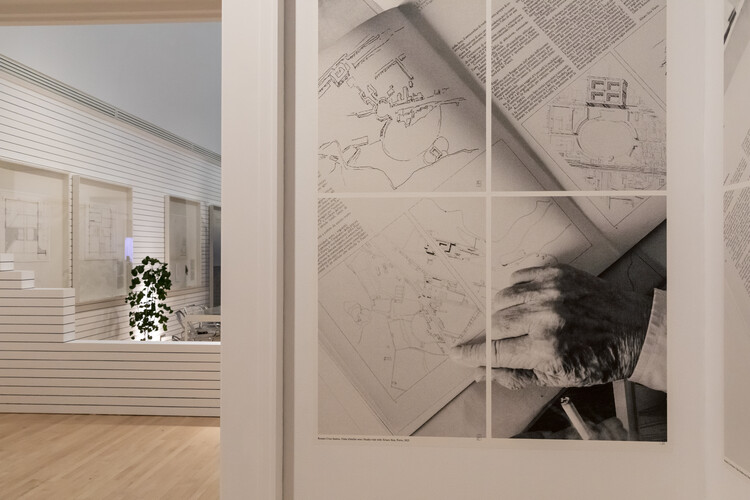
The 8th edition of the Lisbon Architecture Triennale is scheduled to take place in the autumn of 2028. As in previous editions, the curatorial process begins three years in advance, allowing time to fully develop the project and build on the work of earlier Triennales. The 7th edition, curated by Ann-Sofi Rönnskog and John Palmesino, founders of Territorial Agency, ran from October 2 to December 8, 2025. It was structured around the question How heavy is a city?, proposing an understanding of cities not as fixed objects but as dynamic systems extending beyond urban boundaries into the atmosphere, oceans, and deep time. This approach was explored through three main exhibitions, Fluxes, Spectres, and Lighter, alongside a wider set of initiatives. With the 7th edition concluded, the Triennale has announced Portuguese architect and academic Joaquim Moreno as Chief Curator of the upcoming edition, responsible for developing a new curatorial project for the event.
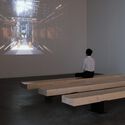
The Canadian Centre for Architecture (CCA) recently launched a new research project and institutional collaboration with M+ in Hong Kong titled How Modern: Biographies of Architecture in China 1949–1979. The project unfolds through an exhibition presented in the CCA's Main Galleries from 20 November 2025 to 5 April 2026, a series of commissioned films and oral history videos by artist Wang Tuo, online editorial content, public programming, and a companion book co-published by the CCA and M BOOKS. This collection of content seeks to reframe architectural histories of modernism in the first three decades of the People's Republic of China, revealing how design operated under shifting ideologies and socioeconomic pressures through the perspectives and experiences of architects, institutions, and residents. The project aligns with the CCA's ongoing interest in producing new readings of modern architecture across different sociopolitical contexts and geographical frameworks, including Architecture in Uniform: Designing and Building for the Second World War (2011) and Building a new New World: Amerikanizm in Russian Architecture (2020).
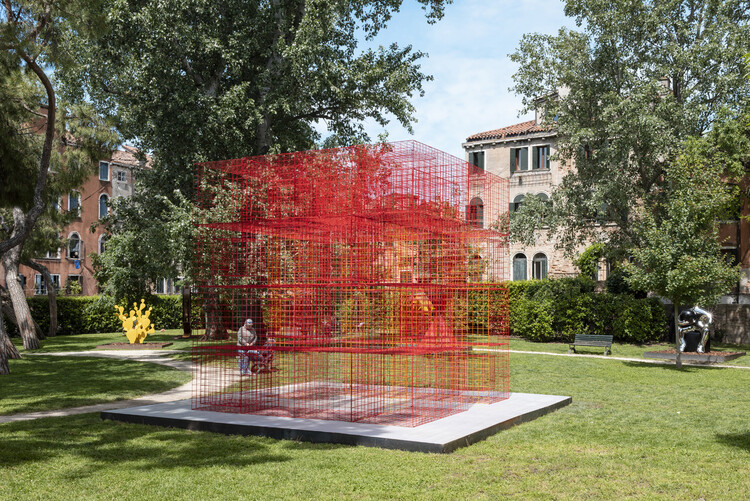
The European Cultural Centre (ECC) has announced the winners of the ECCAwards 2025, selected from participants of the seventh edition of Time Space Existence and unveiled during the exhibition's Closing Day on 23 November 2025 in Venice. Bringing together 207 practices from more than 52 countries, this year's edition highlighted a broad spectrum of architectural and design approaches responding to the themes of Repair, Regenerate, and Reuse. The awards recognise four projects that stood out for their originality, execution, narrative clarity, and forward-looking engagement with questions of sustainability, community, and the future of the built environment.