1. ArchDaily
  2. Landscape Architecture

Landscape Architecture: The Latest Architecture and News

WEISS/MANFREDI Reveals Updated Designs for La Brea Tar Pits Transformation in Los Angeles

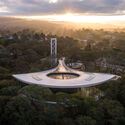
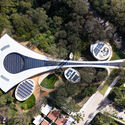
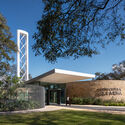
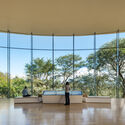
New renderings released by WEISS/MANFREDI reveal updated plans for the ongoing transformation of the La Brea Tar Pits in Los Angeles, a comprehensive redesign that integrates the museum, landscape, and active excavation areas into a continuous public and research-oriented campus. Alongside the design update, the Natural History Museums of Los Angeles County (NHM) has announced the creation of the Samuel Oschin Global Center for Ice Age Research, a new initiative supported by the Samuel Oschin Family Foundation, which advances the site's long-term redevelopment. The transformation project is led by WEISS/MANFREDI as design lead for the museum and park, with Gruen Associates serving as executive architect and landscape architect, and Kossmanndejong (KDJ) responsible for exhibition design. Fundraising efforts are ongoing, with the project positioned for completion ahead of the 2028 Olympic Games in Los Angeles.

WEISS/MANFREDI Reveals Updated Designs for La Brea Tar Pits Transformation in Los Angeles - Image 1 of 4WEISS/MANFREDI Reveals Updated Designs for La Brea Tar Pits Transformation in Los Angeles - Image 2 of 4WEISS/MANFREDI Reveals Updated Designs for La Brea Tar Pits Transformation in Los Angeles - Image 3 of 4WEISS/MANFREDI Reveals Updated Designs for La Brea Tar Pits Transformation in Los Angeles - Image 4 of 4WEISS/MANFREDI Reveals Updated Designs for La Brea Tar Pits Transformation in Los Angeles - More Images+ 6

World Wetlands Day 2026: Integrating Traditional Knowledge for Climate Resilience

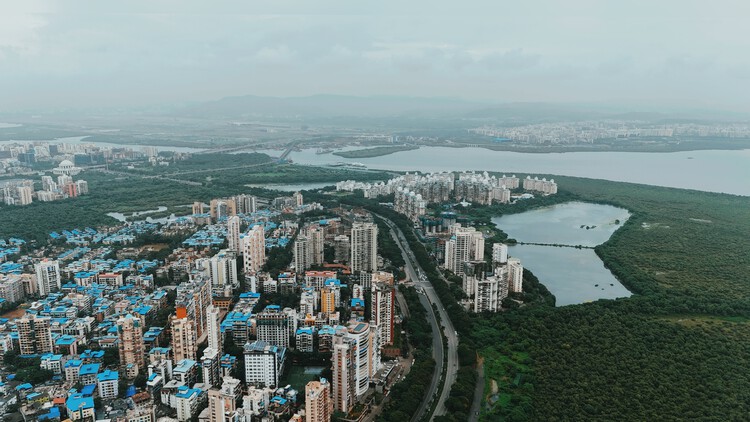
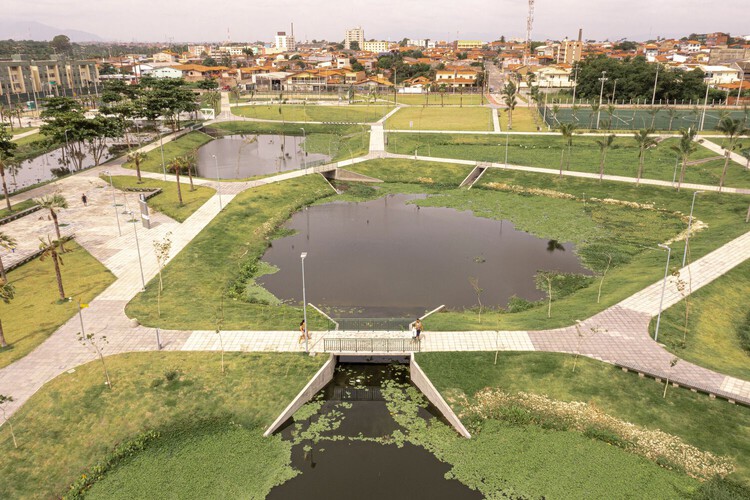
Observed annually on February 2, World Wetlands Day marks the adoption of the Ramsar Convention in 1971 and provides an international framework for recognizing the role of wetlands in environmental protection and sustainable development. The 2026 edition is held under the theme "Wetlands and traditional knowledge: Celebrating cultural heritage," drawing attention to the long-standing relationships between wetland ecosystems and the cultural practices, knowledge systems, and governance structures developed by communities over centuries. The theme highlights how inherited ecological knowledge, often embedded in rituals, seasonal calendars, land-use practices, and spatial organization, has shaped resilient interactions between human settlements and water-based landscapes.

World Wetlands Day 2026: Integrating Traditional Knowledge for Climate Resilience - Image 1 of 4World Wetlands Day 2026: Integrating Traditional Knowledge for Climate Resilience - Image 2 of 4World Wetlands Day 2026: Integrating Traditional Knowledge for Climate Resilience - Image 3 of 4World Wetlands Day 2026: Integrating Traditional Knowledge for Climate Resilience - Image 4 of 4World Wetlands Day 2026: Integrating Traditional Knowledge for Climate Resilience - More Images+ 5

3XN’s Sydney Fish Market to Open as Blackwattle Bay’s First Completed Project

Set to open on January 19, 2026, the Sydney Fish Market marks the first completed project within the broader renewal of Blackwattle Bay on Sydney's inner harbour. Designed by 3XN in collaboration with BVN and Aspect Studios, and delivered by Multiplex, the purpose-built facility replaces the former market with a contemporary structure that combines an operating wholesale fish market with retail, dining, and publicly accessible waterfront spaces. Positioned approximately one mile southwest of Sydney's central business district, the project reframes one of the world's largest fish markets by volume as both working infrastructure and a civic destination.
3XN’s Sydney Fish Market to Open as Blackwattle Bay’s First Completed Project - Imagen 1 de 43XN’s Sydney Fish Market to Open as Blackwattle Bay’s First Completed Project - Imagen 2 de 43XN’s Sydney Fish Market to Open as Blackwattle Bay’s First Completed Project - Imagen 3 de 43XN’s Sydney Fish Market to Open as Blackwattle Bay’s First Completed Project - Imagen 4 de 43XN’s Sydney Fish Market to Open as Blackwattle Bay’s First Completed Project - More Images+ 10

One Roof, Many Disciplines: UC Berkeley’s Summer Programs Offer Interdisciplinary Learning

 | Sponsored Content

Today, interdisciplinary learning and exchange are more important than ever in addressing increasingly complex environmental, social, and urban challenges.

Each summer, the University of California, Berkeley's College of Environmental Design (CED) becomes an intensive laboratory for architectural, landscape, and urban exploration. Through two complementary programs—Design + Innovation for Sustainable Cities (DISC) and the Summer Institutes—Berkeley offers an immersive curriculum grounded in disciplinary rigor, intentional exchange, and a shared institutional culture. Together, these programs reflect CED's long-standing multidisciplinary structure, with architecture, landscape architecture, city planning, and urban design thriving and collaborating under one roof.


Tashiding: Beyond Earth and Sky The Gardens of Douglas & Tsognie Hamilton

Visited by up to 500 guests annually, this number promises to increase with additional garden club registrations and publicity. Stunning photographs and the book’s elegant design take readers on an exquisite visual tour of the property and its development, including the origins and culture of its owners—Douglas Hamilton former president and chairman of The Walters Museum in Maryland and Tsognie Wangmo, the eldest child of the last king of Sikkim, shortly before the Himalayan royal kingdom was taken over by India.

Media Matters in Landscape Architecture

Media Matters in Landscape Architecture makes a unique contribution to landscape architectural praxis for its explicit framing of “environmental media” in terms of its dual meaning within our discipline. In the sciences, environmental media are the materials of the natural world—soils, air, water, plants, microbes. Within STS and media studies, “environmental media” refers broadly to the relationship between environmental issues—such as pollution, biodiversity loss, climate change—and the creation and application of the tools, interfaces, and images, through which information about these issues is conveyed. This book focuses on how these two distinct understandings of environmental media coalesce within the discipline of landscape architecture and other spatial design fields. Authors from a wide range of disciplines—landscape architecture, media studies, science and technology studies, history of science, engineering, ecology, and architecture—examine how the creation and use of data, images, and models act as the mediums through which a particular understanding of “environment” or “landscape” arises. This framing of environmental media emphasizes the relationships among various design media and the specific material and social environments within which they operate.

Farewell to Masters: Remembering the Architects We Lost in 2025

Every year brings new ideas, projects, and shifts in architectural culture, but it also marks the loss of voices that have shaped the discipline across decades. Architecture moves forward, but it also advances through absence. When figures who helped articulate its language and its ambitions disappear, they leave behind more than completed works or influential texts. Their absence becomes a threshold, a moment in which the discipline pauses to understand what remains, what evolves, and what continues to guide us. These moments of loss remind us that architecture is a long, collective construction, carried not only by those shaping the present but also by those whose visions continue to orient how we think about cities and landscapes.

The architects and thinkers we lost in 2025 came from remarkably different worlds, yet the questions that shaped their work often intersected. Some approached the city through identity, symbolism, and historical continuity, seeking to ground the built environment in cultural memory. Others interpreted it through engineering precision, ecological systems, or radical experimentation, expanding what architecture could be and how it could be experienced. Their work spans contexts as diverse as postwar Britain, rapidly urbanizing China, Central European avant-gardes, and the evolving cultural institutions of Berlin and New York. Together, they form a spectrum of responses that defined, and continue to define, architectural culture over the last half-century, revealing the multiplicity of ways in which architecture can engage with society, technology, and the environment.

Farewell to Masters: Remembering the Architects We Lost in 2025 - Image 1 of 4Farewell to Masters: Remembering the Architects We Lost in 2025 - Image 2 of 4Farewell to Masters: Remembering the Architects We Lost in 2025 - Image 3 of 4Farewell to Masters: Remembering the Architects We Lost in 2025 - Image 4 of 4Farewell to Masters: Remembering the Architects We Lost in 2025 - More Images+ 33

World Building of The Year and Interior of The Year revealed at World Architecture Festival 2025

Subscriber Access | 

The Holy Redeemer Church and Community Centre of Las Chumberas by Fernando Menis in La Laguna, Spain has been declared the World Building of the Year at the 2025 World Architecture Festival (WAF).

The ultimate accolades of World Building of the Year supported by GROHE, World Interior of the Year, Future Project of the Year and Landscape of the Year were announced today as hundreds of architects from across the world convened at a grand finale Gala Dinner at Miami Beach Convention Center in Florida. A host of Special Prizes, including the American Beauty Prize supported by the Royal Fine Art Commission Trust, were also announced at the closing event to celebrate the eighteenth edition of the festival. The announcement follows the final day of WAF, in which prize winners across all 43 categories have been competing for the winning titles.

BIG Wins International Competition to Design the New Hamburg State Opera on HafenCity’s Waterfront

BIG – Bjarke Ingels Group has been selected as the winner of the international competition to design the new Hamburg State Opera, a major cultural project planned for the Baakenhöft peninsula in HafenCity, Hamburg, Germany. The building will consolidate the city's opera and ballet companies under one roof, introducing new performance spaces, production facilities, and public amenities along the Elbe. The project replaces the mid-20th-century opera house on Dammtorstraße, responding to the city's call for a venue that reflects contemporary standards in acoustics, stagecraft, and audience experience.

BIG Wins International Competition to Design the New Hamburg State Opera on HafenCity’s Waterfront - Image 1 of 4BIG Wins International Competition to Design the New Hamburg State Opera on HafenCity’s Waterfront - Image 2 of 4BIG Wins International Competition to Design the New Hamburg State Opera on HafenCity’s Waterfront - Image 3 of 4BIG Wins International Competition to Design the New Hamburg State Opera on HafenCity’s Waterfront - Image 4 of 4BIG Wins International Competition to Design the New Hamburg State Opera on HafenCity’s Waterfront - More Images+ 2

Mexican Architect Mario Schjetnan and Grupo de Diseño Urbano Awarded the 2025 Oberlander Prize for Landscape Architecture

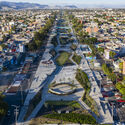
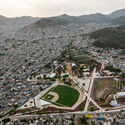
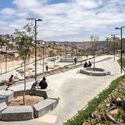
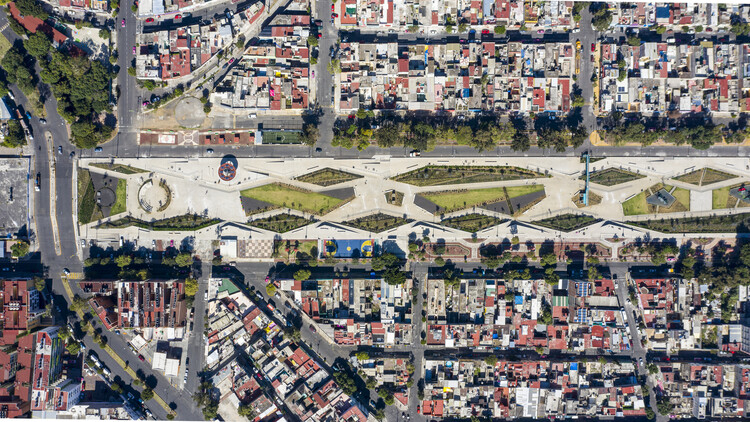
The biennial Cornelia Hahn Oberlander International Landscape Architecture Prize was established to increase the visibility, understanding, appreciation, and dialogue around landscape architecture. The creation of the Oberlander Prize began in 2014, and the most recent laureate was landscape architect Kongjian Yu, the pioneer of the "Sponge City" concept. This year, The Cultural Landscape Foundation (TCLF) announced that Mexico City-based landscape architect Mario Schjetnan and his firm Grupo de Diseño Urbano (GDU) are the recipients of the 2025 Oberlander Prize. According to TCLF, Schjetnan belongs to a generation of landscape architects, architects, and urbanists who became aware of the environmental impacts of urban development and their consequences for life, the planet, and its inhabitants. He and the GDU team are the first Latin Americans to be awarded the Oberlander Prize laureate.

Mexican Architect Mario Schjetnan and Grupo de Diseño Urbano Awarded the 2025 Oberlander Prize for Landscape Architecture - Image 1 of 4Mexican Architect Mario Schjetnan and Grupo de Diseño Urbano Awarded the 2025 Oberlander Prize for Landscape Architecture - Image 2 of 4Mexican Architect Mario Schjetnan and Grupo de Diseño Urbano Awarded the 2025 Oberlander Prize for Landscape Architecture - Image 3 of 4Mexican Architect Mario Schjetnan and Grupo de Diseño Urbano Awarded the 2025 Oberlander Prize for Landscape Architecture - Image 4 of 4Mexican Architect Mario Schjetnan and Grupo de Diseño Urbano Awarded the 2025 Oberlander Prize for Landscape Architecture - More Images+ 7