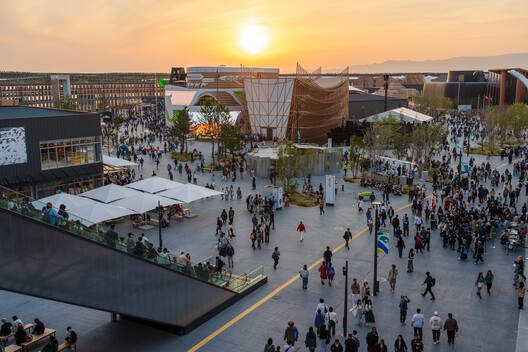
Bahrain's architectural participations in the international exhibitions have gained increasing global recognition, marked most recently by major awards at Expo 2025 Osaka and the Venice Architecture Biennale. These milestones reflect a broader trajectory in which the country's design culture, rooted in climatic intelligence and cultural continuity, has become a prominent voice in international conversations on context-driven architecture.
This growing visibility builds upon a deep architectural lineage. Bahrain's identity has long been shaped by its position as a maritime crossroads of the Arabian Gulf, where the legacy of pearling settlements and the compact urban fabric of Muharraq and Manama reveal a dialogue between local traditions and global exchange. Today, that dialogue evolves through practices that merge preservation with experimentation, translating heritage into a contemporary architectural language that is both place-specific and forward-looking.

Responding to the realities of rising temperatures, humidity, and shifting environmental conditions, architects and institutions in Bahrain are rethinking design through the lens of adaptation. By drawing from vernacular techniques, such as courtyard typologies, shading systems, and material tactility, while engaging in global collaborations, they are crafting a sustainable architectural language that bridges tradition and innovation. This duality underpins Bahrain's recent achievements at international exhibitions and continues to shape its local regeneration efforts in Muharraq, where heritage-led urban revitalization demonstrates how preservation can serve as a framework for contemporary design.
Related Article
"It's the Moment to Open Up the Practice": In Conversation with Andrea Faraguna, Curator of the Bahrain PavilionConnecting Seas: Bahrain Pavilion at Expo 2025 Osaka, by Lina Ghotmeh
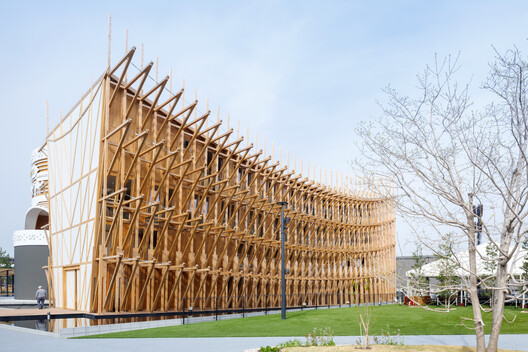
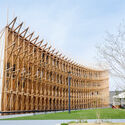
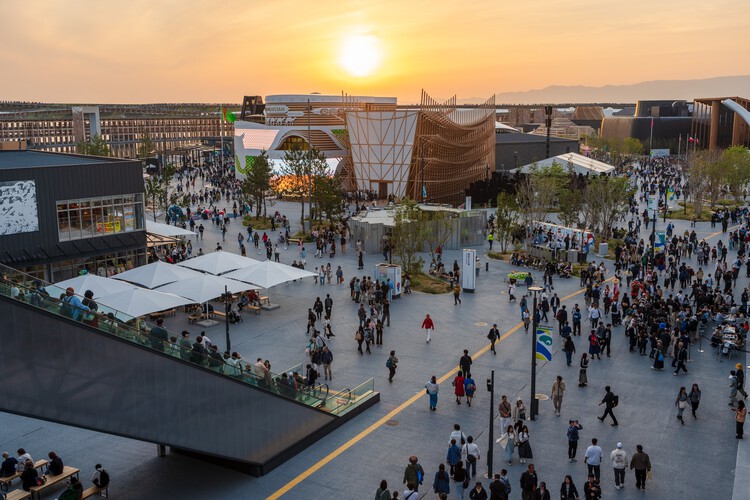
Bahrain's national pavilion for Expo 2025 Osaka, titled "Connecting Seas", received the Gold Award for Best Architecture and Landscape in the under 1,500 square meter category. Designed by Lina Ghotmeh, the pavilion references the country's maritime history through a structure composed of timber and aluminum. Its circular form and open courtyard create shaded communal spaces, while the design incorporates passive cooling techniques to reduce energy consumption. Inside, works by local and international artists and designers, including Shepherd Studio, Sissel Tolaas, Hassan Hujairi, and La Méduse, create an immersive environment that connects environmental narratives with cultural identity.
Heatwave: Bahrain at the Venice Architecture Biennale 2025, by Andrea Faraguna

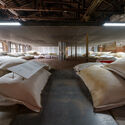
At the Venice Architecture Biennale 2025, Bahrain received the Golden Lion for Best National Participation for its installation "Heatwave", curated by Andrea Faraguna. The pavilion explores climate adaptation in the Gulf through a site-specific installation that combines geothermal wells, solar chimneys, and modular structures. By harnessing passive cooling methods, the project proposes architectural strategies that respond to extreme temperatures without relying on energy-intensive mechanical systems. The installation drew attention for its experimental yet practical approach to environmental design, opening a conversation about scalable applications in urban contexts across the region.
As part of ArchDaily's coverage of the Biennale, an interview with curator Andrea Faraguna offered further insight into the design intent behind "Heatwave." He emphasized how the pavilion translates traditional climatic knowledge into an architectural language that is adaptable to present-day environmental challenges. The conversation highlighted the value of international exhibitions as spaces for testing and communicating strategies that can inform future development across the Gulf.
Heritage and Urban Regeneration
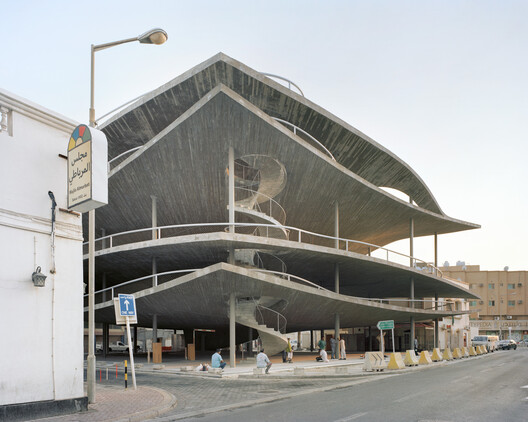
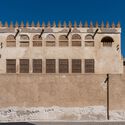
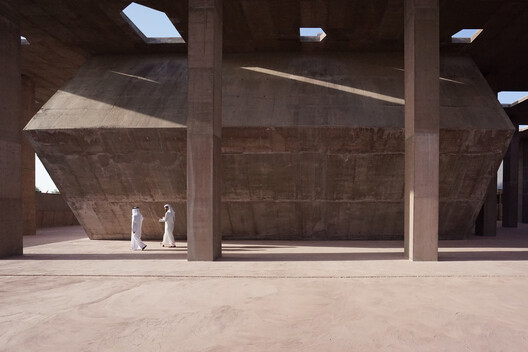
Beyond its presence at international exhibitions, Bahrain's architectural landscape is also being shaped by local preservation and regeneration projects. The historic city of Muharraq, a former pearling hub, is at the center of these efforts. Recognized as a UNESCO World Heritage Site in 2012, the Pearling Path project aims to preserve and reinterpret the city's traditional urban fabric. Led by the Bahrain Authority for Culture and Antiquities under Shaikha Mai bint Mohammed Al Khalifa and Noura Al Sayeh, the initiative integrates heritage conservation with contemporary architectural interventions.
Buildings and public spaces along the path have been restored or reimagined by architects, including Anne Holtrop, Valerio Olgiati, and Christian Kerez. These interventions maintain the scale and materiality of the existing urban fabric while introducing new spatial experiences. By combining traditional techniques with modern design strategies, the project prioritizes community use and cultural continuity. It has also contributed to a broader conversation on how adaptive reuse and preservation can act as catalysts for urban revitalization.
Bahrain's recent architectural trajectory is defined by a series of interconnected themes that bridge local context and global conversations. At the forefront is a focus on climate adaptation. Both the Expo pavilion and the Biennale installation point to a wider shift toward low-energy strategies rooted in vernacular intelligence, from courtyard typologies to wind towers and shaded gathering spaces. Materiality reinforces this approach. Timber elements inspired by traditional dhow construction and open structural systems encourage natural airflow, linking environmental performance with cultural memory. Together, these strategies illustrate how Bahrain's architectural practice is engaging climate, heritage, and experimentation within a coherent and evolving framework.