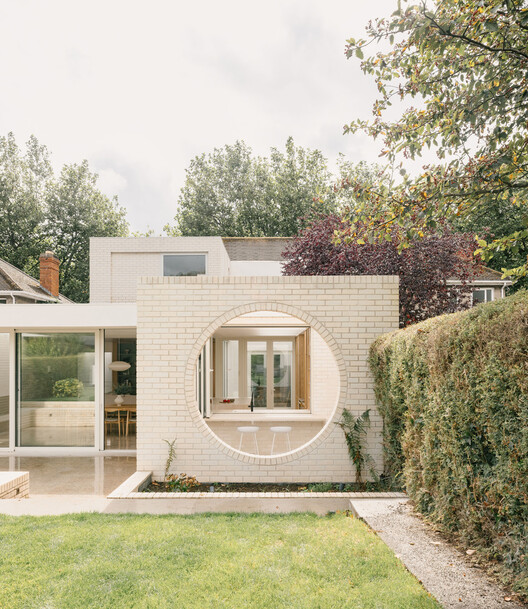
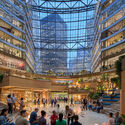
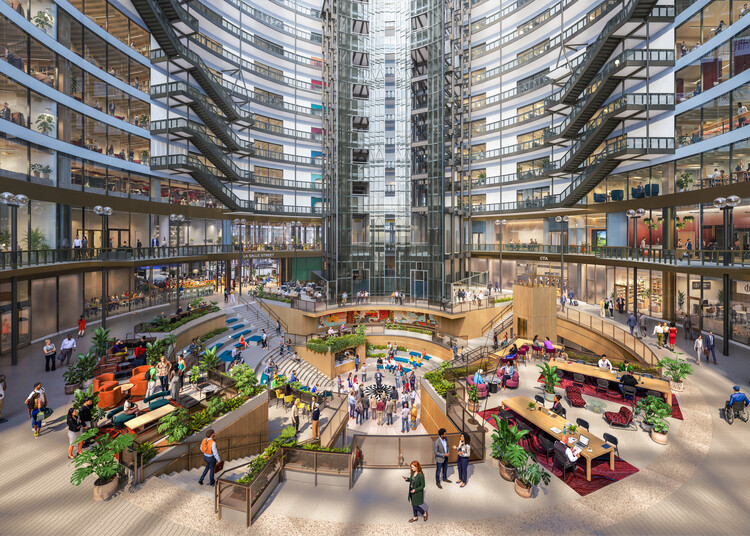
On October 25, 2025, the Fondation Cartier Pour l'Art Contemporain will open its new premises to the public with an inaugural exhibition drawn from its own Collection, entitled Exposition Générale. Located in the heart of Paris, the new space occupies a Haussmannian building that once housed the Grands Magasins du Louvre, recently reimagined by Jean Nouvel. Conceived as a dynamic architecture with five mobile platforms, the building was designed to expand the possibilities of a traditional exhibition venue. These mechanisms aim to accommodate all forms of visual expression, including photography, cinema, the performing arts, science, and craft, within a space that resonates with the urban life of Paris and engages with questions of urban planning and ecology. Within these parameters, the inaugural exhibition brings together more than 600 works by over 100 artists in a contemporary scenography designed by Formafantasma.
Uzbekistan's architectural and artistic heritage reflects a layered history shaped by centuries of cultural exchange along the Silk Road. From the monumental ensembles of Samarkand and Bukhara to the scientific and educational institutions of the Timurid era, architecture has long been a vessel of identity and knowledge across the region. In the twentieth century, Tashkent emerged as a new urban laboratory, where modernist ideals met local craft traditions and environmental pragmatism. The city's reconstruction following the 1966 earthquake became a defining moment, fusing Soviet urbanism with regional aesthetics to produce a distinctly Central Asian expression of modernity, one that translated cultural continuity into concrete, glass, and light.

September marks a shift in seasonality worldwide, bringing with it a renewed focus on cultural and architectural events that encourage reflection on contemporary global challenges. This week's major news highlighted international exhibitions and design initiatives addressing questions of resilience, urban transformation, and collective futures, alongside new projects dedicated to preserving both cultural and natural heritage. Across continents, biennales, urban developments, and restoration efforts are shaping a broader conversation on how architecture and design can foster adaptation, memory, and coexistence in rapidly changing environments.
A blast destroyed 40% of the city of Beirut on August 4, 2020. Five years after the port explosions, the UNESCO Director-General visited Lebanon to assess the institution's work in the capital city. UNESCO's efforts have been based on the recognition that the explosion destroyed numerous buildings and historic neighborhoods that were home to a community of cultural professionals, leaving a void in the city's cultural landscape and economy. The organization mobilized international efforts to restore, reactivate, and safeguard Beirut's heritage buildings, schools, museums, and cultural institutions, seeking to provide a comprehensive response to protect the city's cultural fabric. During the visit in September, new restoration and reconstruction programs were announced, including the rehabilitation of the Mar Mikhael train station and Beirut's Grand Theatre, as well as support for cultural industries in Tyre and Baalbek.
The North Gate of Taipei, also known as Beimen, stands not only as a reminder of the city's complex history but also as a witness to the changing urban landscape around it, and its shifting attitudes towards the urban spaces bordering heritage buildings. Initially a Chinese imperial frontier, spared from demolition during the Japanese colonial dominion, crowded by overpasses and highways in the postwar modernization efforts, it has recently regained its prominent status through the development of the plaza that now frames it. The gate's resilience through shifting urban priorities and architectural policies tells a story of heritage preservation not only through the built form, but also through the open spaces framing it.
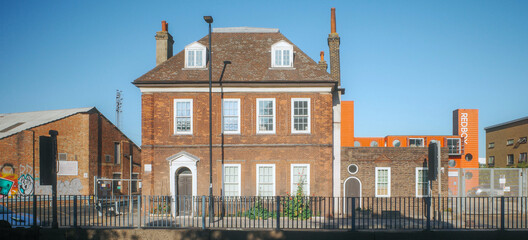
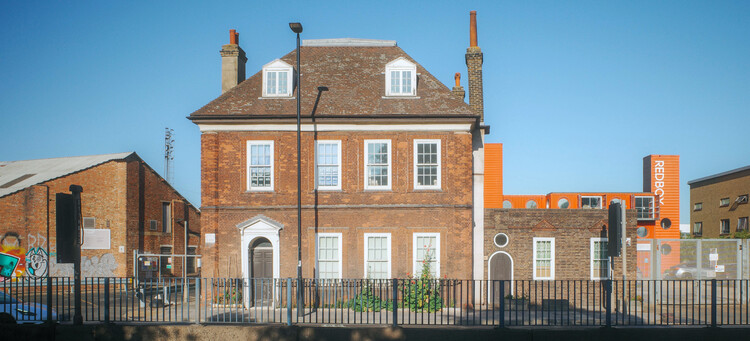
October will see the opening of Ibraaz, a new cultural space reimagined by Architect-in-Residence Sumayya Vally in central London. The initiative is led by the Kamel Lazaar Foundation and aims to highlight art, culture, and ideas from the Global Majority: communities of African, Asian, Indigenous, and Latin American heritage that together represent most of the world's population. The project seeks to bridge local and global conversations by creating a "world of many worlds" within a single venue: a six-floor, 10,000-square-foot building that has undergone multiple transformations, from synagogue to residence, club, and now cultural center.
Revitalisation of Historic Esna, Egypt. Image Courtesy of Takween ICD
Among the seven winners of this year's 16th Aga Khan Award for Architecture was theRevitalisation of Historic Esna in southern Egypt. Led by the Cairo-based firm Takween, the project was far more than a simple restoration. It was a comprehensive renewal effort that combined deep community engagement with the preservation of both tangible and intangible heritage. By creating thousands of jobs and restoring the historic center, the initiative offered a powerful alternative to demolition. The Aga Khan Trust lauded it as a 'replicable model for sustainable development'.
Al-Saa'a Convent after restoration. Image Courtesy of UNESCO / Abdullah Rashid
From 2014 to 2019, Daesh (ISIS) occupied and controlled territory in Iraq and Syria, including the northern city of Mosul. UNESCO estimates that 80% of Mosul's historic town was destroyed during this period, which led to one of the most ambitious reconstruction campaigns in recent decades: "Revive the Spirit of Mosul." Since 2019, UNESCO has carried out large-scale efforts to rebuild the city's landscapes and monuments, reconstructing three religious and cultural landmarks and 124 heritage houses, along with other buildings located in the Old City. The program was structured around three pillars: restoring significant heritage, promoting the return of cultural life, and strengthening spaces for education. On September 1, 2025, Iraq's Prime Minister inaugurated three major landmarks: the Al-Nouri Mosque complex, Al-Saa'a Convent, and Al-Tahera Church, marking the completion of the restoration project.
Comayagua is a city in central Honduras nestled in a valley with the same name. It holds a pivotal place in the nation's history, having served as its colonial and early republican capital for over 300 years. However, when the capital was relocated to Tegucigalpa in 1880, Comayagua's urban expansion halted, inadvertently preserving an ample and rich heritage. By the early 1990s, much of the city's architectural legacy was in a state of disrepair. Recognizing the urgent need to protect it, the governments of Honduras and Spain initiated a collaborative effort, with the objective of initiating a long-term restoration program to create a policy framework that would ensure the preservation of the city's historic center for years to come.
Lina Ghotmeh — Architecture has recently unveiled images of a project to transform a historic residence in Bukhara, Uzbekistan, into a "21st-century cultural destination." The proposal envisions a museum dedicated to the ideas and influence of Jadidism, a Muslim reform movement that advocated for the modernization of education across Central Asia during the late 19th and early 20th centuries.
The project was commissioned by the Uzbekistan Art and Culture Development Foundation (ACDF), established in 2017 to preserve, promote, and nurture the country's heritage, arts, and culture, while integrating them into the global art world and cultural landscape. Scheduled to open to the public in 2027, the museum is part of the ACDF's broader efforts to create landmark cultural institutions that engage audiences worldwide.
The Uzbekistan Art and Culture Development Foundation (ACDF) has announced the transformation of a 1912 industrial building in Tashkent into the Centre for Contemporary Arts (CCA), set to become the first permanent institution dedicated to contemporary art and research in Central Asia. Designed by the French architecture practice Studio KO, led by Karl Fournier and Olivier Marty, the project integrates preservation of the city's industrialheritage with a new cultural identity for the historic site. The building, originally designed by Wilhelm Heizelmann, known for the Treasury Chamber, was constructed as a diesel station and depot for Tashkent's first tram line. After decades of serving the city's electricity network, the structure was transferred to the Foundation in 2019 as part of Uzbekistan's long-term cultural development strategy. Under the leadership of Gayane Umerova, the project now represents a major step in shaping a contemporary cultural infrastructure for the region.
In historic Stone Town, the main city in Zanzibar, Tanzania, the story of one cinema building and its imminent restoration is reflective of the city's history and the narrative of cinemas generally. The early twentieth century saw the advent of cinema construction, peaking in mid-century, before declining against competition with multiplexes and home television. While many were demolished or irreparably altered, many also lay abandoned, like time capsules for a bygone era. They are a snapshot of the architecture styles and methods of their time, acting as a reminder of their role in their communities. Restoring and adapting a cinema like the Majestic is a recognition of its heritage and community value.
Italy's rich history, evident in its monuments and cities, has created a unique context for architectural renovation. Italian architects often embrace this heritage by engaging in a dialogue between old and new, rather than aiming for a complete transformation. This approach intentionally avoids an imitative style, instead using contemporary materials like steel, glass, and new wood to frame and highlight the existing historic stone and brickwork. This juxtaposition turns the original materials from simple structural elements into featured decorative and narrative ones. The result is a layered experience where the history of the space remains visible, ensuring it is preserved rather than erased by the renovation.
During the 47th session of the World Heritage Committee, held from July 6 to 16, 2025, at UNESCO Headquarters in Paris, France, 26 new properties were inscribed on the World Heritage List. In addition to examining new nominations, the Committee reviewed the conservation and management of existing sites, addressed the impact of climate change on heritage, and approved the extension of two existing sites to create new transboundary natural parks. According to UNESCO, the session placed the work of local communities at the center of safeguarding policies, reinforced efforts to preserve African heritage, and acknowledged the growing recognition of remembrance sites and the protection of humanity's shared prehistory. These 26 properties, located across 26 countries, now benefit from the highest level of international heritage protection.
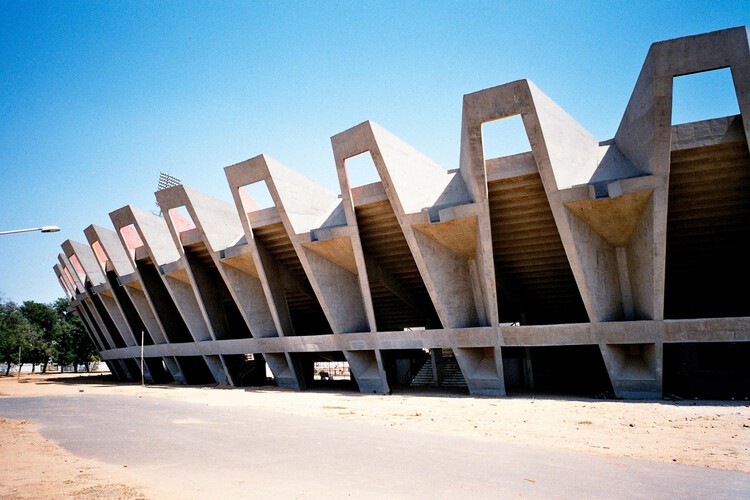
In February 2023, the governor of Kagawa Prefecture, Japan, announced the planned demolition of the Kagawa Prefectural Gymnasium, designed by Pritzker Prize-winning architect Kenzo Tange. Discussion surrounding its fate dates back to its permanent closure in 2014, after a roof leak caused structural problems in the ceiling boards. Since then, several organizations have worked to save the building, including a petition by the World Monuments Fund and an effort by a promotional council to nominate it as a UNESCO World Cultural Heritage site in 2021. Despite these initiatives, on August 7, 2025, the Kagawa Prefectural Government officially announced a public competitive bidding process to select a contractor for the demolition, something the Former Kagawa Prefectural Gymnasium Regeneration Committee is determined to prevent.
The Sardarapat Memorial and the architect's original sketch. Image via risraelyan.com/en/, courtesy of Aram Ghanalanyan
In a time when much global architecture can feel disconnected from local identity, the work of Rafayel Israelyan stands out for being rooted in place, culture, and memory. Working in mid-20th-century Armenia, Israelyan created architecture that is more than functional or monumental; it is culturally resilient. His use of traditional Armenian motifs, materials, and symbolic forms gave his designs a second life after the fall of the Soviet Union, when many buildings across post-Soviet states were abandoned or demolished. Armenia, by contrast, preserved many of his works, likely because their design approach not only served a specific moment in time, but also told a larger story. Long before concepts like sustainability or critical regionalism became popular, Israelyan understood that buildings gain meaning and endurance when they reflect the specific identity and characteristics of their place.

In today's architectural discourse, masterplanning is increasingly recognized as a means to reconcile growth with long-term social, cultural, and environmental priorities. Beyond organizing buildings and infrastructure, these large-scale proposals aim to regenerate urban fabrics, adapt historic or underutilized sites, and establish frameworks for inclusive and resilient communities. Submitted by the ArchDaily community, the projects featured in this edition of Unbuilt Architecture highlight how masterplans can respond to contemporary challenges while preparing cities for an uncertain future.
Spanning diverse geographies, from Europe to the Middle East and the Americas, the selected projects reinterpret industrial complexes, cultural sites, and residential neighborhoods through strategies that prioritize sustainability, mobility, and collective identity. Many share a focus on regenerative design: reopening historic canals, creating climate-adapted public spaces, and introducing green corridors and community hubs to reconnect people with their environments. Together, they showcase how masterplanning is evolving into a critical tool for rethinking how cities grow, adapt, and sustain civic life.