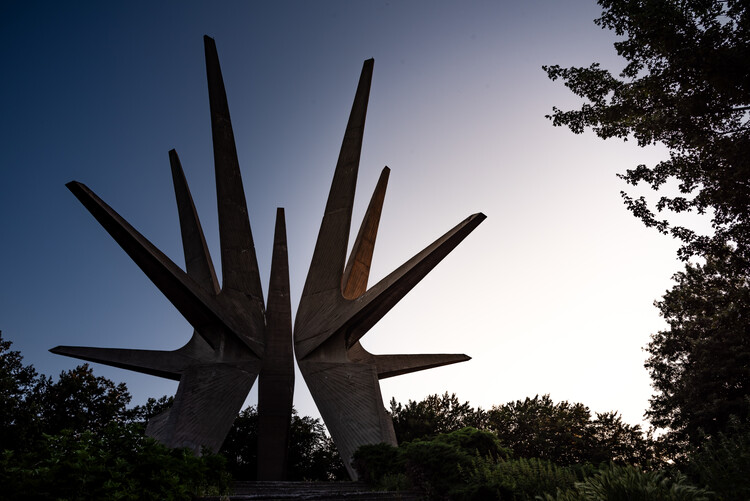
A building still being adjusted, repaired, and debated is declared World Heritage. Another, equally influential, must survive five centuries before anyone considers protecting it. This is not an anomaly in the heritage system; it is the system. Across the world, architecture does not age at the same pace because time itself is not neutral. It is cultural, political, and deeply uneven. What we call "heritage" is not simply old architecture; it is architecture that has reached the right moment in a particular place.
The European Commission and the Fundació Mies van der Rohe have announced the seven finalist projects for the 2026 European Union Prize for Contemporary Architecture - Mies van der Rohe Awards, supported by the European Union's Creative Europe programme. The selection follows the announcement of 410 nominated works in November and a shortlist of 40 projects revealed in early January. Of the seven finalists, five have been selected in the Architecture category and two in the Emerging category. According to the jury chaired by Smiljan Radić, the finalist projects are exemplary contributions to the future of European architecture, demonstrating how the discipline can respond simultaneously to specific local conditions and broader social, cultural, and environmental challenges. The selected works range from interventions in former industrial sites, small villages, and peripheral urban areas to carefully calibrated projects within larger cities. Across these varied contexts, the projects show how architecture can transform overlooked or ordinary settings into inclusive, high-quality spaces for living, learning, and social exchange.
The potential of existing buildings to shape cities and communities in flux through reuse and adaptation is the key focus of HouseEurope! and their activism: addressing the pressing challenge across much of Europe, where it is often easier, cheaper, and faster to demolish buildings than to renovate. For decades, construction policies, industrial practices, and market systems have favored new development, often undervaluing the cultural, social, and environmental significance of existing structures. For their work advocating systemic change in architecture, HouseEurope! received the 2025 OBEL Award under the theme "Ready Made." In a conversation with ArchDaily, collective members of HouseEurope! Alina Kolar and Olaf Grawert discussed the organization's approach to architecture, policy, and collective action.
Bratislava, the rapidly developing capital of Slovakia—located in the heart of Europe—continues to strengthen its presence on the European architectural map. As a growing hub of contemporary design—already home to projects by Zaha Hadid Architects, Massimiliano & Doriana Fuksas, Stefano Boeri, Studio Egret West, and Snøhetta—the city has now reached another important milestone: an international architectural and urban design competition has been announced to shape the future of Zváračák, one of the last major brownfield sites near the city center.
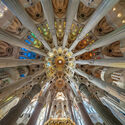
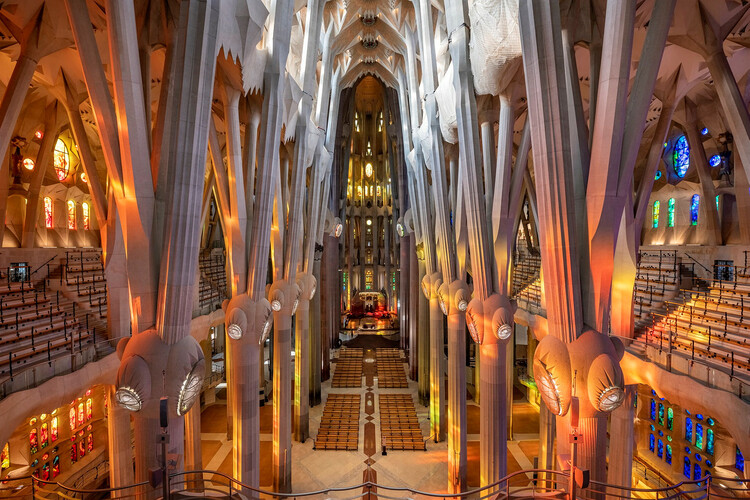
La Sagrada Familia by Antoni Gaudi. Image by Maksim Sokolov, via Wikimedia Commons, License CC BY-SA 4.0
As 2025 concludes, we look ahead to 2026, a year scheduled to deliver a diverse range of significant architectural projects across the world. The year is particularly notable for the completion of new infrastructure and cultural buildings, including long-term projects. Europe will be in the spotlight of the new year with the Milano Cortina 2026 Winter Olympics. This event will feature projects such as the Olympic Village by SOM and the Winter Olympics Arena by David Chipperfield Architects. Also in Milan, BIG is set to complete construction of the City Wave project as part of a new business district in the city. At the same time, after more than 140 years of its establishment, the architects around the world will also be watching for the long-awaited completion of Antoni Gaudí's La Sagrada Familia in Barcelona, announced for 2026.
The Zváračák brownfield area close to the Bratislava city center
One of the last large brownfields in Bratislava has been awaiting its transformation for years. Today, a new phase is beginning for the area known as "Zváračák," located on Račianska Street near the Bratislava's city center.
The European Capital of Culture (ECoC) initiative was launched in 1985 and has, to date, been awarded to more than 60 cities across Europe. It is designed to celebrate and promote cultural diversity on the continent, strengthen European citizens' sense of belonging to a shared cultural space, and foster culture's contribution to urban development. In practice, the designation has proven to be a catalyst for urban regeneration, tourism growth, the strengthening of cities' international profiles, and the improvement of how they are perceived by their own residents. European Capitals of Culture are formally designated four years before the title year, allowing time to plan, prepare, and embed the program within a long-term cultural strategy, establish European partnerships, and ensure that appropriate infrastructure is in place. In 2025, the European Capitals of Culture are the German city of Chemnitz and the Slovenian city of Nova Gorica. For 2026, the designated cities are Oulu in Finland and Trenčín in Slovakia.
For a long time, architecture was understood as an essentially individual activity, dependent on the figure of a creative genius and centered on the ability to solve problems through drawing. Over time, this image began to fade. The protagonism once concentrated in a few names reached its peak during the era of the starchitects and gradually became distributed among offices, collectives, and multidisciplinary teams. Today, architects are expanding their boundaries into other fields such as gastronomy, music, design, and the corporate world, applying spatial thinking to address challenges of various kinds. As social, environmental, and political crises deepen, the role of the architect continues to evolve from a solitary author to a mediator, activist, and collective agent of transformation. This shift reflects an ethical awakening and a recognition that design, regulation, and care are inseparable dimensions of contemporary practice.
The Holcim Foundation for Sustainable Construction has announced the Grand Prize Winners of the 2025 Holcim Awards, selecting one project from each global region to represent the most impactful approaches to sustainable design in this cycle. This edition marks the introduction of the Grand Prize format, replacing the previous tiered distinctions to better acknowledge diverse regional contexts and avoid hierarchical rankings. Evaluated by juries chaired by Sou Fujimoto (Asia Pacific), Kjetil Trædal Thorsen (Europe), Sandra Barclay (Latin America), Lina Ghotmeh (Middle East and Africa), and Jeanne Gang (North America), the winning projects reflect the Foundation's principles of holistic, transformational, and transferable design.
The second edition of the Ammodo Architecture Award has recognized 26 recipients for their contributions to socially and ecologically responsible design. Selected from 168 submissions spanning over 60 countries, the laureates represent a wide range of practices, from established offices to emerging collectives and community-led initiatives. Each recipient receives a grant ranging from €10,000 to €150,000 to support the continued development of their projects. Beyond recognition and financial support, the Ammodo Architecture initiative also functions as a knowledge platform, connecting awardees across regions and facilitating the exchange of ideas on key themes identified by the advisory committee.
The EUmies Awards are organized annually by the Fundació Mies van der Rohe and the European Commission, with the support of the European Union's Creative Europe Programme. Based on the principle that "architecture is not merely a technical or aesthetic matter, but a cultural, environmental, and democratic issue," this 19th cycle of the Prize brings together 410 works from 40 countries and 143 regions across Europe. Beyond recognizing contemporary architecture projects, the Awards also aim to reflect European values such as cultural diversity, sustainability, democracy, and solidarity. This year, most nominated works (23%) are residential projects, including both collective and single-family housing, followed by cultural (13%) and educational (12%) programs. The selection shows a balance between transformations of existing buildings (44%) and new construction (56%), while 12% of the nominees are transnational works and 33% of the studios are 10 years old or younger, underscoring the growing visibility of emerging practices.
21st Europe, a Copenhagen-based think tank founded by former SPACE10 creative director Kaave Pour, has introduced its second major blueprint, Continent of Play. Developed in collaboration with design and architecture studioSpacon, the proposal reimagines playgrounds as vital civic infrastructure, positioning them alongside museums, transport hubs, and energy grids as defining spaces for Europe's future.
All materials come from somewhere, embedded in a chain of extraction, supply, production, and disposal that, depending on its scale, leaves more or less significant marks on the environment. In architecture, we usually approach this trajectory through the lens of materials' circularity, considering how they can re-enter production cycles rather than become waste. Yet, broadening our view to unexpected places reveals parallel systems where by-products from one industry become resources for another. This approach has found fertile ground in organic waste transformed into biomaterials, with one of the most recent examples being the work of Fahrenheit 180º. Through their installation, "From the Tagus to the Tile", they repurpose oyster shells initially discarded by food systems to create a reinterpretation of Lisbon's iconic tiles.
The selection was made by a jury composed of Melike Altınışık, Hans-Petter Bjørnådal, Eleni-Stefania Kalapoda, and Adrian Yap, who evaluated submissions from a range of scales and typologies. The winning projects will be presented in the exhibition "40 Young European Architects with New Visions," opening on December 5th, 2025, at The European Centre, Contemporary Space Athens. A special yearbook publication by Metropolitan Arts Press will also document the selected works, making them accessible to international audiences. Submissions are now open for the 2025–2026 edition, with a deadline of December 15, 2025.