The Commonwealth Association of Architects (CAA) is pleased to launch its 2026 Awards Programme, inviting architects from across the Commonwealth to submit work that demonstrates significant contributions to addressing contemporary global challenges including climate change, rapid urbanisation, biodiversity loss, and social inequality. Aligned with the CAA's charter objectives to maximise the contribution by architects to the well-being of society, the awards programme recognises projects and individuals whose work advances the United Nations Sustainable Development Goals (SDGs) while demonstrating exceptional design quality and measurable impact.
NPO Aoyama Design Forum (ADF), a non-profit organization, has announced the ADF Design Award 2026, celebrating architecture that does more than please the eye—it aims to make a meaningful impact on society, culture, and the environment. The award aims to recognize outstanding works that challenge existing conventions, demonstrate innovative thinking, and enrich people's lives through visionary, responsible design. Architects and designers around the world are invited to submit their proposals on a unique platform that fosters connections, promotes the exchange of ideas, and encourages meaningful cross-cultural collaboration.
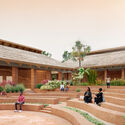
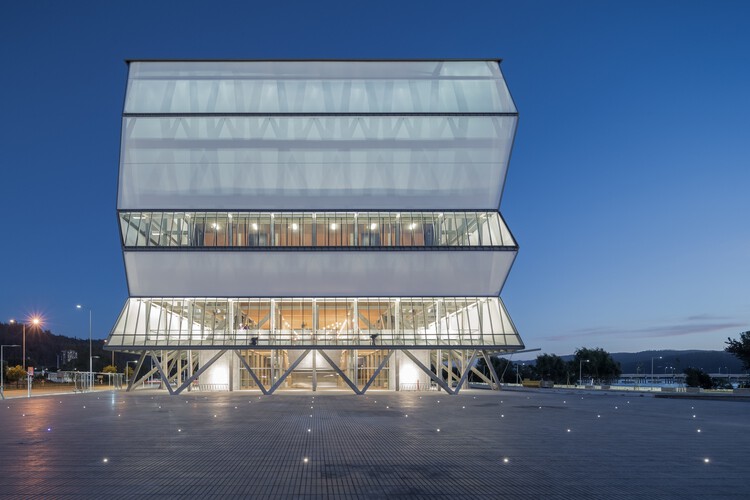
Biblioteca dos Saberes by Kéré Architecture. Aerial view. Render. Image Courtesy of Kéré Architecture
Amid ongoing global discussions on climate adaptation and resilient urban development brought into sharper focus by the outcomes of COP30, this week's architecture news illustrates how cities worldwide are rethinking their built environments. From Venice, where the 19th Architecture Biennale concluded with debates on material use and long-term cultural impact, to international awards foregrounding regenerative and socially responsive design, the conversation around architecture is increasingly intertwined with planetary priorities. Major urban interventions, from Thessaloniki's seafront redevelopment and Rio de Janeiro's new public library, to Abu Dhabi's Natural History Museum and a civic stadium in Birmingham, demonstrate how multiple cities are addressing mobility, heritage, density, and climate resilience. Additional plans, such as Mantua's ecological urban strategy, Utrecht's elevated landscape above transport networks, and Amsterdam Airport Schiphol's redesigned landside mobility system, further reflect a transition toward integrated, people-centred urban frameworks that prioritize environmental performance, public space, and long-term territorial stewardship.
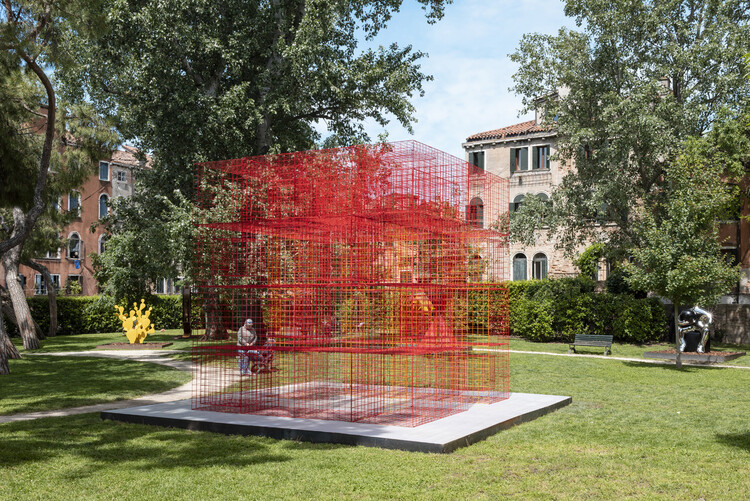
The European Cultural Centre (ECC) has announced the winners of the ECCAwards 2025, selected from participants of the seventh edition of Time Space Existence and unveiled during the exhibition's Closing Day on 23 November 2025 in Venice. Bringing together 207 practices from more than 52 countries, this year's edition highlighted a broad spectrum of architectural and design approaches responding to the themes of Repair, Regenerate, and Reuse. The awards recognise four projects that stood out for their originality, execution, narrative clarity, and forward-looking engagement with questions of sustainability, community, and the future of the built environment.
Can academic projects explore new directions and contribute to public discourse on global and local issues? The 2025 Politecnico di Torino Architecture Students Award aimed to address these questions, showcasing how architectural research, training, and experimentation can be integrated into a school curriculum.

The Pritzker Architecture Prize has released a special video honoring Liu Jiakun, the 54th Laureate of the award. Filmed at the Louvre Abu Dhabi, the ceremony celebrates Liu's architectural vision, characterized by a deep engagement with civic life, cultural continuity, and the human condition. The film captures moments from the event and offers insight into Liu's broader practice, emphasizing architecture's capacity to reconcile tradition and modernity while addressing social and environmental challenges. The release of the ceremony video marks the culmination of the 47th edition of the Pritzker Architecture Prize. The 2026 Laureate will be announced in March, continuing the award's legacy of recognizing architects whose work advances the discipline and its role in shaping human experience.
About a month after the closing of Expo 2025 Osaka, the designs and constructions presented at the world's fair remain as a legacy. While the Bahrain Pavilion, designed by Lina Ghotmeh Architecture, drew particular attention this year for receiving double recognition, it was one among many awarded projects. During the awards ceremony held on the penultimate night of the event, a total of 45 awards were presented among 165 participating countries. The Official Participant Awards are granted according to pavilion size and type, recognizing excellence in Architecture and Landscape (for self-built pavilions only), External Design (for module pavilions only), Exhibition Design, Theme Development, and Sustainability. The recipients were selected by an international jury of nine experts who visited all national and thematic pavilions during two evaluation sessions in May and October 2025. The following overview presents all 45 pavilions distinguished in the five categories of the Official Participant Awards.
The EUmies Awards are organized annually by the Fundació Mies van der Rohe and the European Commission, with the support of the European Union's Creative Europe Programme. Based on the principle that "architecture is not merely a technical or aesthetic matter, but a cultural, environmental, and democratic issue," this 19th cycle of the Prize brings together 410 works from 40 countries and 143 regions across Europe. Beyond recognizing contemporary architecture projects, the Awards also aim to reflect European values such as cultural diversity, sustainability, democracy, and solidarity. This year, most nominated works (23%) are residential projects, including both collective and single-family housing, followed by cultural (13%) and educational (12%) programs. The selection shows a balance between transformations of existing buildings (44%) and new construction (56%), while 12% of the nominees are transnational works and 33% of the studios are 10 years old or younger, underscoring the growing visibility of emerging practices.
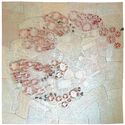
Two views, by Marie-Louise Raue. Image Courtesy of The Architecture Drawing Prize
The eighth edition of The Architecture Drawing Prize has revealed its 15 winners, following a radical restructuring of its judging criteria to reflect the evolving landscape of architectural representation. For the first time, the competition assessed all entries together, rather than by category, embracing the growing influence of digital and AI-assisted tools in the creative process.
Launched in 2017 and co-curated by Make Architects, Sir John Soane's Museum, and the World Architecture Festival (WAF), the Prize celebrates the art and skill of architectural drawing across multiple modes of creation. Sponsored by Iris Ceramica Group and supported by ArchDaily as media partner, this year's edition attracted a record number of more than 200 submissions from around the world. Drawings were evaluated for their technical skill, originality, and capacity to convey architectural ideas through diverse techniques, ranging from traditional hand drawings to complex hybrid compositions.
Bahrain's architectural participations in the international exhibitions have gained increasing global recognition, marked most recently by major awards at Expo 2025 Osaka and the Venice Architecture Biennale. These milestones reflect a broader trajectory in which the country's design culture, rooted in climatic intelligence and cultural continuity, has become a prominent voice in international conversations on context-driven architecture.
This growing visibility builds upon a deep architectural lineage. Bahrain's identity has long been shaped by its position as a maritime crossroads of the Arabian Gulf, where the legacy of pearling settlements and the compact urban fabric of Muharraq and Manama reveal a dialogue between local traditions and global exchange. Today, that dialogue evolves through practices that merge preservation with experimentation, translating heritage into a contemporary architectural language that is both place-specific and forward-looking.
The Créateurs Design Awards (CDA) announced Xu Tiantian, Founder and Principal Architect of DnA_Design and Architecture, as the recipient of the 2026 edition of Le Prix Charlotte Perriand. The award celebrates architects whose work embodies innovation, social responsibility, and a deep engagement with community and place. The architect was recognized for her transformative work bridging urban and rural communities through innovative design interventions. Her approach to architecture was acknowledged as a tool for cultural preservation and rural revitalization, making her an exemplary recipient of this honor, previously awarded to prominent architects such as Frida Escobedo, Jeanne Gang, Kazuyo Sejima, and Ryue Nishizawa.
ReSa Architects. Photo by Antonin Kanant and Revati Shah
The Lisbon Architecture Triennale announced as the winner of the fifth edition of the Début Award the Indian office ReSa Architects. The office is known for its collective approach to spatial practice, treating architecture as a process of rewriting social and bodily relations. In previous editions, the award recognized the work Vão (Brazil, 2022), Bonell+Dòriga (Spain, 2019), Umwelt (Chile, 2016) and Jimenez Lai, from Bureau Spectacular (USA, 2013).
The announcement was made on October 4, during the opening festivities of the Triennale, which in this edition awarded the Lifetime Achievement Award to the architect, Yasmeen Lari from Pakistan, the first person from the global south to receive the honor. Lari joins Marina Tabassum (2022 award winner), Denise Scott-Brown (2019), the duo Lacaton & Vassal (2016), Kenneth Frampton (2013), Álvaro Siza (2010), and Vittorio Gregotti (2007).