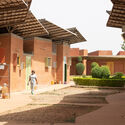
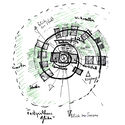
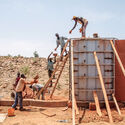
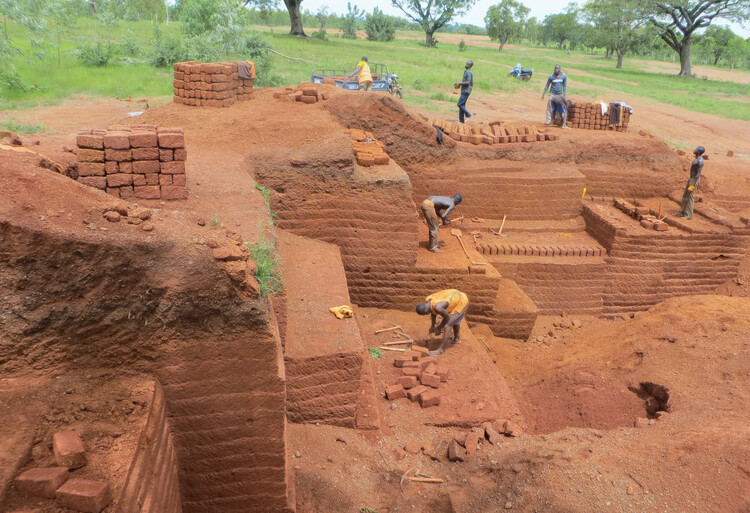
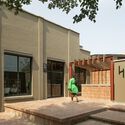
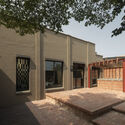
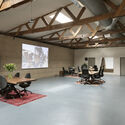
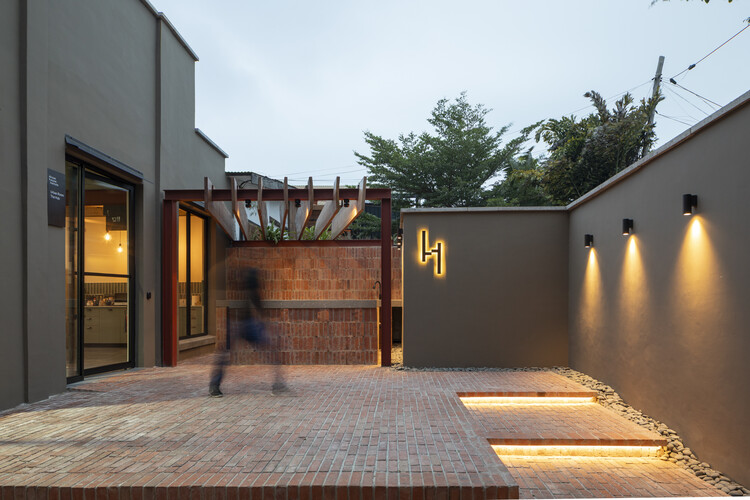
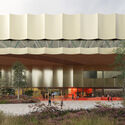
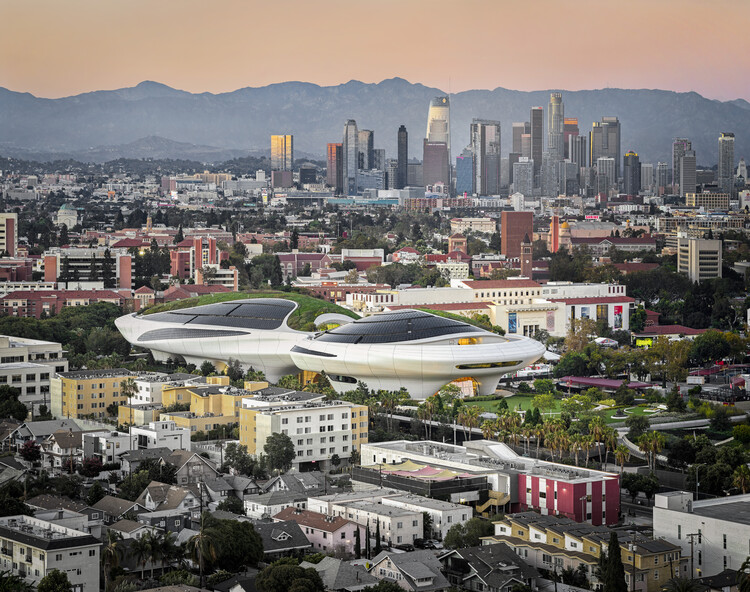
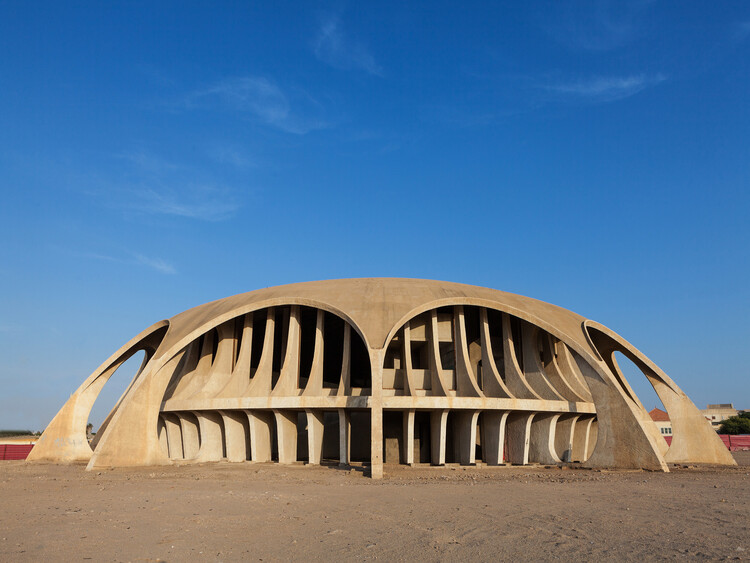
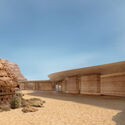
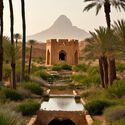
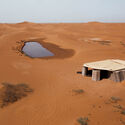
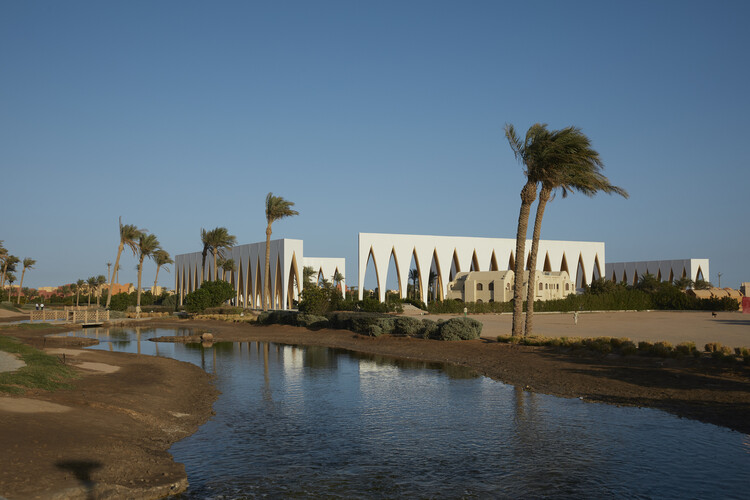
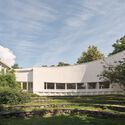
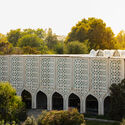
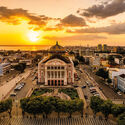
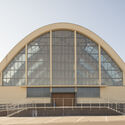
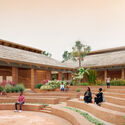
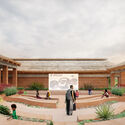
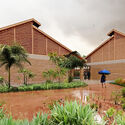
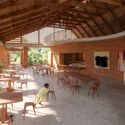
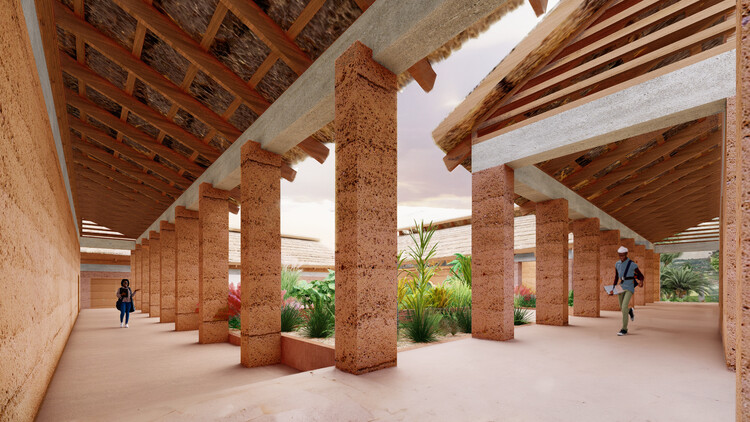
In February 2022, construction began on the Goethe-Institut in Dakar, designed by Kéré Architecture. Present in Senegal since 1978, the Goethe-Institut is reaching a milestone in strengthening cultural ties between Germany, Senegal, and West Africa with this new building. As the first purpose-built Goethe-Institut on the African continent, it embodies a long-term commitment to supporting the creative industries and fostering intellectual exchange. From April 16 to 18, 2026, the Goethe-Institut will host a series of events to mark the inauguration of its new headquarters.
Twenty meters tall and four thousand years old, the Western Deffufa towers over the adjacent date orchards and ancient city remains in the desert. It is a former religious and administrative building near the modern-day Sudanese town of Kerma. Its significance is not only in its age and size, but also in that it is one of the oldest mud brick buildings in the world. And as the nearby mud brick houses also attest, earth is a material of continuous use from ancient times to the present. Yet, conversations around contemporary building systems have largely ignored this essential material. Some architects on the continent of Africa, however, are changing that.
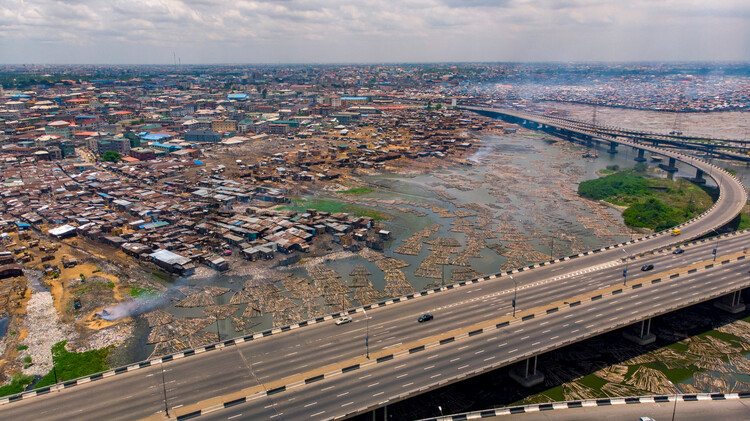
The Cosmogony of (Racial) Capitalism. Image Courtesy of Dele Adeyemo
Having thrown a stone today, Eshu kills a bird of yesterday. The Yoruba proverb tells both a story of reparation and of ancestrality by joyfully bending spacetime conventions and accessing subjects from the past with present actions. The saying offers a poetic entry point to broader West African traditions and to the practice of Scottish-Nigerian artist and architect Dele Adeyemo. Named one of the winners of the ArchDaily 2025 Next Practices Awards, Adeyemo's work brings together ecology, spirituality, dance, and territory, examining how embodied cultural practices can generate alternative spatial possibilities within and against the architecture of racial capitalism.
Born in Nigeria and raised in the United Kingdom, Adeyemo has been visiting Lagos for many years. Through this engagement, he has developed an extensive body of research on collective movement practices that predate capitalism and offer distinct, often imaginative spatial intelligences operating alongside dominant systems. ArchDaily spoke with Dele about his artistic and pedagogical practices, and how he identifies design sophistication where architects often perceive deficiency.
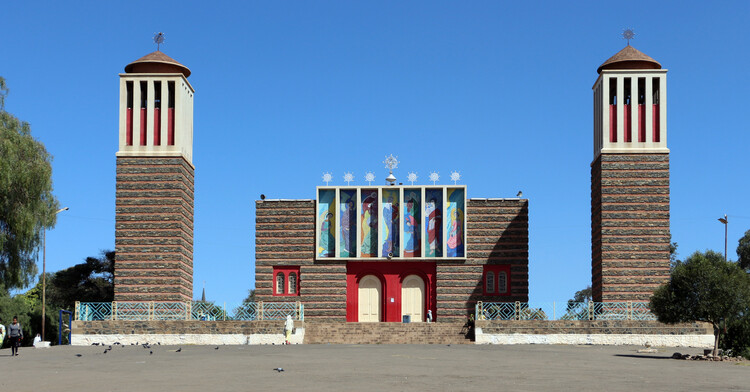
Enda mariam, Asmara Heritage Project, Eritrea . Image Courtesy of Pan-African Biennale (PAB)
The Pan-African Biennale (PAB) is a platform for discussion and exchange on architecture, bringing together, for the first time, all countries in the African continent. To highlight African contributions to the field, it seeks to shift the narrative from one of fragility to one of resilience by raising awareness of the continent's traditions, design, culture, and collective memory. The inaugural one-week event is scheduled to take place in Nairobi, Kenya, launching on September 7, 2026. As the first architecture biennale of its kind on the continent and a highly anticipated event, the opening week will feature exhibitions, installations, keynote dialogues, and public events across the city and other satellite locations. Curated by Somali-Italian architect Omar Degan, the biennale aims to shift architectural discourse by expanding contributions from studios representing all 54 African nations, exhibiting work rooted in local contexts, materials, and cultural narratives.
Ineza Clinic project outpatient unit and pharmacy exterior view render, 2026 . Image Courtesy of Kéré Architecture
Kéré Architecture has designed a new healthcare center in the Bubanza region of Burundi, about 40 kilometers north of the country's former capital, Bujumbura. Commissioned by the NGO Ineza Clinic, the project aims to improve access to healthcare for the region's rural population, complementing the services of the existing general hospital, with a focus on maternity and specialized surgical care. Francis Kéré's plan distributes the program across ten pavilions connected by a road that zigzags up the hillside toward a visitor center, forming a 3,000 m² complex. The project combines materials sourced from the surrounding region, traditional craftsmanship, and knowledge transfer, minimizing its carbon footprint, supporting the local economy, and strengthening local teams. Construction has already started, with the first phase scheduled for completion this year.
As housing shortages and affordability challenges intensify across global cities, this week's architectural discourse centers on how design, policy, and adaptive strategies intersect to shape the future of urban living. Initiatives range from grassroots movements and legislative reforms aimed at expanding access to housing to innovative models that rethink ownership, development, and community engagement. At the same time, architects are reimagining existing structures and districts, transforming underused offices, historic landmarks, and unfinished buildings into mixed-use, culturally significant, or publicly accessible spaces. Across scales, these stories illustrate how architecture negotiates scarcity, value, and social priorities, demonstrating its capacity not only to produce new buildings but also to recalibrate urban environments in ways that balance heritage, sustainability, and human experience.
Abuja was named the capital city of Nigeria on December 12, 1991. Located in the central Federal Capital Territory (FCT), it replaced the most populous coastal city of Lagos in a process of structural reform aimed at national integration and more balanced regional development. Like other capital relocations, Nigeria's capital was moved for strategic reasons to transform Abuja into the country's new administrative center, often referred to as "the center of unity." It was envisioned as a planned city based on a master plan developed by the United States-based consortium International Planning Associates (IPA). More than three decades later, a new master plan titled "City Walk" has been developed by MAG International Links Limited and designed by Benoy as a mixed-use district integrating hotels, offices, residential, retail, cultural, educational, and healthcare facilities, alongside a 450-meter tower and a 13,000-seat indoor arena across 250 hectares.
Lesley Lokko OBE has been recognized with the African Cultural Icon Award, honoring "leaders in the creative arts who promote African culture and heritage on a global stage." The accolade is one of nine awards presented annually to publicly nominated and industry-recommended figures by a panel of judges from across Africa. Nominees are evaluated based on "impact, innovation, sustainability, and contribution to Africa's growth." Lokko is the Founder and Chair of the African Futures Institute (AFI), headquartered in Accra, Ghana, and Director of the Nomadic African Studio, an annual month-long itinerant teaching program working across the African continent. She has been acknowledged for her transformative contributions to architecture, education, and cultural discourse within and beyond Africa, consistently challenging conventional narratives around African identity, space, and creativity.
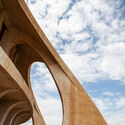
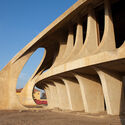
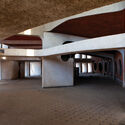
The recently opened Limbo Museum in Accra, Ghana, inaugurated a two-part architectural installation by TAELON7 on March 12th, led by architect Juergen Benson-Strohmayer. The installation was commissioned by the museum in partnership with Art Omi, a not-for-profit arts center in New York's Hudson Valley. The project is the first commission of a collaboration between the two institutions and will be installed in both locations, Accra and New York. Titled Limbo Engawa, the modular, lightweight structure dialogues with the formerly abandoned Brutalist building housing the museum, transforming its skeletal concrete structure and its surrounding land into spaces for use, care, and encounter. The project reflects on the boundaries between unfinished urban architecture and the landscape, foregrounding the labor and stewardship often invisible in both urban and institutional contexts, and asserting that even incomplete or overlooked sites are vessels of civic possibility.
Spaces of retreat continue to offer fertile ground for unbuilt exploration, revealing how architecture can support rest, reflection, and immersion in nature amid shifting environmental and cultural conditions. In this Unbuilt edition, submitted by the ArchDaily community, the selected projects assemble a diverse range of proposals that reconsider hospitality through the lens of refuge. These works position accommodation not as spectacle or excess, but as spatial frameworks shaped by landscape, climate, material restraint, and shared experience.
Across distinct geographies, from Southeast Asian hillsides and Indonesian coastlines to African wilderness, Alpine terrain, Middle Eastern landscapes, and North American forests, the proposals demonstrate varied architectural responses to sensitive sites. They include elevated structures that hover lightly above steep ground, temporary lodge systems embedded in remote ecologies, reconstructed mountain shelters grounded in memory and reuse, courtyard-centered communal stays shaped by lifestyle cultures, contemplative desert retreats, and inclusive woodland camps designed for accessibility and environmental balance.
In January 2026, the World Monuments Fund/Knoll Modernism Prize was awarded to Australian firm Architectus for their conservation of the Africa Hall in Addis Ababa, Ethiopia. The award recognizes that Modernist buildings, once seen as a vanguard of architecture, are falling into disrepair and are underappreciated by the public. The situation in Africa is typical of this global sentiment, and this was the first time a building on the continent was graced with this award. The prize also spotlights Ethiopia's rich Modernist inventory, which marks its continental role in the mid and late twentieth century.
In an age so obsessed with skincare and appearances, few architects are truly interested in the intestines of our buildings. With a practice rooted in contextual awareness and technical pragmatism, sensitive to the needs of the people it serves and to resource limitations, Moroccan architect Aziza Chaouni focuses on the hidden systems that allow architecture to be. Over the past two decades, she has been working on projects across different geographies, particularly in the Saharan region, actively engaging with its communities and heritage.
Currently leading the South–North (SoNo) Lab for Sustainable Construction and Conservation at EPFL in Lausanne, Switzerland, Chaouni brings to the academic realm her architectural expertise in operating under pressing constraints, advocating for reciprocal collaboration between the Global South and the Global North. ArchDaily had the opportunity to speak with Aziza about her experience in Africa and how it can foster more sustainable ways of designing buildings for the future of our cities.
The City of Amsterdam has launched an international architectural competition for the design of the National Slavery Museum, in partnership with the National Slavery Museum Foundation.
Design teams from the Netherlands and around the world are invited to develop a vision for a museum building and park at Kop van Java-eiland, the western tip of an island in a former dockland area of central Amsterdam.
Deputy Mayor Touria Meliani (responsible for Arts and Culture) said: ‘The National Slavery Museum will be a place for meeting, reflection and connection. A museum that tells the underrepresented story of the transatlantic and Indian Ocean
Bir Ettin Restoration / Bled El Abar Collective. Image Courtesy of Bled El Abar Collective
In some languages, the very word for building refers to its immovability. The discipline of engineering related to buildings is referred to as statics. Thus, architecture is closely related to the fixed and the immobile. And yet, for millions of nomadic people around the world, shelters must be of a light and distinctly movable structure, while home is the vast landscape in which they reside. Such lifestyles, which carry centuries of traditions, are constantly under threat from the pull factors of sedentary life in towns and cities. In Tunisia, one project acknowledges the risk of heritage loss and attempts to improve conditions for nomadic herders.
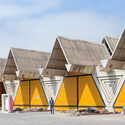
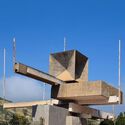
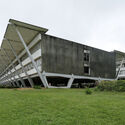
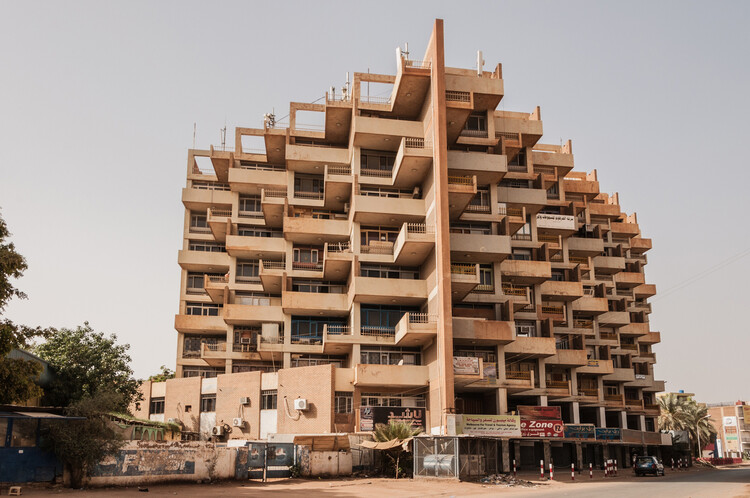
Launched in September 2024, the Rediscovering Modernism in Africa series joined a growing worldwide interest in this topic. Previously underrepresented in architectural discussions, the work of architects and researchers on the continent and abroad has continued to tell the story of these high-quality modern works of architecture. These buildings represent designers striving to create locally suited architecture using global concepts and technologies, coinciding with huge political changes as most African countries gained their independence.
Construction has begun on the new Bishoftu International Airport (BIA), designed by Zaha Hadid Architects for Ethiopian Airlines Group. Ethiopia's Prime Minister, Abiy Ahmed Ali, laid the cornerstone at the airport's groundbreaking ceremony on Saturday, January 10, 2026. The new airport will be located approximately 40 kilometers south of the Ethiopian capital, Addis Ababa, and is planned to become Africa's largest airport. Phase One of the project is designed to serve 60 million passengers per year. Subsequent phases are expected to increase capacity to up to 110 million passengers annually, supported by four runways and parking for 270 aircraft, more than four times the capacity of Ethiopia's current main airport, according to statements by the Prime Minister.
Malabo served as the capital city of Equatorial Guinea from the country's independence from Spain on October 12, 1968, until January 2, 2026, when a decree issued by President Teodoro Obiang Nguema Mbasogo officially transferred the capital to Ciudad de la Paz ("City of Peace"), located in Djibloho Province. Obiang formalized the move as part of a long-planned territorial reorganization. While the former capital remains an important economic center on Bioko Island, Ciudad de la Paz was conceived as a planned capital on Africa's mainland. The initiative to relocate the capital dates back to 2008, with construction beginning in 2011. The new capital, also referred to as Djibloho, after the province, or Oyala, has been framed by the government as a decentralization effort aimed at improving national accessibility.