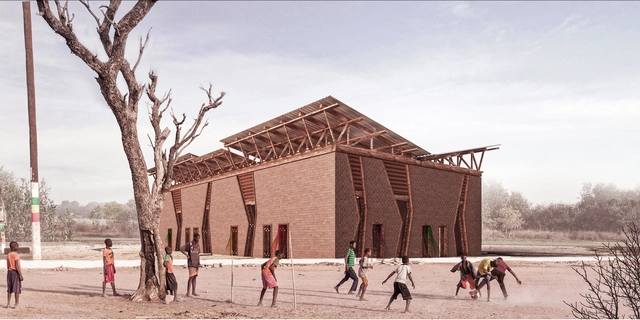
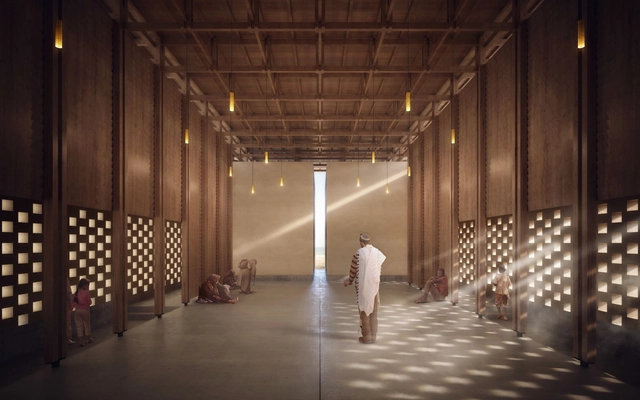
The winners of the Kaira Loo Competition have been announced, dedicated to the design of a Peace Pavilion to be built in the city of Sedhiou, southern Senegal. The objective of the competition was to create a symbolic structure serving as a memorial to the victims of African wars, and that would sensitize the local and international community by creating a commemorative and educational space that respects both the environment and local traditions.
https://www.archdaily.com/918845/winning-designs-for-senegal-peace-pavilion-judged-by-kengo-kumaNiall Patrick Walsh
Manufacturers: Afrisam, Blackwood, Chartwell, Cladcom, Dracon National, +13Ecosense, Infin8, Krost engineering, Magnet engineering, Prestige tiling, Restaurant shopfitting, Space Lift, Union Steel, Upfront Media and Jalite, WBHO, Wescape & Hensjen, White Head, World of decorative concrete-13
Videos
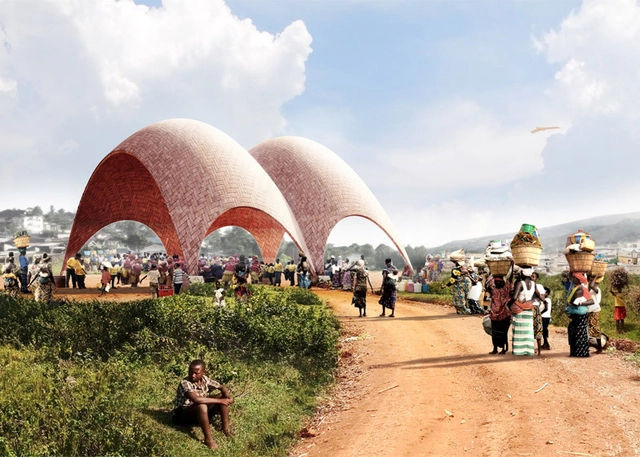
Droneports. Image Courtesy of Jonathan Ledgard and Norman Foster
A new video by AERIAL FUTURES explores the potential of droneports in East Africa and the Global South. The Norman Foster Foundation was one of the first groups to propose the creation of a droneport network to deliver medical supplies and other necessities to areas of Africa that are difficult to access due to a lack of roads or other infrastructure. The project aspires to have droneports across small towns in Africa and in other emerging economies by 2030.
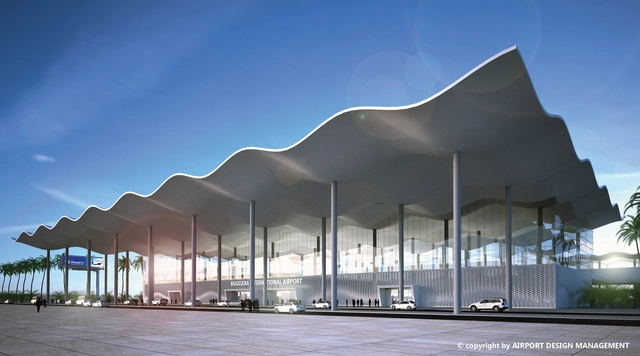
Rwanda’s largest publicly funded project, Bugesera International Airport is on track to be the first certified green building in the region. A few pieces of this net zero emission complex include: a 30,000 square metre passenger terminal, 22 check-in counters, ten gates, and six passenger boarding bridges. Funded by Public Private Partnership, the project is cost estimated at $414 million USD. The international hub was only one of several initiatives discussed by the AfricaGreen Growth Forum (AGGF) in Kigali at the end of last year.
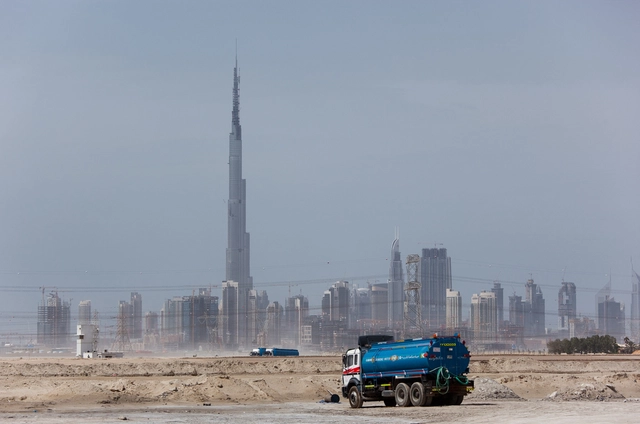
In the past three decades, Dubai has grown from a dusty desert town to a strategic hub for international business and tourism. As a result, several cities in the developing world have been competing to outdo one another in the race to replicate this development model—an urbanism largely built around the automobile, luxury villas, gleaming skyscrapers, massive shopping malls, and ambitious “smart” cities, designed and built from scratch. Across Africa, these new developments go by different names: Eko Atlantic City Nigeria, Vision City in Rwanda, Ebene Cyber City in Mauritius; Konza Technology City in Kenya; Safari City in Tanzania; Le Cite du Fleuve in DR Congo, and several others. All are mimicries of Dubai.
https://www.archdaily.com/910933/what-urban-africa-needs-to-learn-from-dubaiKatherine Allen
Alárò City. Image Courtesy of Skidmore, Owings & Merrill
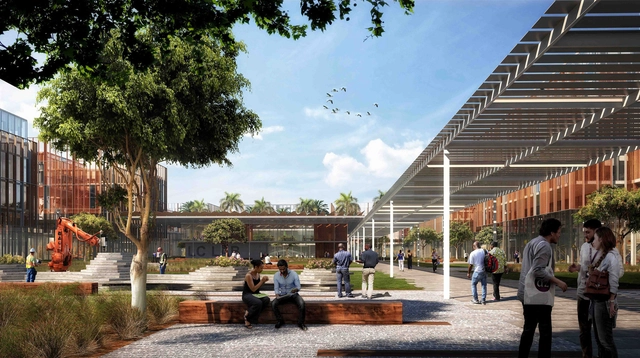
Skidmore, Owings & Merrill have broken ground on Alárò City, a new masterplan development that will connect to Lagos in southwest Nigeria. The mixed-use model community will feature an international trade gateway with a new seaport and airport. Designed for the Lagos State Government and Africa’s largest urban developer Rendeavour, the project is made to boost foreign direct investment to create an economic and cultural hub for West Africa.
"Kaira Looro Competition" is an international architecture competition aimed at raising awareness of the international community towards emerging architecture in developing countries. The new edition of the competition has as its theme is to create a pavilion for the promotion of universal peace which inspires contemplation, reflection, and prayer for those who unjustly lost their lives. The competition is organized by the Nonprofit Organization “Balouo Salo” engaged in Africa for humanitarian projects of architecture and support of disadvantaged communities, with the collaboration of the University of Tokyo, Kengo Kuma & Associates, Direction de la Culture de Sedhiou, Conseil Municipal de Sedhiou and others relevant parts.
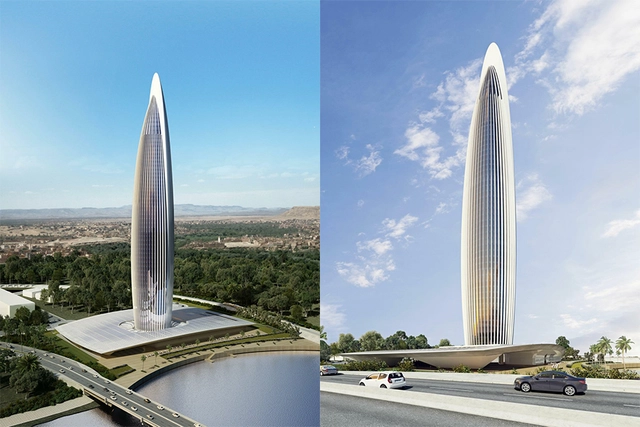
Bank of Africa Tower. Image Courtesy of Rafael de la-Hoz Arquitectos
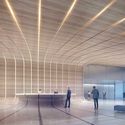
Africa’s tallest skyscraper is set to begin construction in two weeks time. Designed by Spanish architects Rafael de la-Hoz Arquitectos and Moroccan firm CHB Cabinet Hakim Benjelloun, the 820-ft tall Bank of Africa Tower will take the title of tallest tower from the Carlton Centre in Johannesburg. Aiming for LEED Gold and HQE ratings, the tower will begin construction on November 1 and is expected be complete by May 30, 2022.
Videos
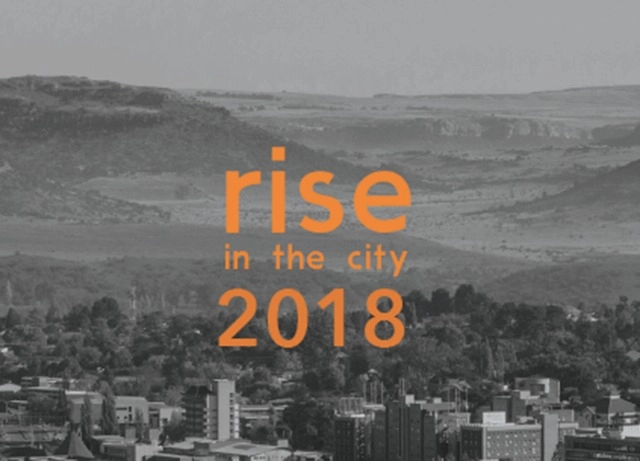
rise in the city 2018: Pushing the boundaries of design
rise in the city is a unique international architecture competition for students and recent graduates worldwide. The challenge is to design affordable and sustainable housing solutions for Africa’s growing population. We invite all innovative problem solvers in the built environment to design a low-income housing prototype in an effort to curb Lesotho’s housing problem in an environment challenged by increased urban migration, climate change, and scarcity of resources.
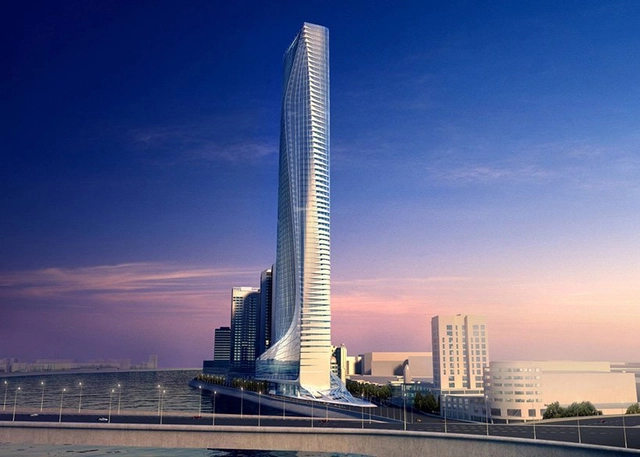
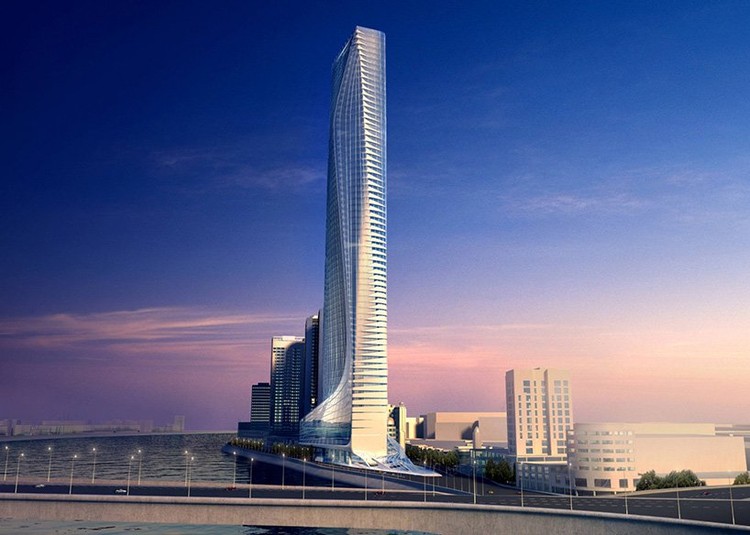
Nile Tower. Image Courtesy of Zaha Hadid Architects
After more than a decade, Egypt has returned to its plan to construct Africa's tallest building. Sited on the Nile River in central Cairo, the skyscraper was designed by the late Zaha Hadid in 2007. President Abdel Fattah el-Sisi and the government are working with the project developers, Living in Interiors, to create the twisting "Nile Tower" with a design that will rise 70 stories. Overlooking views of Cairo, the Nile and the pyramids, the project hopes to symbolize Egypt's growth and the development of the country.
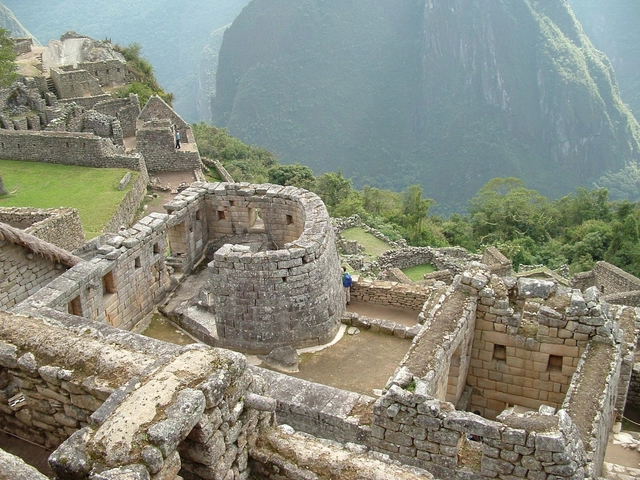
A collection of stones piled one on top of the other, dry stone is an iconic building method found just nearly everywhere in the world. Relying solely on an age-old craft to create sturdy, reliable structures and characterised by its rustic, interlocking shapes, the technique has deep roots that stretch back even before the invention of the wheel. Its principles are simple: stack the stones to create a unified, load-bearing wall. But the efficient, long-lasting results, coupled with the technique’s cultural significance, have lead to continued use and updated interpretations all the way to contemporary architecture today.
AMKNA, the Dubai-based studio, has been shortlisted for the 2018 World Architecture Festival, in recognition of their design proposal of a cultural center in Sedhiou, Senegal. The proposed “Sedhiou Cultural Center” will provide citizens with a rich cultural, social, and educational experience, all while sustaining the surrounding environment and keeping African heritage alive.
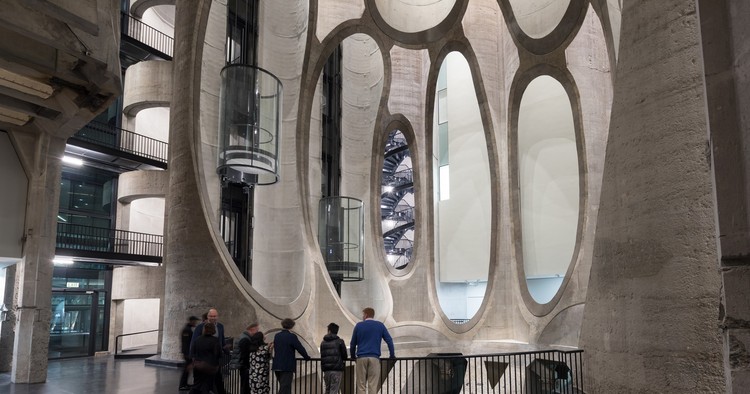
The Zeitz Museum of Contemporary Art Africa—or Zeitz MOCAA for short—recently received first place in ArchDaily's Refurbishment in Architecture awards, with its striking design transforming a formerly derelict industrial building into an iconic landmark in South Africa’s oldest working harbor. Developed by the V&A Waterfront in Cape Town and designed by Heatherwick Studio, the mixed-use project is now “the world’s largest museum dedicated to contemporary art from Africa and its diaspora.” To celebrate the award, we sat down with group leader Matthew Cash to discuss the challenges faced during the project, its cultural importance to Africa, and the practice’s interest in refurbishment as a whole.
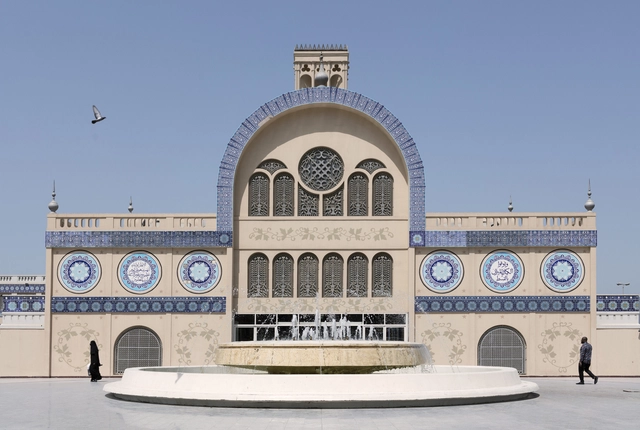
The Sharjah Architecture Triennial will open in November 2019 as "the first major platform for dialogue on architecture and urbanism in the Middle East, North Africa, East Africa and South Asia." Curator Adrian Lahoud has announced the theme of the Triennial as the Rights of Future Generations, aiming to fundamentally challenge traditional ideas about architecture and introduce new ways of thinking that veer from current Western-centric discourse.
Since the start of civil war in 1991, the political and architectural landscapes of the East African country of Somalia have been unstable. While the country’s urban centers, such as the capital city Mogadishu, boast a diverse fabric of historic mosques, citadels, and monuments alongside modernist civic structures, the decades of conflict have resulted in the destruction of many important structures. And, while the fighting has substantially subsided in recent years, the future of the country's architectural heritage is still far from secure.
In response, Somali architecture students from across the UK, Italy, and the United States have banded together to form Somali Architecture, an ongoing research project archiving and digitally "rebuilding" iconic structures through 3D models. Their goal is “to preserve the identity and authenticity” of Somalia through its architecture—both existing and destroyed. “We want each iconic building of the past to be reinterpreted for a more coherent future,” they say.
See below for a selection of the structures Somali Architecture has uncovered and re-constructed so far.
Winning schemes were situated in Mexico, Niger, and the USA. Image Courtesy of Global LafargeHolcim Awards
Results have been announced for the 5th Global LafargeHolcim Awards for Sustainable Construction, with three women-led teams awarded the gold, silver, and bronze positions. The design competition asked participants to speculate on future methods of balancing environmental performance, social responsibility and economic growth, “exemplifying architectural excellence and a high degree of transferability.”
The competition attracted over 5,000 submissions from 131 countries. Having been regionally assessed by juries in Europe, North America, Latin America, the Middle East/Africa and Asia Pacific, 55 successful proposals were entered for the global awards, where six winning schemes were selected.


.jpg?1548949170&format=webp&width=640&height=580)
.jpg?1548948676 "© Dave Southwood")
.jpg?1548949093 "© Dave Southwood")
.jpg?1548948182 "© Dave Southwood")
.jpg?1548948366 "© Dave Southwood")
.jpg?1548949170)




.jpg?1548778211&format=webp&width=640&height=580)
.jpg?1548778022 "© Niel Vosloo")
.jpg?1548778229 "© Niel Vosloo")
.jpg?1548777535 "© Niel Vosloo")
.jpg?1548778264 "© Niel Vosloo")
.jpg?1548778211)