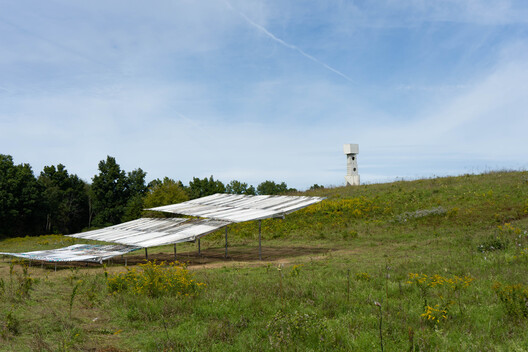
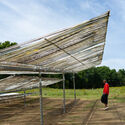
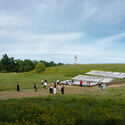
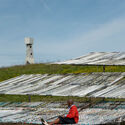
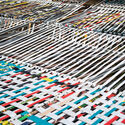
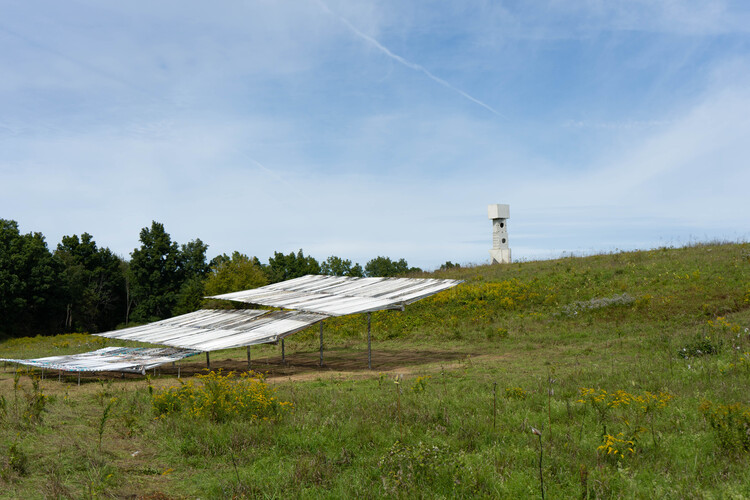
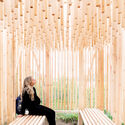
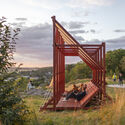
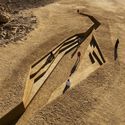
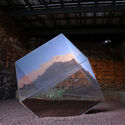
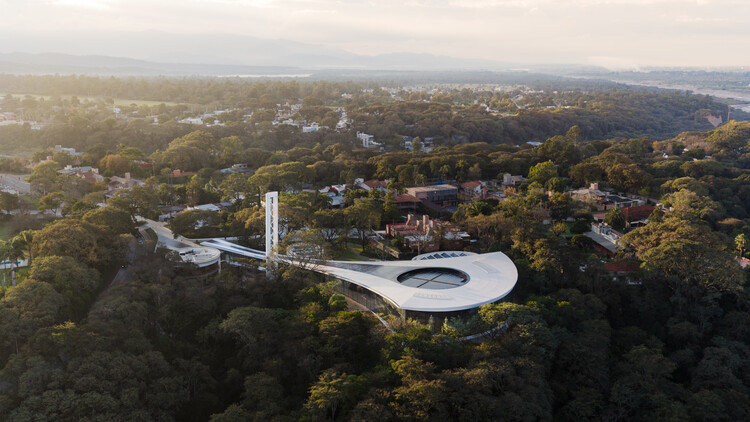
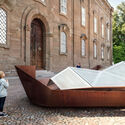
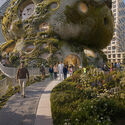
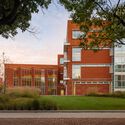
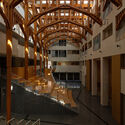
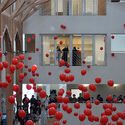
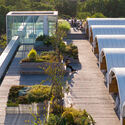
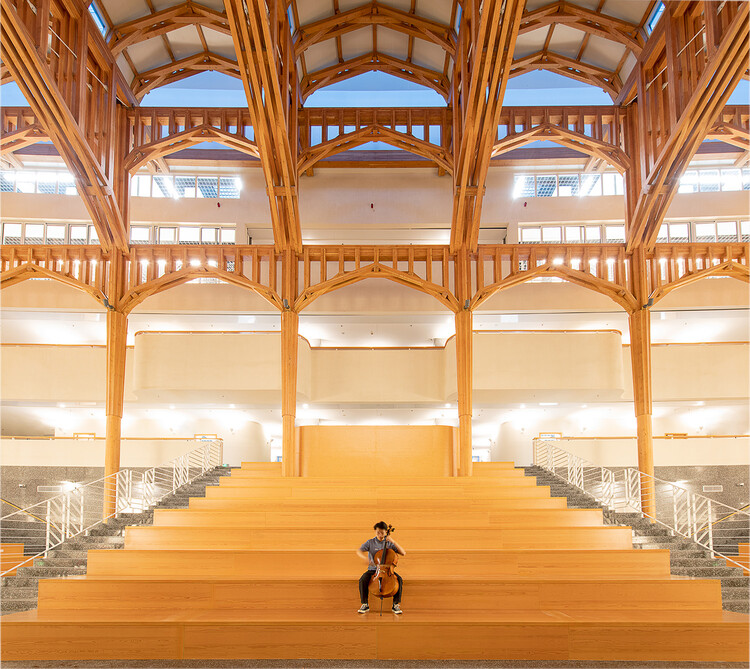
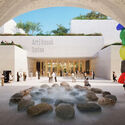
Limbo Engawa, 2026. Steel, salvaged billboard tarpaulin. Co-commissioned by Art Omi and Limbo Museum. Image Courtesy of Art Omi. Photo: Nadia Boyea
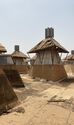
Art Omi and Limbo Museum have presented Limbo Engawa, a two-part site-specific installation by TAELON7, led by architect Juergen Benson-Strohmayer. First presented at Limbo Museum in Accra, Ghana, on March 12, 2026, the project was reconfigured for Art Omi's Sculpture & Architecture Park in Ghent, New York, where it opened on September 19, 2026. Developed as a joint commission between the two institutions, the project uses a modular architectural system to explore how spaces for gathering and exchange can respond to different landscapes, climates, and cultural contexts.
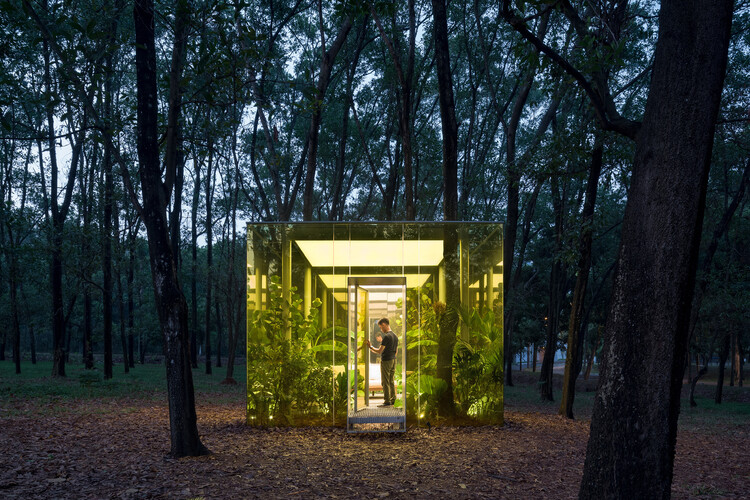
While complex, layered with meaning, and categorized into various forms, heterotopia, a concept developed by the philosopher Michel Foucault, can broadly be understood as the manifestation of alternative realities. Unlike utopias – idealized, unreachable non-places – heterotopias are tangible, real-world spaces that operate according to their own internal logic, offering a lived alternative to dominant spatial and cultural paradigms.
Escapism, in an architectural sense, is not merely about fleeing standard realities; it is a critical tool for reimagining them under different cultural, social, and environmental conditions. Temporary installations serve as fertile testing grounds for these spatial possibilities. Often framed as sanctuaries or refuges, these works intentionally detach from pre-conceived norms – whether by seeking a return to a primal way of living or by provoking radical perceptual shifts.
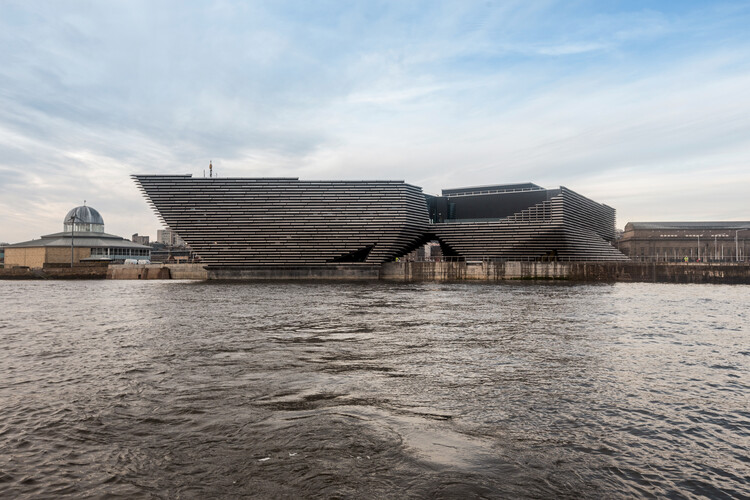
MAD, the architecture studio founded by Ma Yansong, has revealed the designs for Danshuis, a new dance center planned for Rotterdam, the Netherlands. Located on a landmark site in the city's historic docklands, adjacent to the Fenix Museum of Migration, also designed by MAD, the project is expected to open in 2030. The 9,500-square-meter center will transform an Art Deco warehouse dating from 1923 on the south bank of the River Maas. Planned as a center for the production, development, and practice of dance across different styles, Danshuis aims to bring together professional and amateur programs for different ages and levels of experience.
Japanese architect Kengo Kuma has been selected to receive the Andrée Putman Lifetime Achievement Award at the 2027 Créateurs Design Awards (CDA). The award, one of two Legacy Awards presented by the organization, recognizes a career that has influenced architecture and the built environment across generations and geographic contexts. Kuma will receive the honor during the CDA Awards Ceremony, which will take place at the Shangri-La Paris on January 16, 2027.
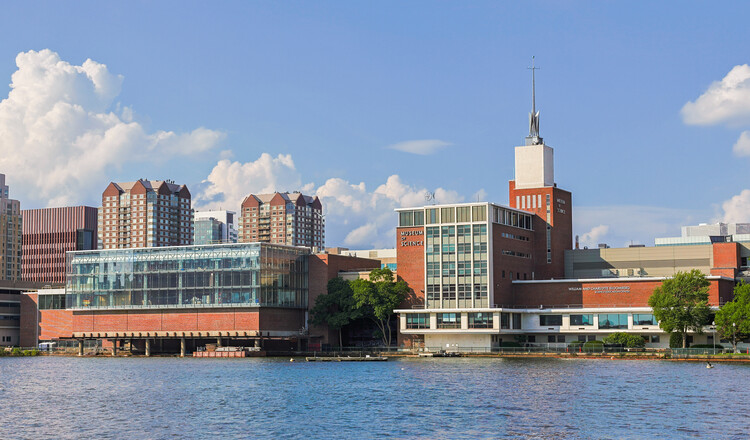
The construction of the William and Charlotte Bloomberg Public Science Common, the new venue at Boston's Museum of Science, one of the United States' oldest science institutions, is nearing completion. The 929 m² (10,000-square-foot) building, designed by William Rawn Associates, Architects, Inc., is expected to open to the public on October 10, 2026, followed by a celebratory event on October 28. The new glazed civic venue overlooks the Charles River with views of the Boston skyline, and features movable walls and retractable seating to shift between functions and programs. The space is designed to support public dialogue around the sciences, using immersive media, production, and livestreaming technology to reach audiences beyond the city.
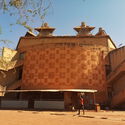
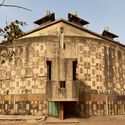
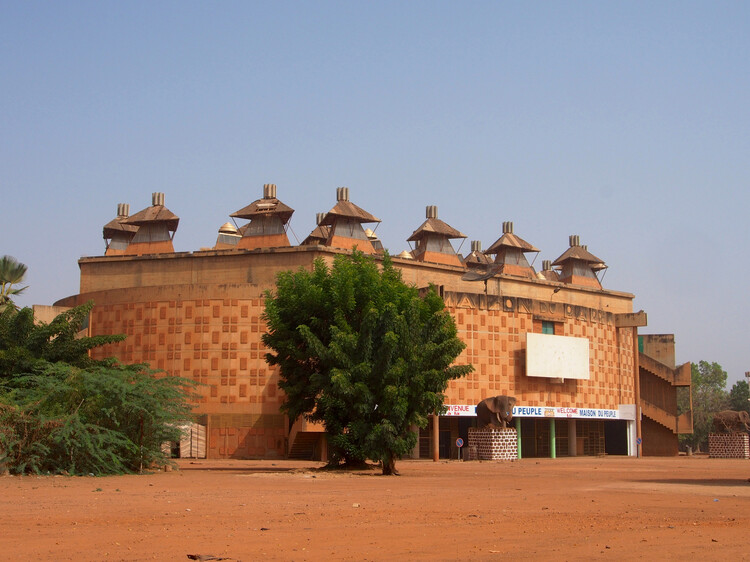
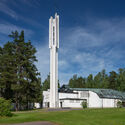
When African countries gained independence from European colonial rule during the mid-twentieth century, nation-building involved more than establishing new governments and political institutions. Newly sovereign states also needed to establish a built identity that could distinguish them from their colonial past, and architecture became an important tool in this process. Across the continent, monumental civic buildings, universities, conference centers, and cultural institutions were commissioned to embody progress and national unity. Yet this created a fundamental contradiction: many of these buildings adopted modernist and Brutalist architectural languages that had originated in Europe, while some were even designed by architects from former colonial powers. The Maison du Peuple in Ouagadougou, Burkina Faso, provides a particularly revealing example of how an architectural language associated with Europe could be appropriated and transformed into an expression of postcolonial independence.
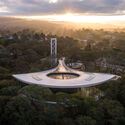
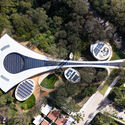
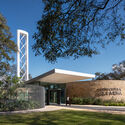
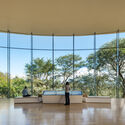
Pelli Clarke & Partners has completed the Lola Mora Cultural Center in San Salvador de Jujuy, Argentina, a new cultural institution dedicated to the life and work of Argentine sculptor Lola Mora (1866-1936). Located in the country's northwestern region, the project is the firm's first cultural building in South America and the final project led by its founder, the late César Pelli. Designed as a net-zero facility, the center brings together six of Mora's monumental marble sculptures for the first time in more than a century, providing a permanent home for works that were previously displayed outdoors in Jujuy.
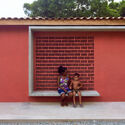
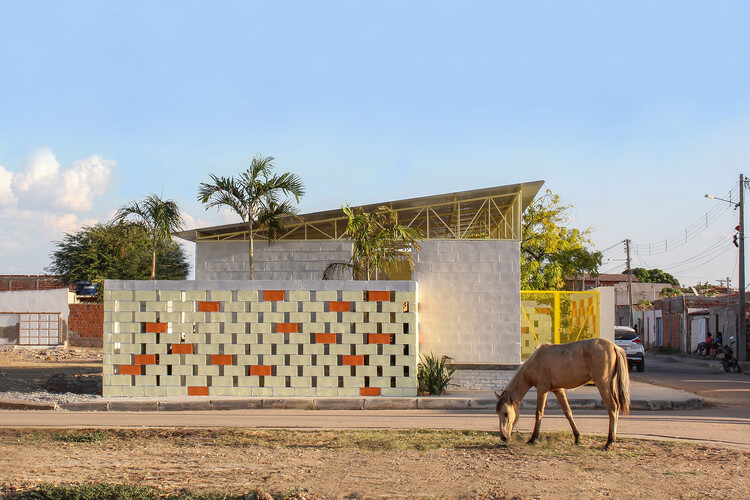
In 2021, the IBGE (Brazilian Institute of Geography and Statistics) released a survey regarding the number of cultural and social facilities in Brazil's cities. The findings were alarming: only 29.6% of Brazilian municipalities had cultural and social facilities such as museums, while theaters and concert halls were present in only 23.3% of cities. This overview speaks volumes about the scarcity of such spaces in Brazilian cities. In this context, when a women's cooperative in Maranhão or a volunteer group in Bahia decides to build their own cultural and community facility, the gesture not only fills a material gap but reclaims, on their own initiative, a right that should be guaranteed by public policy.
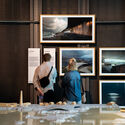
This week, architecture's relationship with culture took center stage through exhibitions, public projects, and new cultural infrastructure that extend architectural discourse beyond the building itself. While major exhibitions from Australia, Shanghai, Barcelona, and Copenhagen examined themes of housing, landscape, and place through research and design, newly unveiled projects in China and Italy demonstrate how museums, performance venues, and mixed-use projects are increasingly conceived as open public landscapes rather than isolated institutions, while new exhibitions and construction milestones reflect ongoing experimentation in adaptive reuse, context-responsive design, and flexible urban environments.
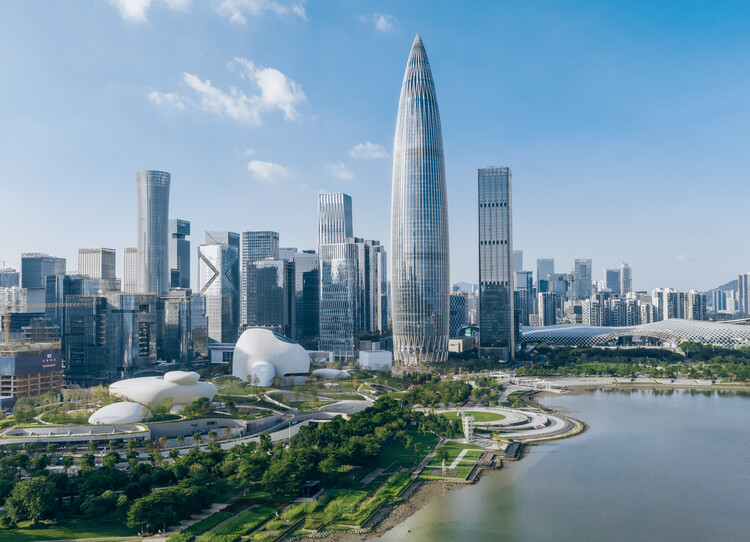
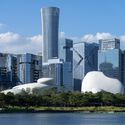
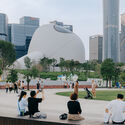
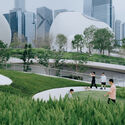
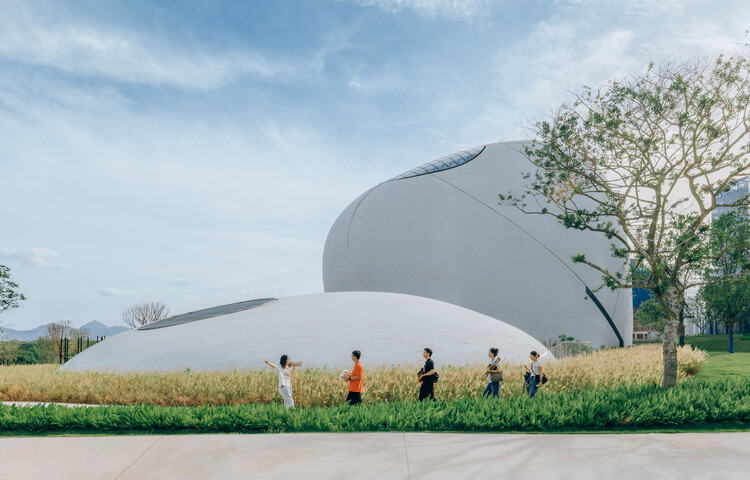
MAD / Ma Yansong's Shenzhen Bay Culture Square exhibition hall and park project began in 2018, with the project completed in 2020. The 188,000 m² building sits on a site area of approximately 51,000 m² along the city's waterfront, at the heart of Houhai, Nanshan District, the headquarters hub of Shenzhen's Greater Bay Area. The masterplan for the site, which includes the Creative Design Hall, the Shenzhen Science and Technology Museum, and a vast public green space, was announced by MAD in 2020 and was expected to be completed in 2023. After eight years, the project, led by Ma Yansong, Dang Qun, and Yosuke Hayano, is now complete and is intended to serve as a cultural facility for design and cultural exchange.
This week was marked by recognition and major announcements for the cultural industry. Amid international reports of both deliberate and natural destruction, UNESCO added 25 new sites of Outstanding Universal Value to its World Heritage List, protecting a diverse range of places that includes funerary landscapes and landmark works of modern architecture. Beyond heritage, contemporary architectural practice also received renewed recognition through Alejandro Aravena and Smiljan Radić, while new developments were announced for cultural projects across the United Arab Emirates, Ecuador, China, India, and the United States. Recent updates include the restoration of a landmark cinema in Los Angeles, a new museum dedicated to innovation and entrepreneurship in Bengaluru, and the topping out of a 39-story hybrid timber tower in Sydney.
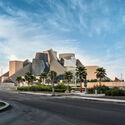
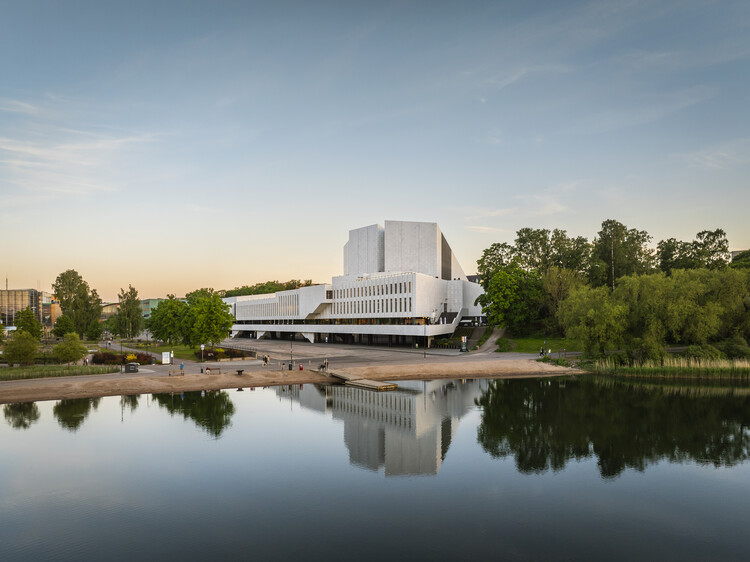
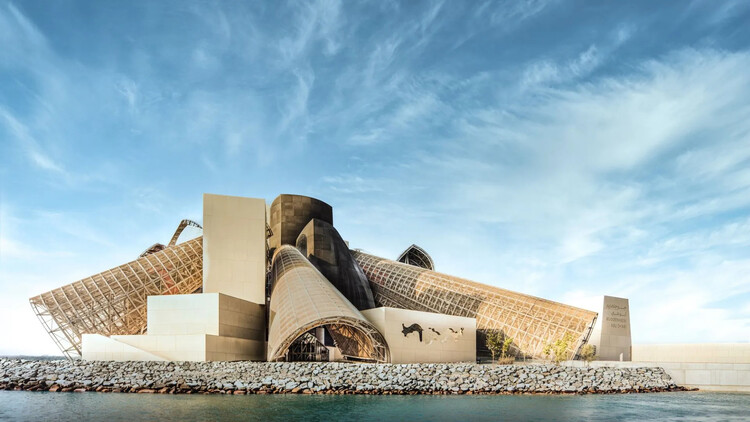
Abu Dhabi's Department of Culture and Tourism has announced that Guggenheim Abu Dhabi will open to the public on December 11, 2026, on Saadiyat Island. The museum, designed by the late Frank Gehry, becomes the fourth institution in the Guggenheim's global network, joining outposts in New York, Venice, and Bilbao.
The project was first announced in 2006. Construction began in 2011, was suspended for several years amid economic strain and contract changes, and resumed in 2019. A 2025 completion date, set in 2021, ultimately slipped to this December.
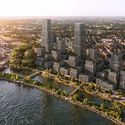
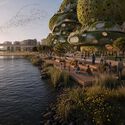
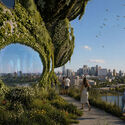
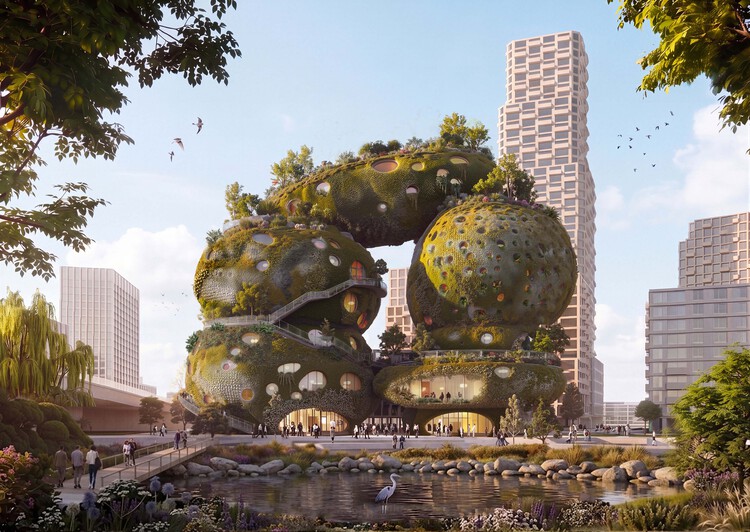
MVRDV has won the international design competition organized by the social enterprise Shift to design the Shift Embassy, a new cultural destination planned for Rotterdam's developing Waterkant district. Conceived as a hybrid of architecture and landscape, the proposal, titled Rotterdam ROCKS! combines exhibition spaces, hospitality, education, public amenities, and ecological infrastructure within a publicly accessible building intended to support Shift's mission of engaging visitors with environmental and societal challenges. The project will form part of Waterkant, a large-scale urban development on the south bank of the Maas, planned to include 3,750 homes alongside schools, workplaces, cultural venues, and public spaces.
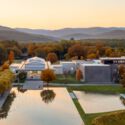
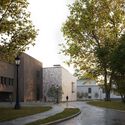
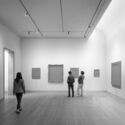
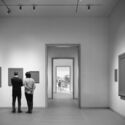
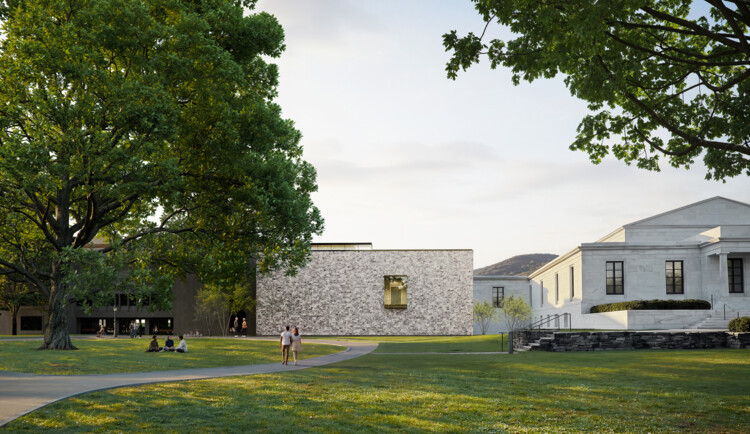
The Clark Art Institute, a prominent art institution located in the Berkshires of western Massachusetts, United States, has unveiled images of the design for the extension of its current facilities. The institution, opened in 1955, is both an art museum and a center for research, critical discussion, and higher education in the visual arts. The new wing, commissioned to Selldorf Architects in October 2024, will expand the current gallery and art storage space and connect the Museum Building and the Manton Research Center, previously renovated by the same firm. The new building will be complemented by a landscape design by Reed Hilderbrand, reinforcing the experience of the architecture, art, and surrounding Berkshire landscape.
In 2023, the School of Design Building at Shanghai Jiao Tong University opened its doors after a complete remodeling and adaptation of an existing structure. Designed by architect and scholar Xing Ruan, who also serves as Dean of the school, the building went on to receive two recognitions at the Prix Versailles: the World Title of the Most Beautiful Campus and the Special Prize for an Interior, one of the three major honors of the competition. Awards of this kind tend to generate their own momentum. Once a building is recognized, it is quickly placed within a convenient narrative — its materials, techniques, form, and spatial decisions all assigned meanings that make the project legible, categorizable, and easy to cite.
Yet what an award confirms is perhaps only that a building has been seen. What remains worth asking is why it exists in the way that it does — what problems it was made to address, what beliefs it refuses, and what it proposes about the discipline beyond the occasion of its construction. It was in the School of Design Building itself that the following interview took place, moving between architecture, scholarship, frugality, and the limits of what buildings can — and should — be asked to do.
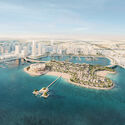
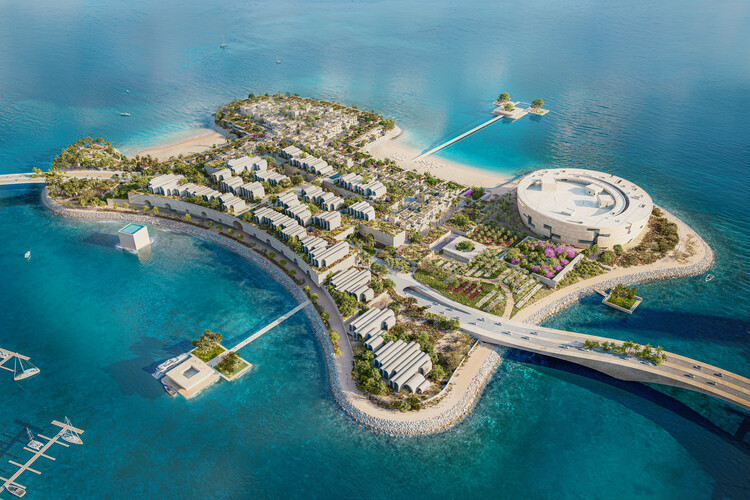
South aerial view of Al Maha Island, 2026. Render . Image Courtesy of Herzog & de Meuron
Al Maha Island is a 230,000 m² human-made island located off the coast of Lusail, Qatar. Built as an entertainment and leisure destination north of Doha, it opened in 2022, just ahead of the FIFA World Cup. In 2024, Qatar Museums released renderings of the future Lusail Museum, designed by Swiss architecture office Herzog & de Meuron and located on the southern tip of the island. Most recently, the firm revealed updated images of the island masterplan and the museum's exterior design. The new Lusail Museum will house a collection of Orientalist art, exploring the movement of people and ideas across the globe, past and present, and will offer opportunities for study and debate on contemporary global issues. It is expected to become the cultural anchor of Lusail City, in a building conceived by Jacques Herzog as "a vertically layered souk, or miniature city contained within a single building."
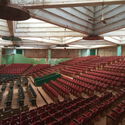
In June 2026, the refurbished Teatro Mauri reopened its doors on Cerro Bellavista in Valparaíso, formerly Chile's main port. The building forms part of Latin America's modernist legacy and stands adjacent to La Sebastiana, one of the renowned residences of the poet Pablo Neruda. It was designed by architect Alfredo Vargas Stoller, author of other icons of modern architecture in Valparaíso, such as the Edificio Cooperativa Vitalicia and the Conjunto de Viviendas Vargas in Viña del Mar. Teatro Mauri opened in 1951 as a venue for performances and cinema. Following a fire in the early 1990s, it fell into disrepair, serving only sporadically as a venue for local parties and events. In 2015, it was purchased by the Sociedad Chilena de Autores e Intérpretes (SCD), which commissioned its restoration from architects Laura Garrido and Gregorio Garretón.