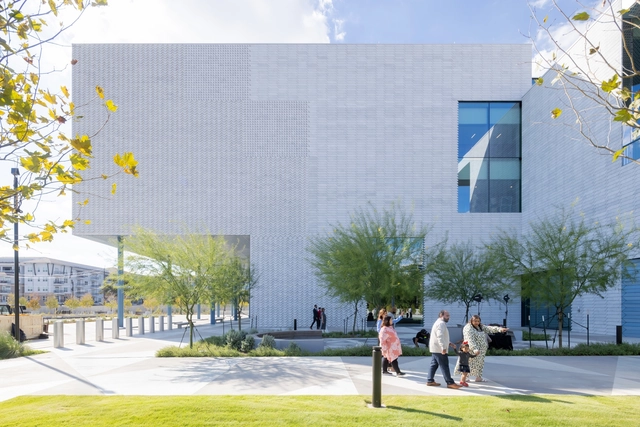
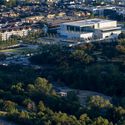
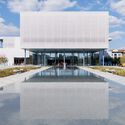
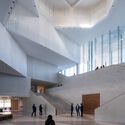
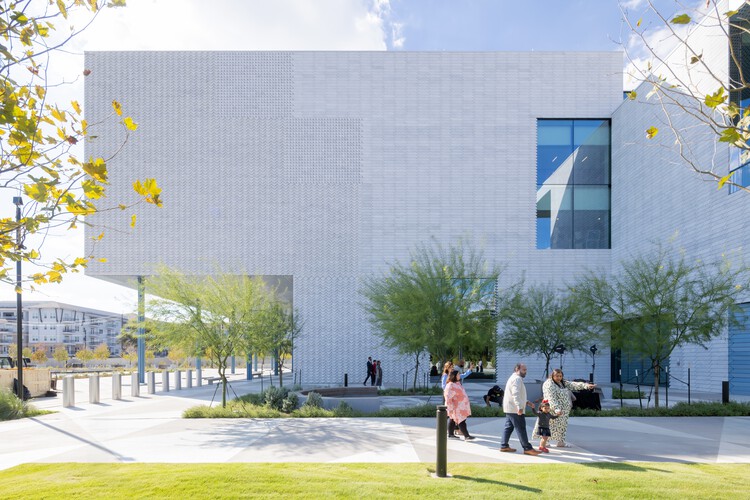
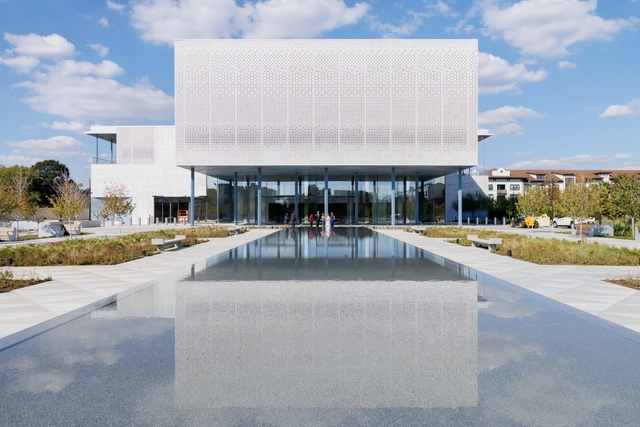
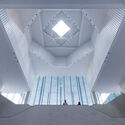
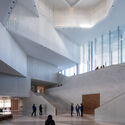
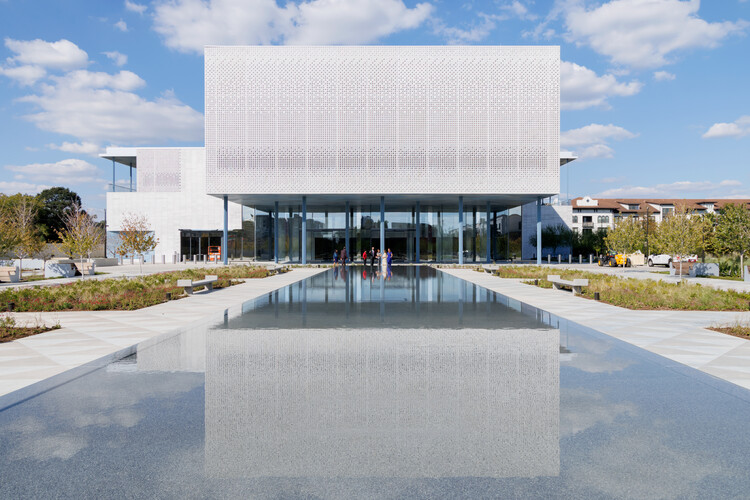
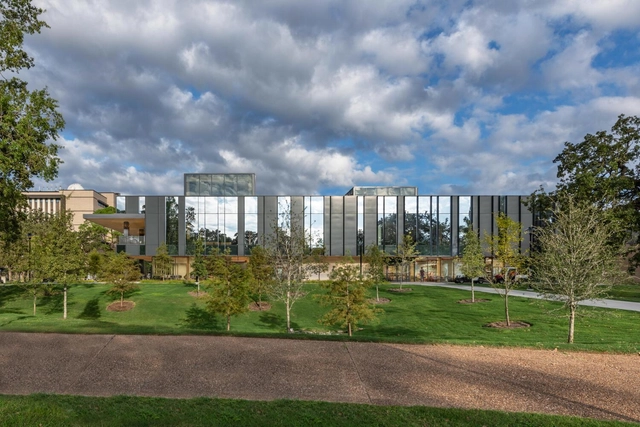
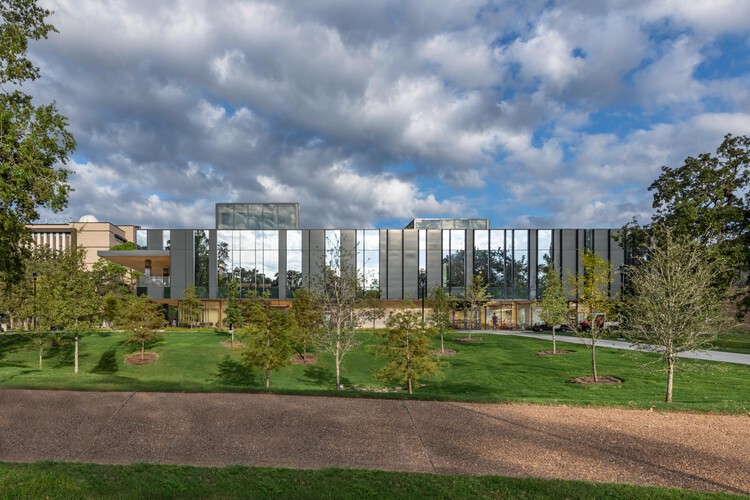
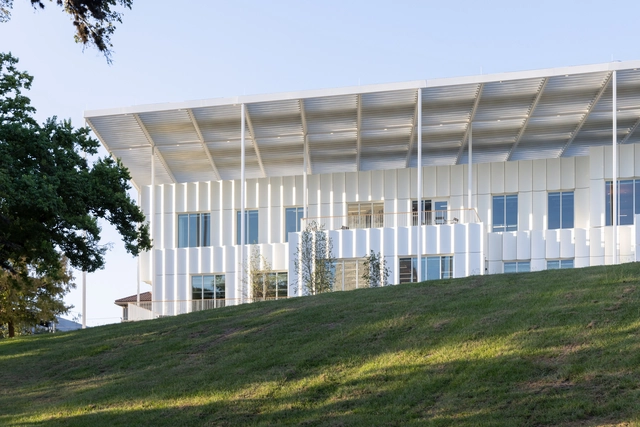
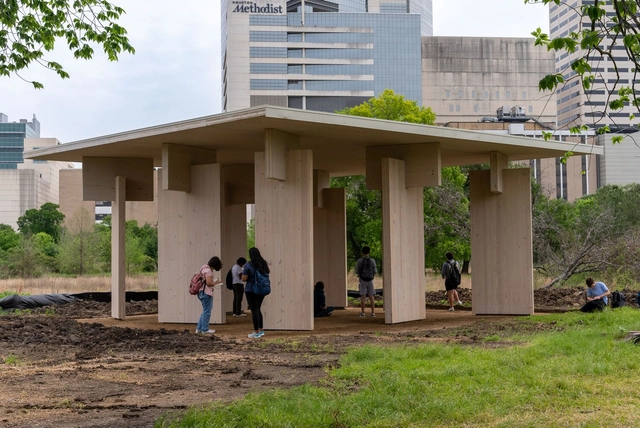
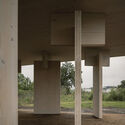
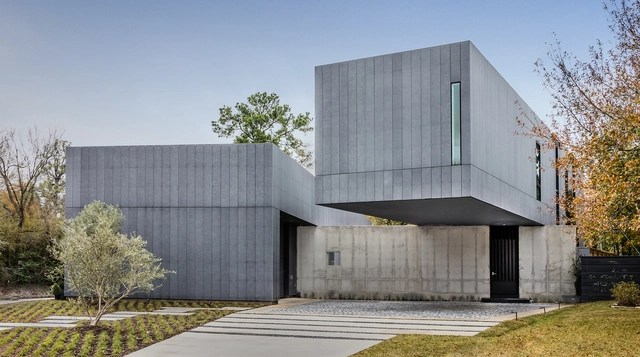
The Ismaili Center in Houston, the first of its kind in the United States, was inaugurated on November 6, 2025, by Mayor John Whitmire. Designed by Farshid Moussavi Architecture and Nelson Byrd Woltz Landscape Architects, the 11-acre site overlooking Buffalo Bayou Park establishes a new architectural and cultural landmark within Houston's urban and social landscape. Located at the intersection of Allen Parkway and Montrose Boulevard, the Center builds upon a vision first outlined by His Highness Prince Karim Aga Khan IV in 2006 and later developed under the direction of his successor. Joining six existing Ismaili Centers worldwide, in London, Vancouver, Lisbon, Dubai, Dushanbe, and Toronto, the Houston Center aims to continue a global tradition of fostering intercultural dialogue and civic engagement.
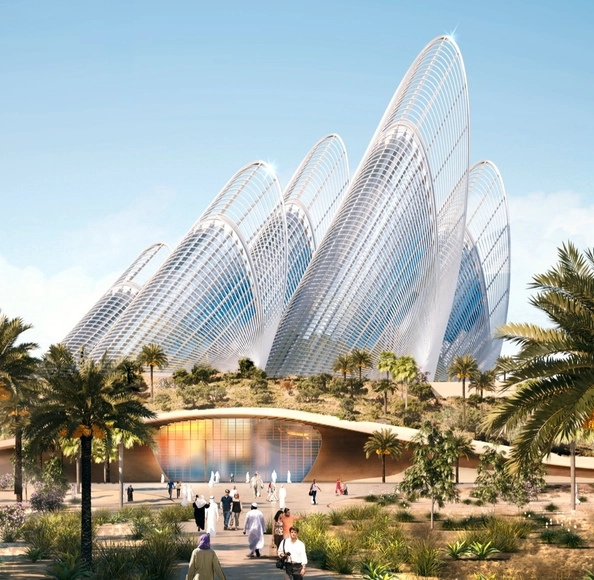
Sheikh Zayed National Museum / Foster + Partners. Image Courtesy of Foster + Partners
As 2024 comes to an end, the architectural world looks ahead to 2025, a year set to unveil transformative projects across the globe. From cultural landmarks in Asia, such as Sou Fujimoto's "Grand Ring" for Expo 2025 Osaka and MAD Architects' Hainan Science Museum in China, to dynamic urban developments like OMA's Harajuku Quest in Tokyo and David Chipperfield's Elbtower in Hamburg, these projects reflect a commitment to innovation, sustainability, and preserving cultural heritage.
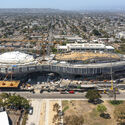
In North America, Studio Gang's Shirley Chisholm Recreation Center in Brooklyn and the Lucas Museum of Narrative Art in Los Angeles highlight architecture's role in fostering community connections. Meanwhile, Europe anticipates Shigeru Ban's hybrid residential tower in Antwerp and Kengo Kuma's Visitor Center at Albania's Butrint National Park, showcasing the intersection of contemporary design and local context. As these projects take shape, they offer a glimpse into architecture's power to redefine spaces and inspire communities.
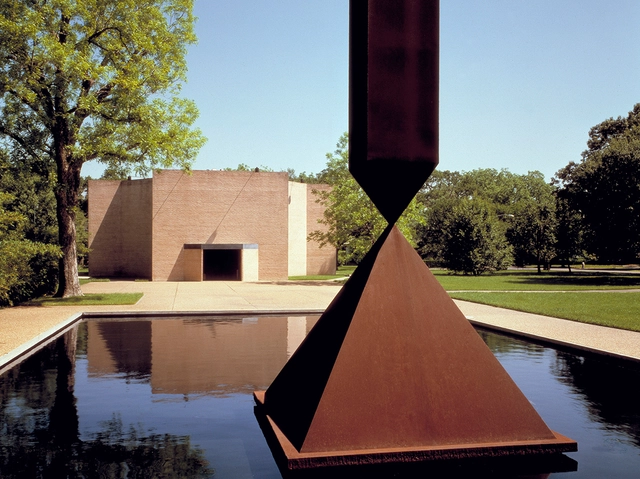
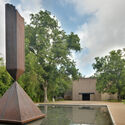
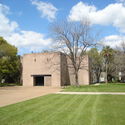
Rothko Chapel / Philip Johnson, Howard Barnstone, Eugene Aubry. Image via Huston Museum District, under policy of fair use
The Rothko Chapel, a celebrated structure appreciated for its profound meditative space, has announced its reopening to the public on December 17th. Following the extensive damage caused by Hurricane Beryl last July, the custodians of the structure announced its indefinite closure, as a team of art conservators, engineers, and volunteers began the extensive work to restore both the architecture and the invaluable artworks stored within. The Chapel's reopening marks a significant milestone in the recovery process, making this sanctuary of contemplation accessible once again to the community.
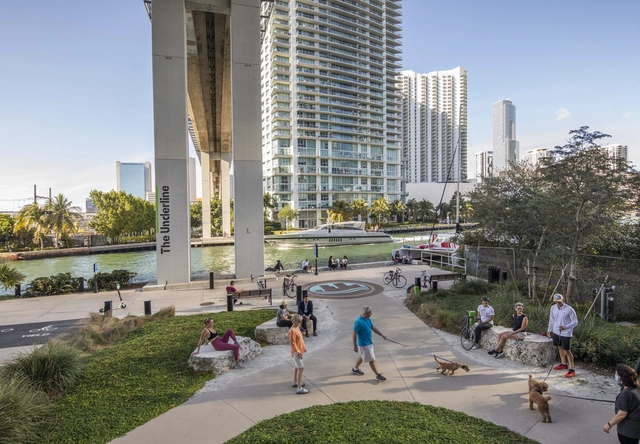
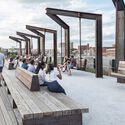
In the early 2000s, an abandoned rail line in Manhattan sat decaying - a memory from a time when freight trains traveled straight through the city. To most citizens, it was a site destined for demolition. However, a few visionary residents saw an opportunity in this neglected space and advocated to transform it into a public green space for the community. The success of the project seemed to spark a "High Line Effect", inspiring other American cities to pursue civic infrastructure on outdated railways, roadways, and industrial sites.
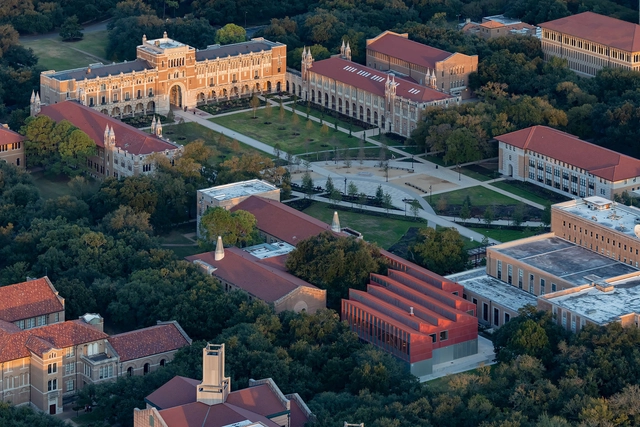
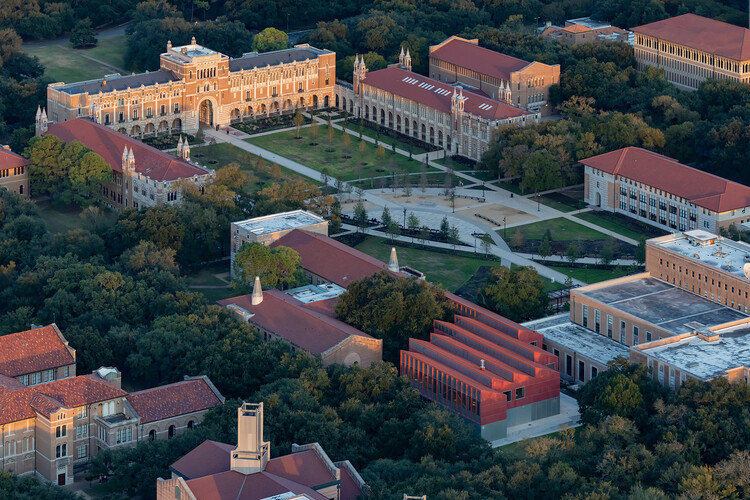
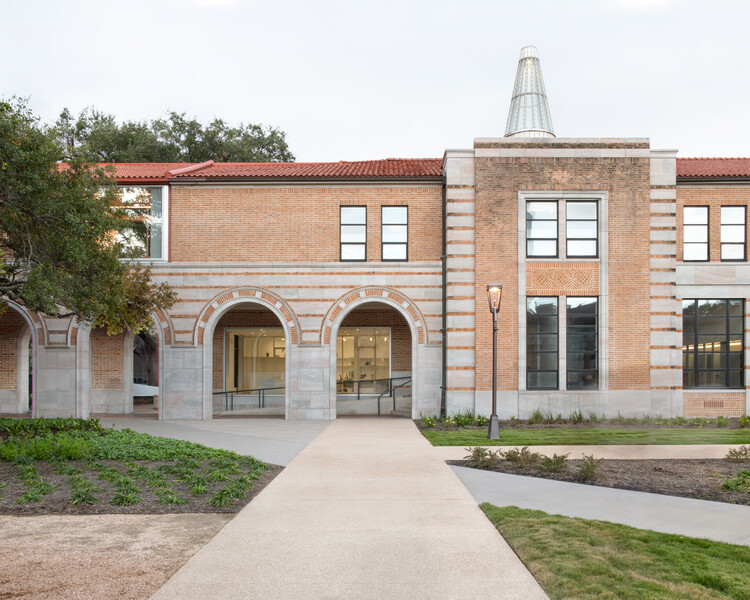
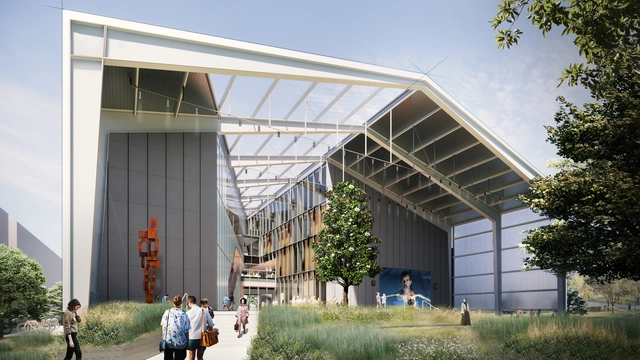
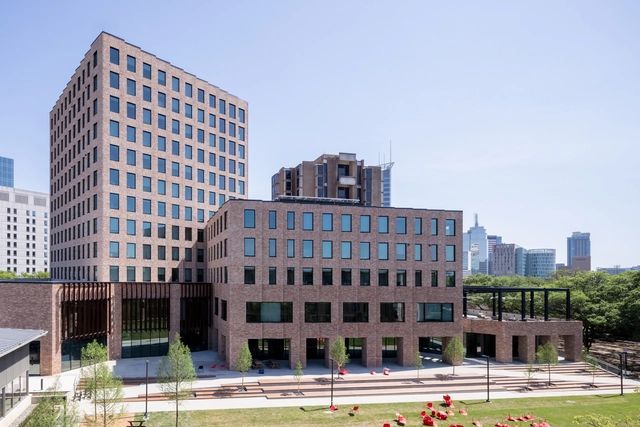
Diller Scofidio + Renfro (DS+R) with a team led by Charles Renfro has broken ground on Rice University's New Arts Building named the Susan and Fayez Sarofim Hall. The new building envisioned as a gateway to the university's campus will incorporate exhibition areas, labs, studios, shops, faculty offices, and other facilities. To create adaptability over time, the structure uses an expandable prefabricated system, thus incorporating interdisciplinarity and experimentation within the design. The building located in Houston, Texas, is expected to open in the fall of 2025.
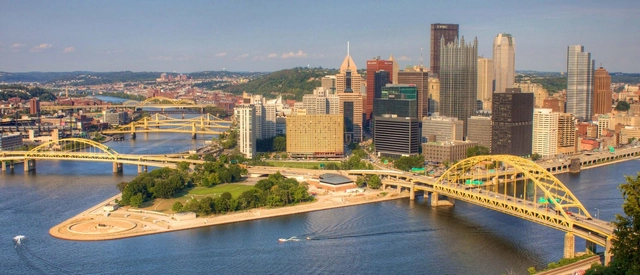
Recently I visited Pittsburgh for a fascinating hand-drawing conference at Carnegie Mellon’s superb school of architecture, which to my knowledge is not among the top 10 in U.S. News and World Report. I wonder why? The curriculum is cutting-edge, the faculty world-renowned, and the students well-grounded and talented. More people of color are in the design community at CMU than at Princeton, SCI-Arc, or Harvard.
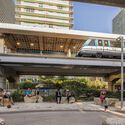
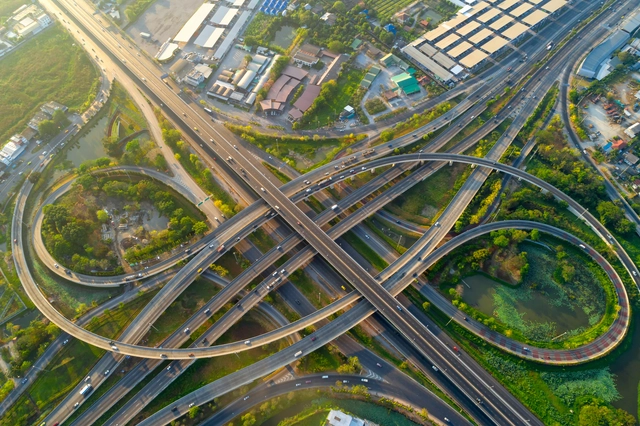
Highway interchanges have evolved from important infrastructures that help distribute traffic to unique landmarks that define cities. As multiple road networks embrace and form distinctive sculptures, these road intersections range from singular bridge connections and roundabouts to numerous, layered and multi-layered interchanges. They twist, turn, loop, and wrap around sparse land, vegetation, or existing structures in a bid to transfer travelers from one roadway to another. However, they also create a moment of enclosure, forming partially bounded areas and a sense of space. These spaces could be viewed as liminal and transitional, with no fixed typology able to be hosted. But that blurring character calls for ideas of urban intervention to disrupt the notion of what these spaces can be. They can be readapted from car-dominant sculptures into more human-friendly places and re-integrated as extended schemes of the city's architecture.
The passage of the Biden Administration’s climate change package, the so-called “Inflation Reduction Act,” has predictably split along partisan lines, with Republicans characterizing the bill as an act of reckless government spending, certain to raise taxes and fuel further inflation. But does this act really represent reckless spending? The legislation authorizes $430 billion in spending, the bulk of which—more than $300 billion—is earmarked for tax credits; other spending, and initiatives aimed at stimulating the clean energy economy; and reducing carbon emissions. (The bill also allows Medicare to negotiate prices with drug companies for certain expensive drugs.) The bill is funded in part by a 15% minimum tax on large corporations and an excise tax on companies that repurchase shares of their own stock. Given the scope of the problem, and the escalating future costs of climate inaction, this legislation is an exceedingly modest, but very necessary, first step.
https://www.archdaily.com/988604/its-time-to-be-honest-about-the-impending-costs-of-climate-changeMartin C. Pedersen, Steven Bingler