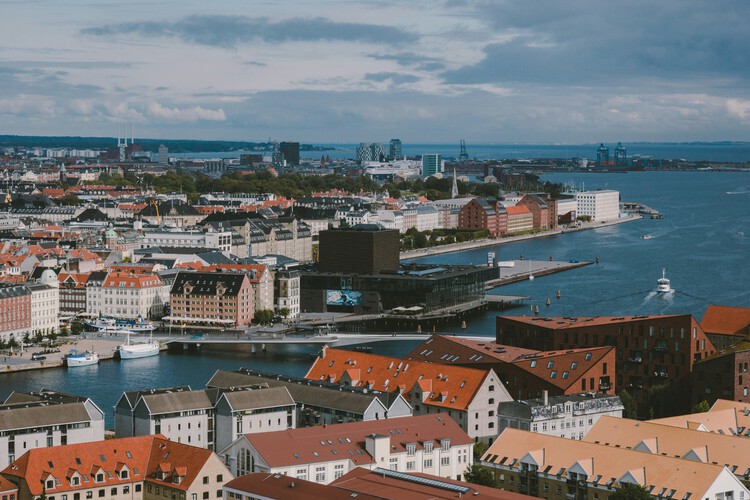
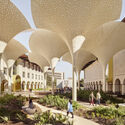
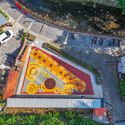
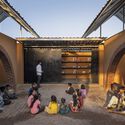
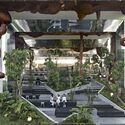
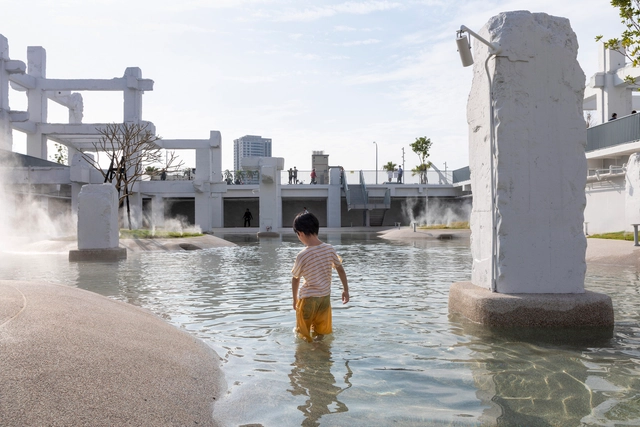
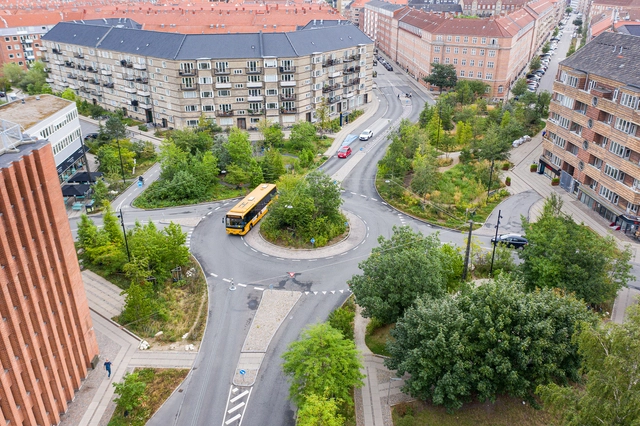
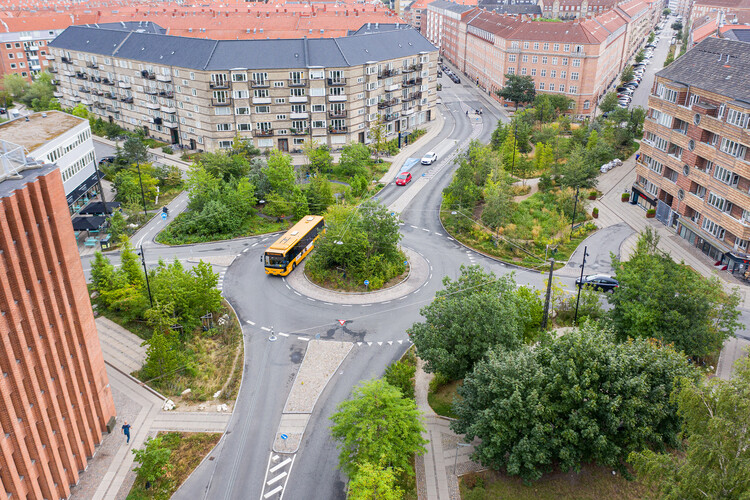
Global city rankings offer one way of looking at how urban environments support everyday life. The Economist Intelligence Unit's (EIU) Global Liveability Index evaluates 173 cities across stability, healthcare, culture and environment, education, and infrastructure, highlighting both long-term patterns and changes from one year to the next. In the 2026 edition, Copenhagen has been named the world's most liveable city for the second consecutive year, followed by Vienna and Melbourne. The Danish capital scored 98 out of 100 overall, receiving perfect scores in stability, education, and infrastructure. The global average remains unchanged at 76.1, with improvements in healthcare, education, and infrastructure offsetting continued declines in stability.
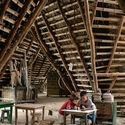
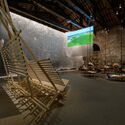
Aulets Arquitectura en Corto invites you to the Espacio Arquia in Madrid (c/ Tutor, 16) on Thursday, September 17, at 7:00 PM for the screening of the short film Amarar. The title refers to a traditional Mallorcan technique of treating wood by immersing it in water to increase its durability. This term has become the name of a sustainable design project that transforms native pine trees into contemporary furniture of high artisanal value. In collaboration with the University of the Balearic Islands, the project also researches the use of this wood in construction. The initiative is led by Francisco Cifuentes and Sebastián Martorell, founding partners of the Palma de Mallorca-based firm Aulets Arquitectes. "We have a vast forest mass on the islands," explains Cifuentes, "but 95% of the forests are abandoned. At the same time, we are importing 70,000 tons of wood for construction. Architects must build with materials that can regenerate local ecosystems. A change in the model is necessary." Directed by Marc Hierro, the short film presents several solutions proposed by Aulets Arquitectes and other project collaborators to promote responsible forest management and utilize wood as a durable, recyclable material with full traceability. Following the screening, a discussion will feature Francisco Cifuentes, Sebastián Martorell, and Albert Cuchí, author of the article "Construir el territorio," recently published in the El Croquis monograph dedicated to the architectural work of Aulets Arquitectes. "What Aulets pursues," asserts Cuchí, "is the recovery of the territory as the authentic field of action for architecture, maintaining an appropriate relationship with resources, ensuring the renewability of extraction processes, and weaving construction together with other social activities to build an ecological society."
Under the theme Common Ground, ICFF 2026 brought together the international design community through a shared focus on craftsmanship and innovation. From May 17–19, 2026, ICFF (International Contemporary Furniture Fair) returned to the Javits Center for a landmark edition that celebrated the global design community during NYCxDESIGN.
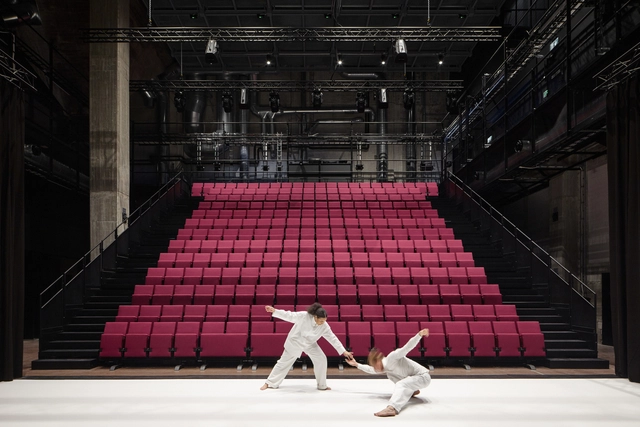
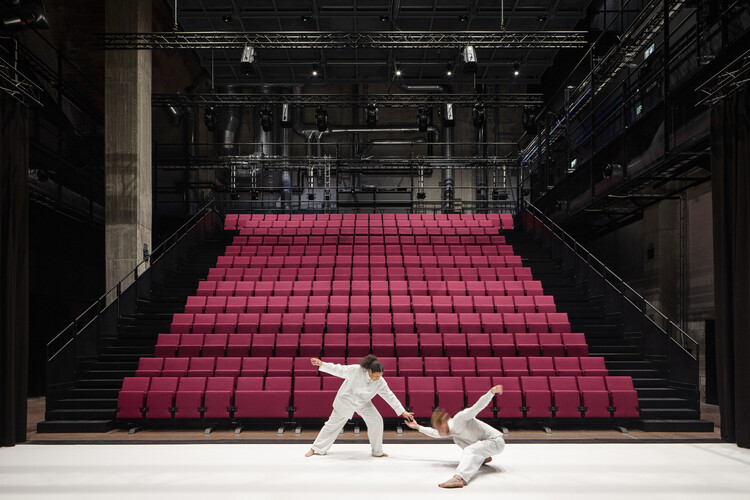
Over the past decade, the definition of a performing arts venue has shifted. No longer singular-purpose destinations, today's cultural facilities are expected to operate as flexible, revenue-generating, community-centered ecosystems. This evolution has challenged architects, operators, and owners to rethink not just how venues are designed, but how they function over time.
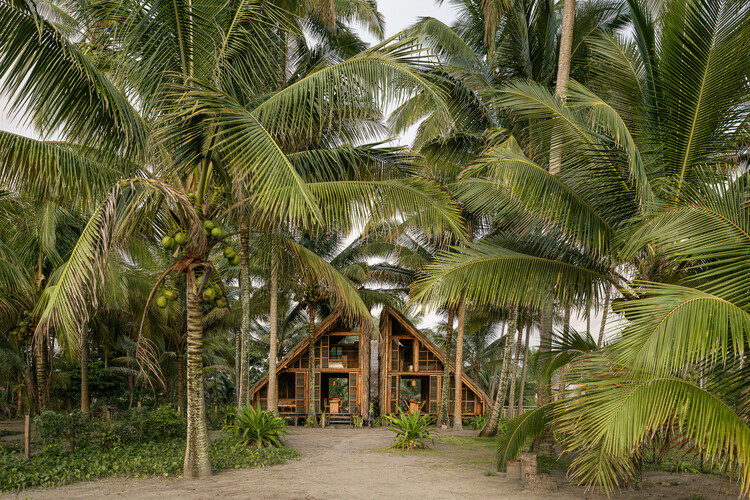
Ecuador's territory embraces a remarkable diversity of landscapes, ranging from the Pacific Coast to the peaks of the Andes, the vast expanse of the Amazon rainforest, and the volcanic Galápagos Islands. Each region of the country presents its own distinctive characteristics, reflected in its varied environmental, cultural, and social contexts. While Latin American architecture is rooted in rich ancestral traditions, native construction techniques, and local materials, contemporary Ecuadorian architecture expresses an evolving identity that blends these elements with actual demands. Tradition and innovation, local resources and modern techniques, along with social responsibility and aesthetics, interact with the natural environment, urban conditions, and social contexts.
How does an architectural installation express the identity of a region? How can a building material connect with the essence of a nation? Throughout its history, Spain has been shaped by a wide range of cultures and civilizations, including Muslim, Phoenician, Roman, Greek, Carthaginian, and Visigothic influences. From flamenco to ceramic tiles adorning façades and historic monuments, each region of Spain embraces its own customs and traditions, reflected in its architecture, history, art, and design. During Milan Design Week 2026, Tile of Spain presents Spanish Design as a Souvenir at the Fuorisalone—an installation that transforms ceramic tile into a narrative medium through a series of sculptural objects reinterpreting everyday icons of Spanish life.
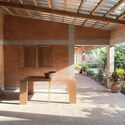
Studio NEiDA operates at the intersection of architectural practice, research, and curatorial work, with a consistent focus on how buildings emerge from the material and cultural conditions of a place. Rather than treating materiality as a finishing language, the studio frames it as the beginning of an architectural narrative—starting from what is locally available, they look at what craft knowledge exists on the ground, and how those resources and skills situate a project within an architectural lineage. This approach foregrounds limitations and possibilities as productive forces, and positions design as an iterative process of aligning spatial intent with the realities of construction culture and vernacular intelligence.
Across their work, NEiDA's interests extend beyond form toward the socio-political and climatic contexts that shape how architecture is made and inhabited. They emphasize learning from non-authored, vernacular, and informal building practices as a way of establishing a shared grammar for intervention, and they describe an indoor–outdoor continuity not as a stylistic preference but as a response to local life and ventilation logics—where outdoor rooms can be as spatially defined and programmatically central as interior ones. Collaboration, in this framework, is not auxiliary: the studio highlights on-site exchange with craftspeople and builders as a core methodology, where projects evolve through collective intelligence and adaptive communication.
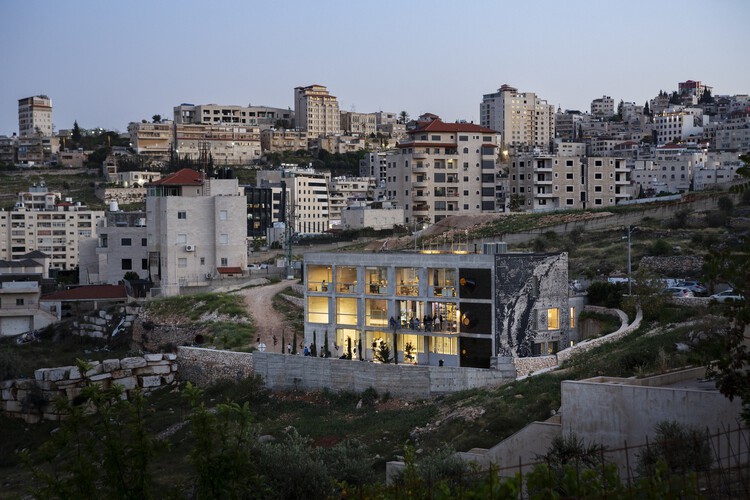
Wonder Cabinet / AAU ANASTAS. Image Courtesy of AAU ANASTAS
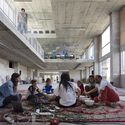
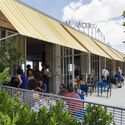
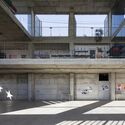
Among the 2025 Aga Khan Award winners is AAU Anastas and their project, Wonder Cabinet in Palestine, whose central aim is to serve as a haven for culture and creativity and a bridge between design and production. Beyond this meaningful project, AAU Anastas—working from offices in Bethlehem, Palestine, and Paris, France—has built a broad portfolio since 2015. Notable works include Dar Al Majous, a restoration in Bethlehem that challenges the boundary between domestic and public realms; the Tulkarm Courthouse (2015), one of their first projects that redefined civicness and social gathering on a prominent corner site in Tulkarm; and The Flat Vault, a commercial intervention that adds a juxtaposed stone vault to an existing monastery shop associated with a church built in the 12th century by the Crusaders.
Among these compelling works, Wonder Cabinet likely drew the jury's attention not only for its refined execution and layered spatial complexity, but also for how it operates as a socially generative platform—dissolving the boundary between social infrastructure and architecture. Conceived to support culture, creativity, design, and production, the building aspires to host architects, designers, chefs, artisans, and sound and visual artists, among others. In no small way, it advances the spirit articulated by the 2025 judges, who characterized this cycle as a year of fostering resilience and optimism through design, by demonstrating how architecture can catalyze community and enterprise simultaneously.
The opening of the new Fondation Cartier pour l'Art Contemporain in Paris last October sparked renewed questions around the role, form, and future of museums. As cultural institutions continue to proliferate worldwide in this digital era, the museum itself appears increasingly in need of redefinition. Rather than offering a single model or solution, Architecture for Culture: Rethinking Museums, written by architectural historian and curator Béatrice Grenier, argues for a more contextual and plural understanding of what a museum can be: an institution shaped by its environment, its public, and the specific cultural questions it seeks to address.
ArchDaily had the opportunity to discuss these ideas with the author against the backdrop of the Fondation Cartier's newly inaugurated home on Rue de Rivoli. Housed within a restored Haussmannian building that once accommodated the Grands Magasins du Louvre, the space has been radically reimagined by Jean Nouvel as a dynamic, transformable architecture.
In 2025, the architectural field has been marked by a dense calendar of exhibitions, a measured slowdown in construction across multiple regions, and a period of reflection that scrutinizes the impact of intelligence (artificial and natural)—both on professional practice and workplace culture, as well as its use as a pedagogical tool. Over this calendar year, ArchDaily has published more than 30 interviews in a range of formats—Q&As, in-person conversations, video features, and more. These exchanges have engaged themes of sustainability and nature, housing and urban development, AI and intelligence, adaptive reuse and public life, and have closely followed major exhibition platforms including the Venice Biennale, Expo 2025 Osaka, Milan Design Week, Concéntrico, and others.
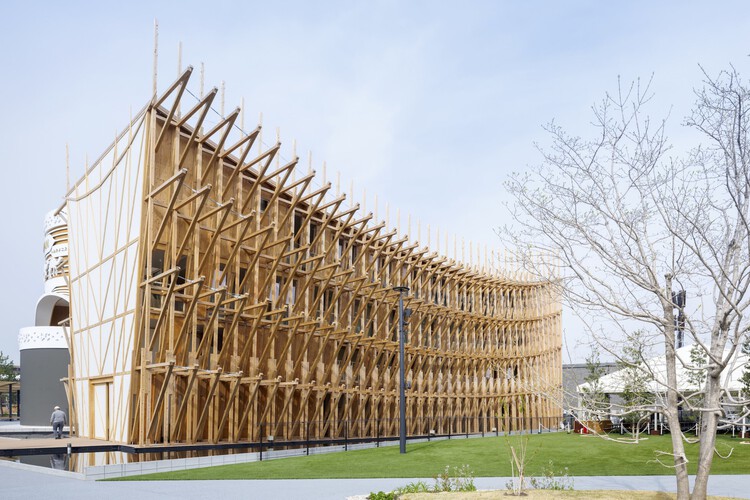
Cultural diplomacy refers to the use of cultural expression and creative exchange to foster understanding and build relationships between nations. In this context, architecture has long played a distinctive role. Beyond its functional and aesthetic dimensions, it serves as a medium of communication, a language through which countries express identity, values, and ambition on the global stage.
Architecture operates as a form of soft power — persuasive rather than coercive — enabling nations to project influence through material presence. From modernist embassies in the post-war era to monumental pavilions at world expositions, governments and institutions have recognized the built environment's potential to shape perception. By commissioning prominent architects and adopting specific design languages, countries have used architecture to signal modernity, tradition, innovation, or stability.
In the world of interior architecture, where creativity and culture intersect, Tola Ojuolape stands as a designer whose work is a testament to personal narrative. From her early studies in art and construction to her degree in interior architecture, Tola's career has been shaped by a deep connection to her Nigerian heritage, discovered during her travels back to the African continent. This journey has profoundly influenced her design philosophy, creating a process tightly woven with history, culture, and a sense of place.
Culture is the set of knowledge and practices people use to express themselves and make sense of the world collectively. As Brazilian philosopher Marilena Chauí reminds us, the word derives from the Latin colere, which means "to take care of." In that sense, agriculture means taking care of the soil, while religious cults are the care of the gods. At its core, culture is the creation of symbolic universes, expressed through different languages, including architecture, that weave connections across time. It safeguards the memories of the past while opening new possibilities for the future.
This month, ArchDaily explores The Architecture of Culture Today, asking a central question: How does architecture shape the way culture is produced, consumed, and experienced? This theme examines how architecture both shapes and responds to cultural life — from the permanence of museums, theaters, and libraries to the ephemerality of pavilions, installations, and virtual platforms. It considers the architect's role in curation, scenography, and exhibition design, as well as the portrayal of cultural spaces in film and digital representations.
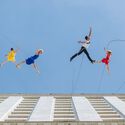
"Dance, dance… otherwise we are lost." This oft-cited phrase by Pina Bausch encapsulates not only the urgency of movement, but its capacity to reveal space itself. In her choreographies, space is never a neutral backdrop, it becomes a partner, an obstacle, a memory. Floors tilt, chairs accumulate, walls oppress or liberate. These are architectural conditions, staged and contested through the body. What Bausch exposes — and what architecture often forgets — is that space is not simply built, it is performed. Her work invites architects to think not only in terms of materials and forms, but of gestures, relations, and rhythms. It suggests that architecture, like dance, is ultimately about how we inhabit, structure, and emotionally charge the spaces we move through.
Historically, architecture and dance have operated in parallel, shaping human experience through the body's orientation in space and time. From the choreographed rituals of classical temples to the axial logics of Baroque palaces, built space has always implied movement. The Bauhaus took this further, as Oskar Schlemmer's Triadic Ballet visualized space as a geometric extension of the body. This was not scenery, but spatial thinking made kinetic. In the 20th century, choreographers like William Forsythe and Anne Teresa De Keersmaeker integrated architectural constraints into their scores, while architects such as Steven Holl, Diller Scofidio + Renfro, and Toyo Ito designed buildings that unfold as spatial sequences, inviting movement, drift, and delay.
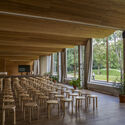
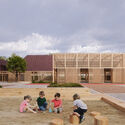
How do nature and landscape dialogue within spaces designed for children? How are architecture and urban design capable of shaping natural atmospheres that integrate practices of play, participation, and exploration? From participatory projects that involve children in the design process to built environments that incorporate furniture adapted to their needs, the conception of spaces for childhood entails the creation of places for encounter, learning, and coexistence. At times, these spaces are able to strengthen the relationships between interiors and exteriors, connecting their users with nature and the surrounding environment. Depending on their cultures, customs, and histories of attachment to place, several contemporary projects deploy tools and strategies that integrate architecture, nature, and pedagogy to form broad experiences of learning, play, and discovery.
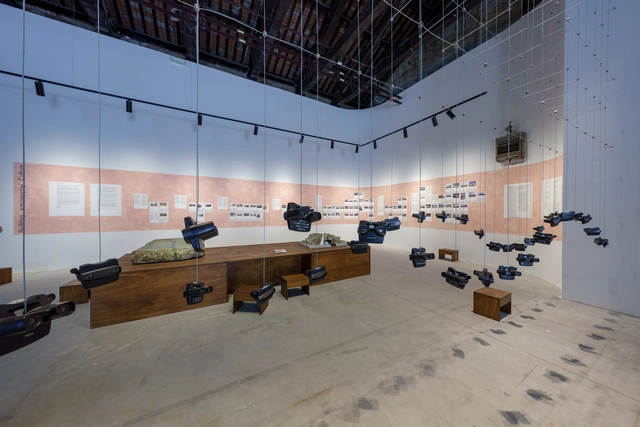
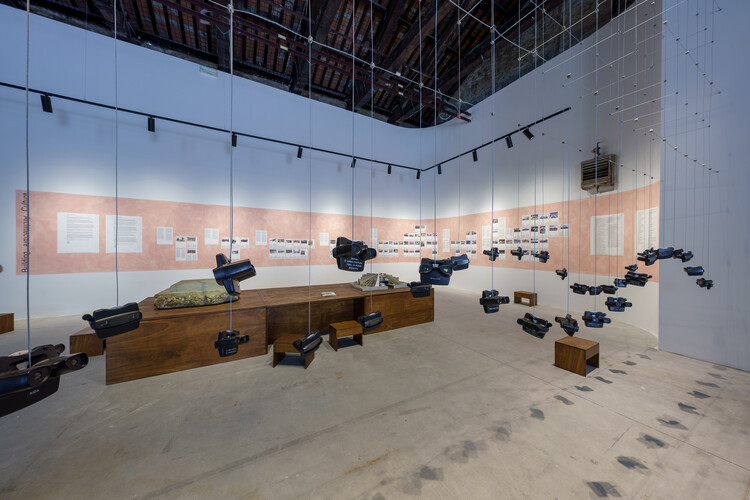
Curated by Anneke Abhelakh, the Albania Pavilion at the 2025 Venice Architecture Biennale, titled "Building Architecture Culture", explores how the country's architecture embodies its political, cultural, and social transformations. Albania's built environment reflects a layered history, from Ottoman and Italian rule to communist isolation and post-socialist transformation, each leaving visible marks on its cities and public spaces. The pavilion examines how architecture both responds to and shapes collective memory, public space, and civic engagement, framing these questions through past, present, and future perspectives.
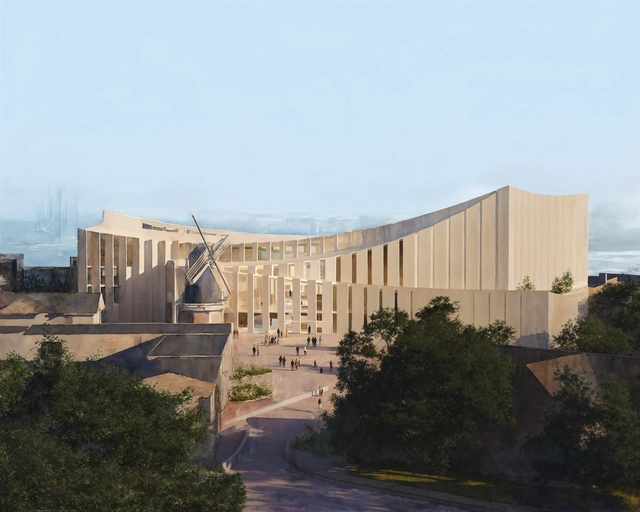
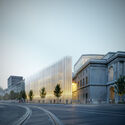
The House of Culture and Administration, a new civic complex designed by Benthem Crouwel Architects in collaboration with Snøhetta, is gradually taking shape in the Dutch city of Delfzijl. Located at Molenbergplein, the project brings together cultural and administrative functions in a unified architectural gesture that aims to strengthen the urban fabric of Eemsdelta. The current visualization marks a step forward in the structural design phase. Technical and financial refinements will continue over the summer, with final approval from the municipal council expected in October 2025.
As cities worldwide navigate evolving social, environmental, and cultural priorities, recent project announcements showcase how architecture is increasingly conceived as both civic infrastructure and a catalyst for collective identity. From Populous' new stadium design in Thessaloniki that blurs the lines between sport and urban life, to HENN's transparent cultural stage in Augsburg that invites community participation, these projects illustrate architecture's expanding role beyond its immediate function. In Luxembourg, Schmidt Hammer Lassen's work for the European Investment Bank reimagines institutional spaces through sustainability and heritage, while SLA and GHD's new island community in Toronto pushes forward nature-based, climate-adaptive urbanism. This edition ofArchitecture Now brings together diverse yet interconnected efforts to shape how architecture can support long-term ecological, cultural, and civic impact.