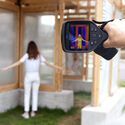
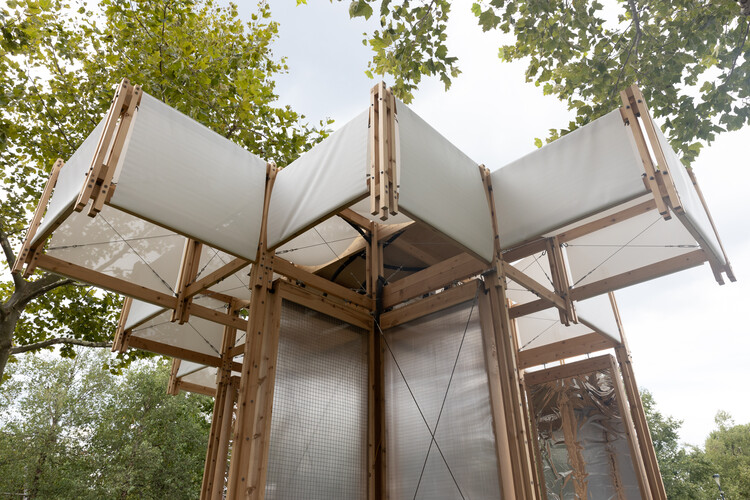
When exposed to heat, the body activates several physiological mechanisms to maintain thermal homeostasis. However, these natural defenses are often overwhelmed in our modern cities.In an urban environment defined by heat-absorbing asphalt, concrete, and a lack of green spaces, these mechanisms become inefficient. If the surroundings are excessively hot, humid, or poorly ventilated—conditions amplified by the Urban Heat Island effect—the core body temperature begins to rise, and the risk of serious complications increases, ranging from cramps and exhaustion to potentially fatal heat strokes.
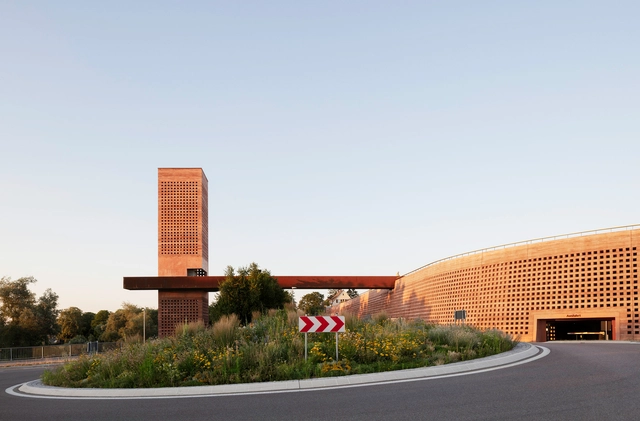
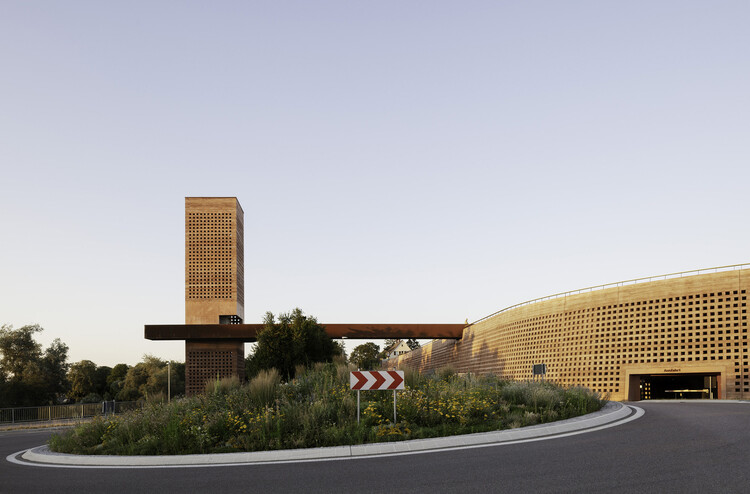
Areal am Kronenrain / MONO Architekten. Image Courtesy of Gregor Schmidt
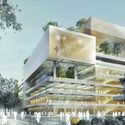
Marginalized in architectural discourse and often dismissed as purely functional, parking garages remain among the most ubiquitous structures in the urban landscape. Designed to accommodate the needs of private vehicles, they occupy central locations, shape skylines, and consume considerable resources, yet rarely receive the same attention — or architectural care — as cultural institutions, schools, or housing. Despite their prevalence, these buildings tend to fade into the background of daily life, treated as infrastructural necessities rather than as design opportunities.
This is beginning to change. As urban mobility undergoes profound transformations — from the decline of car ownership to the rise of electric vehicles and shared transport systems — the role of parking infrastructure is being redefined. Architects and planners are reimagining garages as adaptable frameworks that integrate public space, ecological functions, and mixed-use programs. These new approaches challenge the perception of parking as a residual typology and instead position it as a civic structure with the potential to support more inclusive, flexible, and sustainable urban models.
Contemporary architecture in UNESCO World Heritage contexts presents a unique challenge: revitalizing historically significant sites while adhering to strict preservation guidelines. From urban centers to natural landscapes and intangible cultural traditions, these projects demonstrate the delicate balance between innovation and heritage conservation. Whether working in a mega city, a protected landscape, or a culturally rich rural area, architects are tasked with reimagining these spaces without compromising their historical value. Each project offers a fresh perspective on how heritage sites can evolve and remain relevant in modern times.
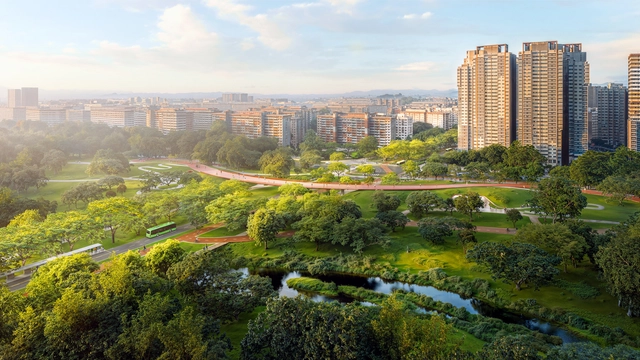
The team led by Henning Larsen, in collaboration with Ramboll, Cistri, Gehl, Participate in Design, and Camphora has won the commission for the master plan consultancy to design Singapore’s North-South Corridor’s surface streets. The project proposes an expansive urban transformation, aiming to integrate public transport, active mobility, community-focused spaces, and greenery along the 21.5km corridor. Local communities and stakeholders are also actively engaged in the design process through public engagement sessions. The initial master plan design is set to continue into 2026, over the next 18 months.
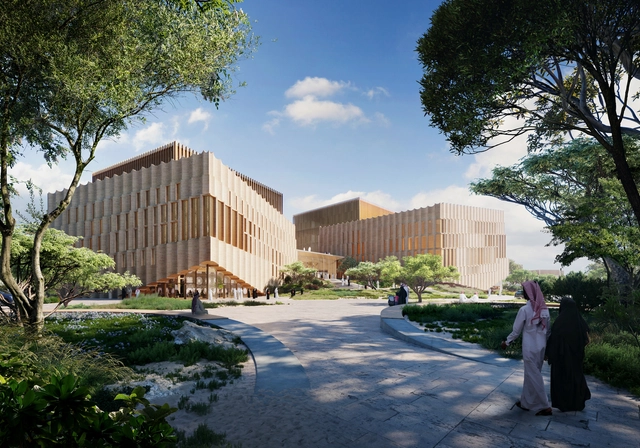
Henning Larsen Architect has just revealed the designs for The JeddahOpera House, a new local landmark in Saudi Arabia. Drawing inspiration from the historical Al-Balad neighborhood, the Opera House celebrates culture and regional geography. Situated along the Red Sea waterfront, the opera house aims to connect residents and visitors to the sea through a culture spine under a natural canopy. Extending from the city, through the opera house, to the water, this “spine” forms an integral part of the Jeddah Central masterplan for the new Opera Quarter.
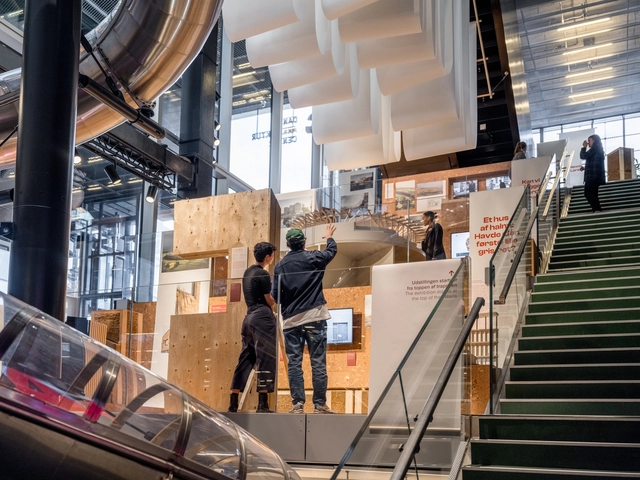
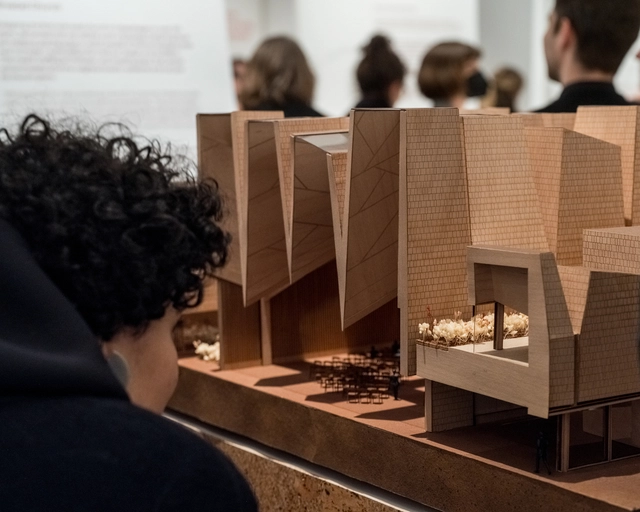
In a bid to explore new materials and methods for more sustainable construction, Henning Larsen opens the “Changing our Footprint” exhibition at the Danish Architecture Center in Copenhagen. The initiative, open from November 17, 2023, until March 3, 2024, aims to showcase ideas for more climate-friendly architecture and to start conversations on architecture and construction’s role in mitigating the effects of climate change. This represents the second iteration of the exhibition, as the first version opened at the Aedes Architecture Forum in Berlin earlier this year.
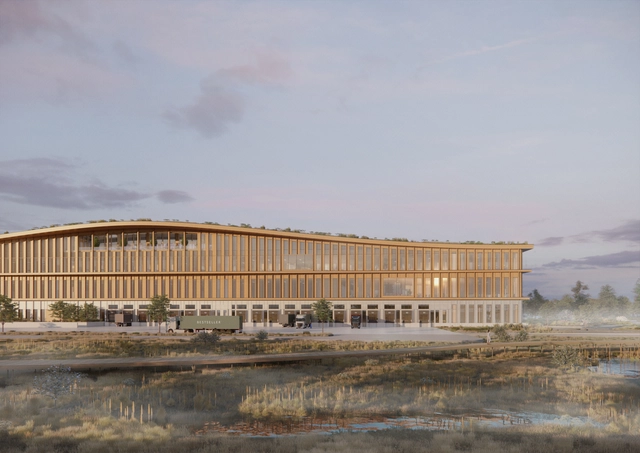
Henning Larsen has revealed the designs for Europe’s largest timber logistics center. Located in Lelystad, on the Dutch island of Flevopolder, the center is a testament to the future of timber structures. Serving as Bestseller’s new 155,000 sqm Logistics Center, the design is committed to reduced emissions, fair working conditions, and following circular design principles in order to minimize waste.
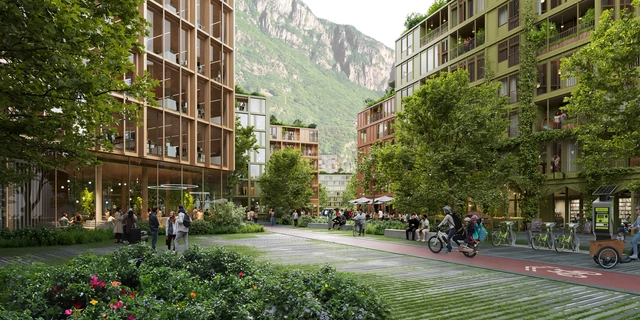
Henning Larsen has revealed the design proposal for Bolzano’s Industrial Zone. The concept revitalizes and reconnects part of the city through prioritizing adaptive reuse, urban mining, and timber construction. The proposed design will transform the post-industrial area into “Pone Roma Quartier,” an inviting, multigenerational, mixed-use neighborhood with a solution to the city’s pressing housing crisis.
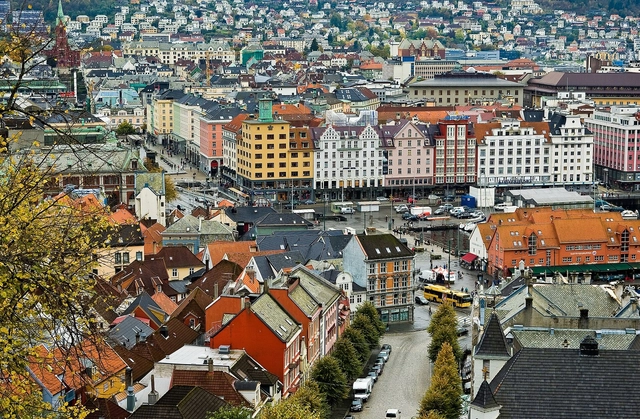
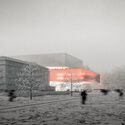
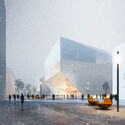
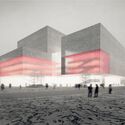
Five finalists have been shortlisted in the competition to design the new Griegkvartalet Theater in Bergen, Norway. The project is set to be a cultural powerhouse in Western Norway, hosting multidisciplinary forms of art, including opera, musical theater, ballet, dance, concerts, and conferences. The competition emphasizes integration with the surroundings, urban space, energy efficiency, and feasibility.
The shortlisted teams include Henning Larsen Architects, Snøhetta, Zaha Hadid Architects, MAD arkitekter and Kengo Kuma, and the Nordic Office of Architecture includes Arkkitehtitoimisto ALA in the architecture subjects. Each studio was selected from 32 participants worldwide and will be filtered into three winners in the coming stages in the fall of 2023. Ultimately, by March 2024, one winner will be selected and receive the official service contract to begin construction.
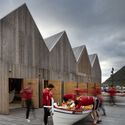
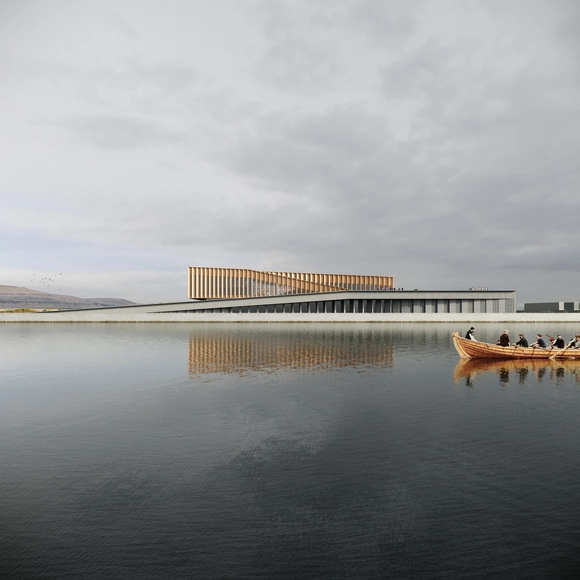
Henning Larsen has just revealed the design for Smyril Line's new headquarters and ferry terminal in Torshavn, the capital of the Faroe Islands. The building pays homage to traditional Faroese fishing boats and the historic Eastern harbor while embracing the picturesque backdrop of abundant landscapes and open seas. The new headquarters serves three functions: a ferry terminal, an office building, and a logistics center.
Canberra Theatre Centre design concept. Image Courtesy of Henning Larsen, Architectus, and Arup
The consortium formed of international studio Henning Larsen, Australian office Architectus, and global consultants Arup has been selected to transform the Canberra Theater Center into a vibrant and inclusive space. The project is developed in consultation with First Nations peoples to ensure that Canberra’s Civic and Cultural District will become a welcoming space for both artists and audiences. The winning tender includes preliminary designs that depict a new theater building to be added to the district, in addition to the renovation of the Courtyard Studio, Canberra Theater, and The Playhouse.
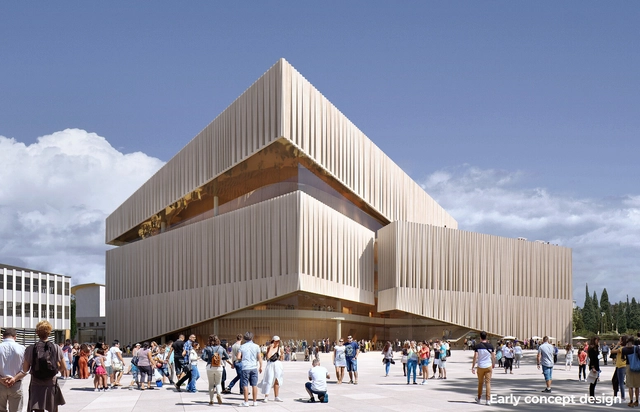
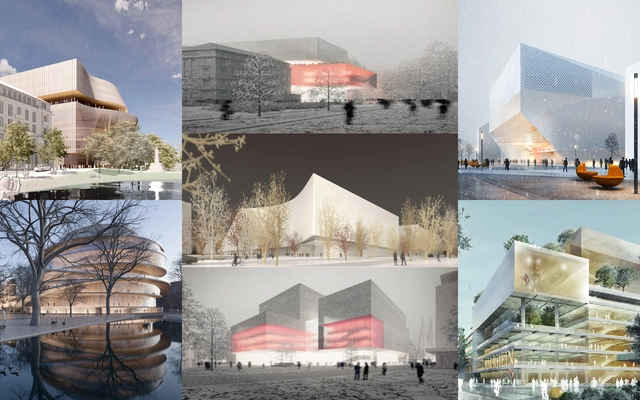
The finalists for the Opera of the Future competition have been announced. This urban planning competition, commissioned by the state capital of Düseldorf, was created to select a location for the new cultural institution. After an extensive examination of potential site locations, the two options for the competition proposals were: Heinrich-Heiene-Allee, where the current opera house is, and Am Wehrhahn.
Throughout the brief, firms were encouraged to figure out how this future project could become a lively and public space open to the entire city, offering a wide range of services. As a result, submissions were received for both prospective buildings, and the finalists for each location were announced.
In an effort to address the architecture industry’s environmental impact, Henning Larsen is presenting the “Changing Our Footprint” exhibition at AedesArchitecture Forum in Berlin. The event features the small but scalable steps that the office is taking to move towards a more desirable future through the projects they are designing and the research they are conducting. The exhibition aims to be an engaging event, inviting visitors to participate in the dialogue, to think critically about the proposed solutions and initiatives, and to ask difficult questions in the search for better outcomes. The exhibition is open until March 22, 2023. Henning Larsen will also host a series of panel debates at the Aedes Architecture Forum from February 22 to March 14.
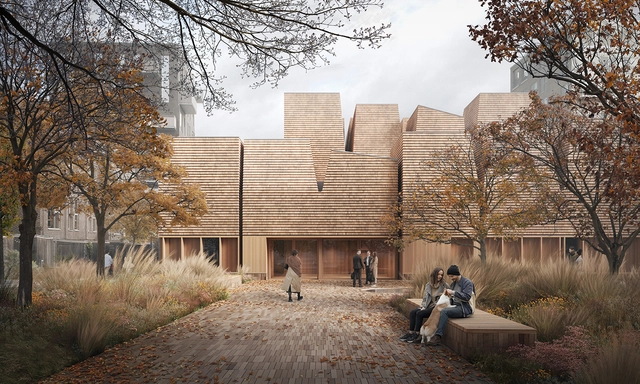
Henning Larsen has revealed the first images of the Ørestad Church, the first church to be built in Copenhagen in the last 30 years. The modern monument is built in wood and wood shingle, reflecting Ørestad’s open natural landscape and embracing the identity of the local community. The intention was to create a serene space, detached from the bustle of the city, where the calmness and simplicity of interior spaces can offer residents solace from their everyday life. Construction is expected to start in 2024, and the church will be consecrated in 2026.
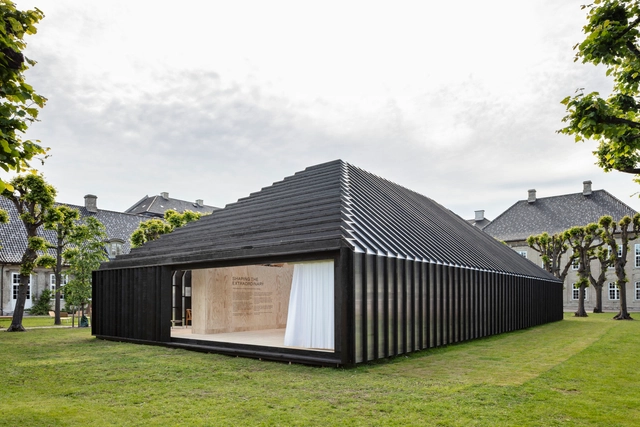
Henning Larsen has unveiled the "Fritz Hansen Pavilion", a sustainably-designed pavilion for the 3daysofdesign event in Copenhagen. Set in Designmuseum's Grønnegården, the Pavilion is developed with a Nordic approach, centered around daylight, using low-carbon materials, and circular design principles. The pavilion is designed to be disassembled, ensuring that its materials can be reused elsewhere. The pavilion will be open to the public during 3daysofdesign 15 – 17 June, and will then be used by Designmuseum Danmark until mid- Autumn.
Henning Larsen Reims School. Image Courtesy of Henning Larsen
Henning Larsen has been selected among 40 international architecture firms to design NEOMA’s new French Business School, in Reims, France. The Danish firm's hybrid timber design combines innovation, environmental consciousness, and a focus on student life, setting to accommodate over 4,000 students across a 26,000 sqm campus. Construction is expected to start in spring of 2023, and is scheduled to be open for the start of the 2025 academic year. Along with Henning Larsen, the winning team includes Patriarche, Egis, Elioth, Etamine, Acoustb, and Creafactory.
Architecture draws together influences in art, culture and daily life. When designing for local communities and sourcing regional materials, architects often take inspiration from vernacular traditions. Utilizing traditional materials and resources from the area where a building is located, they draw from local climates and a history of building and ideas. Building sites around the world are diverse locations shaped by new construction technologies, past techniques, and changing conditions of cultural life.
Henning Larsen revealed the design for World of Volvo, an experience centre for the Swedish car manufacturer that highlights the Scandinavian landscape and architectural traditions. Currently under construction, the project features a circular timber structure that takes on a modern approach to traditional construction material, while expressing openness and an intimate relationship with the landscape. The venue is set for completion in late 2023 and will open to visitors in 2024.