On the first Monday of October, World Architecture Day offers an opportunity to reflect on the role that architecture plays in shaping our world and our communities. Established by the International Union of Architects (UIA) in 1986, this day was designated as a basis for the ongoing discussions on innovations in architectural practice, new approaches to the ever-changing role of architects and designers, and the varied responses to emerging concerns.
As in previous editions, UIA sets a central yearly theme to guide these conversations. This year, the theme of World Architecture Day 2024, "Empowering the Next Generation to Participate in Urban Design," opens up multiple interpretations, contemplating the impact of urban design on the next generation, as well as highlighting the impact and contributions of young architects in shaping the cities of tomorrow. This year's event aims to address crucial challenges faced by the urban environments and their impact on the next generations. The focus is on creating cities that are not only greener and more environmentally friendly but also inclusive, catering to the diverse needs of various groups in society.
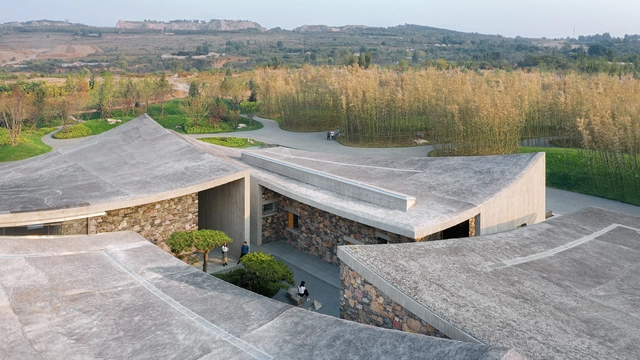
Oct Art Center, Photo by Xia Zhi. Image Courtesy of Zhu Pei Studio
“This is going to be amazing! I feel so excited,” says Zhu Pei about his now under-construction Majiayao Ruins Museum and Observatory in Lintao, Gansu province. The Beijing-based architect designed his building like a deeply embedded cavernous space evoking a giant fragment of ancient pottery, resembling an archaeological site from the Neolithic Age discovered here a century ago. The building is so unusual that it cannot be described in common architectural terms. For example, a vast cast-in-place concrete hyperbolic shell lies prone on the ground, blocking the cold wind from the northwest in winter. The architect used the sand and gravel from the local Tao River to produce a special rough concrete with horizontal scratches on the surface, symbolizing the traces of thousands of years of erosion. All of Zhu’s buildings are quite remarkable. Yet, despite their novelties, they are rooted in culture, nature, and climate. They are designed based on his architectural philosophy, Architecture of Nature, articulated in five fundamental points: incomplete integrity, sponge architecture, cave and nest, sitting posture, and structure and form.
The city of Barcelona and the region are preparing to host Manifesta, the European nomadic biennial of art, architecture, and urbanism, which will celebrate its 15th edition on September 8, 2024. The event will take place in twelve cities over twelve weeks, where an extensive list of participants will materialize projects aimed at reimagining the future through art and architecture.
The first edition of Manifesta took place in Rotterdam in 1996. Over its 14 previous editions across 25 years, it has visited various European cities such as Luxembourg, Ljubljana, Frankfurt, San Sebastián, Trentino-South Tyrol, Murcia, Genk, Saint Petersburg, Zurich, Palermo, Marseille, and Pristina. One of the main pillars of Manifesta is based on critical urban research, promoting the construction of communities and cultural programs with a local identity that act as agents of change. While the nomadic character is a hallmark of the event, each city works with local artistic communities, citizens, and organizations to carry out projects that address issues inherent to the location.
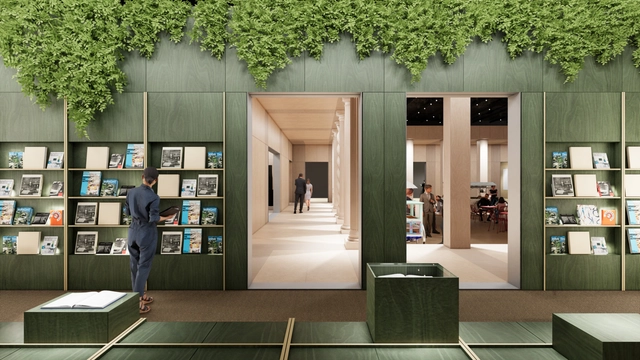
Stefano Boeri has designed a cultural square at the heart of the Italian pavilion for the 76th edition of the Frankfurt Book Fair. With Italy returning as Guest of Honor after 36 years, the book fair is the largest and most significant event in the publishing world and will be held from October 16-20, 2024. The Italian pavilion, designed by Stefano Boeri, seeks to celebrate Italian cultural heritage and publishing, aligning with the theme “Roots in the Future.”
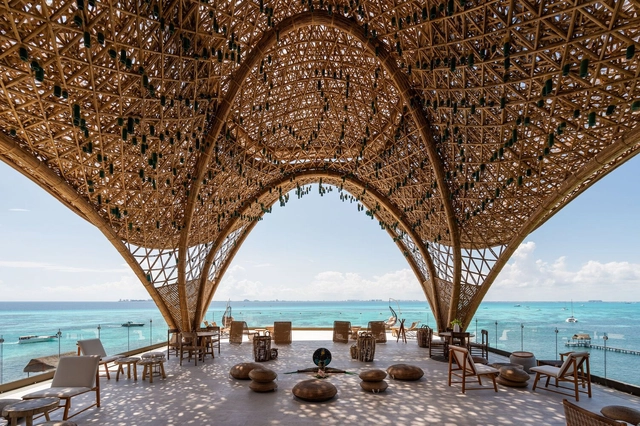
In the quest to promote a more sustainable construction where the use of natural materials contributes to the transmission of local traditions and cultures, an increasing number of architecture projects are exploring different resources and techniques to address environmental, economic, or social concerns. Understanding the benefits and qualities of materials such as color or texture influences the final experience of those who inhabit, walkthrough, or visit spaces. Therefore, understanding their technical, constructive, aesthetic, and functional properties should be part of the design process from the beginning.
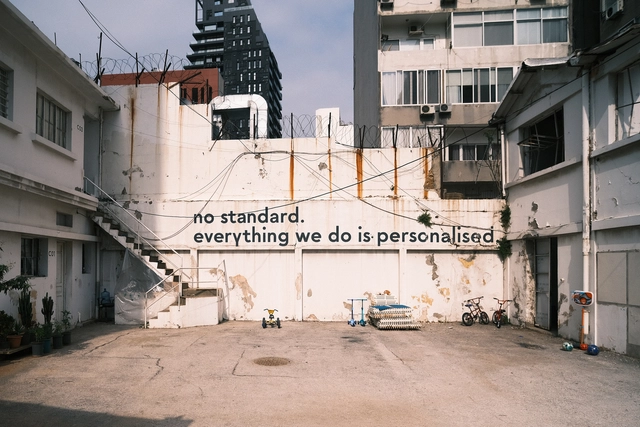
We Design Beirut, Lebanon’s four-day design experience will take place from May 23-26, 2024. This multidisciplinary event aims to showcase and celebrate design and creativity through a varied program, including showcases, installations, talks, and workshops. Founded by Mariana Wehbe in collaboration with industrial designer Samer Alameen, the event seeks to foster a global conversation on design and sustainability through programs in the fields of interior design, architecture, furniture, product design, functional art, ceramics, and home accessories.
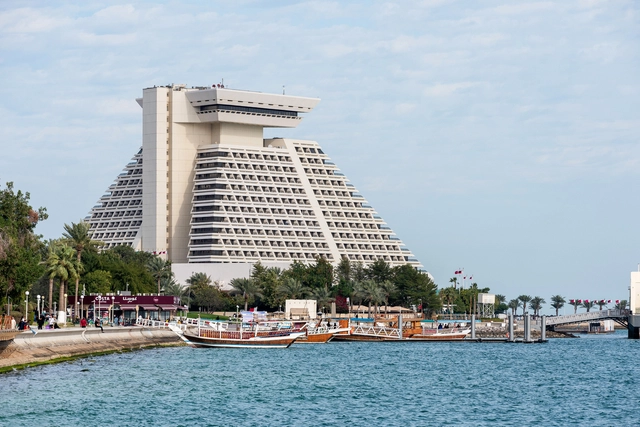
As part of the Design Doha 2024 Biennial, Glenn Adamson and Péter Tamás Nagy present the exhibition “Colors of the City: A Century of Architecture in Doha” investigating the architectural evolution of the capital of Qatar based on multiple global influences that characterize it. Running until March 30, 2024, the exhibition offers a journey through Doha's architectural history featuring various styles such as Classicism, Art Deco, and Modernism, contemplating the Qatari adaptations of these styles developed by architects from Europe, America, the Middle East, and South Asia.

Architecture is the design of spaces for human occupation. Despite architects’ skill in designing spaces to influence human behavior there often is a shortfall in anticipating and reacting to occupants’ behavior. To create environments that boost well-being, productivity, and social engagement, a symbiotic relationship between buildings and human behavior must be fostered. The intersection of architectural and anthropological studies forms an insightful framework for the design of physical spaces informed by human behavior and cultural context.
Respecting others seems like something still distant from prevailing in humanity. In a world where news bombards us with various forms of violence, it is always necessary to find ways to recognize the worth and dignity of each person and to respect differences. We need to cultivate tolerance towards what we don't know, and in this regard, architecture can be an important ally.
MAD Architects has unveiled the project for the renovation of the "Wanmicang" warehouse on the southside of the Shanghai Zhangjiang CementFactory. The building is set to be transformed into a multifunctional public waterfront space for culture, creativity, and commerce. The project maintains the character of the former industrial site but introduces a new addition in the form of an ark-like metal 'floating' volume, creating a stark contrast between the old and new structures. The project is scheduled for completion by 2026.
Cities are the bedrock of civilization. For millennia, they have attracted people with the promise of superior standards of living — from better economic and educational opportunities to easier access to quality public infrastructure such as housing, healthcare, and public transport. Today, however, many cities around the world are finding it challenging to live up to this promise. With urban migration accelerating at a dizzying rate – the United Nations projects that over two-thirds of the world's population will live in cities or urban centers by 2050 – existing resources and services in cities are coming under increasing pressure, rendering them dysfunctional and leading to glaring inequities.
There is no singular way to define or assess liveability; every city has a unique set of characteristics, from its history, culture, geography, and demographics, to how it is governed and what urban issues plague it. Therefore, improving liveability requires concerted efforts from multiple stakeholders including people, governments, and experts, to identify critical problem areas and opportunities, and devise contextual solutions. The TV show Tale of Two Cities, where Indian architect and urbanist Dikshu C. Kukreja sits down with global leaders, brings out great insights into what some major cities in the world are doing to create more liveable environments for their inhabitants. Here we present five examples: from Bogotá, Kolkata, Hannover, Tirana, and Washington, D.C.
This year, the torch of the World Capital of Architecture passed from Rio de Janeiro to Copenhagen. For Audrey Azoulay, Director-General of UNESCO, “Copenhagen will build upon Rio’s achievements, by continuing to show the way in which architecture and culture can respond to the challenges of our time, especially in the environmental field.”
Through the perspectives of various Danish architects, such as Marie-Louise Høstbo, Head of Design at Fritz Hansen, we venture into the unique character of North Copenhagen. Exploring some of her favorite locations –all of which exemplify the city’s culture and sustainable approach– we analyze how Copenhagen upholds a strong legacy and how architecture and urban development play an essential role in shaping its urban identity, while promoting sustainability and liveability. From the serene coastal escape at Bellevue to the reimagined dry dock echoing the city’s maritime history, Høstbo showcases how the World Capital of Architecture seamlessly integrates “design, art, and architecture from the past, present, and future.”
As has become customary in recent years, on the first Monday of October, we celebrate both World Architecture Day and World Habitat Day, serving as a reminder to the global community of its collective responsibility for the well-being of the built environment. This edition, like its predecessors, sheds light on the realm of architecture and the challenges faced by our cities, introducing new themes, contemplating the state of our urban areas, and proposing constructive strategies.
Since urban economies have encountered significant difficulties this year, the UN's World Habitat Day focuses on "Resilient Urban Economies: cities as drivers of growth and recovery." Launching Urban October, this event seeks to bring together diverse urban stakeholders to deliberate on policies to help cities recover after the dual economic impacts caused by the COVID-19 pandemic and conflicts worldwide. Aligned with this concept, World Architecture Day, created by the UIA in 1985, has chosen to concentrate on "Architecture for Resilient Communities," emphasizing the role and duty of architecture in fostering thriving community existence while initiating a global dialogue regarding the interconnectedness of urban and rural regions within every nation.
What we build can be metaphoric—often intentionally, sometimes subliminally. But architecture is seldom the intentional commentary of architects, crafting symbolism; more often it is a direct reflection of its time and the culture that made it.
Graffiti, as an art form, has a complex relationship with gentrification. On one hand, it has engaged the streets and urban fabric as a canvas for people to express themselves culturally and socio-politically. This expression could be a form of rebellion by ethnic minorities and disadvantaged groups in certain neighborhoods, or it can build up a sense of cultural uniqueness and social expression, giving a neighborhood a positive character and attracting newcomers. However, over the years, the latter has been an agent of gentrification, spiking up property values to accommodate richer residents and alienating the native communities of those neighborhoods.
In certain instances, artists recognize their role in this urban scheme and tweak their art form through its style, message, location, and action as direct forms of protest to fight against gentrification. From Brixton, Shoreditch, and Hackney in London, Williamsburg and Bushwick in New York, to The Canal Saint-Denis and Belleville in Paris, the use of graffiti on the streetscapes of these neighborhoods can either protest or inspire different forms of development.
The Museum of West African Art (MOWAA) has just unveiled a 20-acre project for a Creative District in the historic center of Benin City in Edo State, Nigeria. MOWAA, in collaboration with Adjaye Associates, is planning to establish a comprehensive environment dedicated to the artistic and cultural realms of the past, present, and future. The space provides support and collaboration opportunities for young professionals in the creative and cultural fields while also fostering partnerships with institutions throughout West Africa. At the heart of the project is the Creative District’s role in contributing to economic growth and development.
Under the titles of Optimism and Instability, this year’s global index score has returned to pre-Covid-19 days, highlighting that the world has fully recovered from the pandemic. Ranking living conditions in 173 cities based on stability, health care, culture and environment, education, and infrastructure, the survey suggests that nowadays, “life in cities is a bit better than at any time in the past 15 years”, although Stability scores dropped on average in 2023, due to worldwide clashes, political disruptions, social protests, inflation, and wars.
The Croatian Pavilion at the Venice Architecture Biennale 2023 celebrates the harmonious coexistence of the wild and domesticated, natural and man-made, and inanimate and living elements. Modeled after the Lonja Wetlands in Croatia, where communities that have adapted to the continuously shifting landscape have coexisted harmoniously for generations to create a dynamic habitat, the Pavilion is a hub for ongoing research into potential futures through educational experimentation and practice. The exhibition was curated by Mia Roth and Tonči Čerina, in collaboration with their design team: Luka Fatović, Vedran Kasap, Ozana Ursić, Niko Mihaljević, and Ivica Mitrović .“Same As It Ever Was” places a focus on the connections among actors from various backgrounds around the world.