1. ArchDaily
  2. Low Carbon

Low Carbon: The Latest Architecture and News

Populous Reveals Designs for Shah Alam Sports Complex Redevelopment in Malaysia

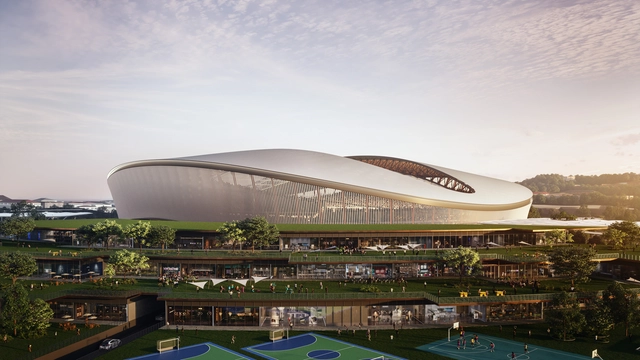
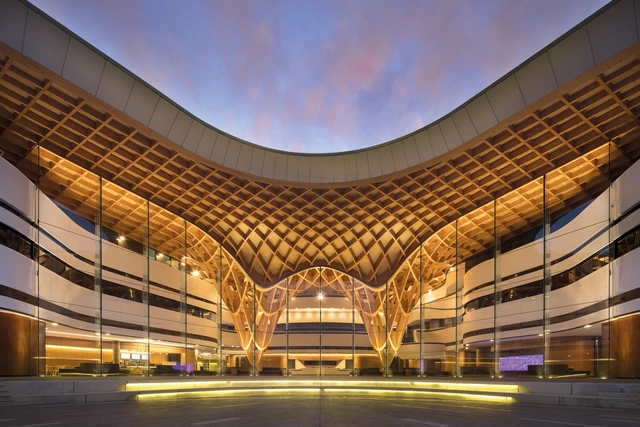
Populous, in collaboration with Malaysian practice HIJJAS Architects + Planners, has released the design for the new Shah Alam Sports Complex in Selangor, Malaysia. Anchoring the Kompleks Sukan Shah Alam (KSSA) masterplan, the stadium sits at the heart of a 188-acre redevelopment led by Populous that aims to transform the site into a major public and civic destination. Originally opened over 25 years ago, the existing Shah Alam Stadium has been a significant venue in the country's sporting history. The new proposal retains the original stadium's silhouette while introducing contemporary architectural and technical upgrades to support current and future needs. Redevelopment works, including the demolition of the aging structure, are planned over 48 months, with completion targeted for 2029.

Populous Reveals Designs for Shah Alam Sports Complex Redevelopment in Malaysia - Image 1 of 4Populous Reveals Designs for Shah Alam Sports Complex Redevelopment in Malaysia - Image 2 of 4Populous Reveals Designs for Shah Alam Sports Complex Redevelopment in Malaysia - Image 3 of 4Populous Reveals Designs for Shah Alam Sports Complex Redevelopment in Malaysia - Image 4 of 4Populous Reveals Designs for Shah Alam Sports Complex Redevelopment in Malaysia - More Images+ 3

MVRDV "Carbon Confessions" Exhibition in Germany Reveals the Realities of Sustainable Construction

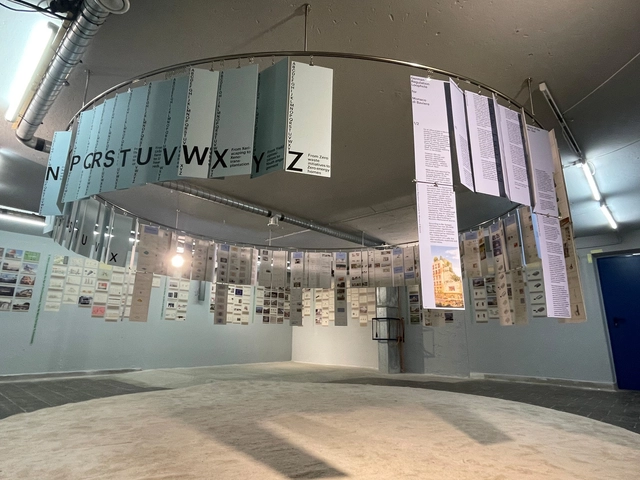
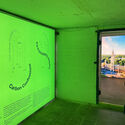
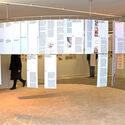
As the global climate crisis intensifies, the construction industry faces increasing pressure to reduce carbon emissions, prompting a fundamental reassessment of building practices. Dutch architecture firm MVRDV, known for its commitment to sustainability, presents an honest exploration of this challenge in "Carbon Confessions," an exhibition at Munich's Architekturgalerie. The exhibition provides insight into the firm's ongoing efforts, highlighting both its achievements and the obstacles encountered in the pursuit of carbon reduction.

MVRDV "Carbon Confessions" Exhibition in Germany Reveals the Realities of Sustainable Construction - Imagen 1 de 4MVRDV "Carbon Confessions" Exhibition in Germany Reveals the Realities of Sustainable Construction - Imagen 2 de 4MVRDV "Carbon Confessions" Exhibition in Germany Reveals the Realities of Sustainable Construction - Imagen 3 de 4MVRDV "Carbon Confessions" Exhibition in Germany Reveals the Realities of Sustainable Construction - Imagen 4 de 4MVRDV Carbon Confessions Exhibition in Germany Reveals the Realities of Sustainable Construction - More Images+ 4

Living Places Copenhagen: A Living Lab to Test the Experimental Building Project

 | Sponsored Content

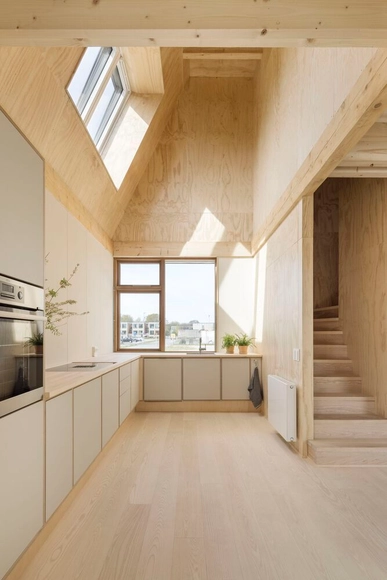
It's been four years since the VELUX Group, together with partners EFFEKT architects and Artelia engineers, first embarked on Living Places. The experimental housing project demonstrated that building more sustainable homes using readily available products, materials and technologies is possible. Putting the ultra-low carbon housing concept to the test, VELUX conducted a study with 98 live-in guests to evaluate whether sustainable homes can also provide indoor comfort. Using a combination of environmental sensors and guest questionnaires, the findings reveal that the homes maintain a comfortable indoor climate in line with European Standards and had a positive effect on the well-being of guests, showing that building for planet can also greatly benefit people.

Is Mass Timber the Key Element in a Low Carbon Future?

This article was originally published on Common Edge.

Chinese temples have stood for centuries, battered by wind and earthquakes, without a crack or timber out of place. They employ an ancient technique called “bracket set construction” that requires no nails or metal parts to connect wooden structural elements. Scandinavian stave churches are nearly as durable. Unsurprisingly, there are plenty of trees in Sweden and all over China.

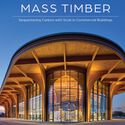
So what is with the hype about innovation in “mass timber” construction over the past few years? As Boyce Thompson argues in his thoughtful new book, Innovations in Mass Timber: Sequestering Carbon with Style in Commercial Buildings (Schiffer Publishing), this will be the next big thing in “green” tech for architects feeling guilty about their costly titanium skins and outsized carbon footprints. The color photos show some impressive buildings in places where the wood industry has always been healthy, such as the Pacific Northwest and Scandinavia. The Japanese build log cabins with imported material that might as well be gold.

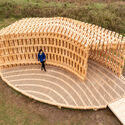
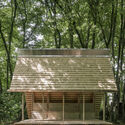
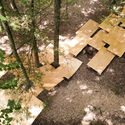
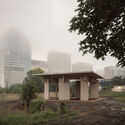
Is Mass Timber the Key Element in a Low Carbon Future? - Image 1 of 4Is Mass Timber the Key Element in a Low Carbon Future? - Image 2 of 4Is Mass Timber the Key Element in a Low Carbon Future? - Image 3 of 4Is Mass Timber the Key Element in a Low Carbon Future? - Image 5 of 4Is Mass Timber the Key Element in a Low Carbon Future? - More Images+ 1

From New Buildings to Retrofit Projects: Solar Facade Systems for a Circular and Low-Carbon Architecture

 | Sponsored Content

The sun’s influence on human life encompasses multiple dimensions, from biological and developmental aspects to religious-mythological connotations in civilizations such as the Egyptians and Romans. Moreover, this influence extends to its use as a natural resource within the realm of science. In scientific pursuits, the continuous search to harness the sun as an energy source has been a constant throughout the years. Within this context, the discovery of the photovoltaic effect and its application have paved the way in the history of solar panels, starting from the first observations of Becquerel to the initial prototypes of Charles Fritts in the 19th century.

Nowadays, the energy obtained from the sun through devices such as solar panels has become one of the most widely used sources in regions like North America and Europe, contributing to the efforts for a complete transition to clean energy. The momentum in this transition has motivated the development of new technologies, such as SolarLab facade systems, that challenge the preconceived idea of what a solar panel looks like and where it can be installed. These systems converge with architecture to integrate them as aesthetic elements, serving as cladding for both retrofit projects and new buildings.

MVRDV’s Explores Low-Carbon and Child-Friendly Solutions at the Shenzhen Women & Children’s Centre

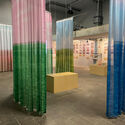
ReviveR,” a new exhibition by MVRDV opened at the Shenzhen Women & Children’s Centre, focused on the different narratives surrounding its hosting building, from the role of play and social interaction, to the importance of fun environments for people of all ages, along with the need to reduce carbon emissions by applying principles of circularity. The exhibition is on display in the building’s 5th-floor auditorium from December 6, 2023, until February 28, 2024.

MVRDV’s Explores Low-Carbon and Child-Friendly Solutions at the Shenzhen Women & Children’s Centre - Image 1 of 4MVRDV’s Explores Low-Carbon and Child-Friendly Solutions at the Shenzhen Women & Children’s Centre - Image 2 of 4MVRDV’s Explores Low-Carbon and Child-Friendly Solutions at the Shenzhen Women & Children’s Centre - Image 3 of 4MVRDV’s Explores Low-Carbon and Child-Friendly Solutions at the Shenzhen Women & Children’s Centre - Image 4 of 4MVRDV’s Explores Low-Carbon and Child-Friendly Solutions at the Shenzhen Women & Children’s Centre - More Images+ 6

RSHP Wins Competition to Transform Jean Moulin Site into Low-Carbon Mixed-Use Development in La Défense, Paris

RSHP has just won the Jean Moulin competition held in La Défense, Paris, to design a low-carbon mixed-use development. The competition is a part of the Paris business district initiative to become the world's first post-carbon business neighborhood, launching “Empreintes,” aiming to revolutionize five urban sites at the district’s periphery. Through collaboration with neighboring city centers, the scheme hopes to create various sustainable mixed-use properties.

RSHP Wins Competition to Transform Jean Moulin Site into Low-Carbon Mixed-Use Development in La Défense, Paris - Image 1 of 4RSHP Wins Competition to Transform Jean Moulin Site into Low-Carbon Mixed-Use Development in La Défense, Paris - Image 2 of 4RSHP Wins Competition to Transform Jean Moulin Site into Low-Carbon Mixed-Use Development in La Défense, Paris - Image 3 of 4RSHP Wins Competition to Transform Jean Moulin Site into Low-Carbon Mixed-Use Development in La Défense, Paris - Image 4 of 4RSHP Wins Competition to Transform Jean Moulin Site into Low-Carbon Mixed-Use Development in La Défense, Paris - More Images+ 5

Navigating COP28: Key Takeaways for Architects from the Dubai Summit

COP28, or the 2023 United Nations Conference of the Parties, was held in Dubai between November 30 and December 13. The annual meeting gathers representatives from 198 countries, as well as industry leaders to discuss and establish strategies to limit the extent of climate change and its adverse effects. The ultimate goal of these meetings is to find ways to limit the global temperature rise below 1.5 degrees Celsius compared to pre-industrial times. At the moment, the global temperature rise is already at 1.2 degrees Celsius. As the construction industry at large accounts for 39% of global emissions, architects and planners have a shared interest in the results of thee international summit, Read on to discover some of the key takeaways of COP28.

Navigating COP28: Key Takeaways for Architects from the Dubai Summit - Image 1 of 4Navigating COP28: Key Takeaways for Architects from the Dubai Summit - Image 2 of 4Navigating COP28: Key Takeaways for Architects from the Dubai Summit - Image 3 of 4Navigating COP28: Key Takeaways for Architects from the Dubai Summit - Image 4 of 4Navigating COP28: Key Takeaways for Architects from the Dubai Summit - More Images+ 5

Studio Gang Unveils Design for a Low-Carbon Theater for the Hudson Valley Shakespeare Festival in the United States

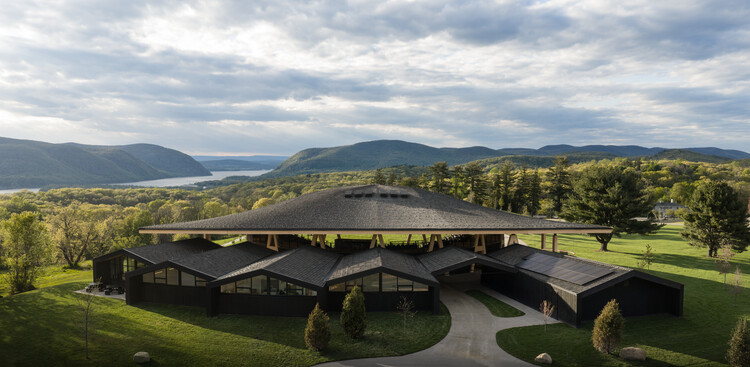
Studio Gang has revealed the design for a new theater for the Hudson Valley Shakespeare Festival (HVSF). Planned to become the first purpose-built LEED Platinum theater in the United States, the building located in Garrison, NY, will serve as the permanent home for HVSF. The structure, measuring over 13,800 square feet, or 1,280 square meters, is designed to become the central point of the 98-acre HVSF campus, aiming to emphasize the theater company’s commitment to sustainable principles and social engagement. The project is expected to break ground in 2024.

Studio Gang Unveils Design for a Low-Carbon Theater for the Hudson Valley Shakespeare Festival in the United States - Image 1 of 4Studio Gang Unveils Design for a Low-Carbon Theater for the Hudson Valley Shakespeare Festival in the United States - Image 2 of 4Studio Gang Unveils Design for a Low-Carbon Theater for the Hudson Valley Shakespeare Festival in the United States - Image 3 of 4Studio Gang Unveils Design for a Low-Carbon Theater for the Hudson Valley Shakespeare Festival in the United States - Image 4 of 4Studio Gang Unveils Design for a Low-Carbon Theater for the Hudson Valley Shakespeare Festival in the United States - More Images

Façade Solutions That Enhance Net Zero Architecture

 | Sponsored Content

Moving towards a sustainable future is a global challenge that involves all disciplines working together. According to the 2021 Global Status Report for Buildings and Construction, almost 40% of carbon emissions come from the construction industry. This places a heavy responsibility on the industry, which must be open to exploring innovative strategies, technologies, and materials in order to pave the road towards a universal sustainability goal: reaching carbon neutrality by no later than 2050.

With that in mind, this article presents three specific products and systems –low-carbon glass, low-carbon concrete, and lightweight materials– that architects are applying in their projects to contribute to a low-impact architectural design.

UIA World Congress of Architects 2023: Emerging Technologies with KOMPAS VC and Material Evolution

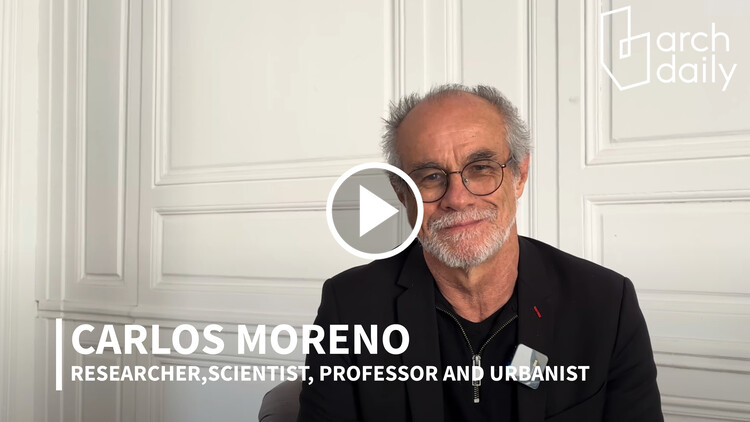
ArchDaily and VELUX have joined forces to provide you with an exclusive coverage of the highly anticipated UIA World Congress of Architects 2023. Watch Sebastian Peck from KOMPAS VC and Liz Gilligan from Material Evolution explain a revolutionary low-carbon cement produced from industrial waste, and how can it help to decarbonize architecture by reducing a building's carbon footprint by 85%.