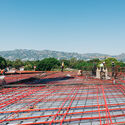
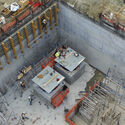
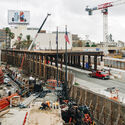
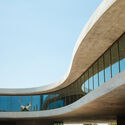
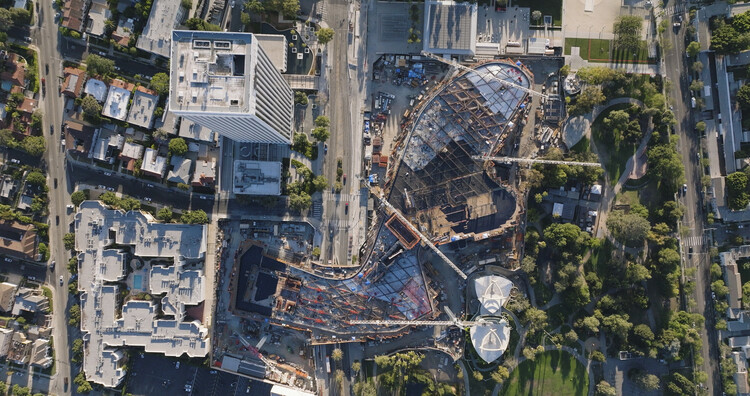
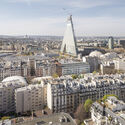
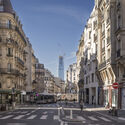
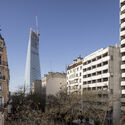
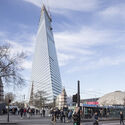
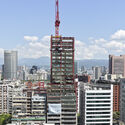
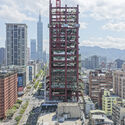
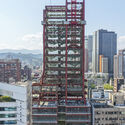
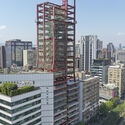
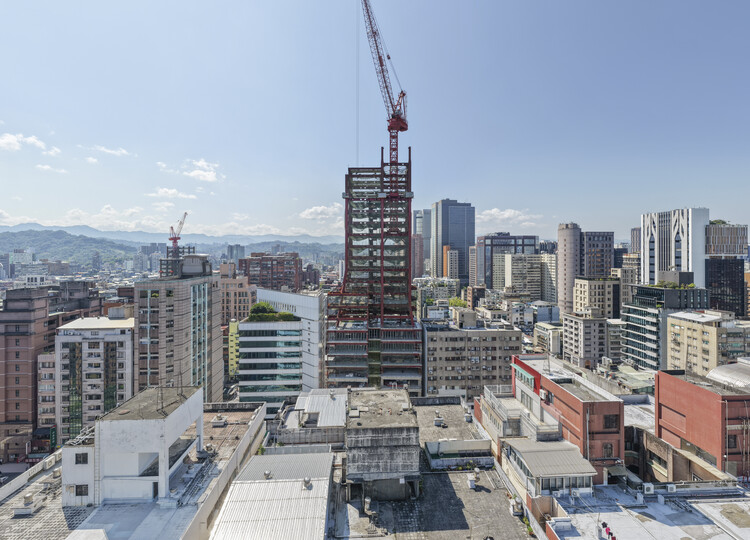
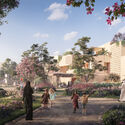
Construction of Zaha Hadid Architects' Yidan Center in Shenzhen, China, has reached full height. The new landmark will serve as the headquarters of the Chen Yidan Foundation and the Yidan Prize, organizations dedicated to promoting lifelong learning and innovation in education. The center will host facilities for academic research, cultural events, and exhibitions, supporting the foundation's mission to advance global education. Located adjacent to the Qianhai Museum, the Yidan Center helps define a new cultural quarter in China's third-most-populous city.
Buildings must change faster than they were built to. Shifting tenant needs, tightening climate policies, and rising office vacancies expose the cost of static stock: waste, noise, downtime, and—in the worst case—stranded assets. The consequence is clear: buildings across typologies must be designed to adapt over time. The inaugural Adaptable Building Conference (ABC), taking place on January 22, 2026, at the Nieuwe Instituut in Rotterdam, brings the industry together to turn adaptability from principle into practice.
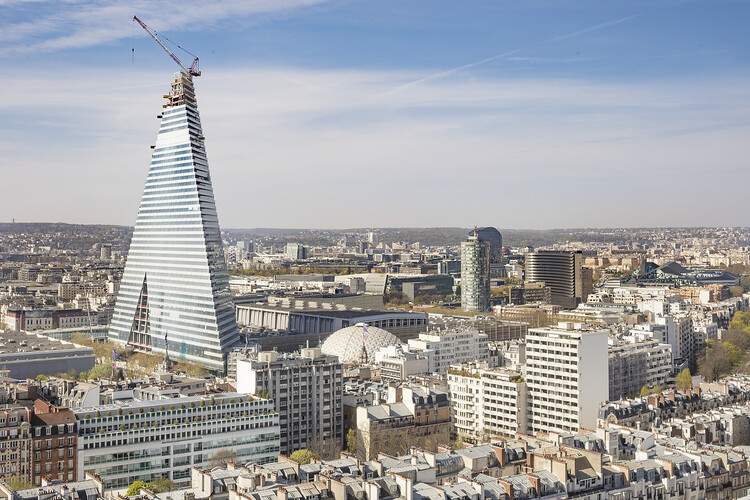
Surfing is, without a doubt, one of the most visually striking and fascinating sports. A fluid choreography that combines strength and delicacy, like a dance on the waves, gathers enthusiasts across the world's oceans. Yet, behind this image of freedom and connection with nature, the sport also carries contradictions. It is a symbol of outdoor life and respect for the ocean, but on the other hand, it is marked by territorial disputes over waves and by an environmental footprint that rarely receives the same attention given to its aesthetics. In times of climate crisis, this paradox becomes even more evident. Surfing depends directly on the health of marine ecosystems, the very ones most affected by pollution and global warming. This tension has been pushing a new generation of shapers, architects, and material designers to seek alternatives, from plant-based and recycled foams to the reuse of industrial waste, in order to reconnect the sport with its ecological dimension.
Touted as the new era in construction, Building Information Modeling (BIM) has captured global attention with its promise of seamless coordination, trimmed budgets, and newfound efficiencies. Yet in India's construction landscape, the adoption of technology tells a more nuanced story about cultural barriers and technical limitations.
"The bigger barrier isn't the technology but rather the planning culture," explains Rahul Bahl Managing Director of Krishna Buildestates Pvt Ltd, highlighting what may be BIM's most fundamental challenge in India. "BIM requires that every detail be finalized before construction begins, from electrical switch locations to final finishes. In India, we often break ground with just the shell resolved and spend the next several months value-engineering as we go."
The Sardarapat Memorial and the architect's original sketch. Image via risraelyan.com/en/, courtesy of Aram Ghanalanyan
In a time when much global architecture can feel disconnected from local identity, the work of Rafayel Israelyan stands out for being rooted in place, culture, and memory. Working in mid-20th-century Armenia, Israelyan created architecture that is more than functional or monumental; it is culturally resilient. His use of traditional Armenian motifs, materials, and symbolic forms gave his designs a second life after the fall of the Soviet Union, when many buildings across post-Soviet states were abandoned or demolished. Armenia, by contrast, preserved many of his works, likely because their design approach not only served a specific moment in time, but also told a larger story. Long before concepts like sustainability or critical regionalism became popular, Israelyan understood that buildings gain meaning and endurance when they reflect the specific identity and characteristics of their place.
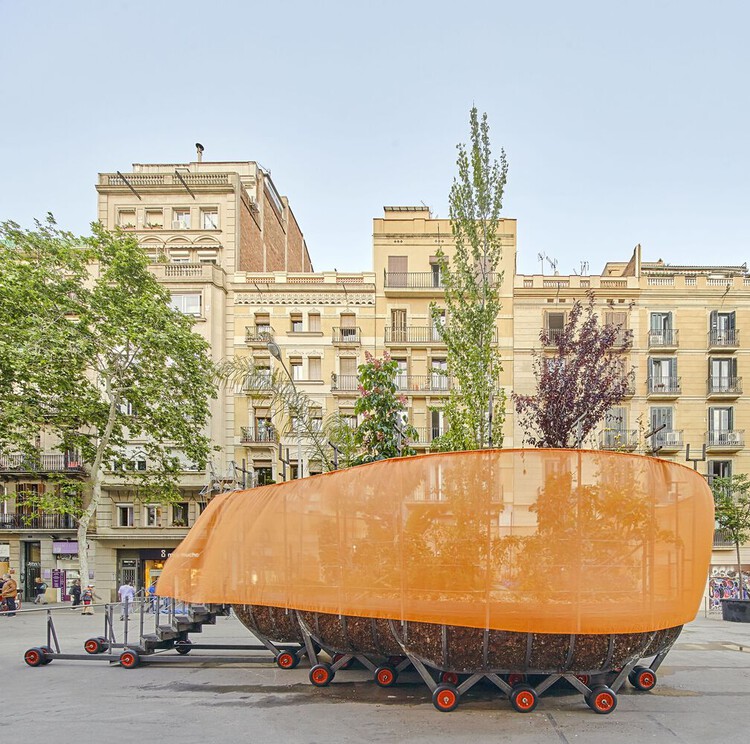
What if we imagined buildings as living systems, designed for assembly and disassembly with minimal impact? A form of open, modular, and adaptable architecture designed to evolve with its surroundings, responding to seasonal changes and on-demand needs instead of remaining static. At first glance, the idea seems paradoxical, as many buildings were constructed to last, designed to endure, resist the effects of time, and avoid demolition. Because of this, reversing or undoing could be seen as a setback. But what if that way of thinking no longer fits every scenario?
https://www.archdaily.com/1031388/built-to-not-last-how-reversible-architecture-is-redefining-the-way-we-buildEnrique Tovar
The future of the architecture industry holds countless possibilities, as research in the domain progresses. One innovation is the ability for structures to be rendered acoustically invisible, absorb earthquake energy, or harvest electricity from the sounds around them. Qualities of this nature can help redefine the functionality and sustainability of buildings. Architects and scientists are at the forefront of this creation. What makes this possible are metamaterials that could offer alternative methods of designing good buildings.
What can our existing buildings teach us about building for the future? In a time of dwindling resources, architects are increasingly called to engage in dialogue—with the site, its history, and the untapped potential of what already stands. Rather than defaulting to demolition and new construction, the future of architecture may rest in uncovering the possibilities for innovation within buildings that have already stood the test of time.
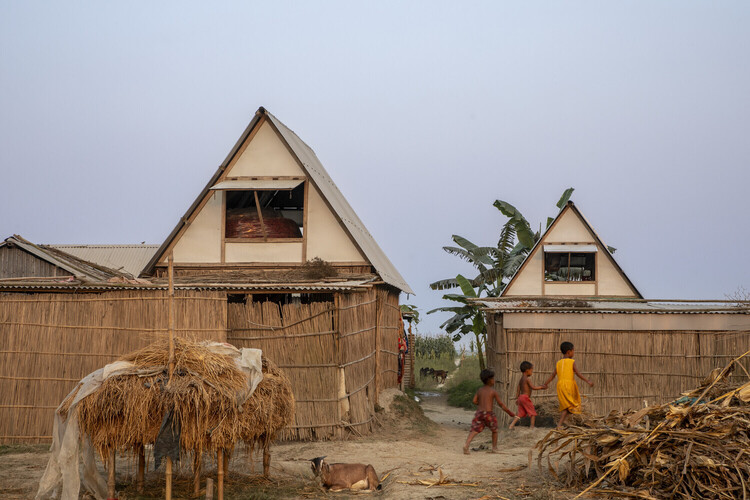
Desi Training Center / Studio Anna Heringer. Image Courtesy of Studio Anna Heringer
"The times they are a-changin'," sang a young Bob Dylan in 1964, capturing a nation at a crossroads, gripped by the civil rights movement and overshadowed by Cold War tensions. Nearly a decade later, David Bowie turned that gaze inward with "Ch-ch-ch-ch-changes," a fragmented meditation on identity, reinvention, and personal transformation, echoing the collapse of countercultural ideals and the acceleration of globalization. By the 1990s, Tupac Shakur brought the focus back to the streets and urban centers. In "Changes," he laid bare the raw realities of racial injustice and systemic violence, offering not resignation but a forceful indictment: "That's just the way it is."
Three voices, three decades, three ways of confronting change. If art (here, through music) has historically served as both mirror and outcry in times of upheaval, then it is fair to ask: how has the construction industry responded to a world in constant flux, a world urgently demanding transformation? In a world shaped by powerful economic forces, architecture is increasingly challenged to reconcile social responsibility with market realities. Today, we face a convergence of planetary crisis and social fragmentation: the planet is warming, inequalities persist and deepen, data multiplies, and identities fracture. In this context, architecture can no longer afford to limit itself to formal experimentation or market-driven imperatives. It is called to rethink with clarity, responsibility, and imagination what we build, with what we build, how we build, and above all, for whom.
In an effort to foster a sense of belonging among its inhabitants, to value ancestral cultures, and to preserve identity, the Latin American region embraces an architecture rich in nuances and regional characteristics. The use of local materials and construction techniques, or the dialogue between modular and vernacular approaches, among other aspects, reflect the intention to promote the involvement of native communities, students and their families, Iindigenous peoples, and local builders in the design and construction processes of a wide variety of rural schools throughout Latin America.
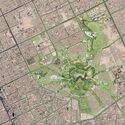
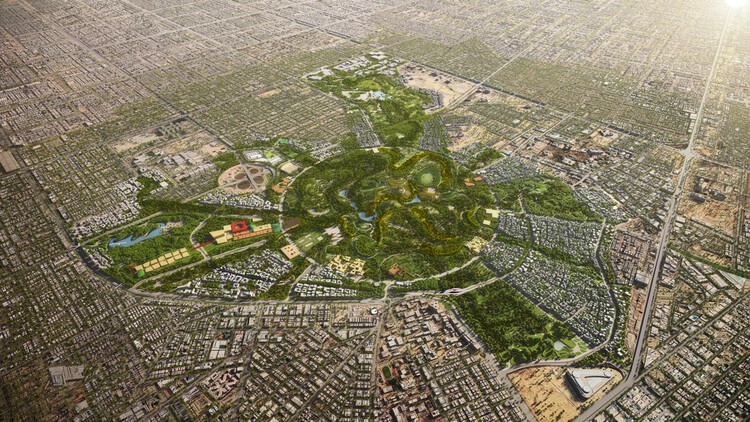
Barcelona-based architecture studio Bofill Taller de Arquitectura was commissioned to design the Royal Arts Complex (RAC) by the Royal Commission for Riyadh City in 2019. Currently under construction, the 320,000-square-meter building complex comprises thirteen structures, each contributing to the promotion of artistic expression. The project is located within King Salman Park, a 13.3-square-kilometer park being developed on the site of Riyadh's former airport. The broader development includes mixed-use projects to transform the area into a major recreational district. The overall masterplan also features a stadium by Populous, planned for the FIFA 2034 World Cup.
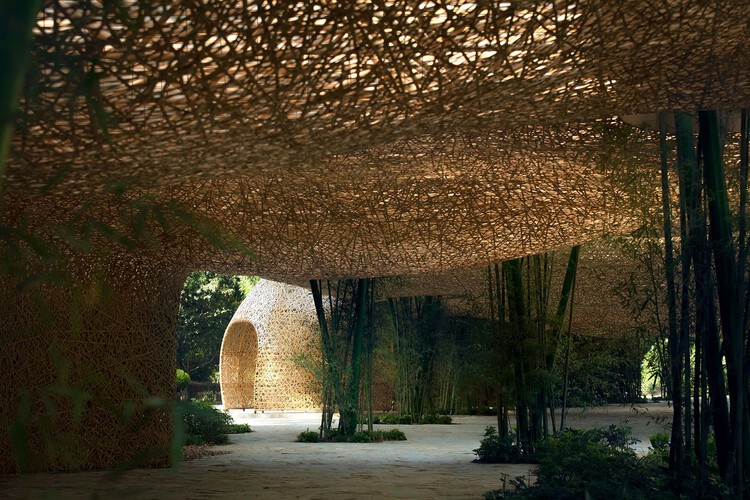
The bamboo scaffolding building typology—temporary, agile, and deeply rooted in tradition—particularly, the bamboo shed theatre building technique, is recognized as an item of Intangible Cultural Heritage in Hong Kong. As one walks through the city, especially in busy urban districts, it's nearly impossible not to encounter a bamboo scaffold within a five-minute radius. Bamboo scaffolding is arguably the most iconic construction material in Hong Kong, valued for its abundance, sustainability, flexibility, adaptability, and—most importantly—scalability. These qualities have contributed to its widespread use in temporary construction, from building maintenance and renovations to festival stages and sporting events.
However, this once-ubiquitous feature of the urban landscape may be slowly fading from view. A dwindling pool of skilled, younger workers—combined with evolving construction regulations—has contributed to its decline. On March 17, the Development Bureau announced plans to "drive a wider adoption of metal scaffolds in public building works." In practice, this means the Architectural Services Department (ArchSD) will soon require at least 50% of its capital works projects to utilize metal scaffolding. While not a formal ban, the policy signals what many see as the beginning of a gradual phase-out of bamboo scaffolding in public-sector construction.
"Divers" by David Martin at the Yerevan Cascade Complex. Image by Besides the Obvious via Shutterstock.
Tucked away between the majestic peaks of the Caucasus and the enchanting landscapes of the Near East, Armenia is a small yet fiercely proud nation, shaped by rugged mountains and ancient volcanoes. One of the world's oldest countries, its roots stretch back to the 6th century BCE, standing at the crossroads of empires—Persian, Roman, Byzantine, and Ottoman. Yet, through centuries of upheaval, Armenia has held onto its distinctive identity, carved into its language, architecture, and rich cultural traditions—earning it the evocative title, "the land of stones."
The next generation of Sub-Saharan Africa’s green and inclusive cities is just around the corner, but only if designers embrace the opportunity. Can small-scale entrepreneurship drive new sustainable housing, or will the overburdened sector fail to meet the challenge of climate change?
Prefabrication is one of the most transformative innovations in architecture and construction, redefining how buildings are designed, manufactured, and assembled. While not a new concept, its application has evolved to offer a broader range of advantages. Traditionally valued for its precision and quality, prefabrication is now equally recognized for its cost and time efficiencies, particularly in leveraging regional differences in labor and production. This shift has fueled its resurgence across high-end, design-driven projects and large-scale, cost-efficient public buildings.
Liu Jiakun, the 2025 Pritzker Prize winner, has spent decades redefining Chinese architecture by combining utopia with function and social engagement with personal memory. His buildings are reflections of the everyday lives of ordinary people, crafted with an understanding of place, culture, and materiality. Rejecting the pursuit of a fixed architectural style, Jiakun believes in a strategy rather than a signature aesthetic, tailoring each project to its specific context and needs. His work integrates history with contemporary urban needs, collectivism with individual experience, and density with openness, offering timely solutions to the challenges of rapid urbanization.
Jiakun's approach is deeply rooted in Chinese philosophy, common sense, and local craftsmanship, ensuring that architecture grows naturally from its surroundings rather than being imposed upon them. His buildings reflect an authenticity that speaks to both past and present, avoiding grand gestures in favor of spaces that foster interaction, spirituality, and human connection.
As the global climate crisis intensifies, the construction industry faces increasing pressure to reduce carbon emissions, prompting a fundamental reassessment of building practices. Dutch architecture firm MVRDV, known for its commitment to sustainability, presents an honest exploration of this challenge in "Carbon Confessions," an exhibition at Munich's Architekturgalerie. The exhibition provides insight into the firm's ongoing efforts, highlighting both its achievements and the obstacles encountered in the pursuit of carbon reduction.