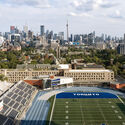
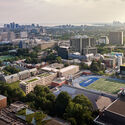
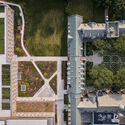
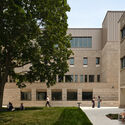
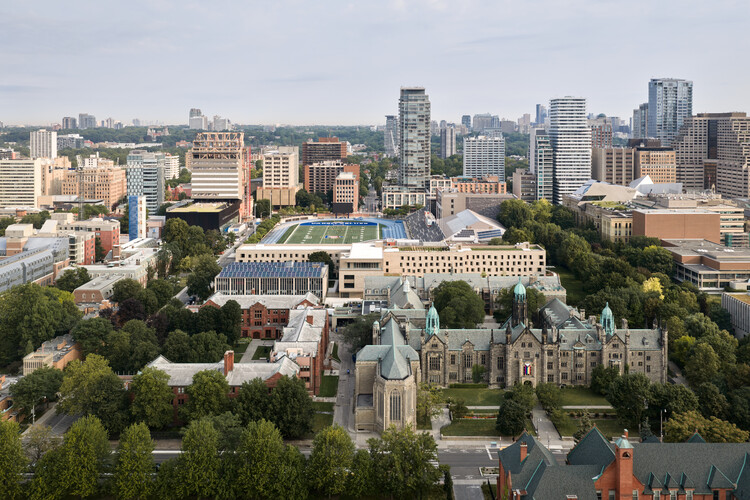
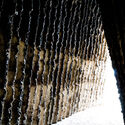
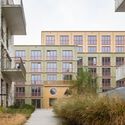
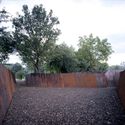
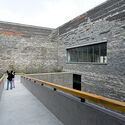
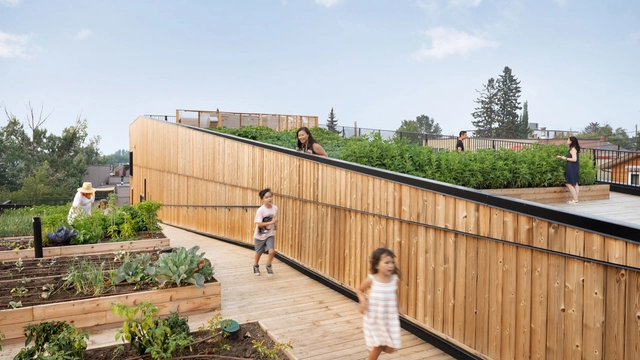
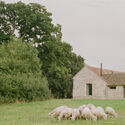
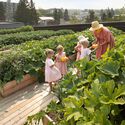
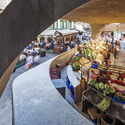
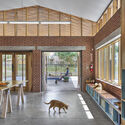
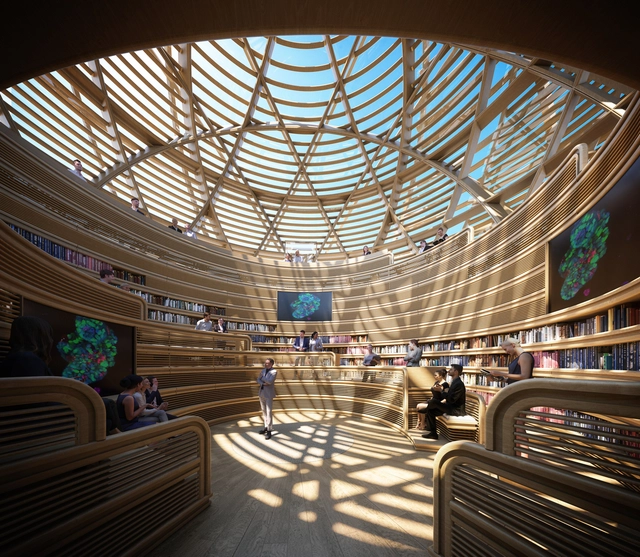
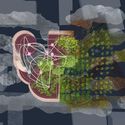
Mecanoo's Lawson Centre for Sustainability is the first new building for Trinity College since 1979. One of the most anticipated projects of 2026, it was designed to be one of Canada's most advanced sustainability-driven academic and residential buildings. Mecanoo worked in collaboration with Toronto architecture firm RDHA to design a sustainable community and "living lab," building on the College's traditions around shared meals and communal gatherings. Instead of the fourteen-story high-rise tower originally envisioned by the College, the team designed a walkable building that frames the existing campus and creates new landscapes for food production and social encounters. The broader campus vision included food, nature, work with local materials, and hands-on learning about sustainable living.
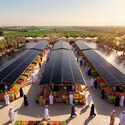
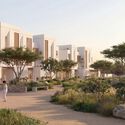
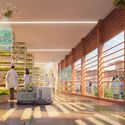
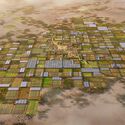
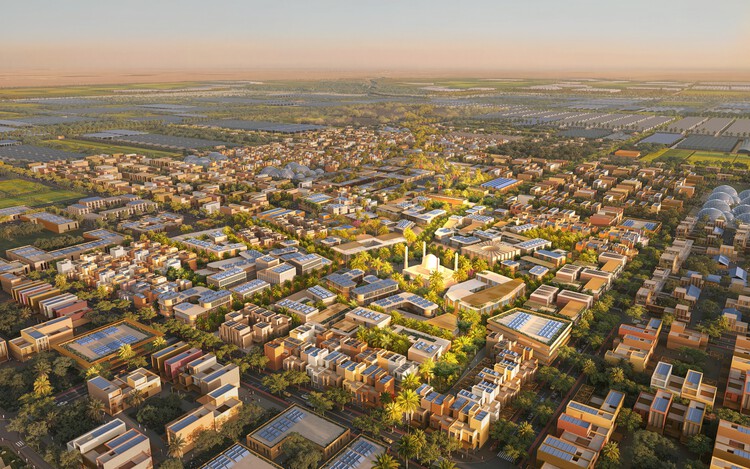
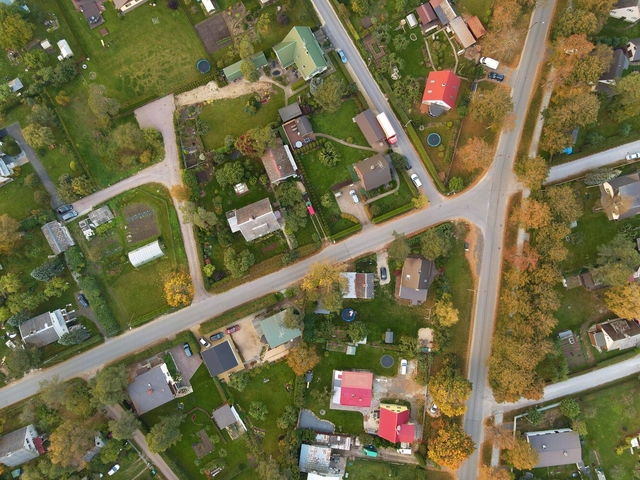
Foster + Partners, in collaboration with Dar Al-Handasah, has revealed the master plan for Al Najd Agricultural City in Dhofar, southern Oman. Covering approximately 54 million square feet, the development is conceived as a self-sustaining agricultural and urban settlement designed to respond to the region's environmental conditions and agricultural landscape. Commissioned by the Ministry of Housing and Urban Planning and the Ministry of Agriculture, Fisheries, and Water Resources, the project forms part of the objectives outlined in Oman Vision 2040, which seeks to strengthen food security, diversify the national economy, and support sustainable development initiatives.
There is a standard way of telling the history of architecture and food. It begins with the human decision to cultivate, to store, to distribute, to consume, and ends with the building that decision produced. In this version of events, food is the occasion and architecture is the response.
But what if the story runs differently? What if the tomato built Almería? What if the cod redesigned the North Atlantic? What if the soybean is, at this moment, constructing a port in Santos and demolishing a forest in the Cerrado simultaneously, and the architect has simply not been told? These are descriptions of processes already complete, or well underway, that have produced some of the most spatially consequential contemporary landscapes. Much of the built environment is shaped by the pressures, metabolisms, and territorial ambitions of what we eat. Architecture, in this, is often less a project than a consequence, and the discipline has been telling its own story from the wrong end.
Western philosophical tradition has long placed culture in opposition to nature. This dual thinking has shaped the canon of the sciences and humanities, and architecture was not left aside. Under that logic, everything that is not human exists to be exploited by them and is named "natural resource". This extractivist mindset has shaped the development of many parts of the world in the last centuries, leaving deep—sometimes irreparable—marks on the planet. Nevertheless, other ways of living have always existed. From West-African religious practices based on animism to the herbal sciences of the masters of the Sacred Jurema in Brazil; from indigenous communities in India whose life rhythm mirrors the monsoons, to the Arctic's Inuits who can see dozens of shades of white: humans and nature bear no distinction, what exists is life.
Contemporary authors bring this discussion to the realms of philosophy and, more specifically, architecture. Donna Haraway, Antônio Bispo dos Santos, Achille Mbembe, and Beatriz Colomina are only a few whose work has helped expand the narrow Western perspective, shedding light on alternative ways of living together—with other humans and more-than-humans—on this planet.
Can architecture be built from food? Between the fire that warms, the aromas that spread, and the bodies that gather around the table, the apparent banality of cooking and eating reveals itself as a choreographed dance of spatial appropriation and belonging. These are gestures that organize routines, forge bonds, and transform the built environment into a lived place. The kitchen—whether domestic, communal, or urban—thus ceases to be merely a functional space, asserting itself instead as a territory for connection.
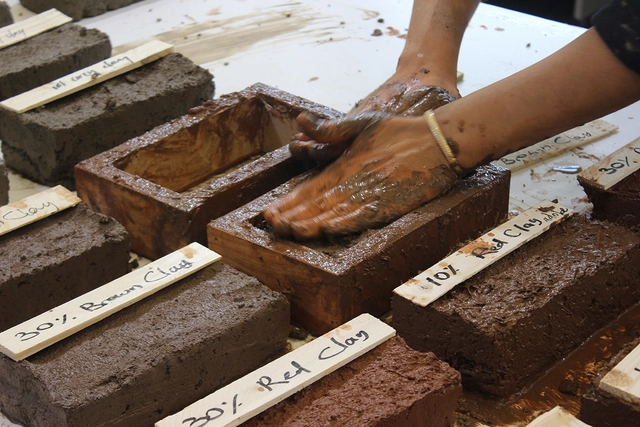
What does it mean to build with care, using what others leave behind? This question shapes the work of the Matter Matters Lab, an initiative founded by architect and researcher Catherine Söderberg Esper during the isolation of the pandemic. Drawing from experiences across cultures and motivated by a personal transformation during motherhood, Catherine began to investigate everyday waste as raw material for regenerative construction systems. Her first experiment involved gluing her own cut hair using white glue, initiating a radically intimate and handmade approach. Since then, the lab has focused on transforming organic waste into low-impact architectural materials, inspired by Indigenous knowledge systems and aiming to break from extractive models in construction. Projects like the Avocado Bricks, made from discarded avocado seeds, exemplify this approach of local, circular, and rooted in the idea of reciprocity between matter, place, and care, offering a new way of building with waste.
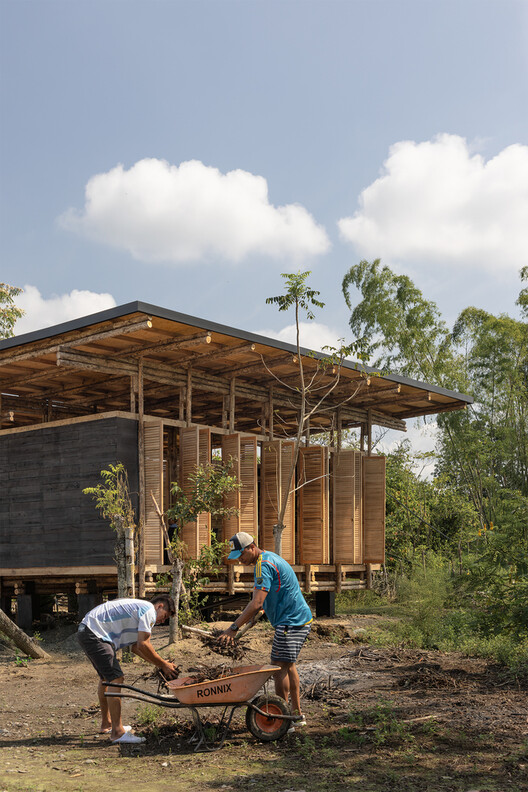
At the Bruder Klaus Field Chapel, designed by Peter Zumthor, the construction process involved the direct participation of residents from the small Swiss village of Mechernich. Using an internal formwork made of vertically placed wooden logs, concrete was prepared in small batches and poured manually, day after day, forming layers marked by subtle variations in the mix and application. At the end of the process, the wooden structure was reduced to ashes, leaving the chapel's interior impregnated with traces of fire and revealing a dark, tactile surface. The result was a quiet and deeply meaningful space, where collective action, time, and material transformation became part of the architecture. Centered on locally available resources and manual techniques, this construction method highlights how the choice of materials and building system can shape the experience of a space, reveal the time invested, and embed the culture of a place into the very matter of architecture. In doing so, it offers an example of how construction itself can become a regenerative act, restoring meaning, connecting communities, and honoring material cycles.
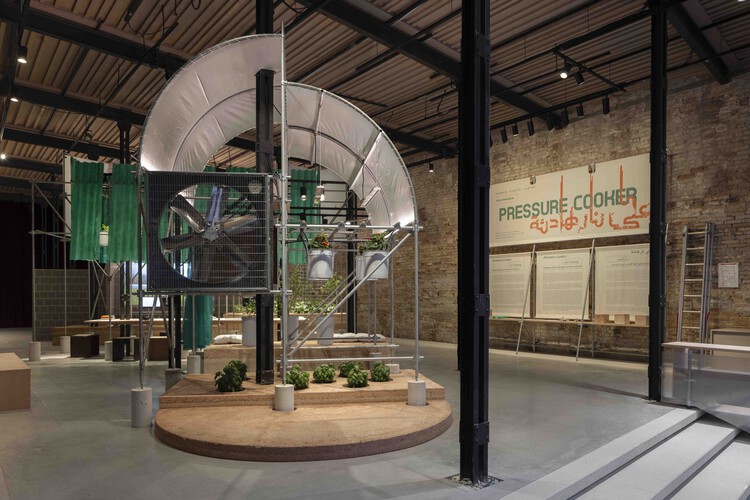
The National Pavilion UAE has opened at the 19th International Architecture Exhibition - La Biennale di Venezia with the exhibition titled Pressure Cooker. Curated by Emirati architect Azza Aboualam, assistant Professor at Zayed University and Co-founder of Holesum Studio, the exhibition explores the evolving relationship between architecture and food production in the UAE, proposing innovative solutions for sustainable and self-sufficient food systems. Positioning the built environment as a catalyst for ecological resilience, it asks: In the face of climate and resource challenges, how can design shape more secure and sustainable food systems?
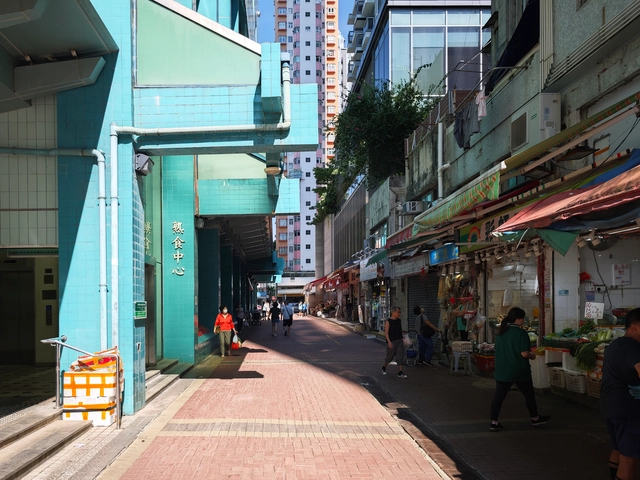
In Delirious New York, Rem Koolhaas vividly discusses the Downtown Athletic Club, a striking example of how an unassuming building exterior can conceal a vibrant mix of distinct, self-contained programs. Inside the uniform facade of this skyscraper, a private athletic club hosts an eclectic range of facilities—boxing gyms next to oyster bars and interior golf ranges below swimming pools—all segregated yet highly accessible. The Downtown Athletic Club epitomized the dynamism of New York's skyscrapers at the time, showcasing the thrill of capitalism through a selective, inward-focused world of leisure and privilege for the selected. This "machine of programs" operated independently of the external city as an isolated ecosystem within its walls. Yet, one might ask: could a similar model, designed for public use, create a more inclusive, lively community and neighborhood experience? This will activate the building within, instead of only serving the selected elites, and influence and transform the urban fabric and shapes around the building. In Hong Kong, a distant parallel can be drawn with the Municipal Services Buildings (MSBs)—publicly-funded structures that serve the community by integrating diverse functions within a singular vast building mass, much like the Downtown Athletic Club.
The farm-to-table movement represents a profound shift in how food is grown, distributed, and consumed. Rooted in sustainability and the support of local economies, it prioritizes fresh, locally sourced ingredients and fosters direct relationships between producers and consumers. While the concept focuses on food, the spaces where these connections occur are equally important in shaping the experience, highlighting the critical role of architecture.
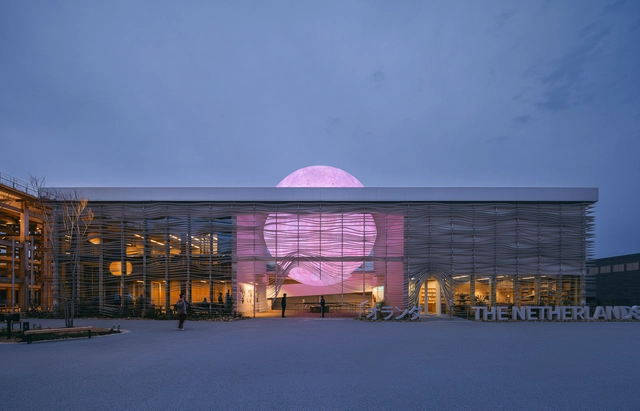
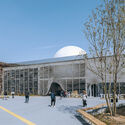
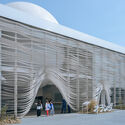
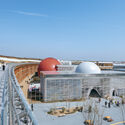
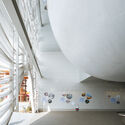
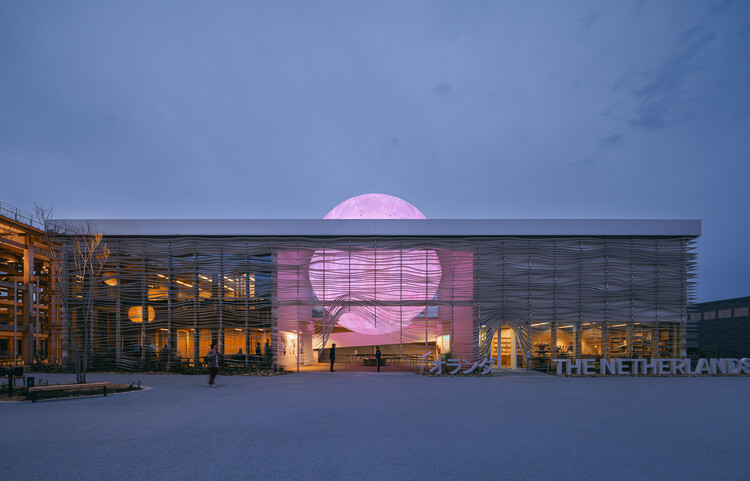
The Kingdom of the Netherlands's pavilion, presented at the Expo 2025 Osaka, Kansai, Japan, features the theme, "Common Ground: Creating a New Dawn Together," emphasizing the Netherlands' dedication to fostering mutual understanding to address global challenges. Designed by RAU Architects, the pavilion's circular design features a prominent illuminated sphere at its center, symbolizing a new era of unlimited clean energy, akin to a "man-made sun" signaling a future powered by sustainable resources.
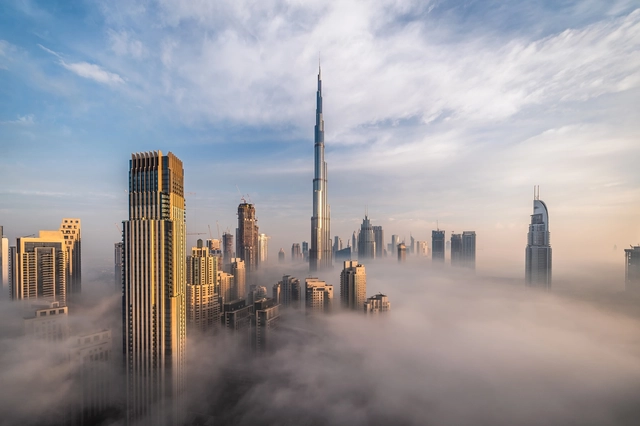
On November 30, 2023, the UN COP28 climate summit begins in Dubai, the United Arab Emirates. The name stands for the Conference of the Parties under the UNFCCC, and symbolizes the annual meeting of world governments for the purpose of establishing strategies to limit the extent of climate change and its adverse effects. Last year’s summit concluded with several important measures, including the promise of a global fund aimed at providing financial aid to developing countries affected by climate disasters.
The main purpose of COP is to reinforce the commitments of the Paris Agreement, signed in 2015, which strives to keep the global temperature rise under 1.5C degrees. As the construction industry accounts for 39% of global emissions, architecture plays an important role in helping to lower our carbon footprint, making COP28 a crucial event for architects.
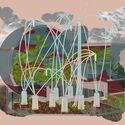
Foodscapes: Spain's Pavilion for the Venice Architecture Biennale 2023, curated by Manuel Ocaña and Eduardo Castillo-Vinuesa, explores the Spanish agro-architectural context to address global issues. It analyzes the past and present of food systems and the architectures that construct them, in order to look towards the future and question other possible models that are capable of feeding the world without devouring the planet.
https://www.archdaily.com/1003304/foodscapes-a-journey-into-the-architectures-that-feed-the-worldArchDaily Team
In an age of unprecedented globalization, our food supply chains — the institutions and mechanisms involved in food production and distribution — have become longer. So much so that they are hardly perceived as chains or systems. They have been integrated into our lives, and into our cities, and transformed our relationships with food. And yet, those very long food supply chains are implicated in some of our most pressing global problems, from food security and waste to biodiversity and climate change. These food supply chains have come to their current state, their current length, over decades, or centuries perhaps, through all sorts of political, social, cultural, and economic processes, and carry with them a range of burdens: vague producer-consumer relationships, and a host of negative environmental externalities, among many others.
Dedicated to the theme "Edible; Or, The Architecture of Metabolism," the 6th version of the Tallinn Architecture Biennale (TAB) 2022 opens on 7 September 2022, in partnership with ArchDaily and the curatorship of Lydia Kallipoliti and Areti Markopoulou, in collaboration with local advisor Ivan Sergejev. Divided into five thematic groups: Living machines, Lifecycle, Food and Geopolitics, Food Systems, and the Future Food Deal, the TAB invites audiences to reflect on food and architecture and to reimagine planetary food systems along with architecture's capacity to perform metabolic processes.
Tallinn Architecture Biennale (TAB 2022) announced the programme for its 6th edition that brings forward circularity in architecture. Under the theme "Edible; Or, The Architecture of Metabolism", this year's edition explores "architectural strategies for local production and self-sufficiency" and highlights ways of reusing waste resulting from urban environments. Curated by Lydia Kallipoliti and Areti Markopoulou, in collaboration with local advisor Ivan Sergejev and assistant curator Sonia Sobrino Ralston, TAB 2022 reflects on the possibilities that natural metabolical processes can bring to cities and buildings when transferred to the domain of architecture.
Stores in Santiago, Chile, ran out of yeast in mid-March, such as it happened after the beginning of the social crisis in 2019. Given that Chile has the second-highest bread consumption per capita in the world, it would seem that Chileans handle uncertainty stocking up ingredients for bread making. Everybody wants to make bread, including myself.