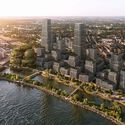
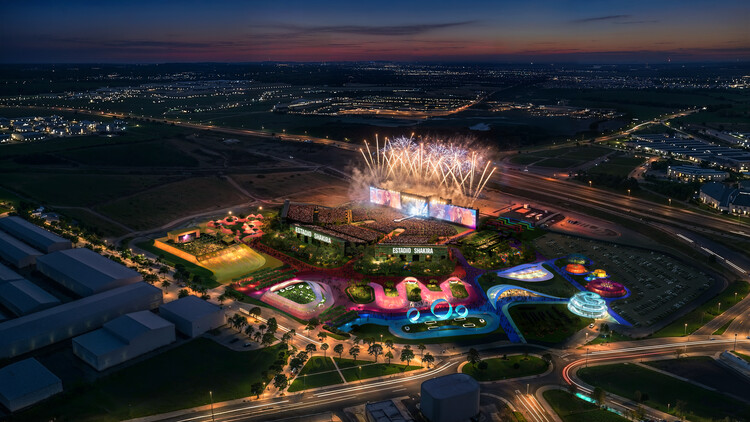
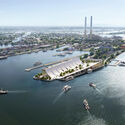
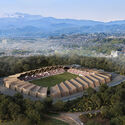
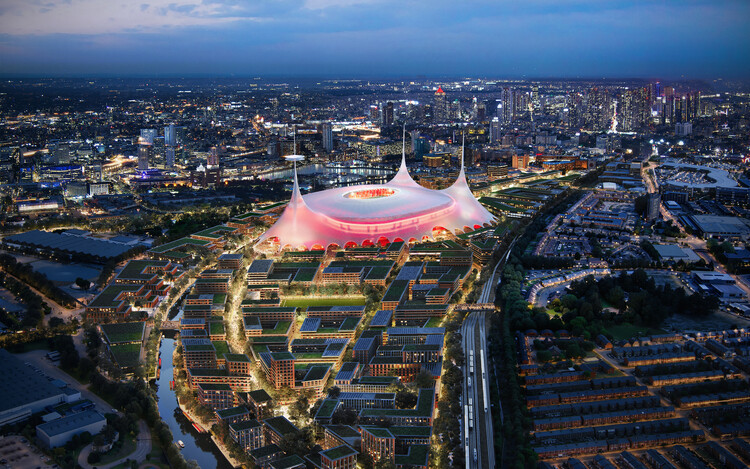
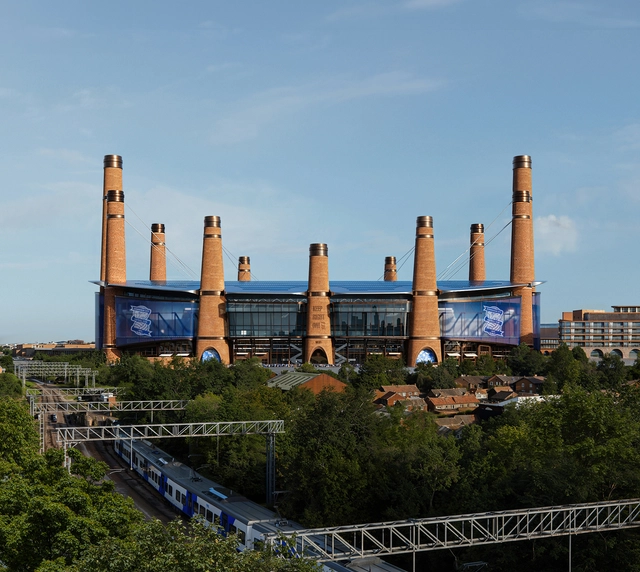
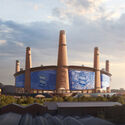
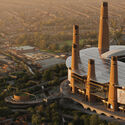
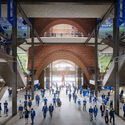
Heatherwick Studio and MANICA Architecture have released the design for Birmingham City Football Club's new stadium, set to anchor the forthcoming BirminghamSports Quarter in East Birmingham, England. The 62,000-seat venue, planned for Bordesley Green, forms part of a wider redevelopment strategy and coincides with the club's 150th anniversary. Developed through a competition led by filmmaker Steven Knight, the project aims to introduce a multifunctional sports and cultural venue integrated into its urban context.
As cities and landscapes evolve, architecture is increasingly asked to support well-being,performance, and collective experience. From stadiums that honor deep cultural memory to intimate wellness spaces that foster restoration and connection, sports and wellness typologies are expanding beyond mere functionality. They create environments where movement and health intersect with design quality, sustainability, and social meaning. Today, these spaces range from elite training grounds and recreational clubs to contemplative retreats and inclusive public amenities, shaping how communities gather, heal, and celebrate shared identity.
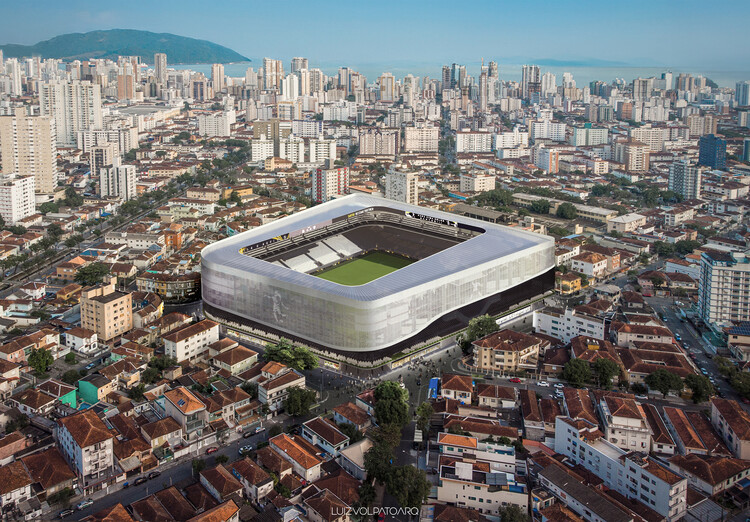
This selection of unbuilt proposals submitted by the ArchDaily community illustrates that diversity. In São Paulo, Luiz Volpato Arquitetura reinvents the historic Santos Futebol Clube stadium with a geometry that preserves fans' memory while introducing new commercial and social uses. In Hanoi, Van Aelst I Nguyen and Partners bring filtered light and fresh air to a dense urban sports complex. In Dubai, RSP proposes Haven, a residential development anchored in holistic wellness and nature-driven experiences, while India's Tropic Responses imagines Aira Club as a climate-conscious leisure hub. High in the Himalayas, Gadasu + Partners carve a meditative spa into mountain stone, and in Isfahan, Arsh4d Studio rethinks segregated women's parks to create inclusive, future-oriented civic space.
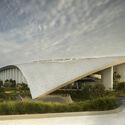
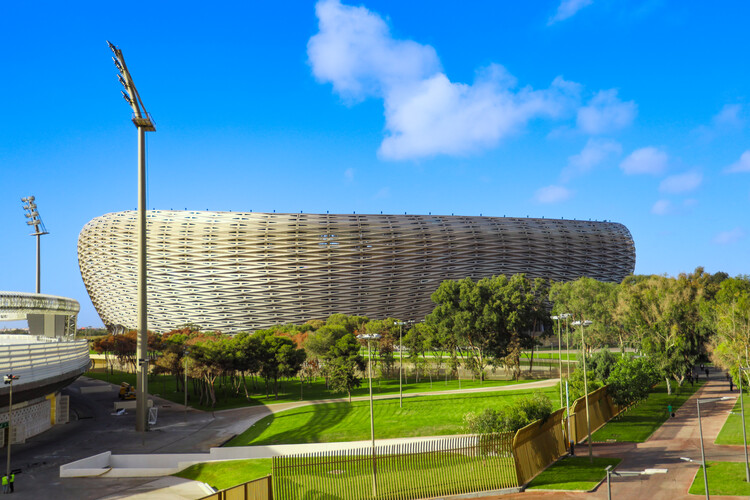
The Prince Moulay Abdellah Stadium in Rabat has officially opened as Morocco's new national stadium, following its inauguration by Crown Prince Moulay El Hassan on September 4, 2025. Designed by Populous, the stadium has a capacity of 68,700 and was developed under the direction of the National Agency for Public Facilities of Morocco to meet FIFA standards, enabling it to host matches up to the semi-finals of the 2030 FIFA World Cup. The redevelopment replaces the original 1983 stadium, positioning it as Morocco's flagship sports venue ahead of a series of international events.
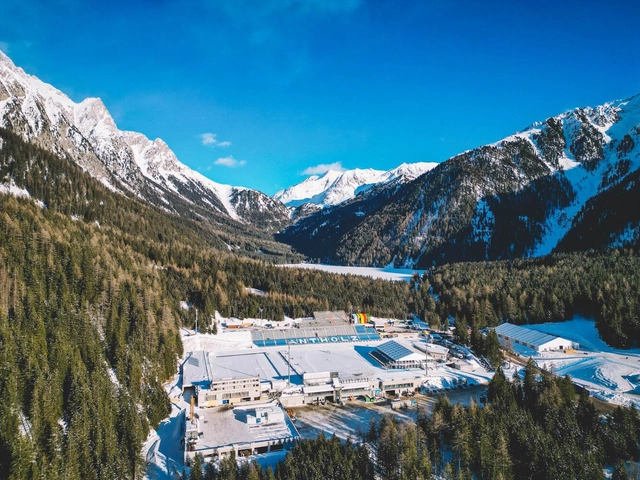
On June 24, 2019, the International Olympic Committee (IOC) announced that Milan and Cortina d'Ampezzo would host the 2026 Winter Olympic Games. The last Winter Games to take place in Italy were held in Turin in 2006, and since then, climate change in the European continent has impacted traditional skiing venues. In this context, Italy has the advantage of a portion of the Alps, a strip of about 1,200 km along the borders with France, Switzerland, Austria, and Slovenia. The Italian Alpine region hosts most of the facilities that have been prepared over the past five years for the Winter Olympics, which will take place from February 6 to 22, 2026, followed by the Paralympic Games from March 6 to 15. Set to be the most geographically widespread Olympic Winter Games in history, this edition continues the sustainable model established by the Paris 2024 Olympic Games by relying almost entirely on existing and reconditioned sports infrastructure.
Toronto Paramedic Services Multi-function Station 02. Image Courtesy of Diamond Schmitt Architects
As cities and infrastructures evolve to meet shifting cultural, environmental, and social demands, new architectural projects are redefining how public spaces and civic institutions operate. This edition of Architecture Nowbrings together proposals spanning different contexts and scales: on Yakushima Island, Jean Nouvel embeds a boutique retreat for NOT A HOTEL into a UNESCO-listed forest landscape; in New York City, Rossetti and WSP are preparing a major renovation of Arthur Ashe Stadium to expand capacity and enhance the visitor experience; in Toronto, Diamond Schmitt and gh3* have broken ground on a mass-timber, net-zero paramedic station; and across the English Channel, Hollaway Studio is leading a transformation of LeShuttle's UK and French terminals into more seamless and sustainable gateways. Together, these projects reflect how design is being used to adapt existing systems and landscapes to new forms of public life.
Since its opening in 1987, Four Winds Field — home of the AA Minor League team South Bend Cubs — has undergone several transformations. In each of them, brick has remained a central architectural element, evoking tradition, permanence, and a distinct urban character. Now, with a major expansion underway, the stadium reaffirms this legacy while embracing innovative construction techniques, most notably, the integration of thin brick as a contemporary solution that honors the past without compromising technical performance.
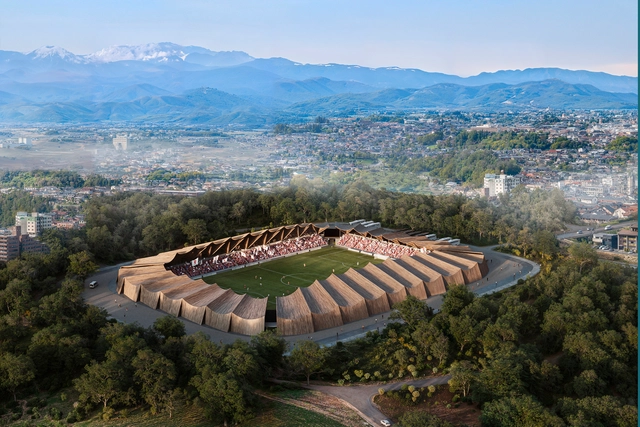
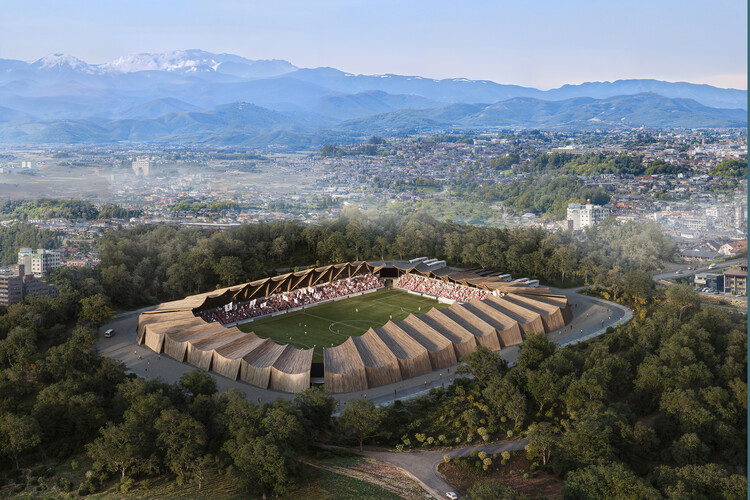
VUILD has presented the design for a wooden soccer stadium planned for Fukushima, Japan, as the future home of Fukushima United FC. Commissioned by SportX, the proposal combines community participation, an innovative timber structure, and sustainable strategies, positioning the stadium as both a functional sports venue and a potential symbol of renewal. Inspired by the Japanese tradition of Shikinen Sengu, the periodic rebuilding of shrines, the concept introduces three cycles: resources, community, and craftsmanship.
Oxford United Football Club's planning application for a new all-electric football stadium has been approved by Cherwell District Council. The scheme was developed by a team that includes AFL Architects, Mott Macdonald engineering services, Fabrik landscape design, and Ridge and Partners built environment consultants. Designed for a capacity of 16,000 spectators, the master plan also proposes a 1,000-person events space, a 180-bed hotel, a restaurant, a health and wellbeing centre, and a new public plaza with gardens.
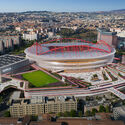
Estadio da Luz, Daytime Aerial. Image Courtesy of Populous
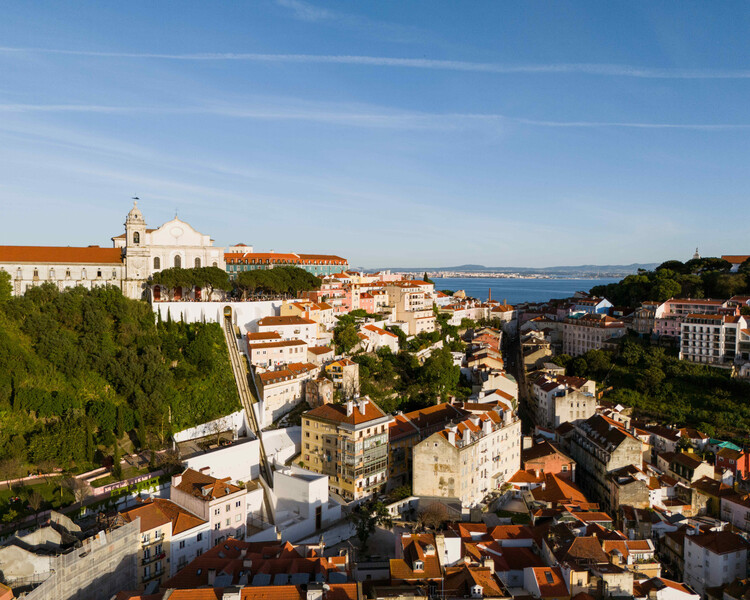
Populous has unveiled the design for a new master plan for the Estádio da Luz in Lisbon, in collaboration with Lisbon-based architecture firm Saraiva + Associados. Commissioned by S.L. Benfica, the project aims to upgrade the stadium and introduce new mixed-use and public facilities within the surrounding precinct. Populous describes the project as part of a wider trend in stadium-led urban development, referencing parallels with venues like Wembley Stadium and the Etihad Campus. According to the firm, the design responds to the stadium's existing context while supporting future expansion and new forms of public engagement. Completion is expected in alignment with upcoming internationalsporting events, including the 2030 FIFA World Cup.
As cities worldwide navigate evolving social, environmental, and cultural priorities, recent project announcements showcase how architecture is increasingly conceived as both civic infrastructure and a catalyst for collective identity. From Populous' new stadium design in Thessaloniki that blurs the lines between sport and urban life, to HENN's transparent cultural stage in Augsburg that invites community participation, these projects illustrate architecture's expanding role beyond its immediate function. In Luxembourg, Schmidt Hammer Lassen's work for the European Investment Bank reimagines institutional spaces through sustainability and heritage, while SLA and GHD's new island community in Toronto pushes forward nature-based, climate-adaptive urbanism. This edition ofArchitecture Now brings together diverse yet interconnected efforts to shape how architecture can support long-term ecological, cultural, and civic impact.
Chicago Fire FC soccer stadium. Image Courtesy of Gensler
From Milan's Scalo Farini to downtown Chicago, and from the Tuscan countryside to the UK's retrofit initiatives, recent announcements demonstrate how architecture is evolving in response to climate goals, cultural identity, and urban transformation. Herzog & de Meuron's new headquarters for UniCredit will anchor one of Europe's largest redevelopment sites with a focus on sustainability and workplace innovation, while Gensler's stadium design for Chicago Fire FC aims to redefine the U.S. matchday experience as part of a major waterfront development. In Tuscany, Alvisi Kirimoto's Sapaio Pavilion merges agricultural production with architectural sensitivity, and in the UK, RIBA and The King's Foundation are advancing retrofit as a national agenda. Meanwhile, finalists including MVRDV, Heatherwick Studio, and Mecanoo are advancing in an international competition to create a climate landmark intended to inspire large-scale behavioral change. This edition of Architecture Now brings together diverse yet interconnected efforts to shape how architecture can support long-term ecological, cultural, and civic impact.
Shah Alam Sports Complex Render. Image Courtesy of Populous
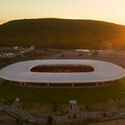
Populous, in collaboration with Malaysian practice HIJJAS Architects + Planners, has released the design for the new Shah Alam Sports Complex in Selangor, Malaysia. Anchoring the Kompleks Sukan Shah Alam (KSSA) masterplan, the stadium sits at the heart of a 188-acre redevelopment led by Populous that aims to transform the site into a major public and civic destination. Originally opened over 25 years ago, the existing Shah Alam Stadium has been a significant venue in the country's sporting history. The new proposal retains the original stadium's silhouette while introducing contemporary architectural and technical upgrades to support current and future needs. Redevelopment works, including the demolition of the aging structure, are planned over 48 months, with completion targeted for 2029.
The Municipality of Venice has unveiled plans for a new 18,500-capacity stadium designed by Populous. The stadium will be built in the Bosco dello Sport in Tessera and is intended for football, Serie A rugby, and other events such as concerts. Maffeis Engineering and Populous have been commissioned for the design and engineering work by a consortium composed of Costruzioni Bordignon, Fincantieri Infrastrutture, and Ranzato Impianti, which was awarded the contract in March 2024. Soil Engineering, Seingim, and Gae Engineering are also collaborating on the project.
Renovation work has officially commenced at FC Dallas' Toyota Stadium in Frisco, Texas, with architecture firm HKS leading the redesign. Originally opened in 2005 with a seating capacity of approximately 20,000, the stadium is undergoing a phased transformation to improve functionality, expand amenities, and prepare for the 2026 FIFA World Cup, with the intention of hosting one of the teams for training. Construction began on the east side and will progress incrementally, allowing the venue to remain operational for home games throughout the process. Completion is scheduled for 2028.
OMA/David Gianotten, has won the competition to revitalize the historic Selman Stërmasi Stadium and its surrounding area in central Tirana, Albania. Originally built in 1956, the stadium is now being redesigned to not only expand the existing football grounds but also to foster stronger links between surrounding neighborhoods in Tirana. With the revitalization, the stadium aims to be a key connector between the Blloku and Komune a Parisit neighborhoods.
Designed by Zaha Hadid Architects in collaboration with the Guangdong Architectural Design & Research Institute, the Greater Bay Area Sports Centre in Nansha, China, is approaching completion. Construction began in August 2023, with the main structures of the stadium and arena topping out in February 2024. Roofing and curtain wall installations were finalized in February 2025, and the project has now entered its final phase of interior finishing and landscaping. The center is set for handover in June 2025, ahead of its role as a key venue for the China National Games in November.
Aerial render. Image Courtesy of Foster + Partners
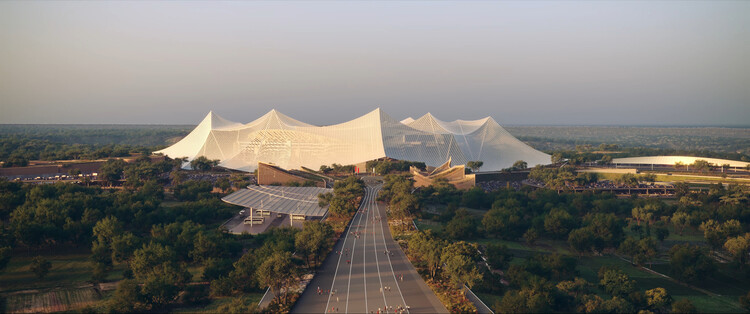
In September 2024, Foster + Partners announced its appointment by Manchester United for the development of a master plan for the Old Trafford Stadium District. The centerpiece of the master plan is a new stadium, set to become the largest football venue in the United Kingdom with a capacity of 100,000 seats. This week, the firm unveiled images of the stadium design along with surrounding public spaces, including parks, mixed-use developments, an open-air cinema, and a renovated train station. These images contain the illustrative concepts that will become the basis for more detailed feasibility, consultation, and planning work as the project enters new stages.