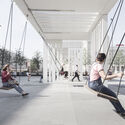
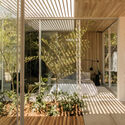
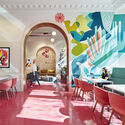
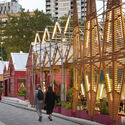
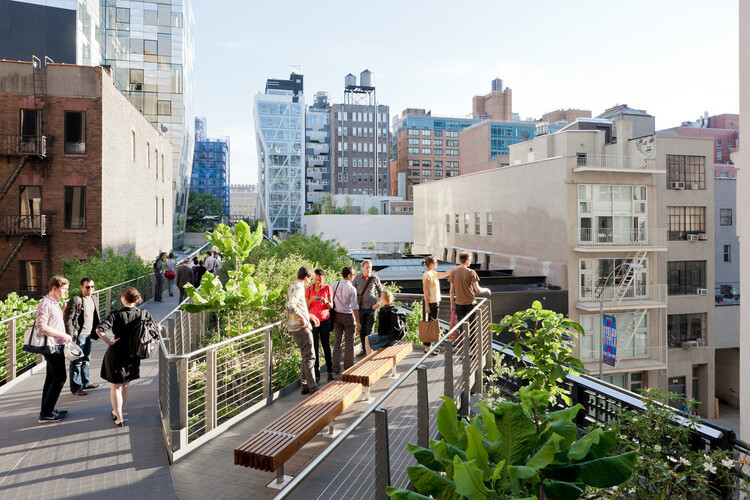
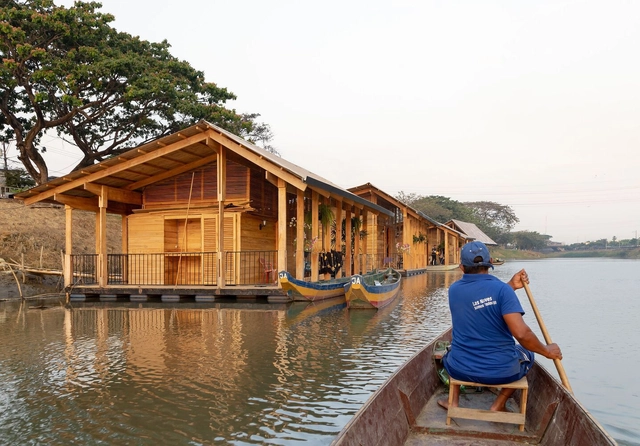
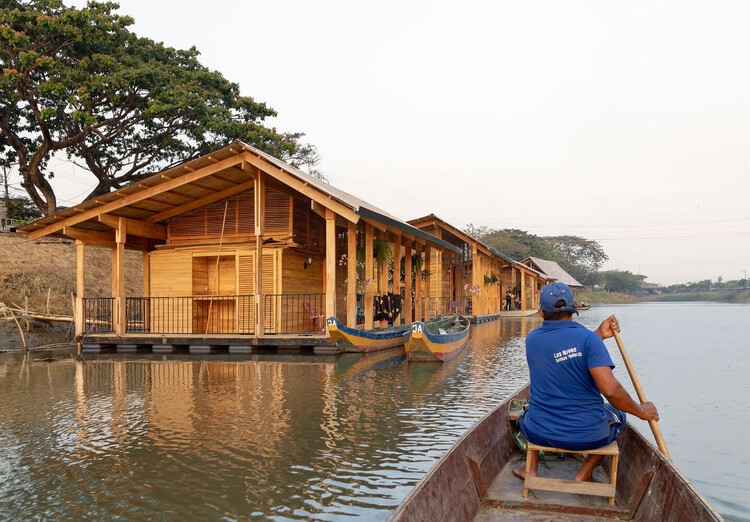
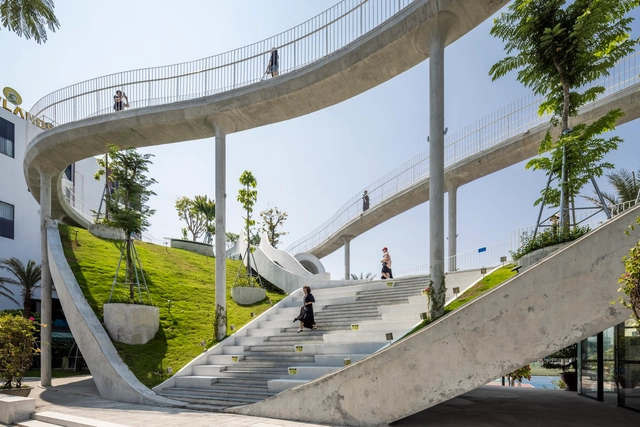
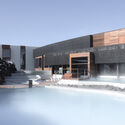
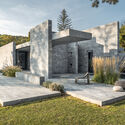
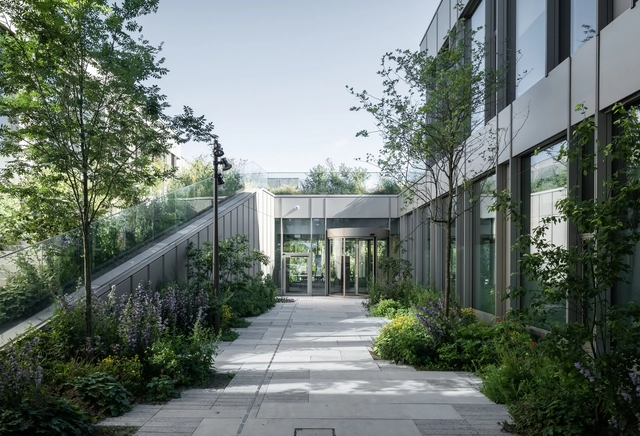
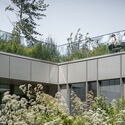
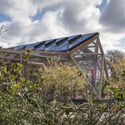
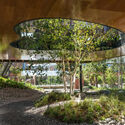
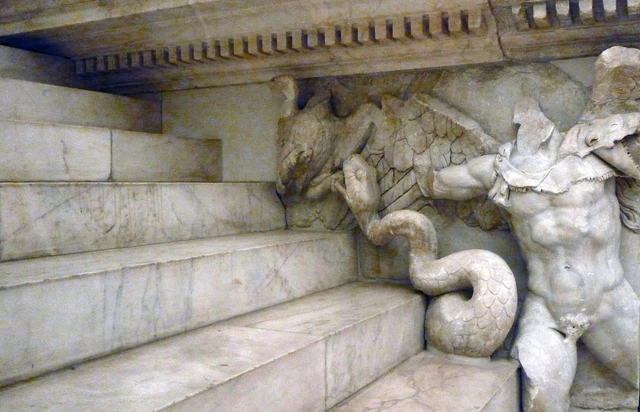
The intersection of neuroscience and architecture/design has brought innovations to the way spaces are conceived.Recently, the relevance of inclusive and regenerative design has come to the fore, addressing the need to create environments that welcome human diversity, including older adults and neurodiverse individuals. This approach not only broadens accessibility but also promotes environmental regeneration and user well-being.
A good conversation can make time feel like it's passing more quickly. But is this effect solely due to the verbal exchange, or could our perception of time be shaped by the spatial conditions surrounding us? There are environments that, due to their scale, distribution, and atmosphere, are conducive to meeting, listening, or pausing, thereby influencing the human experience. Perhaps it's not the words we share, but the space in which we speak that truly shapes our understanding of time. Some sociological theories about our society and the built environment go beyond considering it as a mere physical container and suggest that architecture, in its very duality, can act as both an inhibitor and a catalyst for our temporal experiences, impacting our wellbeing.
https://www.archdaily.com/1029304/wellbeing-and-slow-spaces-can-architecture-distort-the-way-we-experience-timeEnrique Tovar
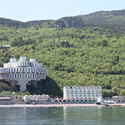
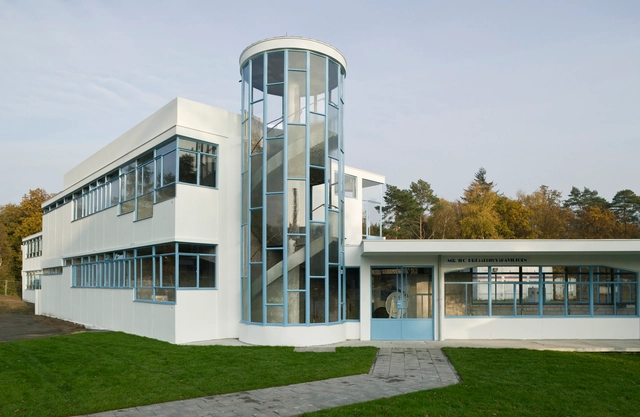
The intersection of architecture and medicine profoundly shaped modernist design, where transparency, light, and air became essential tools in the pursuit of health. Emerging from the tuberculosis crisis of the late 19th and early 20th centuries, the sanatorium evolved beyond a medical facility into a testing ground for architectural innovation. The necessity of fresh air, sunlight, and sterility transformed these spaces into prototypes for modernist principles, influencing spatial organization, material choices, and design philosophies that extended far beyond healthcare.
More than sites of treatment, sanatoriums embodied contemporary medical theories in built form. At a time when tuberculosis — often called the white plague — devastated populations worldwide, medical professionals prescribed environmental exposure as the primary therapy. Architecture adapted accordingly, producing buildings with expansive terraces, large windows, and streamlined interiors designed to optimize ventilation and maximize natural light.
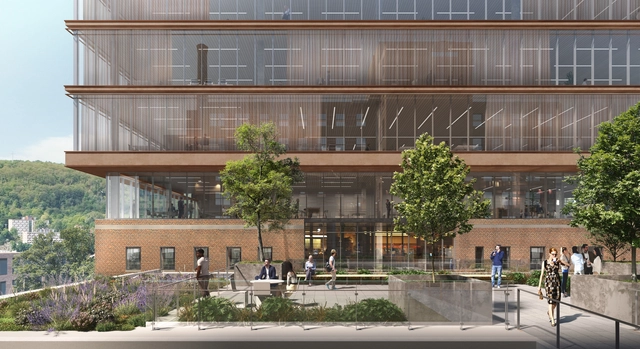
Terrace Garden between both phases. Image Courtesy of NEUF architect(e)s
With modern medicine, it may be difficult for many people today to imagine the devastation caused by Tuberculosis (TB) just about 100 years ago. Initially associated with insalubrious, overcrowded conditions, just in Canada it caused the death of approximately 8000 people annually in the late 19th century. During this time, before more advanced treatments were discovered, prescriptions from doctors involved sunlight, fresh air, and rest. As a response, sanatoria were established. These were places where patients could be separated from the community to manage their disease. One testament to that legacy stands in the heart of Montreal: the former Royal Edward Laurentian Institute, later known as the Montreal Chest Institute. Born from crisis, it has since become a symbol of resilience, transformation, and innovation, shifting from a space of isolation to a thriving hub for research and entrepreneurship in the life sciences.
Historically, public bathing was a fundamental necessity for hygiene, giving rise to communal bathhouses in regions where private bathrooms were a rarity. In Japan, for instance, sento bathhouses emerged during the early Edo period, serving as essential facilities when most households lacked their own bathing spaces. Similarly, in other parts of the world where plumbing and water management were considered luxuries, shared public baths became vital components of urban life. Over time, these spaces evolved beyond their functional role, becoming venues for socializing, relaxation, and a temporary escape from daily routines.
However, in the modern era, private bathrooms have become ubiquitous in contemporary homes, effectively addressing the hygiene concerns that once made public bathhouses indispensable. With the rise of alternative social spaces—cafés, fitness centers, bars, and jazz lounges—the traditional communal bath no longer serves the same essential function. While some may still appreciate the social aspect of public bathing, the inconvenience of changing clothes and getting wet in front of strangers can deter many from engaging in the experience.
Discussions of architectural form demonstrate how disability is negatively imprinted into the field of architecture. In architectural theory and the history of architecture, “form” typically refers to the physical essence and shape of a work of architecture. In the modern idea of form, it is a quality that arises from the activity of design and in ways that can be transmitted into the perceptions of a beholder of architecture. Form provides a link between an architect’s physical creations and the aesthetic reception of these works. It occupies a central place within a general understanding of architecture: the idea of the architect as “form-giver,” among many other turns of phrase, conveys the sense of some fundamental activity and aesthetic role of form within architecture, what architects create, and how people perceive works of architecture.
Augusto Malta, Demolition Morro do Castelo, Rio de Janeiro, RJ, June 1, 1922. . Image Courtesy of Biblioteca Nacional Digital Brasil, Fundação Biblioteca Nacional.
At the inauguration of the First Brazilian Congress of Eugenics in July of 1929, the physician and anthropologist Edgar Roquette-Pinto addressed an audience preoccupied with the question of how a country as vast as Brazil could best increase and improve its population. To accomplish this, Roquette-Pinto exalted “eugenia” as the new science that, together with medicine and hygiene, would guarantee the efficiency and perfection of the race. With the following words, the Brazilian scientist underscored a positivist agenda that brought architecture to the very core of the eugenics—the so-called science of race “improvement”—movement: “It is critical to emphasize that the influence [on our race] does not stem from the natural environment but rather from the artificial environment, created by man.” With these opening remarks to the Congress, Roquette-Pinto called attention to the crucial role that the man-made environment plays in the “amelioration” of what he called “the biological patrimony” of Brazil’s diverse population. In his invitation to social engineering, Roquette Pinto pointed to the environmental-genetic collusion that they hoped would bring with it the very possibility of progress.
Diagram of Falcon Lift's Falcon FS 420C. Image Courtesy of Falcon Lift
For companies or leasers that own large buildings, building maintenance can seem daunting, costly, or even superfluous, particularly when building functions appear to be running smoothly. But proper and consistent building maintenance is imperative for a number of reasons. Buildings inherently function less effectively over time due to natural causes such as climate, daily occupant use, mechanical obsolescence, and more. When left unresolved, these issues can devalue user experiences, create dangerous and unhealthy environments, and even incur costs higher and more sudden than consistent building maintenance costs.
https://www.archdaily.com/928044/why-is-building-maintenance-importantLilly Cao
Our entire civilisation is facing one of our most challenging times since WWII.
The results caused by the COVID-19 outbreak are unimaginable and unpredictable yet, but we are already feeling the drastic effects. Richard Kozul-Wright, Director of the UNCTAD, estimates an impact that will cost the world economy around $1 trillion, expecting the worst scenario than the financial collapse in 2008.
( CHALLENGE )
Propose a visionary project that helps to revive the economy of a region, city or community affected by the COVID-19 outbreak.
In a perfect harmony of architecture, economy, and environment, the competition aims to generate visionary ideas
BRIEF Things aren't going too well right now. Each new day seems to add to the uncertainty about the immediate and long-term impact of the Coronavirus pandemic. Whether you think that people are overreacting or it is truly a global health emergency, one fact is objectively true: Covid-19 has affected billions of lives: if not physically than economically and mentally.
Entire cities in China have been on lockdown for weeks and now Europe faces the same pressures. Behind the news stories that love to flash statistics on infection rates are real people who are uncertain of what this
FuturArc Prize 2020 asks how an Asian city might restore a human-nature balance.
TASK 1) Pick a city in Asia. This may be the city you live in or one that you are familiar with. 2) Evaluate the loss of natural habitats and ecosystem services. 3) Understand the impact of this loss on the well-being of humans and other species. 4) Propose new elements and networks that will invite Nature back and restore ecosystem services.
This year, you decide the scale and boundary of the intervention. Your proposal can be at the city-scale; it can be a retrofitted neighbourhood; or it can be a prototype for
Vista do átrio. Image Cortesia de Safdie Architects
The first Brazilian project by Safdie Architects has broken ground in Sao Paolo's Morumbi neighborhood on November 6. Developed in partnership with Perkins+Will, The Albert Einstein Education and Research Center is part of the Albert Einstein hospital complex.
The new center, named Campus Cecilia and Abram Szajman, will be one of the most advanced institutions in Latin America for medical studies. It will feature innovations in learning methods and technologies, as well as flexible research laboratories capable of adapting to the advancement of hospital techniques.
The population’s aging phenomenon is occurring worldwide. We say phenomenon because all population pyramids are reversing, which means birth rates are steadily decreasing over the years, and at the same time, life expectancy has been increasing. Thus, the elderly population is growing at a faster rate than children.
According to IBGE (Brazilian Institute of Geography and Statistics), in 2017 there were more than 30 million people over the age of 60 in Brazil (14.6% of the population). To understand this growing demographic, let's take a look at other countries' statistics. Mexico's total population is about 28 million, the size of Australia's and New Zealand's combined population. We are talking about a demographic the size of a country.
Designed by Henning Larsen and MSR Design, the New Public Service Building for the city of Minneapolis aims to consolidate several departments, currently found across multiple different sites, into one unified building. The scheme promotes the health and well-being of its 1,300 employees through maximizing daylight and green space throughout, integrating a significantly sustainable remit within the 385,000 square foot, 11 story proposal. Located diagonally across from the existing city hall, Henning Larsen brings a “knowledge-based Scandinavian design approach” to the high-performance office space, hoping to set a “new architectural agenda in North America."
Symantec HQ - The building features a blend of natural materials, bold colouring, and branding. Image Courtesy of Little
Architecture continually evolves to meet societal demands. Recently, a global effort to tackle climate change, and to achieve optimum energy efficiency in buildings, has brought standards such as BREEAM and LEED to the fore. However, as scientific analysis and awareness of human mental health has increased, architects are once again required to place humans at the centre of the design process. This growing trend has led to the development of WELL Building Certification – considered the world’s first certification focused exclusively on human health and wellbeing.