‘Infrastructural Monument’ Conference

Courtesy of Center for Advanced Urbanism

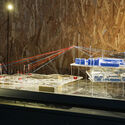
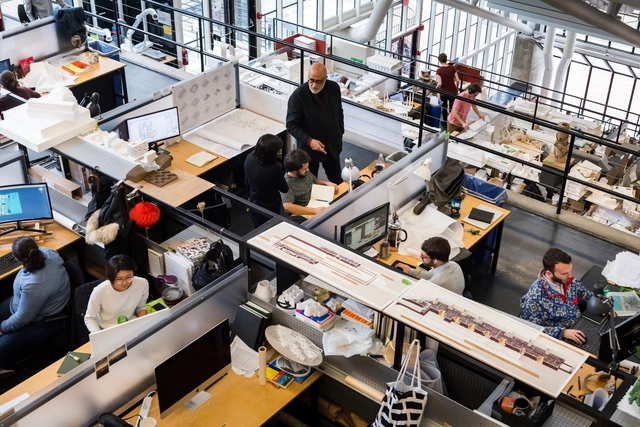
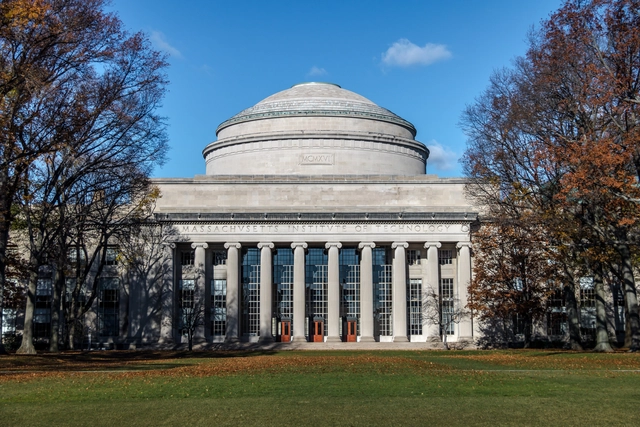
Taking place April 8-9 at MIT’s School of Architecture and Planning the ‘Infrastructural Monument’ Conference hosted by the Center for Advanced Urbanism (CAU), focuses on the development of infrastructural research agendas and projects which is a key mission for MIT’s CAU. This conference is the first in a series, devoted to a series of strategic design challenges facing cities worldwide. The conferences challenges you to answer the question, ‘Can a typical American city be transformed from a collection of fragments assembled regionally by interstate highways, to a more durable regional constitution, using targeted infrastructural investment projects?’ For more information, please visit here.

Neri Oxman: On Designing Form

Neri Oxman is an architect and founder of  with the MIT Media Lab. Her work focuses on computational strategies for form finding; she chooses to define and design processes that generate form. She has published numerous papers and has contributed to various texts. Her work has also been featured at the MOMA for the exhibit “Design and the Elastic Mind“, which she designed four systems of processes. In this lecture posted by PopTech, Oxman discusses what the processes of nature can teach designers and how computational strategies defined by materials and the environment can expand the possibilities of the generation of form through algorithms and analysis.

Follow us after the break for more.

‘Latest Works’ Lecture by Manuel Aires Mateus at MIT

House in Aroeira / Courtesy of Mateus e Associados

Manuel Aires Mateus of Aires Mateus e Associados will be giving a lecture at MIT featuring ‘Latest Works’. The projects of are characterised by materiality, mass and an essential muteness or quietness. The Paulo Gomes Archeological Center, Casa Areia and Furnas Monitoring and Investigation Centre are perhaps the most elemental and representative of their projects, seeming to draw power from the connection or contrast with nature.

Situated at the archaeological site of Crasto Lofts, the Paulo Gomes Archeological Center features an exhibition area defined as the liminal space between a concrete and glass skin and the exposed cliff side. (Australian Institute of Architects).The event, which is free and open to the public, takes place Thursday, May 3rd at 6:30pm at Building 10, room 250. For more information, please visit here.

‘Elemental Recent Projects: Monoliths and Trees’ Lecture by Alejandro Aravena at MIT

Siamese Towers / Courtesy of

Alejandro Aravena, based in Santiago de Chile, will be giving a lecture at MIT on the theme of ‘Elemental Recent Projects: Monoliths and Trees’. After the 8.8 earthquake and tsunami that hit Chile in 2010, they have worked in the reconstruction by proposing a mitigation forest as the main infrastructural work, but also dealing with housing, public buildings, productive activities and transportation. In 2011 they were called to perform a similar redesign of an entire city in the Atacama desert, where the Chilean Copper Company, Codelco, commissioned them to intervene at the whole scale of Calama where they are proposing an oasis.

They have been also working in different buildings like the Angelini Innovation Center in Chile and the Mirador del Diablo in Mexico where architecture has become rather monolithic. The event, which is free and open to the public, takes place Thursday, April 19th at 6:30pm at Building 10, room 250. For more information, please visit here.

‘Evolved to Fit: Biomimicry in the Built World’ Lecture by Janine Benyus at MIT

© Cook + Fox Architects, screen design drawn from ' research on biomimicry

Janine Benyus, president of the Biomimicry 3.8 Institute in Missoula, MT, will be giving a lecture at MIT on the theme of ‘Evolved to Fit: Biomimicry in the Built Word’. Janine Benyus is a natural sciences writer, innovation consultant, and author of six books, including her latest − Biomimicry: Innovation Inspired by Nature. In Biomimicry, she names an emerging discipline that seeks sustainable solutions by emulating nature’s designs and processes (e.g., solar cells that mimic leaves, agriculture that models a prairie, businesses that run like redwood forests). The event, which is free and open to the public, takes place Thursday, April 5th at 6:30pm at Building 10, room 250. For more information, please visit here.


On Oikonomia: Saarinen’s Ezra Stiles College Open After $55M Renovation

Ezra Stiles College under construction, 1961. Copyright Balthazar Korab Ltd.

, –Yale’s Ezra Stiles College, designed by Eero Saarinen and completed in 1961, reopened to students last month after a one-year, $55 million dollar renovation. The project was the last in a complete overhaul of all the residential colleges at Yale, which started in 1998 and has cost over $500 million (adjusted for inflation).

Students are happy with the work, praising the new brick pizza oven in the dining hall, shift from single to suite-style rooms, and improved furniture and lighting. Jon Rubin ’12 told the Yale Daily News (YDN) the renovated Stiles is “definitely a step up” from the college he lived in two years ago.

10 College Campuses with the Best Architecture

Photo by Rex Hammock - http://www.flickr.com/photos/rexblog/

Architectural Digest has compiled a list of college campuses throughout the United States which have the most remarkable architectural traditions, which broadcast their innovative philosophy through design. A number of colleges have fully incorporated modern architecture into their campus schemes, for example MIT; while others have preserved their historical edifices through the course of the years, like the University of Virginia. The list involves some prestigious institutions, in addition to some surprises, all possessing their individual architectural languages.

See the 10 College Campuses with the Best Architecture after the break.

New Energy Tools to Assist in China’s Rapid Urbanization

©

A new set of tools have been developed by researchers at MIT in collaboration with China’s Tsinghua University that will evaluate the performance and consumption of large-scale projects. Led by Dennis Frenchman and Christopher Zegras from MIT’s School of Architecture + Planning, these new set of guidelines and tools are a proactive response to the rapid urbanization of China and its ever-increasing development and infrastructure projects. The main goal is to introduce sustainable methods of implementation and construction, and responsible energy patterns one neighborhood at a time.

MIT’s Festival for Art Science and Technology ‘FAST Light’

Liquid Archive, Courtesy of NADAA

’s Festival for Art Science and Technology will culminate this weekend May 7th and 8th with FAST Light, a series of innovative site specific installations around the campus and along the Charles River. Installations by Department of Architecture Head, (founder and principal of Office dA and of the newly formed NADAAA), Professor Sheila Kennedy (Principal of Kennedy & Violich Architecture), and Professor Meejin Yoon (Principal of Höweler + Yoon Architecture and MY Studio) are among the final river front projects that will light up the night along the river this Saturday and Sunday in front of Killian Court at MIT.

More information, photographs, and videos following the break

FAST Light at MIT

Courtesy of

The FAST Light festival of art, science and technology celebrates ’s culture of creativity and invention. Beginning in February installations, pavilions and artwork have transformed the campus continuing thru May.  Installations demonstrate how the tools of ‘technology, invention and fantasy can transform the physical environment in thought-provoking, breathtaking ways.’

VoltaDom, by Skylar Tibit is currently on view as part of more than 20 installations created by MIT faculty and students. Tibit shared with us a video and photographs of the installation.  A complete list of installations and events can be found on the official site for FAST Light.

ICEWALL / Yushiro Okamoto

Photographs courtesy of

As a part of ’s 150th anniversary celebration, a student competition was held for a installation to become part of the festivities. Yushiro Okamoto‘s winning proposal, ICEWALL, has recently been completed and has been submitted to share with us here at ArchDaily. Follow after the break to browse through a large collection of photographs of the project.

AD Futures #4: SPARC


HiDrone - 1st Prize Awarded London Architecture Gallery International Competition 2008

SPARC is a team of international architects at the based in Boston, MA, with a multidisciplinary background at the ´s Media Lab. This has resulted on a continuous research on smart/responsive environments applied to the world of architecture, design, urbanism and landscape architecture.

This new relation between technologies and built spaces has opened a wide array of possibilities, that we are just starting to see. And that´s why I choose this practice for this week´s AD Futures.