1. ArchDaily
  2. Aldo Rossi

Aldo Rossi: The Latest Architecture and News

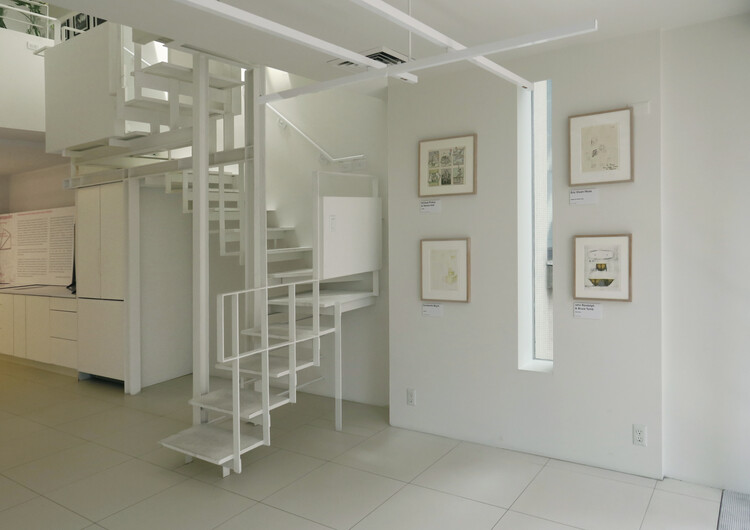
Exhibition at Paul Rudolph’s Modulightor Building in New York Unites Works of Architectural Art from Gehry, Rossi, and More

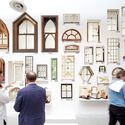
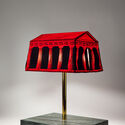
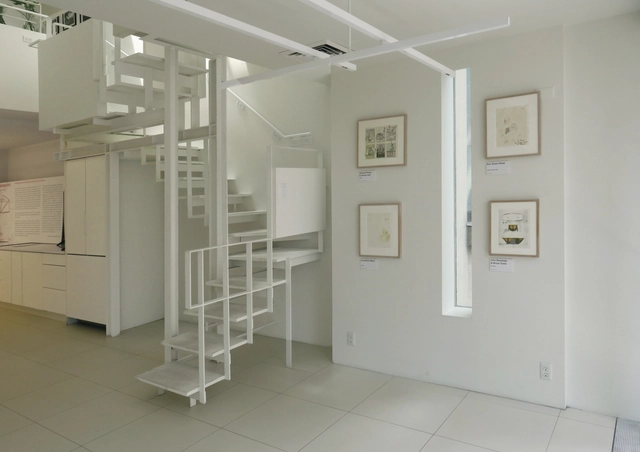
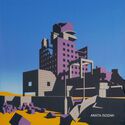
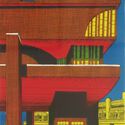
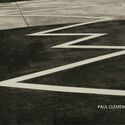
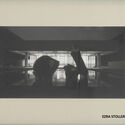
An exhibition of architectural drawings and photographs, titled "Architecture = Art: The Susan Grant Lewin Collection," is now on view at Paul Rudolph's Modulightor Building in Manhattan, New York. Hosted by the Paul Rudolph Institute for Modern Architecture (PRIMA), the collection brings together works by prominent architects, including Eileen Gray, Daniel Arsham, Frank Gehry, Jesse Reiser, Hani Rashid, Steven Holl, Aldo Rossi, Michael Graves, James Wines, Stanley Tigerman, John Hejduk, among others. The drawings are accompanied by a selection of photographs by architectural photographers such as Ezra Stoller, Robin Hill, Norman McGrath, Paul Clemence, and others. The exhibition opened on July 2 and will remain on view until September 20, 2025.

Exhibition at Paul Rudolph’s Modulightor Building in New York Unites Works of Architectural Art from Gehry, Rossi, and More - 1 的图像 4Exhibition at Paul Rudolph’s Modulightor Building in New York Unites Works of Architectural Art from Gehry, Rossi, and More - 2 的图像 4Exhibition at Paul Rudolph’s Modulightor Building in New York Unites Works of Architectural Art from Gehry, Rossi, and More - 3 的图像 4Exhibition at Paul Rudolph’s Modulightor Building in New York Unites Works of Architectural Art from Gehry, Rossi, and More - 4 的图像 4Exhibition at Paul Rudolph’s Modulightor Building in New York Unites Works of Architectural Art from Gehry, Rossi, and More - More Images+ 16

The Iconic Gallaratese Complex in Milan Through the Lens of Kane Hulse

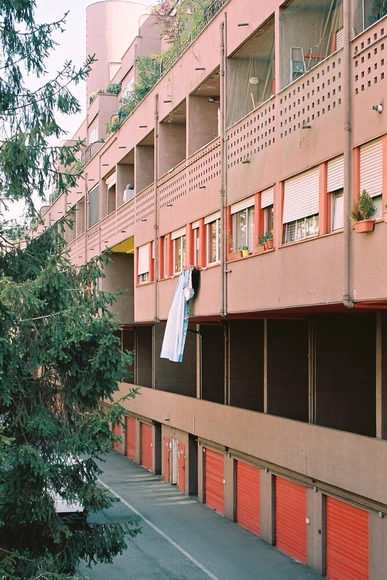
In the aftermath of the Second World War, a drastic housing shortage spread across Europe, and Milan was no exception. Various plans and solutions were conceived to address this crisis, outlining satellite communities for the city to accommodate between 50,000 and 130,000 residents each. The first of these communities began construction in 1946, just one year after the war's end: the Gallaratese project.

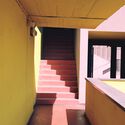
In late 1967, as the plan allowed for the private development of Gallaratese 2, the esteemed Studio Ayde, led by partner Carlo Aymonino, was assigned the project. Aymonino invited Aldo Rossi to contribute his architectural skill to the complex, leading to the realization of their distinct visions for an ideal microcosmic community. Together, these two Italian architects began a journey to shape a groundbreaking and historically significant housing icon for Milan. Captured through the lens of Kane Hulse, the building and it’s significance is revisited through this photo series.

The Iconic Gallaratese Complex in Milan Through the Lens of Kane Hulse - Image 1 of 4The Iconic Gallaratese Complex in Milan Through the Lens of Kane Hulse - Image 2 of 4The Iconic Gallaratese Complex in Milan Through the Lens of Kane Hulse - Image 3 of 4The Iconic Gallaratese Complex in Milan Through the Lens of Kane Hulse - Image 4 of 4The Iconic Gallaratese Complex in Milan Through the Lens of Kane Hulse - More Images+ 3

Melancholy and Architecture: Interpretations of Aldo Rossi and the San Cataldo Cemetery

Subscriber Access | 

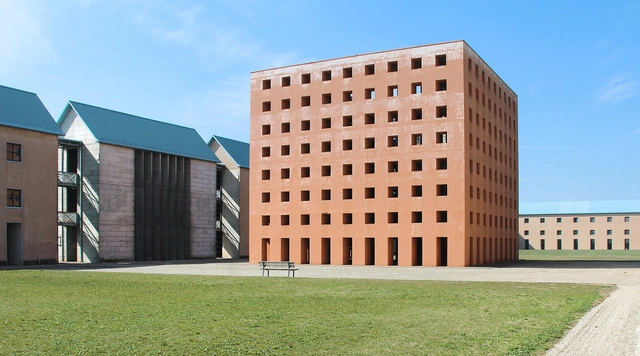
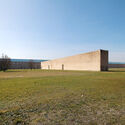
Cemeteries are among the architectural programs with the greatest symbolic value. They suggest rituals, rigor and solemnity while offering some comfort or hospitality, if not for those who bid farewell to their loved ones, at least to "guarantee" a dignified afterlife for those who have passed away. The San Cataldo Cemetery, designed by Aldo Rossi and Gianni Braghieri, fulfills the first part of the previous statement. Partly because the project was not entirely built, austerity and empty spaces predominate. But when considering the proposed project, perhaps the aridity would remain, and the harshness would be felt more forcefully. Composed of buildings with almost abstract, pure shapes, without noble details or cladding, the cemetery project is a good example of Aldo Rossi's production at the time of its conception, around 1970.

Melancholy and Architecture: Interpretations of Aldo Rossi and the San Cataldo Cemetery - Image 1 of 4Melancholy and Architecture: Interpretations of Aldo Rossi and the San Cataldo Cemetery - Image 2 of 4Melancholy and Architecture: Interpretations of Aldo Rossi and the San Cataldo Cemetery - Image 3 of 4Melancholy and Architecture: Interpretations of Aldo Rossi and the San Cataldo Cemetery - Image 4 of 4Melancholy and Architecture: Interpretations of Aldo Rossi and the San Cataldo Cemetery - More Images+ 3

Space Popular Adapts Aldo Rossi’s Concepts of Urbanism to the Virtual Realms of the Metaverse

Through the “Search History” exhibition at MAXXI Museum in Rome, Lara Lesmes and Fredrik Hellberg, directors of the architecture and art studio Space Popular, set out to explore the work of Also Rossi and to translate his notions of “urban fact” and “analogous city” to the virtual realm. The installation is a reflection on the proliferation of metaverse platforms and the concept of virtual urbanism. The exhibition is part of the fifth edition of Studio Visit, a partnership between Alcantara and the MAXXI Museo nazionale delle arti del XXI secolo, which challenges designers to put forward a personal reinterpretation of the works of the masters in the MAXXI Architecture Collections.

Space Popular Adapts Aldo Rossi’s Concepts of Urbanism to the Virtual Realms of the Metaverse - Image 1 of 4Space Popular Adapts Aldo Rossi’s Concepts of Urbanism to the Virtual Realms of the Metaverse - Image 2 of 4Space Popular Adapts Aldo Rossi’s Concepts of Urbanism to the Virtual Realms of the Metaverse - Image 3 of 4Space Popular Adapts Aldo Rossi’s Concepts of Urbanism to the Virtual Realms of the Metaverse - Image 4 of 4Space Popular Adapts Aldo Rossi’s Concepts of Urbanism to the Virtual Realms of the Metaverse - More Images+ 29

How Do the Critics of Yesteryear Think About Urban Density?

Subscriber Access | 
How Do the Critics of Yesteryear Think About Urban Density? - Featured Image
Corvidae Coop, Seattle, designed by Allied8 Architects. Image Courtesy of Allied8 Architects

This article was originally published on Common Edge.

In the 1960s and 1970s, a series of critiques of the modern city appeared. Jane Jacobs’s attack on those intent on redeveloping New York City was the most immediately impactful, loosening the grip of Robert Moses and his followers, but others had a broader influence on practicing architects and planners. As an observer of San Francisco Bay Region’s cities, I wondered if their books from this period would shed light on current issues of adding density in urban contexts.

Architects Can Act More Like DJs: In conversation with Cino Zucchi

Architects Can Act More Like DJs: In conversation with Cino Zucchi - Featured Image
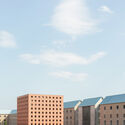
Residential buildings in the ex Mercato Navile area, Bologna, Italy, 2014. Image Courtesy of Courtesy of Cino Zucchi Architetti

Architect Cino Zucchi (b. 1955) grew up and practices in Milan, Italy. He was trained at MIT in Cambridge and the Politecnico di Milano, but claims to be largely self-taught, although influenced by such of his countrymen as Aldo Rossi and Manfredo Tafuri. He is internationally known for diverse projects across Europe. Many are both abstracted and contextual residential complexes in Italy, particularly in Milan, Bologna, Parma, Ravenna, and, most notably, in Venice. Zucchi’s D residential building in Giudecca, attracted international attention and praise when it was completed in 2003. I met Cino Zucchi last year during the Venice Architecture Biennale; that meeting led to an extensive interview that we recently engaged in over Zoom between New York and the architect’s sunlight and books-filled Milan studio.

Architects Can Act More Like DJs: In conversation with Cino Zucchi - Image 1 of 4Architects Can Act More Like DJs: In conversation with Cino Zucchi - Image 2 of 4Architects Can Act More Like DJs: In conversation with Cino Zucchi - Image 3 of 4Architects Can Act More Like DJs: In conversation with Cino Zucchi - Image 4 of 4Architects Can Act More Like DJs: In conversation with Cino Zucchi - More Images+ 8

11 Architect-Designed Furniture and Lighting Pieces Displayed at the 2021 Salone del Mobile

Subscriber Access | 

After a year-long absence, Milan Design Week has wrapped up yet another year of creativity and innovation. From the 5th to the 10th of September, thousands of design companies displayed their creations to more than 200,000 visitors hailing from different countries, demographics, and industries. And while the design fair gravitated towards the world of interior design, many renowned architects such as Bjarke Ingels, Foster + Partners, and Herzon & de Meuron participated in the week-long exhibition and joined forces with interior and furniture design brands to create signature pieces.

11 Architect-Designed Furniture and Lighting Pieces Displayed at the 2021 Salone del Mobile - Image 1 of 411 Architect-Designed Furniture and Lighting Pieces Displayed at the 2021 Salone del Mobile - Image 2 of 411 Architect-Designed Furniture and Lighting Pieces Displayed at the 2021 Salone del Mobile - Image 3 of 411 Architect-Designed Furniture and Lighting Pieces Displayed at the 2021 Salone del Mobile - Image 4 of 411 Architect-Designed Furniture and Lighting Pieces Displayed at the 2021 Salone del Mobile - More Images+ 7

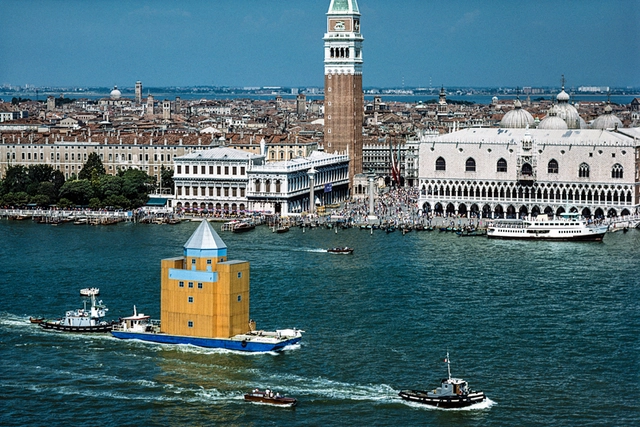
When Architects Design Boats

Subscriber Access | 

Boats offer delightful distractions for a surprisingly large number of architects. So many in fact, that there seems to be something about boats that appeals specifically to those trained in architecture.
Spotlight: Aldo Rossi

Ada Louise Huxtable once described him as “a poet who happens to be an architect.” Italian architect Aldo Rossi (3 May 1931 – 4 September 1997) was known for his drawings, urban theory, and for winning the Pritzker Prize in 1990. Rossi also directed the Venice Biennale in 1985 and 1986—one of only two people to have served as director twice.

Spotlight: Aldo Rossi - Image 1 of 4Spotlight: Aldo Rossi - Image 2 of 4Spotlight: Aldo Rossi - Image 3 of 4Spotlight: Aldo Rossi - Image 4 of 4Spotlight: Aldo Rossi - More Images+ 3

Architecture Classics: Gallaratese Quarter / Aldo Rossi + Carlo Aymonino

As the dust settled following the Second World War much of Europe was left with a crippling shortage of housing. In Milan, a series of plans were drafted in response to the crisis, laying out satellite communities for the northern Italian city which would each house between 50,000 to 130,000 people. Construction the first of these communities began in 1946, one year after the end of the conflict; ten years later in 1956, the adoption of Il Piano Regolatore Generale—a new master plan—set the stage for the development of the second, known as 'Gallaratese'. The site of the new community was split into parts 1 and 2, the latter of which was owned by the Monte Amiata Società Mineraria per Azioni. When the plan allowed for private development of Gallaratese 2 in late 1967, the commission for the project was given to Studio Ayde and, in particular, its partner Carlo Aymonino. Two months later Aymonino would invite Aldo Rossi to design a building for the complex and the two Italians set about realizing their respective visions for the ideal microcosmic community.[1]

Architecture Classics: Gallaratese Quarter / Aldo Rossi + Carlo Aymonino - ResidentialArchitecture Classics: Gallaratese Quarter / Aldo Rossi + Carlo Aymonino - ResidentialArchitecture Classics: Gallaratese Quarter / Aldo Rossi + Carlo Aymonino - ResidentialArchitecture Classics: Gallaratese Quarter / Aldo Rossi + Carlo Aymonino - ResidentialArchitecture Classics: Gallaratese Quarter / Aldo Rossi + Carlo Aymonino - More Images+ 17