Photographer Paul Clemence documented the International Gateway Centre (IGC) in West Kowloon, a mixed-use development by Zaha Hadid Architects in Hong Kong, as it approaches completion. The photo series captures the project at a stage where its overall massing, facade systems, and spatial organization are largely realized, while final works continue across public and interior areas. Clemence's close-range views highlight the vertical shading pleats, the curvature of the glazed envelope, and the transitions between structural and environmental elements, underscoring how the building's formal language is resolved through construction.
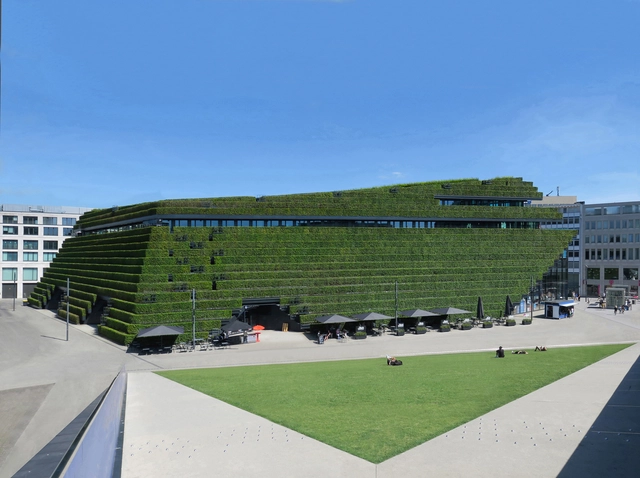
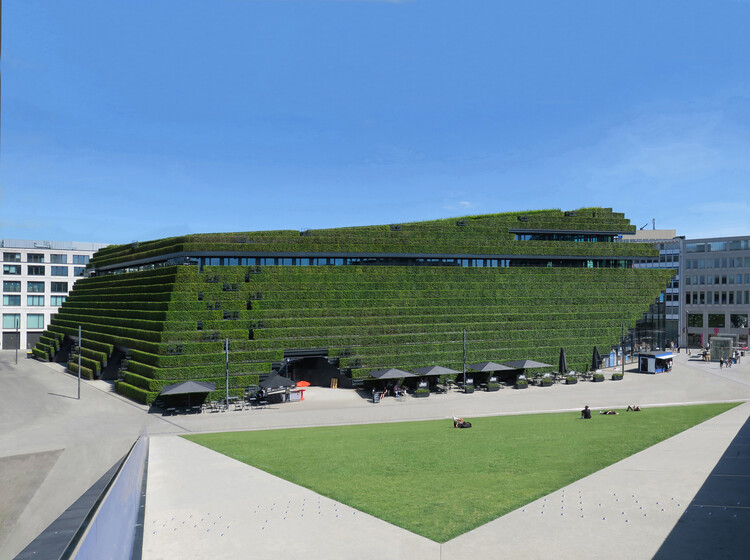
In early 2025, photographer Paul Clemence documented Kö-Bogen II, a commercial and office complex designed by ingenhoven architects in Düsseldorf, Germany. The photo series focuses on the building's signature feature: its vast green façade, considered one of the largest in Europe. Referred to as a "green heart" and an "urban mountain," the building has become a landmark in the city due to its sloping surfaces wrapped in over 30,000 hornbeam plants. For Clemence, this was an unforeseen encounter during his first visit to Düsseldorf, which he describes as an unexpected meeting with a "stunning green pyramid."
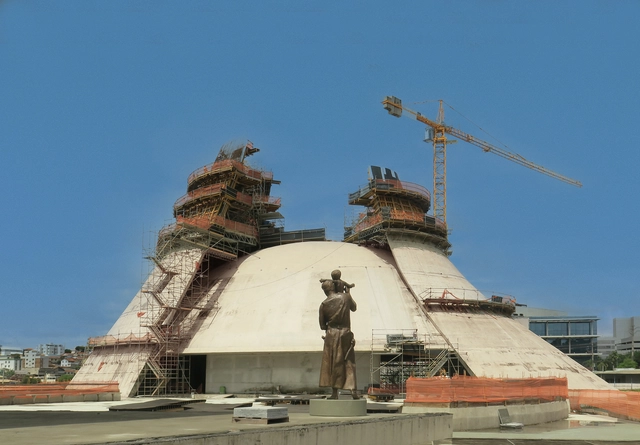
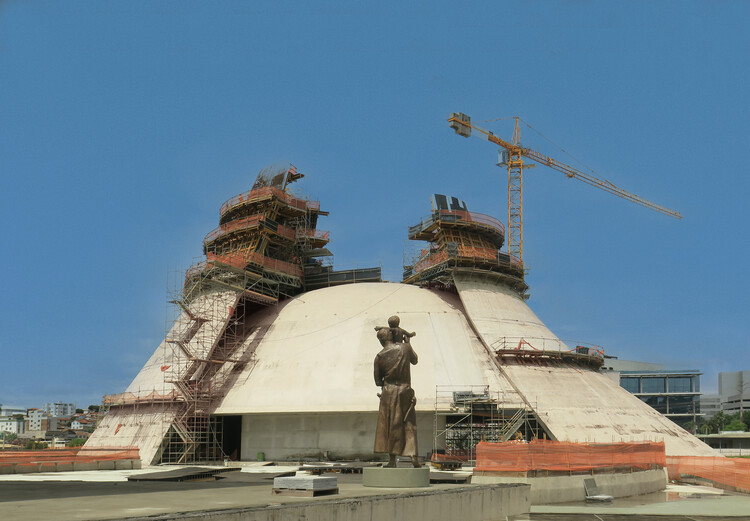
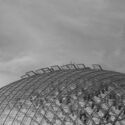
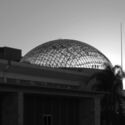
The Cristo Rei Cathedral is Oscar Niemeyer's design for the cathedral of Belo Horizonte, the capital of the state of Minas Gerais in southeastern Brazil. Conceived between 2005 and 2006, it is one of the late architect's final projects in the country. The design features a domed structure approximately 60 meters in diameter, suspended by two towering elements rising 100 meters high. Niemeyer referred to the project as a "square," consisting of a cathedral with a capacity for 3,000 people and an external altar designed to accommodate up to 20,000 worshippers for mass and public events. Construction began in 2013 and is still ongoing. Earlier this year, photographer Paul Clemence visited the site, documenting the building process and capturing the emergence of Niemeyer's signature curves.
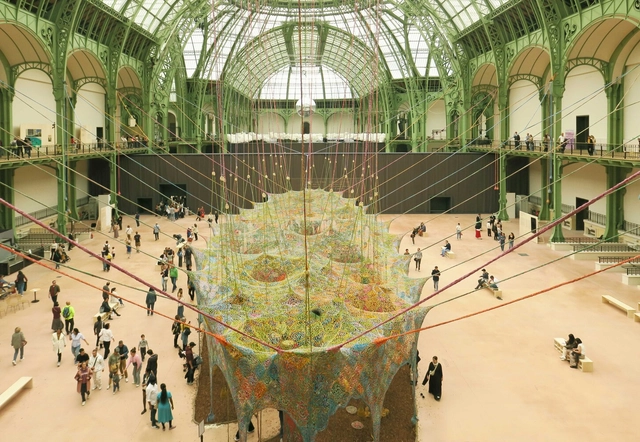
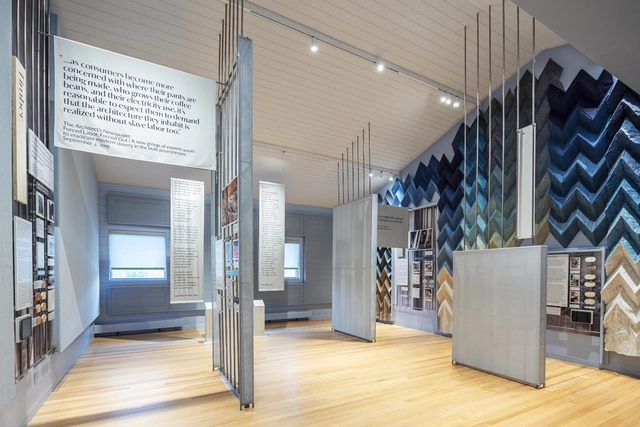
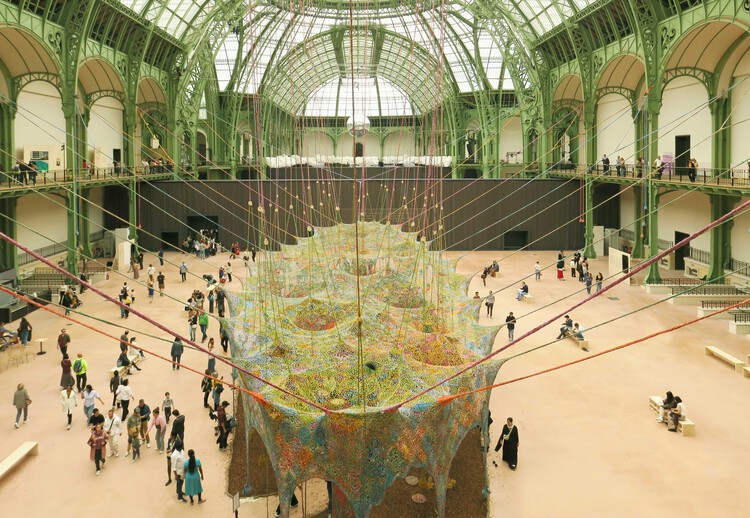
The exhibition "Nosso Barco Tambor Terra" by Brazilian artist Ernesto Neto, held at the recently renovated Grand Palais in Paris from June 6 to July 25, 2025, is a large-scale, immersive installation that invites visitors to reconnect with nature and community through sensory experience. Drawing inspiration from Brazilian and Indigenous cultures, Neto uses textiles, scents, and organic materials to create a space for reflection and interaction. The textile installation was recently captured by photographer Paul Clemence, who sought to portray its architectural qualities.
Photographer Paul Clemence captured a striking photo series of the Bioparque Pantanal, also known as the Pantanal Aquarium, a recently completed architectural project in Campo Grande, Brazil, designed by the late architect Ruy Ohtake. Located within the Parque das Nações Indígenas, one of the largest urban parks in the country, the structure serves as a centerpiece for cultural, scientific, and ecological exploration in the state of Mato Grosso do Sul. Clemence's photography highlights the interplay between the aquarium's architectural design and its surrounding environment, providing a visual documentation of the project's form, materials, and spatial organization.
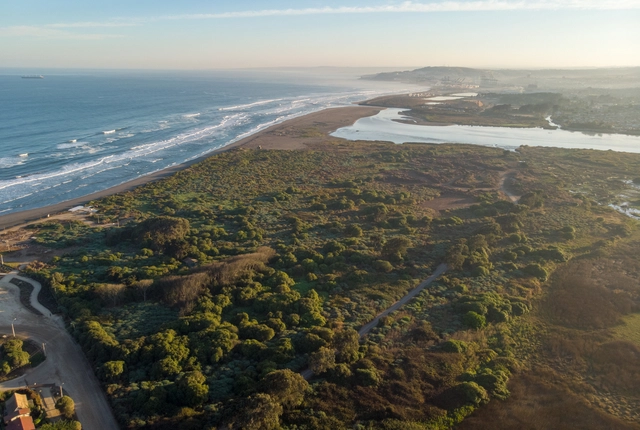
In his latest photographic journey, Paul Clemence explores the architectural essence of SwissMuseums at Le Salon Suisse, Miami Art Week. Delving into the architectural artistry of the region and the museum's significance in today's urban landscape, the photographer showcases a comprehensive exhibition. Titled "Shapes, Rhythm, Abstraction: Swiss Museums," the photo series includes Geneva, Lausanne, Basel, Zurich, and St. Gallen.
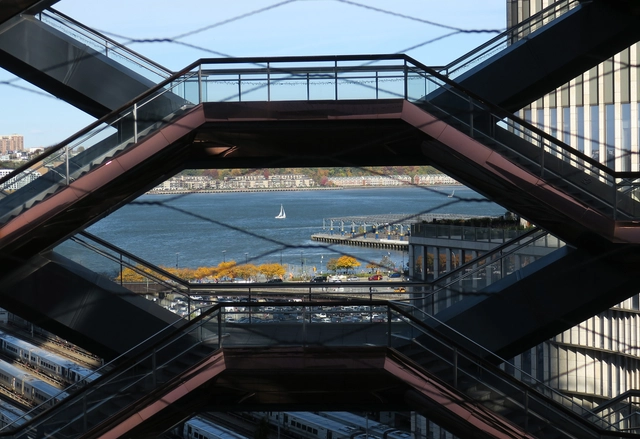
In October 2024, "The Vessel" at Hudson Yards in New York City reopened to the public after being closed for nearly three years due to multiple suicides. Originally designed by Heatherwick Studio and opened in 2019, the 150-foot monumental staircase was closed in January 2021 after four individuals, all under the age of 25, tragically took their own lives within an 18-month span. This photo series by Paul Clemence captures "The Vessel" as it reopens, offering a fresh look at its design and renewed role in the city.
Beyond just a visual record, architectural photography is a powerful medium that holds the ability to reveal and explore architectural spaces from unique perspectives. Through the lens of a skilled photographer, architecture showcases its interplay of lights and shadows, the tectonics of its structural elements, the careful detailing of joined materials, and the larger narratives of cultural heritage. On World Photography Day 2024, we celebrate this unique art form by highlighting the work of 25 distinguished photographers who have captured architecture in its most evocative forms.
Among the featured photo series, Paul Clemence explores the minimalist precision of Swiss museums, Iwan Baan offers a visual narrative of Prague, while Simone Bossi highlights the contrast between man-made structures and their natural surroundings. Additionally, Marc Goodwin continues his series on architecture studios from around the world, providing a glimpse into the profession’s creative spaces. Erieta Attali’s work transports viewers to ancient ruins to explore historical juxtapositions and cultural landscapes.
In his latest photographic journey, Paul Clemence explores the architecture of the Aluminaire House in Palm Springs. The Aluminaire House Foundation has bestowed the house exhibit upon the Palm Springs Art Museum, joining its permanent collection. This architectural landmark, designed by Albert Frey and Lawrence Kocher is currently undergoing reconstruction in the south parking lot of the Museum. Hailed as an icon of modernist design, recently recognized by the Architectural Record as one of the most significant buildings completed worldwide in the past 125 years.
With the 2024 Olympic Games opening ceremony fast approaching, Paris has captured global attention. In addition to the venues being prepared for the Olympics, the city offers a wide range of architectural projects that showcase its efforts to improve the urban environment and promote a greener and more inclusive city. Among these, the new Clichy Batignolles Eco-District in the 17th arrondissement of Paris is a 54-hectare development that set out to transform the former SNCF rail yard into a new neighborhood. The initiative features contributions from internationally recognized architects including MAD Architects, Architect Périphériques, and RPBW, among others. Read on to discover the urban development through the lens of architecture photographer Paul Clemence.
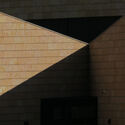
Paul Clemence has released a new series of images showcasing the ongoing construction works in The Los Angeles County Museum of Art (LACMA). Undergoing massive transformations, including a new building by Swiss architect Peter Zumthor, the LACMA is the largest art museum in the western United States. Approved in 2019, Zumthor’s design, known as the David Geffen Galleries, aims to modernize the museum’s campus.
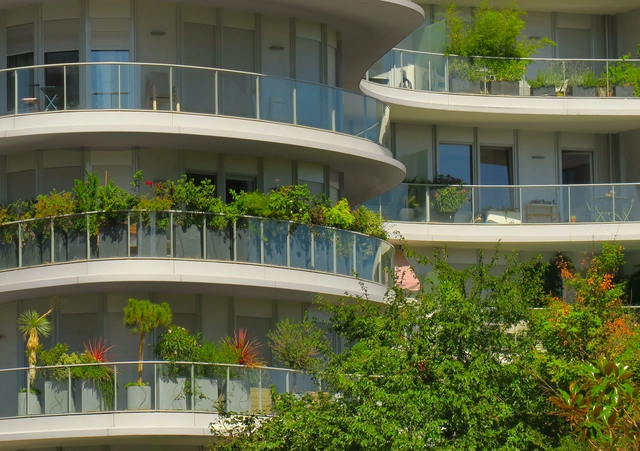
Paul Clemence has released images of the Amaris mixed-use development in Washington D.C., one of the latest works completed by renowned Uruguayan American architect, Rafael Viñoly. The photographic series reveals a distinctively shaped curvilinear building opening towards public spaces along the Potomac River. The volume is created to accommodate residential units with generous views toward the surrounding landscape, marking the terminus point to a row of new buildings in The Wharf development.
A mirage can refer to an optical phenomenon caused by the refraction of light on certain surfaces, creating the illusion of a liquefied appearance. It can also represent an illusion, where something appears to be different from what it actually is. Paul Clemence capitalizes on this dual interpretation in his photographic essay, Modern Mirage, which features Casa do Baile (now the Reference Center for Architecture, Urbanism, and Design), the Art Museum, and the Church of Pampulha. He captures these iconic structures as they are reflected in the water mirrors of the modern complex designed by Oscar Niemeyer in Belo Horizonte, MG.
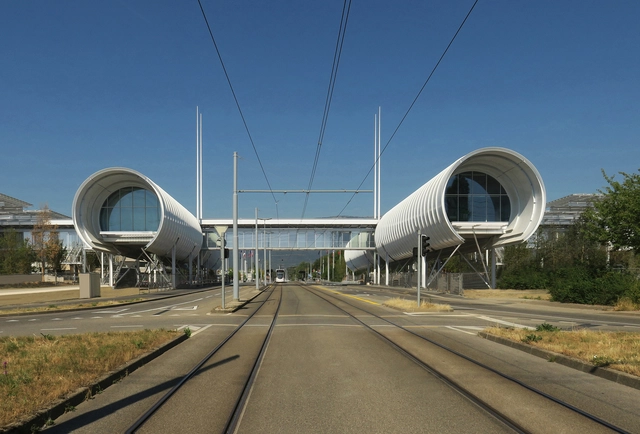
CERN, the European Organization for Nuclear Research, has started a new initiative known as the Science Gateway. The building was designed by Renzo Piano Building Workshop, architects in collaboration with Brodbeck Roulet Architectes Associés (Geneva). Reflecting the institution's broader mission, it encompasses the values of sharing knowledge, technology, and scientific inspiration with society. The Science Gateway is envisioned as an innovative facility dedicated to scientific education and outreach, aiming to catalyze curiosity and passion for science among younger generations. In his latest photo series, Paul Clemence photographed the CERN Science Gateway Building in Geneva, Switzerland.
In the center of the city of Lugano, Switzerland, architect Mario Botta has designed a new housing solution on the foundations of the former Cinema Teatro Cittadella. Captured by Paul Clemence, this photo series displays the new residence in a city rich with an artistic and cultural past. The residential complex is located near the ancient basilica of the Sacred Heart of Lugano, nestled in a quiet area away from city traffic.
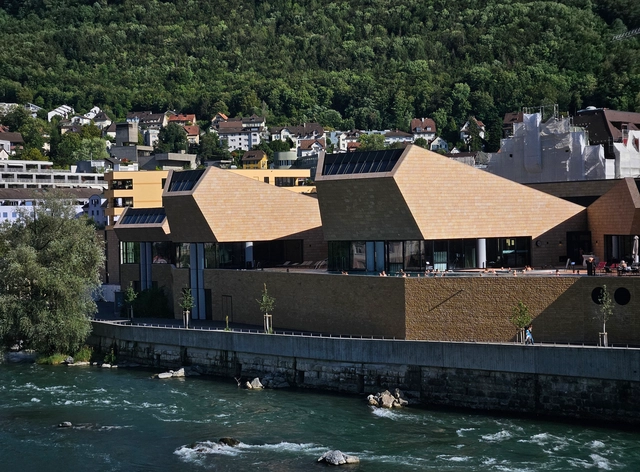
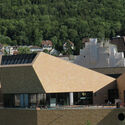
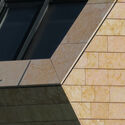
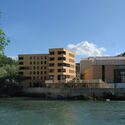
Fortyseven is a novel thermal wellness spa designed by the architect Mario Botta, nestled alongside the Limmat River in Baden, Switzerland. Baden, renowned for its rich cultural and wellness offerings, boasts a spa heritage that extends over thousands of years. The Fortyseven Thermal Wellness Spa has revitalized this historical legacy by presenting wellness culture through a modern lens. Designed by Mario Botta, this project offers an immersive encounter for the body, mind, and soul. The essence of the site and its design is captured by the lens of architectural photographer Paul Clemence, in his latest series.