On Tuesday morning, wildfires erupted in the Pacific Palisades, one of Los Angeles' wealthiest neighborhoods. The catastrophic fire left a significant mark on the infrastructure and neighborhoods of Los Angeles, resembling a war-torn landscape by the morning of January 8, 2025. Iconic locations along Sunset Boulevard transformed into scenes of devastation, with charred buildings. Over 2,000 structures have been destroyed, displacing tens of thousands of residents and sparking urgent appeals for access to homes for medication retrieval. Several hotels in Los Angeles have been taking in displaced residents.
Architects Lehrer Architects LA and Arquitectura y Diseño have just unveiled the first phase of the Gower Mausoleum at Hollywood Forever Cemetery in Los Angeles,United States. This innovative vertical structure, rising 100 feet, is set to provide eternal resting spaces for over 50,000 individuals, while also serving as a cultural and spiritual landmark in the heart of Hollywood.
While hybrid working and flexible hours represent the most obvious ways to improve work/life balance for many, because of the missed social interactions and the lack of space or functionality at unproductive home workspaces, the majority of 16-24-year-olds are the only age group who prefer to work from the office.
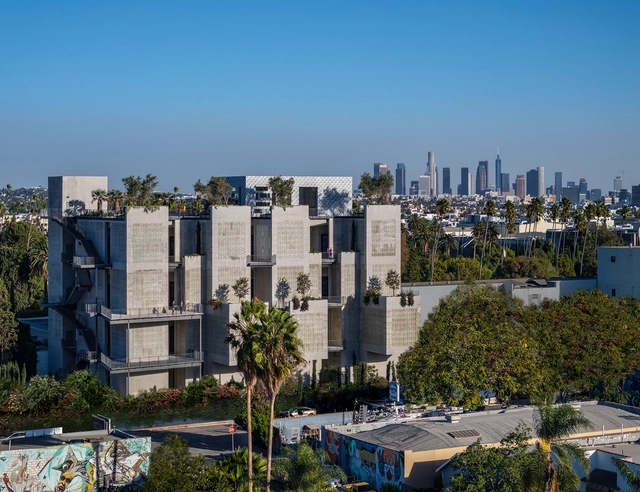
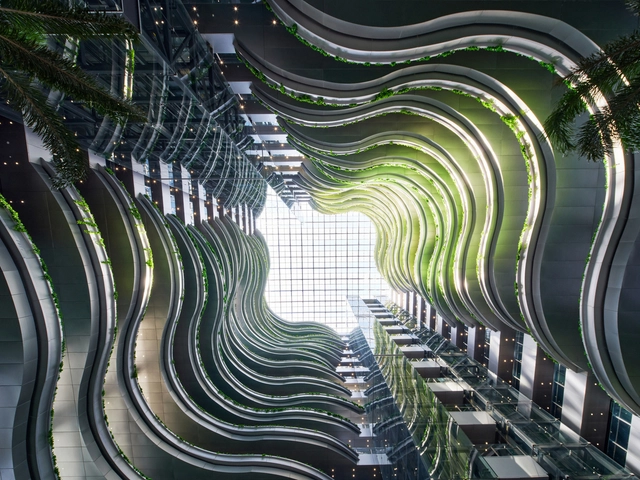
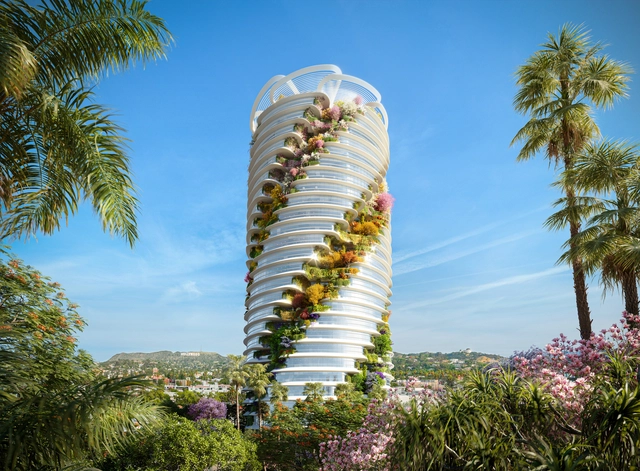
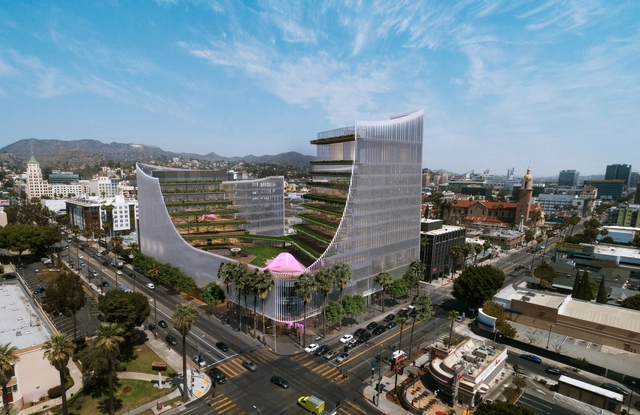
Foster + Partners, led by Norman Foster, has revealed designs for a new “vertical creative office” campus on Sunset Boulevard in Los Angeles, overlooking Hollywood. Developed by real estate firm The Star LLC, the tower is wrapped in spiraling gardens, giving the project its distinctive image and introducing generous outdoor areas throughout. Dubbed “The Star,” the project strives to use active and passive design strategies to bring a welcoming and comfortable space for all future users.
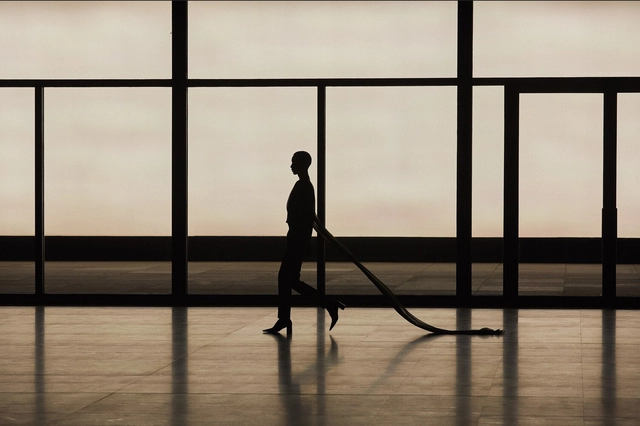
Saint Laurent Men’s Summer 24 at Mies van der Rohe’s Neue Nationalgalerie. Image Courtesy of Saint Laurent
Architecture and fashion share an interesting interplay in the formation of cultural expressions and identities. Both disciplines can become vehicles for creativity at different levels. Architecture is often described as the “third skin” of humans, while clothes represent the second skin, highlighting somewhat similar functionality of protecting the body while also allowing for self-expression and individuality.
The relationship between architecture and fashion can also be seen in the shared design principles, such as form, proportion, human scale, and materiality. More than a simple background for runway shows, architecture can contribute to setting the atmosphere, becoming a source of inspiration, and orienting the movement through space. Collaborations between architects and fashion houses, such as the renowned partnership between OMA/AMO and Prada, further blur the boundaries between the two disciplines, demonstrating the myriad of interconnections between the two creative fields.
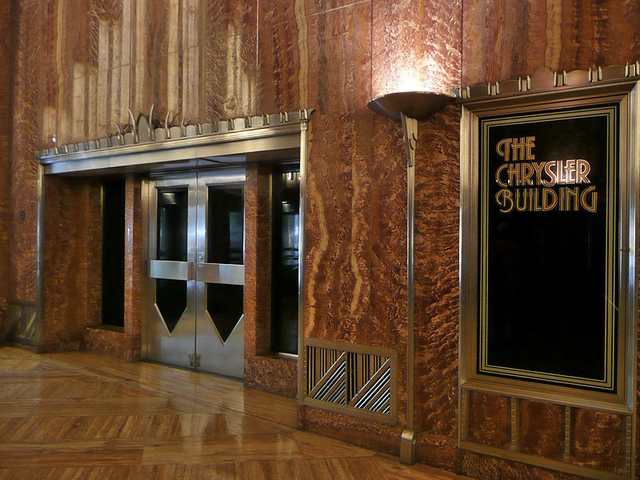
The Chrysler Building interior, Manhatten, New York . Image Courtesy of Dorff / Wikicommons CC BY-SA 3.0
Art Deco or Arts Décoratifs originated in the 1920's, following the Exposition Internationale des Arts Décoratifs et Industriels Modernes held in Paris (1925). However, it wasn’t until the 1930’s that the movement gained momentum across both Europe and the US, broadening Art Deco to cover all elements of decorative art including furniture, interior design, jewelry and architecture. Its popularity stems from its unique origins. Rather than a design movement driven by political or philosophical forces, it was created for the desire of glamorous and alluring change, a reflection of the golden age in Hollywood and a widespread economic boom.
Characterized by its decadence, rich application of color, and geometrical shapes, the movement is dramatically influenced by the discovery of the artifacts of ancient civilizations, and the introduction and admiration of the automobile. A movement heavily influenced by aspects in vogue it sought to create a form of luxury modernism, a step away from a more traditional architecture. It put an emphasis on handcrafted and individually designed elements, rarely to be mass produced.
Architecture firm HKS and landscape designer Hood Design Studio have been selected by global entertainment and media company CMNTY Culture to design a new creative campus in the heart of Hollywood. Dubbed CMNTY Culture Campus, the project will feature production spaces, offices, performance venues, bringing together creative industries in a 500,000-square-foot development.
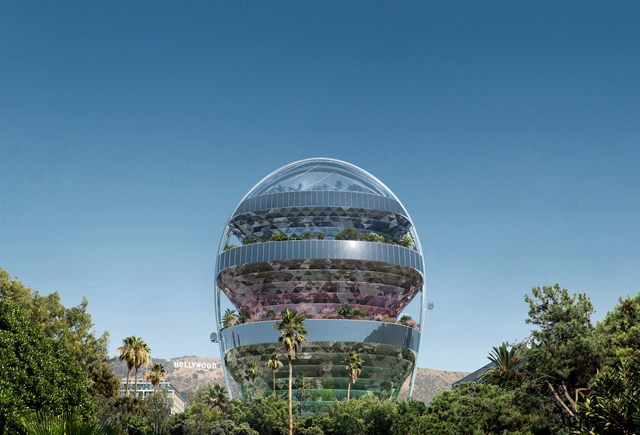
MAD Architects has announced "The Star", a new landmark that will foster culture, creativity, and inspiration in Los Angeles, California. Nestled in the heart of Hollywood, the Star's reflective architecture nods the neighborhood's glamorous characteristics and embeds nature within its structure with natural lighting, greenery, and workplaces that cater to the employees' mental and physical wellbeing.
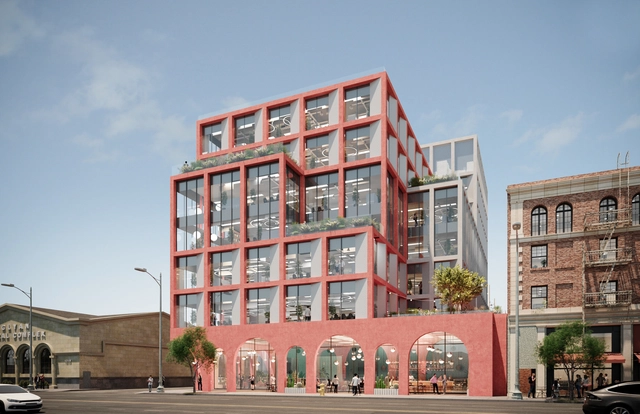
Architectural practice Hawkins\Brown has designed a new mixed-use tower development for Hollywood. The project combines 117,000 square feet of office and retail space for the area's growing media and creative community. As the design team outlines, the proposed project was made to address a growing demand for creative offices in Hollywood, where an influx of entertainment and technology firms are seeking Class-A space in a tight market.
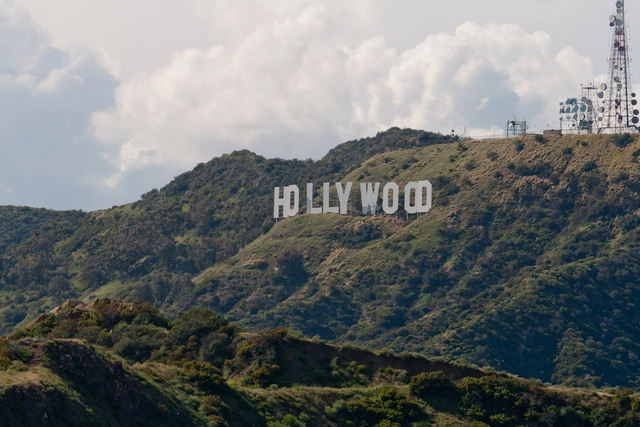
Los Angeles may soon be receiving a new attraction: a gondola-style cable car system that would transport visitors up to the iconic Hollywood Sign in the Santa Monica Mountains.
According to a recent interview with LA mayor Eric Garcetti, the city is considering several new options to open up access to the 45-foot-tall structure, one of which is a sky gondola that would pick up visitors at or near Universal Studios (located on the north side of the mountains in Studio City).
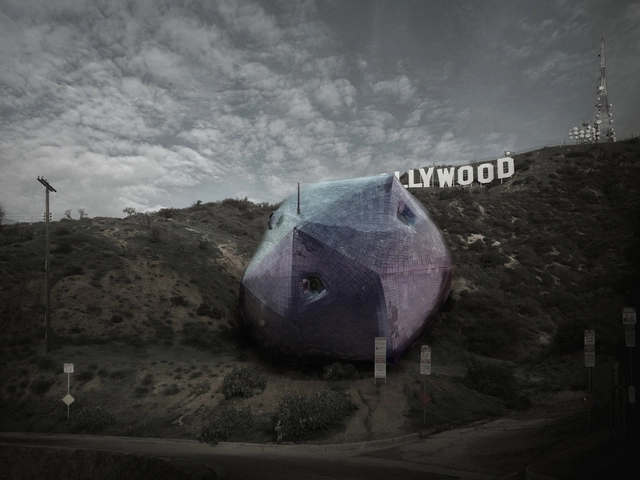
First Place: Ambivalent House / Hirsuta (Jason Payne, Michael Zimmerman, Joseph Giampietro, Ryosuke Imaeda); Los Angeles, California, USA. Image Courtesy of arch out loud
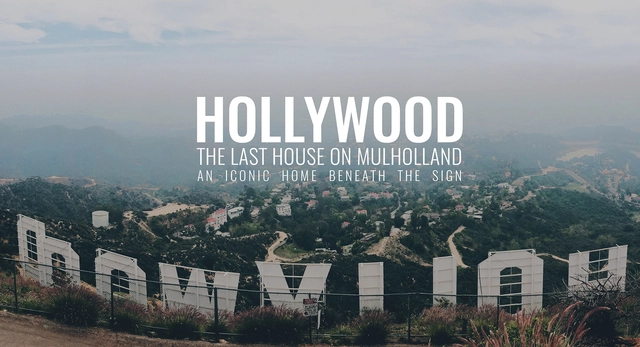
Architectural research initiative arch out loud, in partnership with Last House on Mulholland (LHOM), has released the winner of their competition to design a house of the future, to be sited directly below the Hollywood Sign.
Serving as a “design charette” to generate ideas about potential uses for the currently open site, the competition called for residential designs that demonstrate the use of innovative technology and integrative environmental strategies, while capitalizing on the prominence of the site.
The Hollywood competition received entries from 500 designers across the world, selecting three winners, with an additional owner’s choice.
The winners of the Hollywood design competition are:
Interiors is an Online Publication about the space between Architecture and Film, published by Mehruss Jon Ahi and Armen Karaoghlanian. Interiors runs an exclusive column for ArchDaily that analyzes and diagrams films in terms of space.
Damien Chazelle’s La La Land (2016) is an ode to the Technicolor musicals of Hollywood by way of Jacques Demy and Paul Thomas Anderson. The film is less of a musical and more of a love story with music, as its rich color palette and Cinemascope presentation create an idealized world that strips away its artificiality over the course of its runtime, ultimately becoming more and more realistic.
La La Land uses its filmmaking—particularly its long, unbroken takes—to bring its audience into its world and its spaces. The opening sequence, for instance, where helpless drivers stuck in a traffic jam hop out of their cars and break into a synchronized dance number, was filmed on the 105/110 freeway interchange and was edited to appear as one take, ultimately resulting in an immersive experience that highlights the architecture of the scene.
This essay by Alan Hess about the iconic Capitol Records building in Los Angeles was originally published as "The Architecture of the Capitol Records Tower." It is part of the book 75 Years of Capitol Records, published by TASCHEN, which is scheduled for release in February.
The president of Capitol Records was certain that a serious company could not operate out of a building that looked like the stack of records in a jukebox. So when Welton Becket, the new headquarters’ architect, showed him a model of the multistoried circular tower, Wallichs was annoyed. It would look like an advertising gimmick, Wallichs said, in a city where hot dogs were sold out of buildings shaped like hot dogs. Becket countered that the circular floor plan was more cost-efficient for the amount of usable space than a standard rectangular office building. Unimpressed, Wallichs told Becket to go back and design a conventional building.
The myth that a stack of records inspired the Tower has never died, though. As soon as the building opened, Hollywood columnist Bob Thomas wrote about it as “a monstrous stack of records.” Wallichs went on a public offensive from the start: “There was no intentional relationship between the shape of phonograph records and the circular design of the Tower” he insisted to the Chicago Tribune.
Arch Out Loud is partnering with Last House on Mulholland to host the HOLLYWOOD design competition. The competition asks participants to design a house of the future which demonstrates the use of innovative technology, integrative environmental strategies and capitalizes on the iconic prominence of its site beneath the famed Hollywood sign. The competition serves as a design charette generating ideas about the potential for what the site could become and how it can inspire the future of residential design.
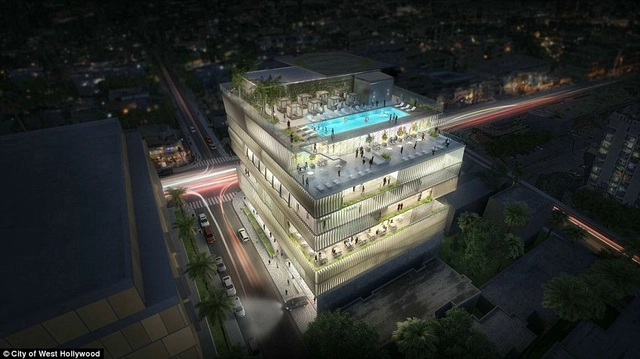
American actress Gwyneth Paltrow has commissioned Gensler to design a new branch of London's exclusive Arts Club in West Hollywood. The eight-story members-only club will feature a number of luxury amenities, including a spa, gym, art gallery and rooftop pool. Paltrow is collaborating with business partner Gary Landesberg to complete the 132,000-square-foot facility, which will also include a restaurant and dining terrace, screening rooms, 15 guest rooms, and helicopter pad.
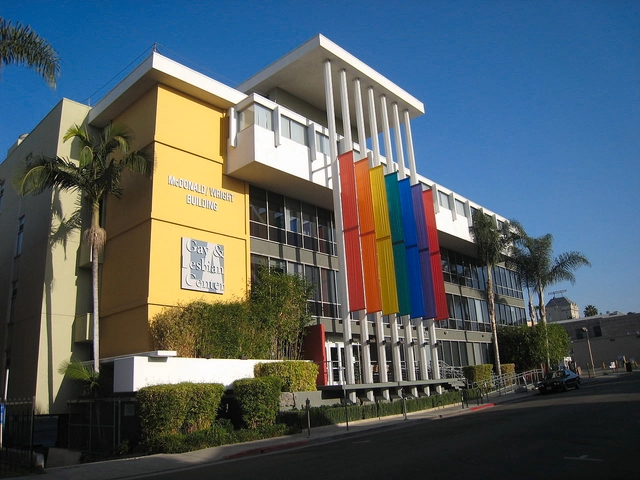
The Los Angeles LGBT Center's existing building in Hollywood. Image via Wikipedia
Leong Leong has been chosen over four others to masterplan and design the Los Angeles LGBT Center's new mixed-use site in Hollywood, California. The Los Angeles-based practice will design a new 183,700-square-foot building that, together with the Center's existing facility across the street, will form a block-wide campus that will include a unique mix of 140 affordable housing units, 100 beds for homeless youth, a new senior center and a center for homeless youth, as well as a new administrative headquarters and cultural arts center.
An overlooked strip mall at the corner of Sunset and Crescent Heights boulevards will soon be replaced by a mixed-use, walkable community designed by Frank Gehry. Known to be the “gateway to the Sunset Strip,” the West Hollywood site will be comprised of 249 apartments, restaurants, retail storefronts and a central plaza - all within "an environmentally sensitive building that complements and contributes to the historic architecture in the neighborhood.”
“Frank Gehry’s deep understanding of the property, its history and the context will elevate the project to the iconic and timeless status that it deserves,” said Townscape partner and project developer Tyler Siegel.