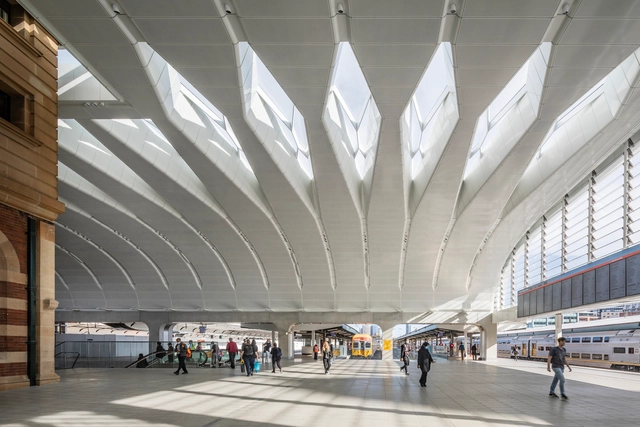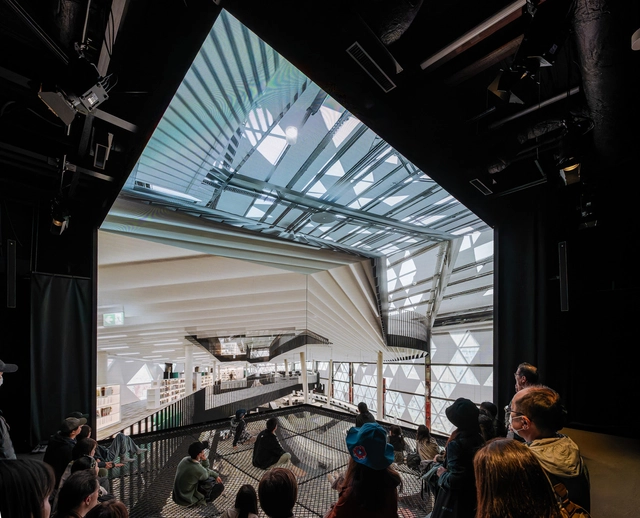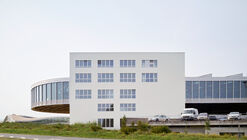
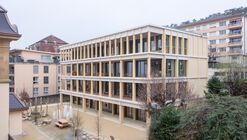
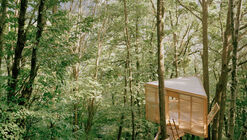
The second round of award winners of the 2025 World Architecture Festival (WAF) has been announced, following Day Two of the world's largest international live-judged architectural event, held at the Miami Beach Convention Center in Florida.

The second round of award winners of the 2025 World Architecture Festival (WAF) has been announced, following Day Two of the world's largest international live-judged architectural event, held at the Miami Beach Convention Center in Florida.

Amid the orderly grid of the Giardini della Biennale, the Swiss Pavilion appears almost reticent. Its low white volumes, completed in 1952 by Bruno Giacometti, seem to withdraw from the surrounding display of national pride. The building embodies a form of modernism that resists monumentality, where precision and restraint replace spectacle, and architecture becomes less an object than a framework for encounter.

Since its inauguration this spring, Expo 2025 Osaka has captured global attention from multiple perspectives, demonstrating how architecture can function as a laboratory for exploring solutions to pressing challenges. After 55 years, Osaka is once again hosting the World Expo, with each installation organized around the sub-themes Saving Lives, Empowering Lives, and Connecting Lives. These pavilions take forms that express the identity and values of their region through distinctive architectural languages, forming the central axis of their design. Building on this foundation, some installations serve as laboratories for the future society, utilizing technology to enhance experiences both inside and outside the spaces, transforming the visit through light, sound, visuals, and movement as part of the technological innovation showcased at the event.

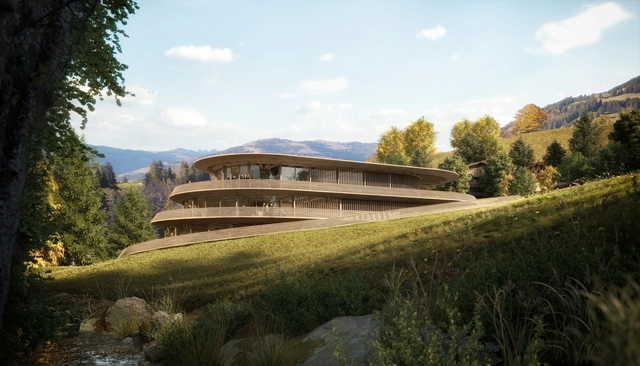
Foster + Partners has received planning permission for a new timber residential building in Gstaad, Switzerland. Designed as a house in the Alpine resort town, the project combines residential use with exhibition, storage, and social spaces. According to the architects, it will be the first purpose-built facility in Gstaad to accommodate the specialised requirements of fine art, cars, fashion, and antique collections.

The 2024–2025 edition of the Europe 40under40 Awards has announced its selected architects and designers, recognizing emerging professionals under the age of 40 working across Europe. Organized by The European Centre for Architecture Art Design and Urban Studies and The Chicago Athenaeum, the program highlights a range of built and conceptual work that reflects contemporary approaches to architecture and design. This year's selection brings together young architects and designers from Cyprus, France, Greece, Italy, Norway, Poland, Portugal, Spain, Sweden, Switzerland, and Turkiye, offering a wide-ranging perspective on Europe's contemporary architectural discourse.

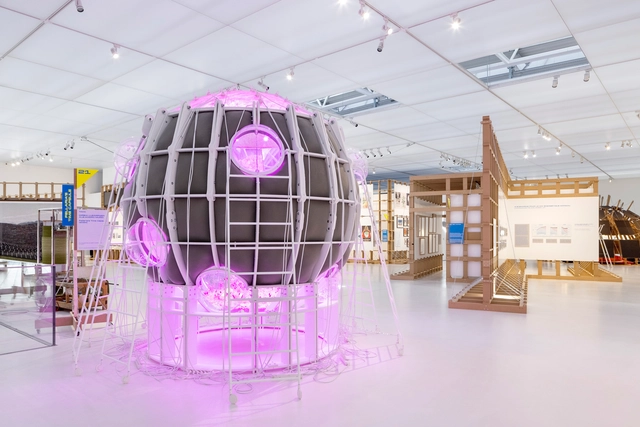
Soleil·s, the second edition of the Solar Biennale, is currently open at mudac, the Museum of Contemporary Design and Applied Arts in Lausanne, Switzerland. Following the first edition hosted at Het Nieuwe Instituut in Rotterdam in 2022, this exhibition explores how design can drive the adoption of solar innovations toward a sun-powered future. The event is initiated by The Solar Movement, founded by designers Marjan van Aubel and Pauline van Dongen, an initiative dedicated to making solar energy the default power source by combining design, technology, and advocacy. This year's exhibition is curated by mudac and offers an immersive experience featuring new and existing projects by TAKK, ecoLogicStudio, Olafur Elíasson, and Andreas Gursky.

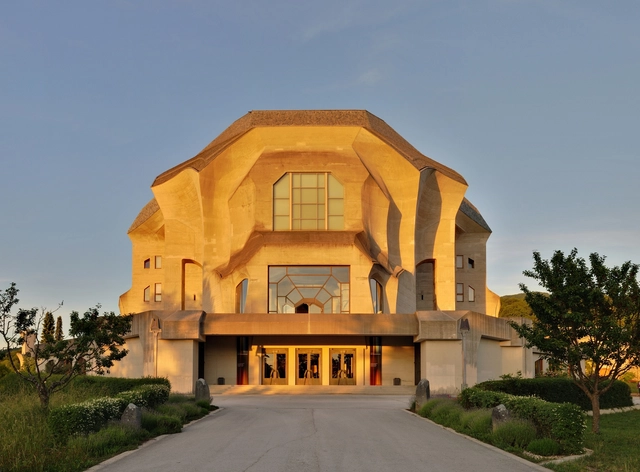
As climate uncertainty and ecosystem changes reshape design priorities, architecture plays an increasingly active role in these discussions, rather than merely observing. Within this perspective, the idea of making a "re" encourages a conscious step back to rethink, reconnect, and realign the relationship between buildings and their environments. This approach, central to regenerative architecture, extends beyond specific technologies or scales, encompassing everything from master plans that aim to re-naturalize cities to national pavilions that combine art and science.

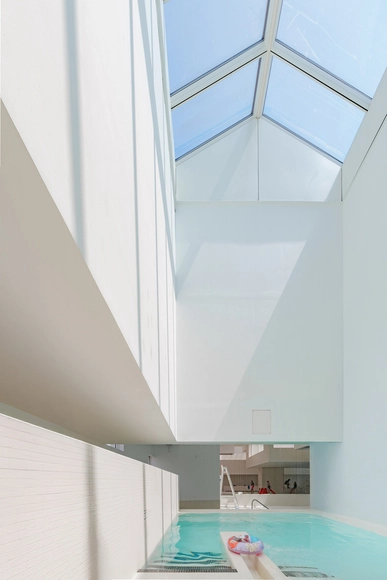
Condensation, maintenance, and humidity are three familiar challenges that continue to test the buildings we design and construct. Whether stemming from climate conditions, limited airflow, or the specifics of construction detailing, these factors affect not only the durability of materials but also the everyday comfort and performance of inhabited spaces. When the setting is an aquatic center or an indoor swimming pool, the demands are even greater. The constant presence of steam, moisture accumulation, and the risk of mold can compromise both energy efficiency and the user experience. In such environments, ventilation and access to daylight, beyond their aesthetic value, become essential tools for maintaining equilibrium, enhancing indoor comfort, and ultimately improving how the space is perceived and utilized.

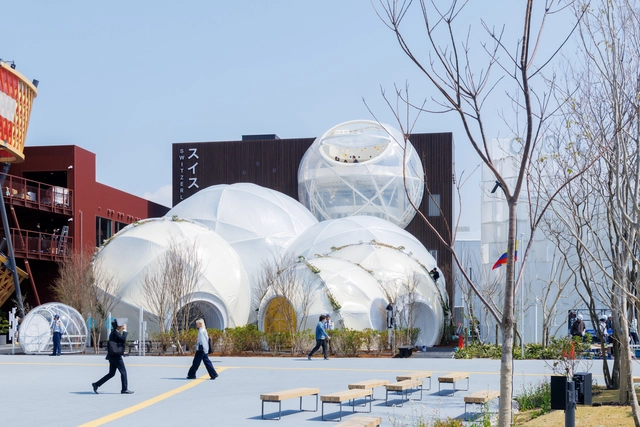
The latest photographs of the Swiss Pavilion for Expo 2025 Osaka have just been released. Designed by Manuel Herz Architekten, NUSSLI, and Bellprat Partner, as a result of a competition won, the pavilion guides visitors through five spatial zones under the theme From Heidi to High Tech. The installation brings together references from Swiss cultural narratives and technological developments in a multi-sensory setting. In line with the Expo's overall theme, "Designing the Future Society for Our Lives," the pavilion aims to minimize environmental impact with a lightweight membrane design that allows for speedy construction and strengthens the relationship between both countries.

In March 2025, the actor Adrian Brody rose to the stage to collect his Academy Award for playing the role of László Toth in the acclaimed film, The Brutalist. The film is about a Bauhaus-educated architect who escaped Nazi Germany in the 1930s for the United States. Whilst the story is fictional, it reflects the lives of several émigré architects who left Central Europe in search of better working and intellectual conditions. These included the first three directors of Bauhaus, the renowned German school of design established in 1919. The first and third directors of the school, Walter Gropius and Mies van der Rohe respectively, ended up in the US where their careers in teaching and building both flourished. Lesser known is the second director, Hannes Meyer, who took a different path from his colleagues.