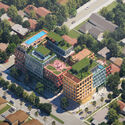
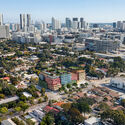
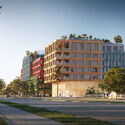
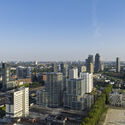
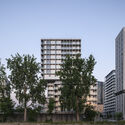
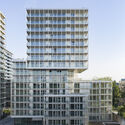
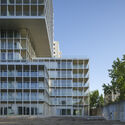
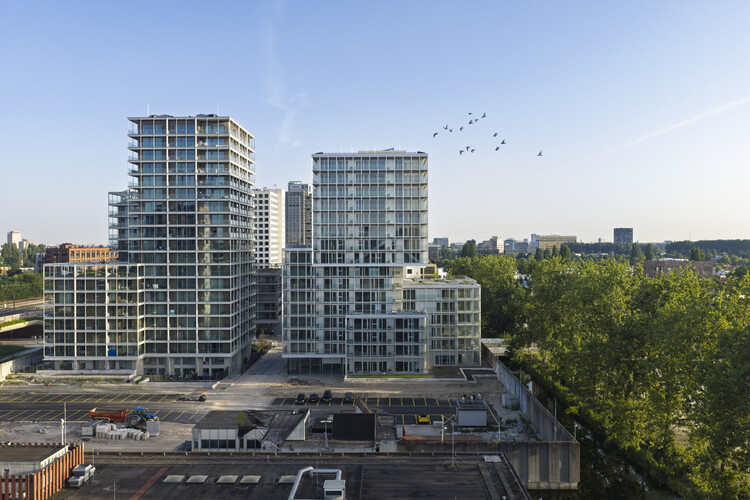
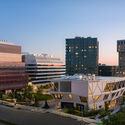
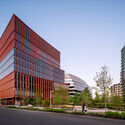
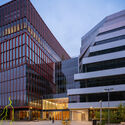
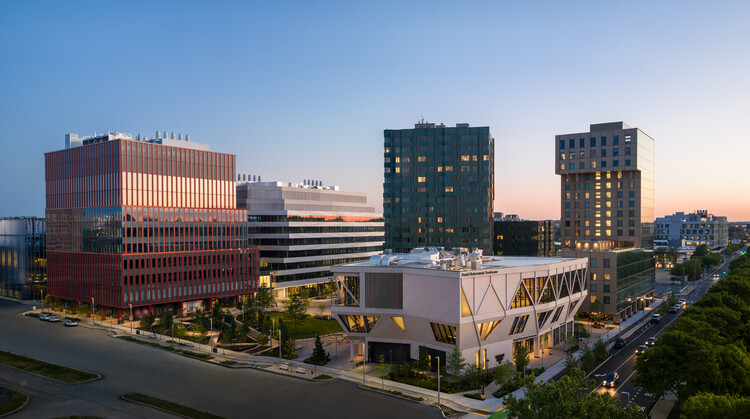
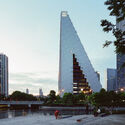
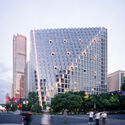
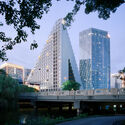
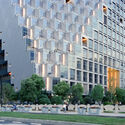
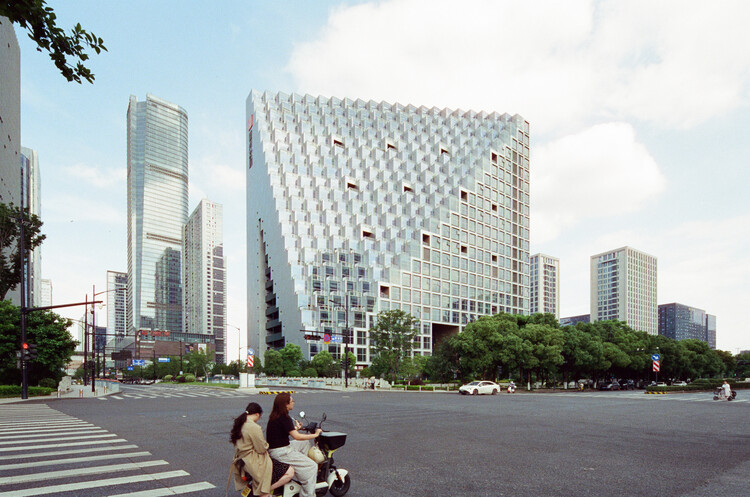
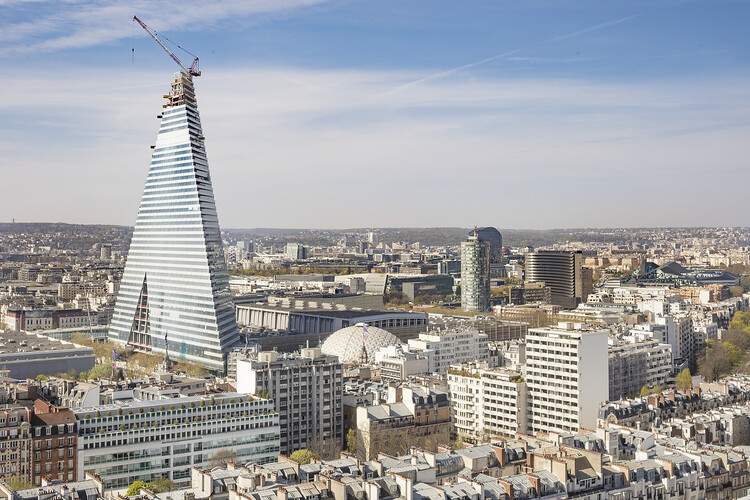
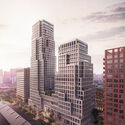
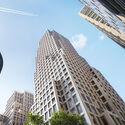
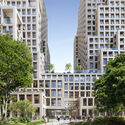
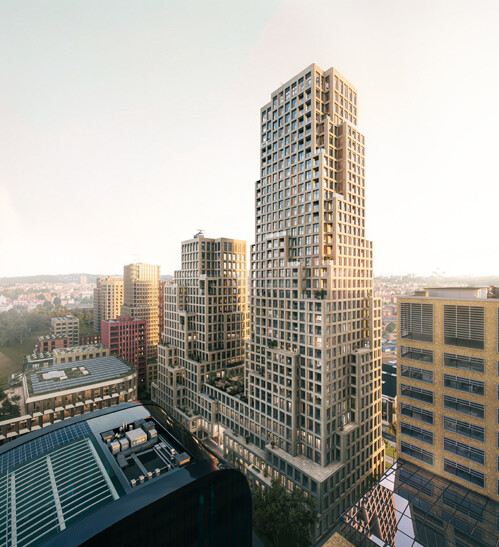
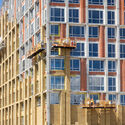
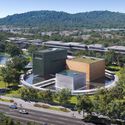
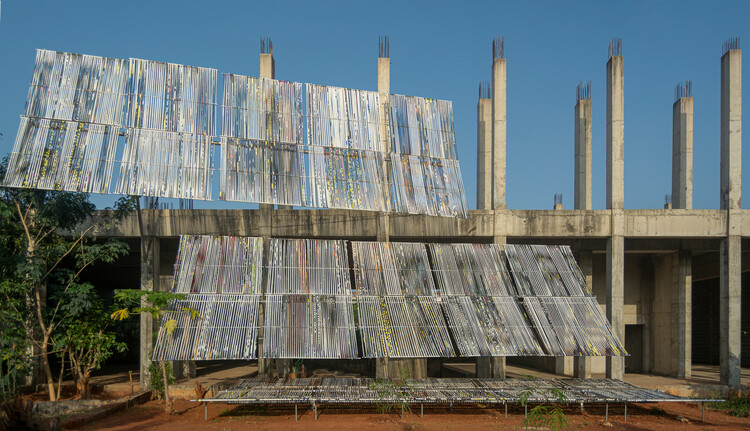
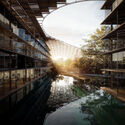
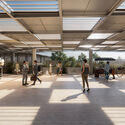
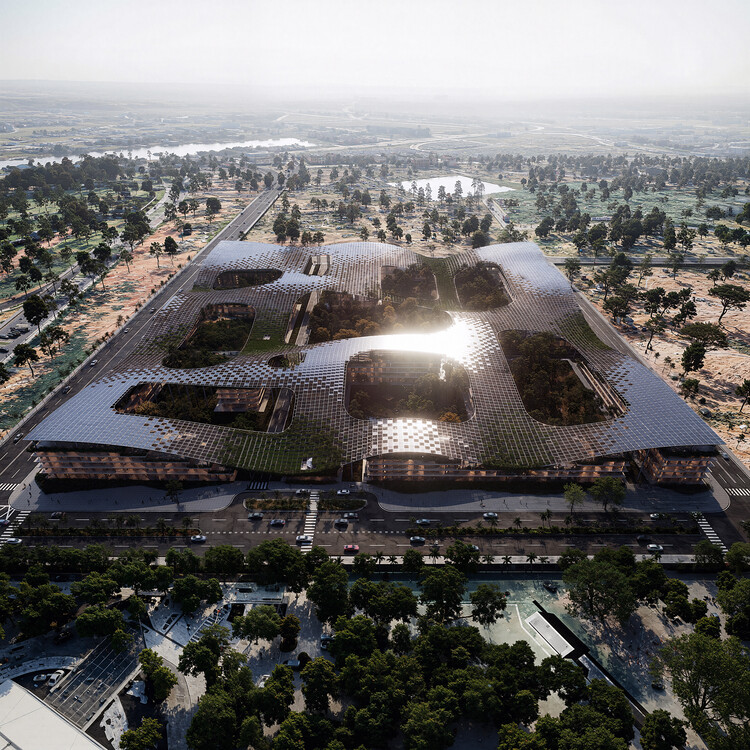
Rotterdam-based firm MVRDV has announced a new milestone in the development of its Tour & Taxis Towers, a mixed-use project in Brussels, Belgium. The design was commissioned by real estate investor and developer Nextensa in 2021, within the framework of a site-specific land use masterplan also designed by MVRDV. The two-tower project combines offices, housing, and public amenities across 58,000 m², forming a landmark in the neighbourhood and reaching 126 metres at its highest point. Recently granted construction permission, the project is designed to reduce embodied carbon through the use of a hybrid structure and lightweight façade elements, aiming to minimize the use of concrete in both the structure and foundations. From the early stages, the firm has employed its CarbonSpace software to guide these decisions.
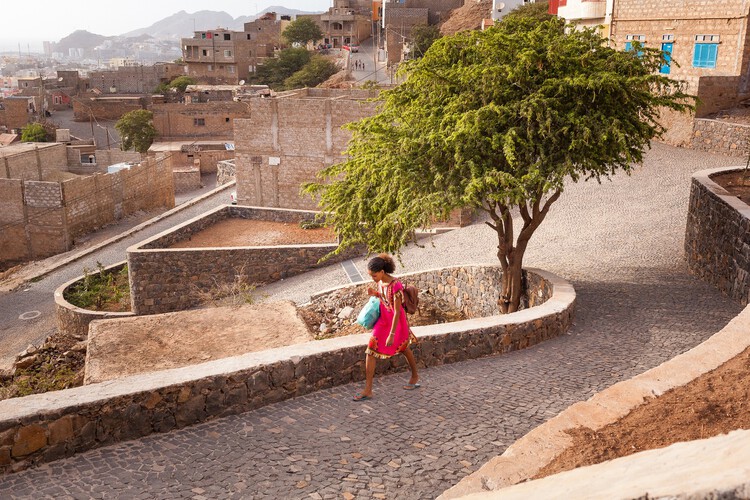
European City Context. Image Courtesy of ReGreeneration
The ReGreeneration project, a Horizon Europe project led by Inetum and supported by C40 Cities, ARUP, Placemaking Europe, and several others, operates as an active collaboration with local governments, private companies, academia, and civil society organizations at the intersection of urban regeneration, green public spaces, and neighborhood-scale design. Its premise addresses how European cities are built and maintained and how they experience a changing climate, arguing that cities must fundamentally change to remain livable under accelerating climate pressures.
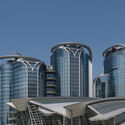
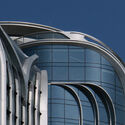
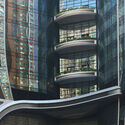
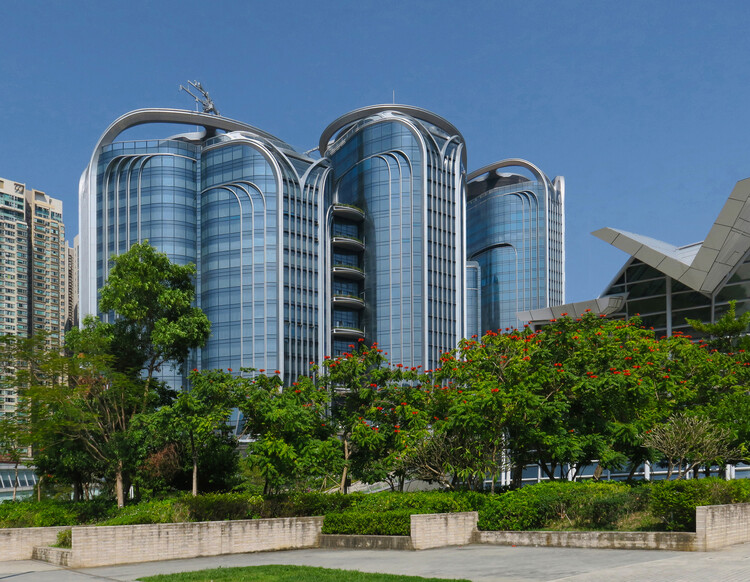
Photographer Paul Clemence documented the International Gateway Centre (IGC) in West Kowloon, a mixed-use development by Zaha Hadid Architects in Hong Kong, as it approaches completion. The photo series captures the project at a stage where its overall massing, facade systems, and spatial organization are largely realized, while final works continue across public and interior areas. Clemence's close-range views highlight the vertical shading pleats, the curvature of the glazed envelope, and the transitions between structural and environmental elements, underscoring how the building's formal language is resolved through construction.
As housing shortages and affordability challenges intensify across global cities, this week's architectural discourse centers on how design, policy, and adaptive strategies intersect to shape the future of urban living. Initiatives range from grassroots movements and legislative reforms aimed at expanding access to housing to innovative models that rethink ownership, development, and community engagement. At the same time, architects are reimagining existing structures and districts, transforming underused offices, historic landmarks, and unfinished buildings into mixed-use, culturally significant, or publicly accessible spaces. Across scales, these stories illustrate how architecture negotiates scarcity, value, and social priorities, demonstrating its capacity not only to produce new buildings but also to recalibrate urban environments in ways that balance heritage, sustainability, and human experience.
World Trade Center Biotic, Brasília. Image Courtesy of Architects Office
Located within the Parque Tecnológico de Brasília, the World Trade Center Biotic is a mixed-use development designed by Brazilian studio Architects Office as part of the district's broader urban expansion. The project is part of the master plan developed in 2020 by Carlo Ratti Associati and is currently being developed. Conceived as a multi-program complex, the proposal brings together offices, residential units, a hotel, retail spaces, and shared facilities within a single urban framework. The project occupies a site of approximately 70,000 square meters and is planned to reach about 180,000 square meters of built area, with an estimated 150,000 square meters expected to be completed by 2030.
RSHP has won a competition to redevelop the Rives-Défense site in La Défense, the business district of Paris. Announced during MIPIM, the project envisions the transformation of an 8-hectare site at the western edge of the district into a low-carbonmixed-use neighborhood. Commissioned by Paris La Défense, the proposal is developed by a multidisciplinary team led by RSHP and including Atelier SOIL as co-architect and urban planner, Altitude 35 as landscape architect, Arcadis as engineering consultant, as well as Atelier Franck Boutté, Urban Eco, and Mobius.
Rojkind Arquitectos, in collaboration with artist Pedro Reyes, SON Architects, Motus Holdings, and ASAB, has been selected as the winner of the mixed-use component in the International Concept Design and Build Competition for the redevelopment of the Zyber Hallulli site in Tirana, Albania. Organized by the Albanian Investment Corporation in partnership with the National Agency for Territorial Planning, the competition was launched in September 2025, with the jury announcing its decision on January 29, 2026. The proposal led by the Mexico-based office was awarded the mixed-use development, while a separate Mexican practice, Taller Héctor Barroso, was selected to design CASA FAMILIA, a new children's campus to be built on a greener, more child-oriented site.
Set to open on January 19, 2026, the Sydney Fish Market marks the first completed project within the broader renewal of Blackwattle Bay on Sydney's inner harbour. Designed by 3XN in collaboration with BVN and Aspect Studios, and delivered by Multiplex, the purpose-built facility replaces the former market with a contemporary structure that combines an operating wholesale fish market with retail, dining, and publicly accessible waterfront spaces. Positioned approximately one mile southwest of Sydney's central business district, the project reframes one of the world's largest fish markets by volume as both working infrastructure and a civic destination.
Construction has officially broken ground on Tokyo's new global headquarters for NTT, a major Japanese technology company. The project is a key component of PLP Architecture's Tokyo Cross Park masterplan, a large-scale regeneration development in the Tokyo metropolitan area, first announced in 2022. On December 5, 2025, construction began on the first stage of the scheme, one of four towers planned within the masterplan. The NTT Hibiya Tower, designed by PLP Architecture and developed by NTT Urban Development in collaboration with Tokyo Electric Power Company, is a 230-metre-tall, 361,000-square-metre mixed-use building and forms the central element of the 1.1-million-square-metre Tokyo Cross Park Vision. PLP Architecture serves as Design Architect for the tower, as well as Masterplanner and Placemaking Strategist for the wider development.
Studioninedots is leading the transformation of a 200-year-old tobacco factory site into Niemeyer, a mixed-use urban complex accommodating digital innovation, cultural venues, hospitality, education, and manufacturing within the existing industrial buildings. Located on Paterswoldseweg in Groningen, the Netherlands, the 38,000 m² project is commissioned by MWPO, with MWPO and Campus Groningen jointly acting as clients for the Shared Facilities. Currently in the design phase (2023–2025), the project's provisional timelines indicate a phased construction start beginning with the factory's southern section in 2026, followed by the northern section in 2027. The Amsterdam-based office's proposal opens the formerly closed industrial ensemble to the public, introducing cafés, galleries, workshops, and shared workspaces distributed across interior streets and adjacent park areas.
Cities are slowly reshaping themselves. Walkable streets, bike-friendly networks, and mixed-use neighborhoods are becoming planning priorities as climate goals, changing lifestyles, and remote work reshape daily patterns. Yet even as these people-centered ideas gain momentum, most cities still rely heavily on private cars, creating a tension between the urban futures we're designing for and the mobility habits that persist today.
This tension has pushed architects and developers to rethink one of the hardest pieces of the urban puzzle: parking. Mixed-use buildings are multiplying, stacking homes, workplaces, and services into tighter footprints, and every square foot has to work harder. The challenge is no longer simply where to put the cars, but how to integrate parking in ways that support density, livability, and long-term adaptability—allowing cities to evolve without letting vehicles dominate their form.
UNS has revealed images of SeoulOne, a master plan designed for Hyundai Development Company (HDC) in Seoul, South Korea, intended as a new model for multigenerational living. The project, already under construction on a brownfield site in the northeast of the city, reimagines an existing industrial site and railway area as a 405,000 m² car-free neighborhood for a multigenerational community. A never-sleeping, green master plan for Seoul, SeoulOne is envisioned as a mixed-use mini-city where all essential services for people of all ages are available within a 10-minute walk. The design includes 24/7 residential towers, retail spaces, offices, a hotel, sports facilities, daycare centers, senior living facilities, and a medical center, offering permanent services within walking distance. More than 30% of the site is dedicated to vegetation, including pocket parks, roof gardens, water gardens, and a forest walk, creating a year-round green village.
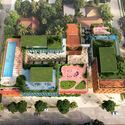
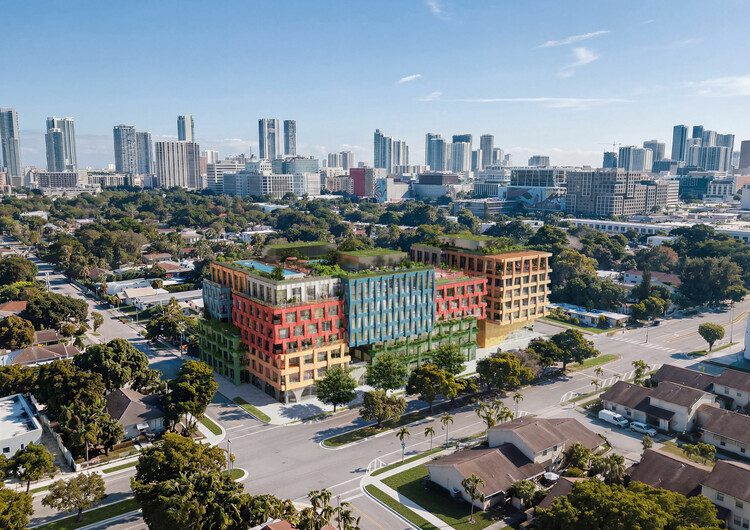
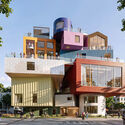
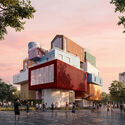
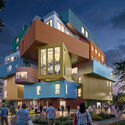
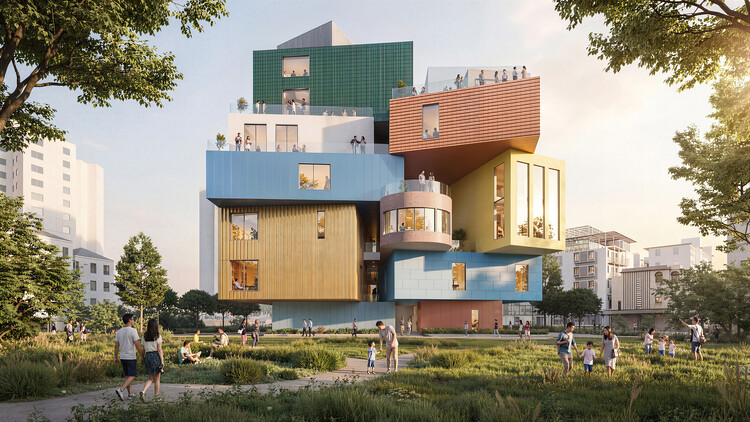
MVRDV and SYNRG have received approval to construct Schieblocks, a 47,000-square-metre office building in Rotterdam, the Netherlands. Designed for developer LSI, who markets the project as The Bluezone Offices, the building will occupy a narrow site along the railway line, reaching 61 metres in height and extending almost 150 metres in length. The programme includes commercial spaces at ground level, offices throughout, and a restaurant and event venue on the upper floors. Conceived as a "3D neighbourhood," the design breaks the large volume into a series of colourful, distinct blocks that incorporate numerous references to Rotterdam's architectural character.
Founded in Winnipeg, Manitoba, in 2007 by Johanna Hurme and Sasa Radulovic, and shortly afterward joined by its third partner, Colin Neufeld, 5468796 Architecture was established as an architecture firm whose early work explored the current state of housing in North America. The Canadian studio operates as a collaborative group of approximately 20 designers, where they prioritize the collective value of ideas over individual authorship.
Ciudad Cayalá, a privately developed, mixed-use community on the outskirts of Guatemala City, is often described as a "theme park" of white lime-washed walls, red tiles, and cobbled plazas. A closer examination, however, reveals a more complex urban narrative. Its significance, however, lies in its capacity to create a safe and well-managed public space, proposing a modern reinterpretation of historic urban principles that mark the region's architectural and urban heritage. Behind the Antigua-style façades lies an urban experiment: a modern re-engagement with architectural elements like arcades, courtyards, and open plazas, which propose a privately-managed public space as a solution to urban challenges in the region.

Hudson's Detroit mixed-used development. Aerial view. Image Courtesy of Bedrock
Detroit-based Bedrock development group has announced the completion of the first phase of its Hudson's Detroit mixed-use project in the city center. The project was first unveiled in 2017, when the company presented plans for a 1.2-million-square-foot development designed by SHoP Architects to be built on one of downtown Detroit's long-abandoned sites, formerly occupied by the J.L. Hudson's Department Store. Once the tallest department store in the world and a central gathering place for the city throughout much of the 20th century, the site has now been reimagined as a contemporary urban destination. After nearly a decade of planning and construction, Hudson's Detroit aims to bring new activity and public space to a location emblematic of the city's commercial and cultural past.
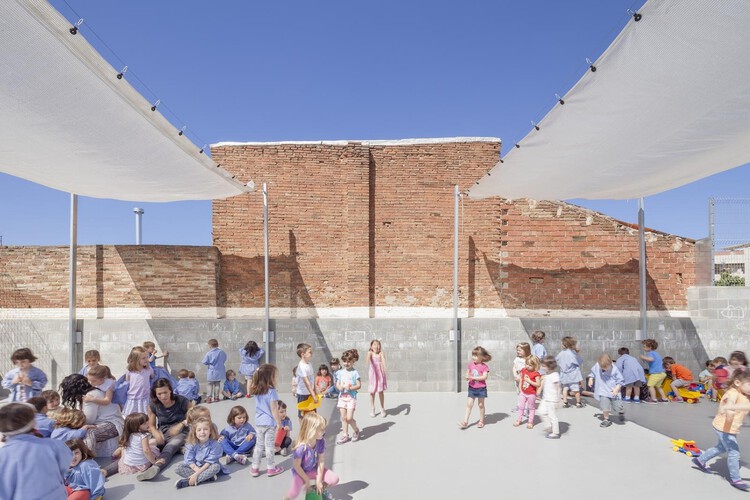
Areal am Kronenrain / MONO Architekten. Image Courtesy of Gregor Schmidt
Marginalized in architectural discourse and often dismissed as purely functional, parking garages remain among the most ubiquitous structures in the urban landscape. Designed to accommodate the needs of private vehicles, they occupy central locations, shape skylines, and consume considerable resources, yet rarely receive the same attention — or architectural care — as cultural institutions, schools, or housing. Despite their prevalence, these buildings tend to fade into the background of daily life, treated as infrastructural necessities rather than as design opportunities.
This is beginning to change. As urban mobility undergoes profound transformations — from the decline of car ownership to the rise of electric vehicles and shared transport systems — the role of parking infrastructure is being redefined. Architects and planners are reimagining garages as adaptable frameworks that integrate public space, ecological functions, and mixed-use programs. These new approaches challenge the perception of parking as a residual typology and instead position it as a civic structure with the potential to support more inclusive, flexible, and sustainable urban models.