Every year on 3 December, the International Day of Persons with Disabilities brings renewed attention to the need for inclusive, equitable environments, both socially and spatially. The 2025 theme, "Fostering disability inclusive societies for advancing social progress," highlights how persistent barriers in employment, social protection, and access to services continue to affect more than one billion people worldwide. Within this broader context, the built environment plays a decisive role: architecture can either reinforce exclusion or open pathways toward autonomy, dignity, and participation in daily life.
Infrastructure has long defined the backbone of cities by linking people, landscapes, and economies through systems that often go unnoticed until they fail. Today, as global challenges demand more adaptive and human-centered responses, architects are rethinking what infrastructure can be: not just a framework for movement and utility, but a catalyst for ecological restoration, cultural continuity, and civic imagination. The following unbuilt projects, submitted by the ArchDaily community, explore this expanded role of infrastructure, where airports, bridges, industrial parks, and pedestrian networks become architectural expressions of connection and care.
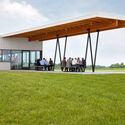
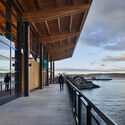
Toronto Paramedic Services Multi-function Station 02. Image Courtesy of Diamond Schmitt Architects
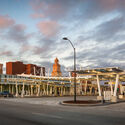
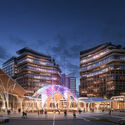
As cities and infrastructures evolve to meet shifting cultural, environmental, and social demands, new architectural projects are redefining how public spaces and civic institutions operate. This edition of Architecture Nowbrings together proposals spanning different contexts and scales: on Yakushima Island, Jean Nouvel embeds a boutique retreat for NOT A HOTEL into a UNESCO-listed forest landscape; in New York City, Rossetti and WSP are preparing a major renovation of Arthur Ashe Stadium to expand capacity and enhance the visitor experience; in Toronto, Diamond Schmitt and gh3* have broken ground on a mass-timber, net-zero paramedic station; and across the English Channel, Hollaway Studio is leading a transformation of LeShuttle's UK and French terminals into more seamless and sustainable gateways. Together, these projects reflect how design is being used to adapt existing systems and landscapes to new forms of public life.
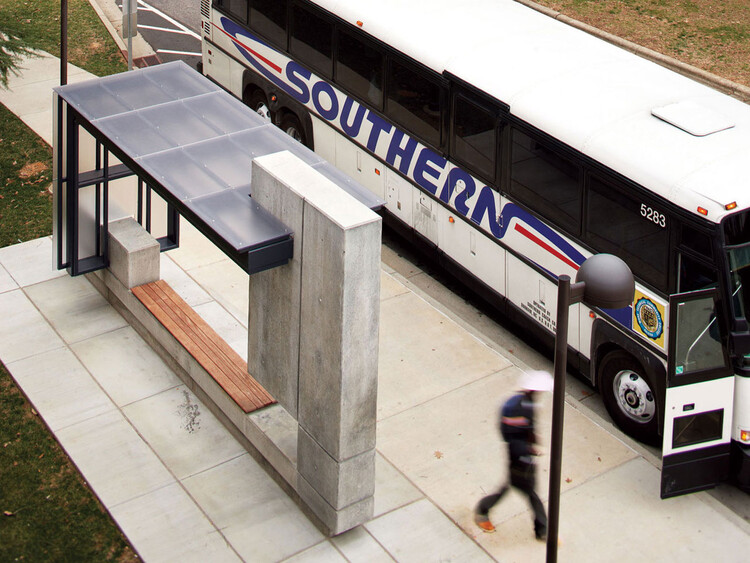
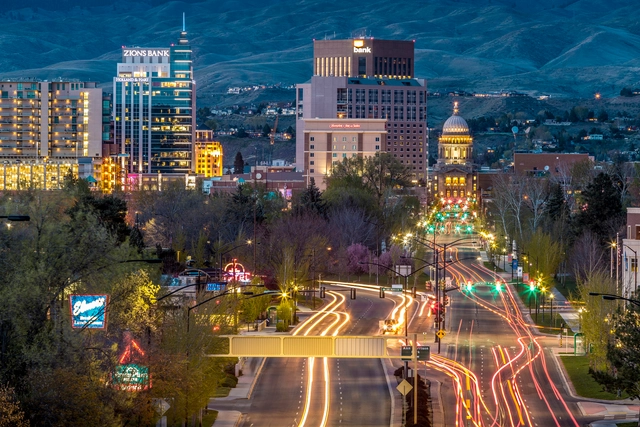
Boise, United States. Image via Wikipedia user: Fæ. License under CC0 1.0. Image Author: Alden Skeie
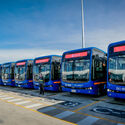
From greenhouse gas emissions and air pollution to deforestation, one of the leading contributors to global warming today is emissions from the transportation sector. Exploring its origins and evolution, as well as the major challenges it faces, the development of electric mobility in urban environments represents a global transition that requires a coordinated mix of policies and actions to achieve cleaner and more sustainable transportation systems. Designing safe and comfortable infrastructure for walking and cycling, promoting public transit and shared mobility, and designing more efficient streets that include electric vehicles, among other actions, are part of a growing worldwide effort to reduce carbon emissions.
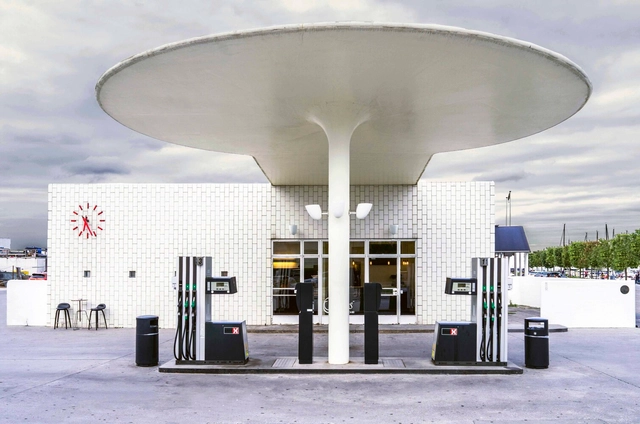
The gas station is an architectural typology that has undergone significant transformations since its inception. Initially, these structures were simple roadside refueling points designed for functionality rather than aesthetics. As automobile culture expanded, gas stations evolved to accommodate new technologies, shifting urban landscapes and changing consumer behaviors. Over time, they became more than just utilitarian stops — they developed into service hubs, integrating restaurants, motels, and leisure spaces, responding to contemporary transportation increasing demands.
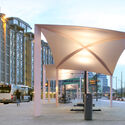
By the late 20th century, however, the widespread standardization of gas stations led them to be perceived as "non-places", a concept defined by anthropologist Marc Augé to describe transient spaces that lack social or cultural significance. With uniform designs and a focus on efficiency, gas stations became interchangeable, reinforcing their role as purely functional infrastructure rather than meaningful architectural interventions. This standardization also departed from the era when fuel stations served as recognizable landmarks, contributing to a homogenized landscape devoid of local identity.
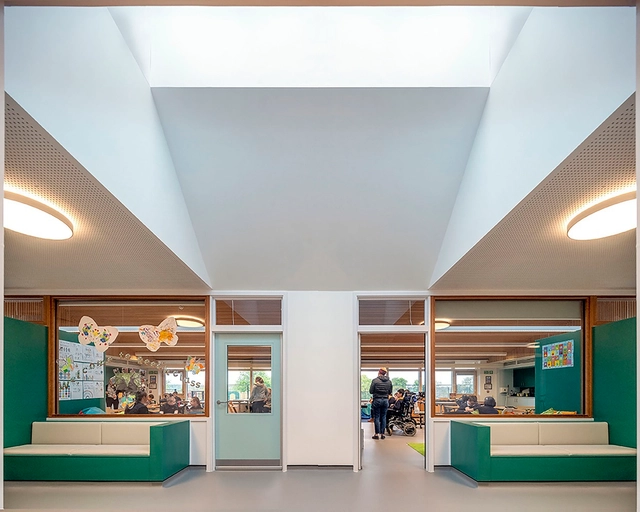
Gallaudet University was established in 1864, becoming the first American educational institution for the deaf and hard of hearing. The university is officially bilingual, with American Sign Language (ASL) and written English used throughout the educational programs. Over the years, the university has grown, adapting both its teaching methods and its spaces to the needs of its students, in turn learning from them how to counter the challenges they face and create a safer and more comfortable environment. These lessons turned into design guidelines, created to educate the architectural community about the strategies they can employ to create more accessible spaces for all.
21st Europe, a new design-led think tank founded by former SPACE10 creative director Kaave Pour focused on shaping the future of the continent, has just unveiled Starline: a blueprint for a high-speed rail system that aims to connect Europe as seamlessly as a city metro. Revealed at the think tank's inaugural summit in Barcelona and developed in collaboration with creative technology studio Bakken & Bæck, Starline combines infrastructure, digital tools, and visual identity into one integrated vision for movement across the continent.
New York City has implemented the first congestion pricing scheme in the US, charging drivers up to $9 per day to enter a designated zone south of Central Park, encompassing areas like Times Square and Wall Street. The initiative aims to alleviate chronic traffic congestion, improve air quality, and generate revenue for public transportation improvements, addressing New York City's ranking as the world's most congested urban area for two consecutive years. The plan went into effect Sunday, January 5th, 2025.
Wagner hits the road in 2025 with the Airstream Roadshow, an immersive experience that inspires new perspectives on office spaces. Under the motto 'It's time for bespoke interior design,' the traveling exhibition highlights the iconic 1962 Airstream Bambi, converted into a mobile working space to showcase Wagner's D2 bespoke interior system, designed by renowned studios Gonzalez Haase AAS and Stefan Diez. As the Airstream travels across Germany, design enthusiasts are invited to explore the lightweight aluminum construction and witness live 3D printing in action.
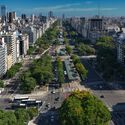
Traveling on land through vast regional areas of African countries has been an inefficient ordeal, particularly in West Africa. Google Maps optimistically estimates it would take 53 hours to drive nonstop from Lagos, Nigeria's largest city, to Dakar, Senegal's capital. However, this estimate doesn't account for the poor road infrastructure, complex border crossings, and socio-economic challenges that realistically extend the journey to about a week.
This is why the ongoing Trans-West African Coastal Highway project offers a great opportunity to connect and unlock the region's potential. This project, also known as TAH 7, is a transnational highway initiative linking 12 West African coastal nations, from Mauritania in the northwest to Nigeria in the east. Its gradual construction opens new avenues for freight movement, rail infrastructure, and, more importantly, innovative forms of architecture around borders, addressing their unique socio-cultural functions.
CityMakers, The Global Community of Architects Who Learn from Exemplary Cities and Their Makers, is working with Archdaily to publish a series of articles about Barcelona, Medellin, and Rotterdam. The authors are the architects, urban planners, and/or strategists behind the projects that have transformed these three cities and are studied in the "Schools of Cities" and "Documentary Courses" made by CityMakers. On this occasion, Victor Restrepo, Coordinator of CityMakers in Medellin, presents his article "Medellin: A Case Study".
Medellín stands as an inspiring example for many cities worldwide. It is a city that transitioned from deep collective fear to hopeful enthusiasm for urban and social life characterized by quality and coexistence. The city's crisis has always been associated with violence and drug trafficking. However, this crisis is more structural and profound, it responds to many more factors, some of which are associated with the accelerated growth of its population, as in many Latin American cities.
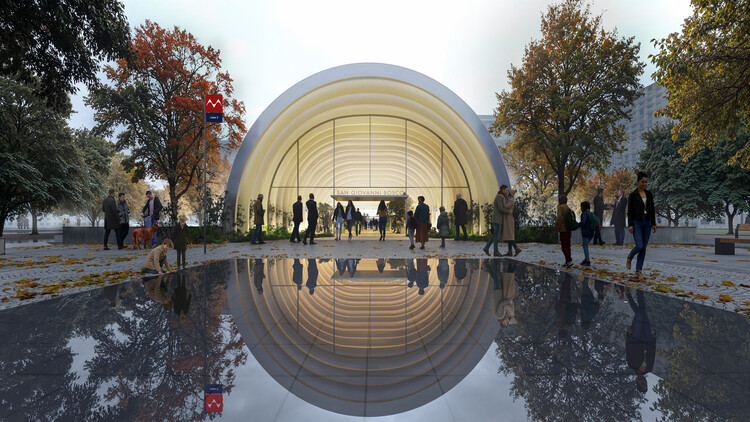
The project for implementing a fourth metro line in the Greek capital began in 2021, with the purpose of reducing the need for automobiles in the crowded city. As the 15-station new line is estimated to transport 340,000 passengers a day, up to 53,000 cars could be taken off the roads each day. While the opening of the line may be five years away, work has now begun to refurbish seven urban squares which will become stations. Despite public support for the initiative, the project has also led to some controversy, with residents fearing gentrification.
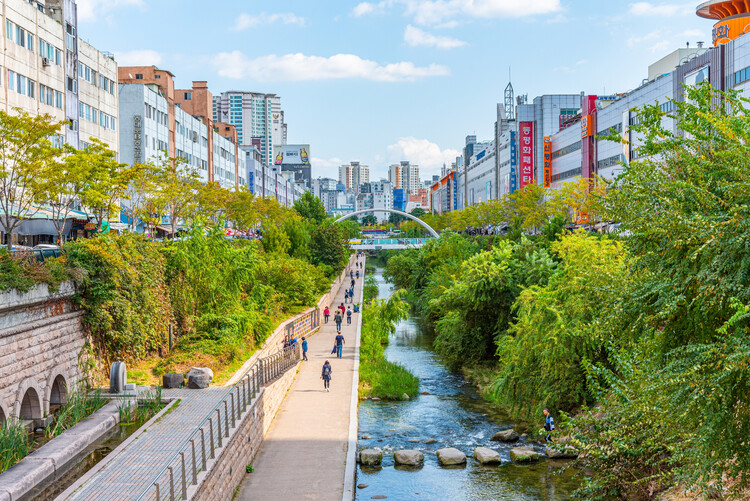
Women-led community planning session in Kibera, Nairobi, Kenya / Kounkuey Design Initiative (KDI). Image Courtesy of The Dirt
"We are focused on creating a just public realm," said Chelina Odbert, Hon. ASLA, CEO and founding principal of Kounkuey Design Initiative (KDI), at the National Building Museum in Washington, D.C. And by just, "we mean free, inclusive, accessible, unbiased, and equitable". A "just public realm is open to everyone.” There is unlimited access to streets and public spaces so people can travel to school and work and be full members of their communities.
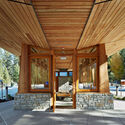
Unfortunately, the public realm is instead often “intimidating, exclusionary, inaccessible, unjust, and inequitable” for many women, LGBTQIA+ people, people with disabilities, and people of color. Landscape architects, planners, and others need to understand who feels safe and comfortable in public spaces or there is a risk of perpetuating inequalities, Odbert argued.
https://www.archdaily.com/1012717/designing-spaces-that-are-good-for-women-and-everybody-elseJared Green
Los Angeles officials have voted on a motion to implement the first Park Block, a pilot project that creates a car-free grid of city streets to open up public space for pedestrians and cyclists, as reported by NBC Los Angeles. The plan takes inspiration from Barcelona’s Superblock program, which creates groups of nine blocks in the district of Eixample and restricts the traffic to the outside streets, freeing up the rest of the streets for pedestrian and local transit only. Implemented in 2016, the plan has led to reduced levels of air pollution, urban noise, and traffic fatalities. A similar program is now planned for Los Angeles, United States.
Staircases facilitate transit and movement within cities, influencing how communities interact and navigate their urban surroundings. Despite often going unnoticed within the cityscape, these staircases are significant witnesses to history. Beyond their architectural function, they are essential connectors, providing spaces where the pulse of urban life unfolds. Amidst buildings, hills, slopes, and bustling streets, staircases emerge as dynamic stages for movements, encounters, and disconnections, intertwining with the narratives embedded in each step.
Last summer, Spain promoted cleaner transportation by offering free seasonal tickets for suburban and regional trains, which translated into roughly 48 million journeys per month. The initiative hoped to help citizens reduce fuel consumption and reduce the cost of living during the economic uncertainties and rising energy prices. In the summer of 2022, a 30% discount for municipal public transport was announced, with local governments in places like Catalonia topping up to a 60% discount. The program ran between the 1st of September and the 31st of December of last year.