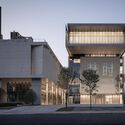
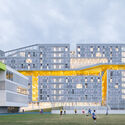
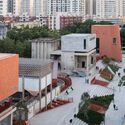
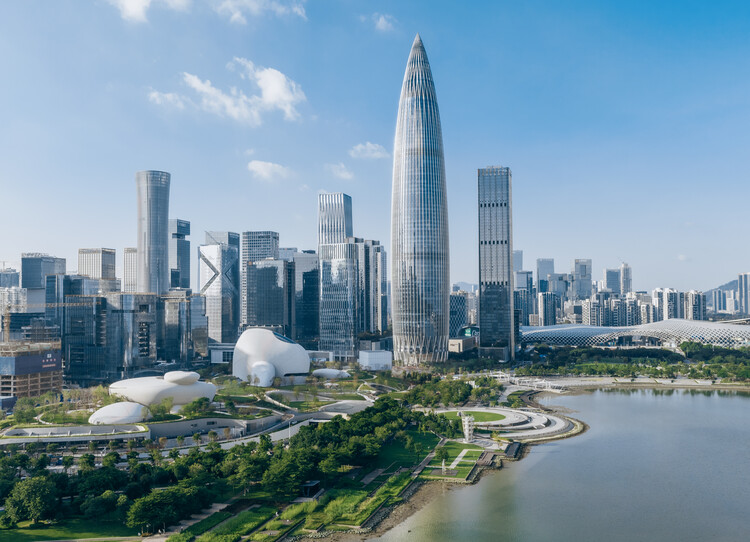
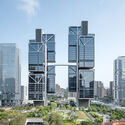
Shenzhen is China's first Special Economic Zone(SEZ), serving as a window for China's Reform and Opening-up and an emerging immigrant city. It has evolved into an influential, modern, and international metropolis, creating the world-renowned "Shenzhen Speed" and earning the reputation of the "City of Design." Architectural design stands as the most intuitive expression of Shenzhen's spirit of integration and innovation. Over the past decade (2015-2025), the development of urban architecture in Shenzhen has closely integrated with its open and inclusive urban character, ecological advantages of being nestled between mountains and the sea, and the local spirit of blending traditional culture with innovative technology, showcasing Shenzhen's unique charm and robust vitality across multiple dimensions.
LaBoqueria is an architecture studio in Barcelona that has the experience of multiple local and international collaborations. This global, multidisciplinary and participative perspective allows them to have a renewed and different vision of architecture.
Focusing on social, economic and environmental aspects, they seek to approach their projects in a comprehensive way, bringing together the different people involved in the process. Among their works are the housing building La Balma carried out together with the architects' cooperative Lacol; the Reformation of premises together with Marta Peinado Alós; and the Ca's Bouer House together with Jordi Queralt.
ArchDaily, interested in collaborative and participatory processes through the theme Democratization of Design, conducted an interview with LaBoqueria to learn about their main inspirations, challenges and visions.
For the Cosmos Foundation, environmental conscience, ecological conservation, and community focus form the foundations of land planning and landscape design within public infrastructure projects. We sat down with the foundation's project director, Felipe Correa, as well as foundation architects Valentina Schmidt and Consuelo Roldán, as they went in depth on the benefits, objectives, and motivations behind the Healing Gardens initiative.
Many of us have already lived, are living, or will live in a shared student house - a good mix of cheap housing and intense socializing with friends and school mates. For a reasonable price, it is possible to have a single private room and share common spaces. In fact, not only university students are living this way nowadays. The concept of co-living is becoming more and more an attractive and effective solution.
A global pandemic can change the way you look at things. In Greenwich, Connecticut, as with most places, restaurants and bars are shuttered now, schools are closed, and traffic is sparse as people stay home and maintain social distancing.
But each weekday, as the sun comes up over the eerily tranquil streets of the historic downtown business district, First Selectman Fred Camillo is still heading to the office. Camillo works in the Town Hall, a public building that’s been off-limits to the public—and to most employees—since mid-March, when all of Connecticut entered a constantly evolving state of lockdown following an executive order by Governor Ned Lamont in response to the COVID-19 outbreak.
Harvard GSD is presenting during the month of April 2020, an online series of talks and webinars via Zoom, where attendees can interact and submit questions. Accessible for everyone who registers, the events are also streamed live to the GSD's YouTube page.
Last week, we asked our social media followers, "What does public architecture mean to you?" These thoughts are intrinsic to the architectural debate and come into play in various types of projects, especially in those related tothe planning of common-use spaces in cities.
In Ancient Greece, a Polis referred to both the city and its body of citizens, where one cannot exist without the other. It is in this intersection, where Public Architecture, has the opportunity to construct the ideals of society: a space where individuals gather, relate to one another, and become citizens.
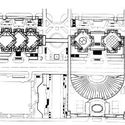
The ‘interstitial volumes’ that lie beneath the central esplanade, interlocked with underground infrastructures.
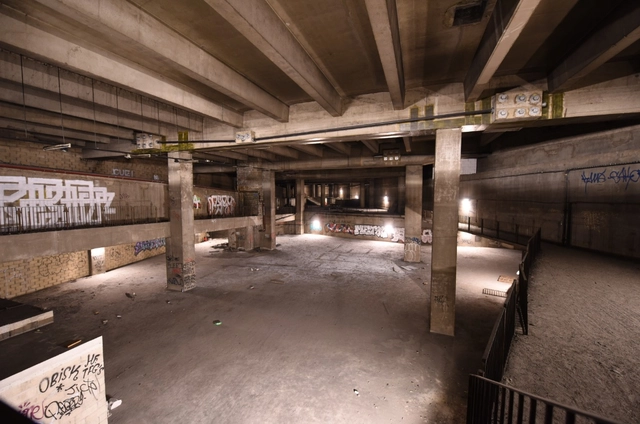
Paris La Défense is seeking to vitalise the ‘interstitial volumes’ that lie beneath its central esplanade, interlocked with underground infrastructures. Located at the heart of La Défense, those spaces are very close to public transport and offer high potential due to their distinctive size and morphology. The aim is to use them to develop a new offering of activities accessible to the public – and see a lively and unusual destination emerge as a result. Paris La Défense, as the urban planner, developer and manager of the business district, is launching a competitive dialogue process. The purpose to this
Cultural flagships, from trendy breeding grounds to iconic cultural palaces, form the core of many urban cultural landscapes. Spaces of Culture is about the new construction and redevelopment of cultural buildings in Amsterdam in the period 2000-2016.
In the construction and development of new cultural spaces in the city, the precise location and architecture play a major role in connecting the venue to the changing needs of the public, the makers and the neighbourhood. Using various case studies, Spaces of Culture shows that the cultural sector could benefit from knowledge exchange between urban planners, developers and the world of architecture.
Videos
What’s best for the left-over spaces from our criss-crossing cities infrastructures?
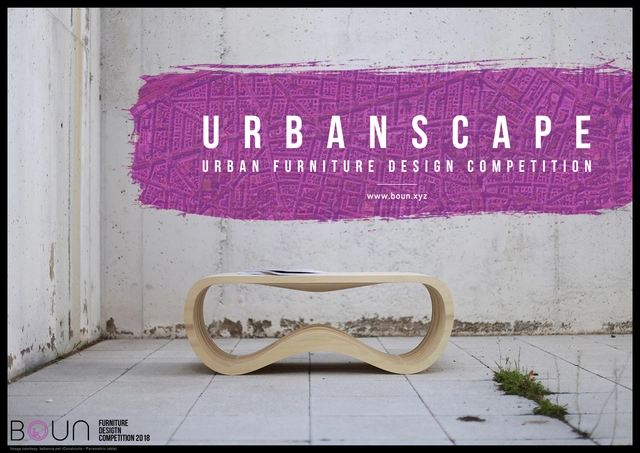
BOUN Serves as a unit block for UNI in the field of furniture design. It will be a platform for experimentation and conceptual exchange of ideas for furniture designs happening at various levels. The program intends to bring out some extraordinary design ideas and designers across the globe to help them in realizing their great Ideas.
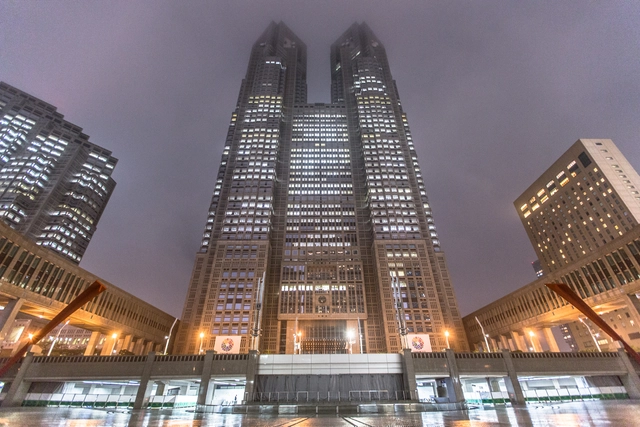
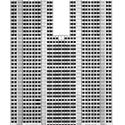
The career of Japanese architect Kenzō Tange features a curious anomaly: he received the same commission twice. In 1952, during the early stages of his career, Tange designed an administrative building in Yūrakuchō, Tokyo, for the city's metropolitan government. Over thirty years later, when the government relocated to Shinjuku, Tokyo, he again won the commission to design its administrative building. Completed in 1991, this would be one of his last, and most ambitious, projects. The second incarnation now dominates the city’s skyline, its highly distinctive design guaranteeing it landmark status. Nicknamed Tochō (an abbreviation of its Japanese name Tōkyō-to Chōsha), its architectural references to both tradition and modernity act as a visual metaphor for the eclectic city over which its inhabitants govern.
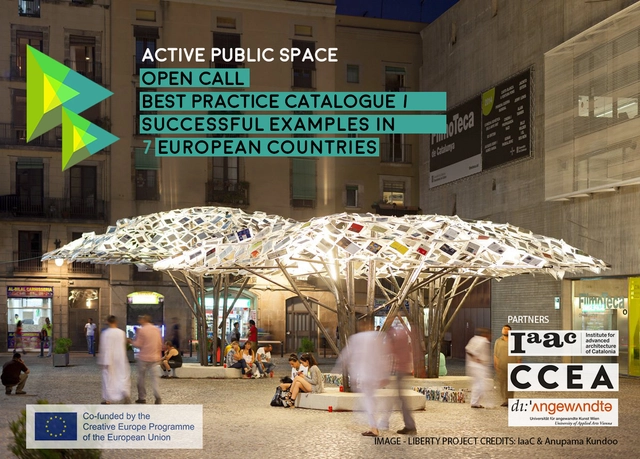
Active Public Space is seeking case studies regarding existing public spaces with particular interest in new “active” forms that emerge from the technological advances of the Information Age. The call is aimed at detecting and mapping existing successful examples of active-smart public space in terms of design, technology, management and occupancy by citizens.
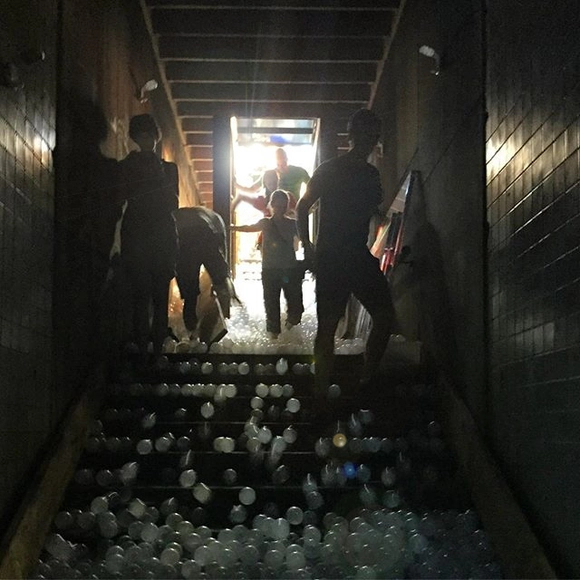
Re-Ball! is an open design competition to turn 650,000+ 3-inch, white, translucent plastic balls into a site-specific installation in the Dupont Underground’s 14,000-square-foot east platform. The balls were previously part of the National Building Museum’s blockbuster 2015 summer destination The Beach. The winning concept will take the medium in a new direction, one that responds to the uniqueness of the installation site. From the open, light-filled box of the National Building Museum’s Great Hall to the curving concrete volume of the Dupont Underground's east platform, Re-Ball! entries should transform the constituent materials — and the space itself — into an entirely
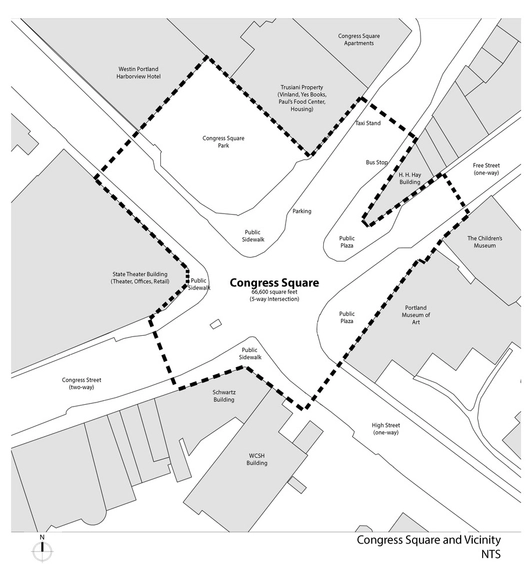
The City of Portland, Maine is seeking proposals from qualified Design Teams for the schematic phase re-design of Congress Square, a 1.3 acre public open space and traffic intersection in the heart of the city’s Arts District in downtown Portland, Maine. The project includes the Congress Square Redesign and the commissioning of works of Public Art, presenting a unique opportunity for collaborative urban design and public art; the redesign concept will be developed in tandem and integrated with the public artwork.