

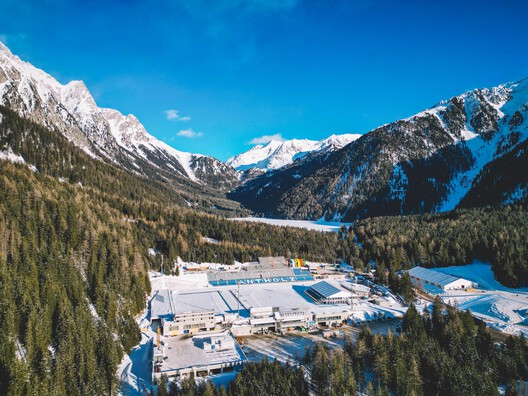
On June 24, 2019, the International Olympic Committee (IOC) announced that Milan and Cortina d'Ampezzo would host the 2026 Winter Olympic Games. The last Winter Games to take place in Italy were held in Turin in 2006, and since then, climate change in the European continent has impacted traditional skiing venues. In this context, Italy has the advantage of a portion of the Alps, a strip of about 1,200 km along the borders with France, Switzerland, Austria, and Slovenia. The Italian Alpine region hosts most of the facilities that have been prepared over the past five years for the Winter Olympics, which will take place from February 6 to 22, 2026, followed by the Paralympic Games from March 6 to 15. Set to be the most geographically widespread Olympic Winter Games in history, this edition continues the sustainable model established by the Paris 2024 Olympic Games by relying almost entirely on existing and reconditioned sports infrastructure.

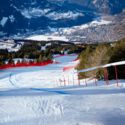

A defining feature of Milano Cortina 2026 is its vast geographical scope, officially hosted by two cities (Milan and Cortina), two regions (Lombardia and Veneto), and two Autonomous Provinces (Trento and Bolzano), covering a total area of 22,000 km². The competitions will be spread across these northern Italian territories, with two primary epicenters: the urban hub of Milan and the mountain resort of Cortina d'Ampezzo. These are complemented by five renowned Alpine host sites—Livigno, Bormio, Anterselva, Tesero, and Predazzo—that will stage the various skiing and snowboarding events.

Before the competitions begin, the Olympic Torch Relay will travel 12,000 km over 63 days, from Rome to Milan between December 6, 2025, and February 6, 2026. It will involve 10,001 torchbearers and pass through 110 provinces across 20 Italian regions, with 60 local celebrations honoring this tradition dating back to the 1952 Oslo Winter Olympic Games. The Paralympic Torch Relay will follow, featuring 501 torchbearers from February 24 to March 6, 2026, leading to the Paralympic Games Opening Ceremony.
Related Article
SOM’s Olympic Village for Milano-Cortina 2026 Combines Athlete Housing with Long-Term Urban UseBelow is the list of official sports venues for the 2026 Winter Olympic and Paralympic Games.
Arenas, a Stadium, and a Sports Park in Milan
Milan is the capital of Lombardy, Italy's most populous region. In addition to the four sports venues that will host figure skating, ice hockey, speed skating, and short-track speed skating, parts of the city's iconic architecture, including Teatro alla Scala and the Cathedral, will also be involved in activities for the Winter Olympic and Paralympic Games. Of the four sports venues, only one was built specifically for these Olympic Games: the Arena Santa Giulia, designed by Arup and David Chipperfield Architects to be used for ice hockey and para ice hockey. The other three venues are undergoing renovation or refurbishment processes, including the historic San Siro Stadium, where the Olympic Opening Ceremony will be held, and the transformation of the Fiera Milano Rho exhibition center into an ice hockey and speed skating stadium, located within the Milano Ice Park. The exhibition center, traditionally known for hosting the Salone del Mobile, is being reimagined with temporary structures and will return to its original function after the Games.

Milano San Siro Olympic Stadium
The Milano San Siro Olympic Stadium, also known as the Giuseppe Meazza football stadium, will be the venue for the Opening Ceremony of the Olympic Winter Games. This existing and historic stadium, which celebrates its 100th anniversary in 2026, will welcome 77,000 spectators for the event that officially begins the Games.

Fiera Milano Rho Ice Park
The Fiera Milano Rho exhibition centre will be transformed to create two temporary Olympic venues. One of its large pavilions will be converted into the Milano Rho Ice Hockey Arena to host preliminary matches for the ice hockey tournament. A separate pavilion will become the Milano Speed Skating Stadium, hosting all speed skating competitions. After the Games, both facilities will revert to their original function.

Milano Santagiulia Ice Hockey Arena
The Milano Santagiulia Ice Hockey Arena will host ice hockey and Para ice hockey. As the only new permanent venue constructed for the Games, it was designed by Arup and David Chipperfield Architects. This privately-funded arena, located in the Santa Giulia district, seats 14,000 and will be converted into a multi-purpose entertainment center after 2026.
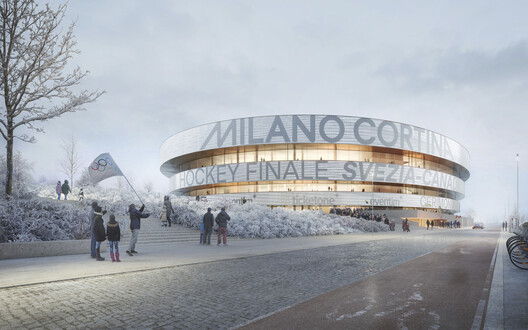
Milano Ice Skating Arena
The Milano Ice Skating Arena, also known as the Unipol Forum, will host the Olympic short track and figure skating events. This existing multi-purpose venue has been modernized for the Games, notably with the installation of a new permanent ice rink. The facility, with a capacity of 10,000, is equipped to handle the different ice requirements for both disciplines.

Sports Centers in Cortina d'Ampezzo
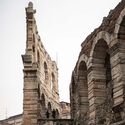
In 2009, the Dolomites in Cortina d'Ampezzo were declared a UNESCO World Heritage Site for their landscape value and unique geological and geomorphological features. Cortina, which hosted the 1956 Olympic Games, has since complemented its stunning natural surroundings with world-class winter sports infrastructure. The region will host five Olympic sports: Bobsleigh, Curling, Skeleton, Alpine Skiing, and Luge. For the Paralympic Games, it will be the venue for Para Alpine Skiing, Para Snowboard, and Wheelchair Curling. Also located in the Veneto region is the historic city of Verona, renowned for its Renaissance architecture and Carlo Scarpa's restoration of the Castelvecchio Museum. The medieval city is home to The Arena, a 1st-century Roman amphitheater that hosts concerts, operas, and performances during the summer. In 2026, The Arena will serve as the venue for the Olympic Games Closing Ceremony and the Paralympic Games Opening Ceremony.

Cortina Sliding Center
The Cortina Sliding Centre is the planned venue for bobsleigh, skeleton, and luge. This venue is a complete reconstruction of the historic Eugenio Monti track, site of the 1956 Olympic Games. The project involved building a modern, sustainable track and supporting facilities intended for future international competitions, including the 2028 Winter Youth Olympic Games. Where there were concerns about the pace of the reconstruction process, the new venue was completed earlier this year and has passed all the pre-homologation tests.
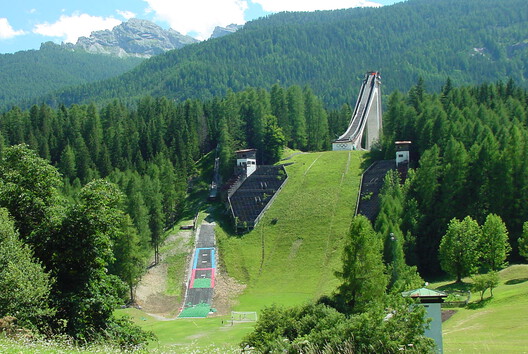
Tofane Alpine Skiing Center
The Tofane Alpine Skiing Centre in Cortina d'Ampezzo will host Olympic women's Alpine skiing and all Paralympic Alpine skiing events. Competitions will take place on the historic Olympia delle Tofane slope, a regular World Cup venue first used in the 1956 Olympics.
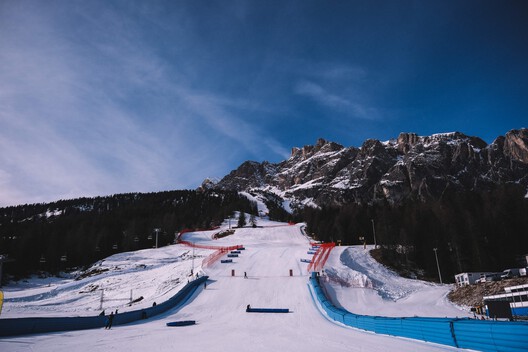
Cortina Curling Olympic Stadium
The Cortina Curling Olympic Stadium will host the curling and wheelchair curling competitions, in addition to the Paralympic Closing Ceremony. Originally constructed for the 1956 Olympic Games, this existing, historic venue has been renovated with a focus on accessibility. It will have a capacity of 3,500 for sporting events.
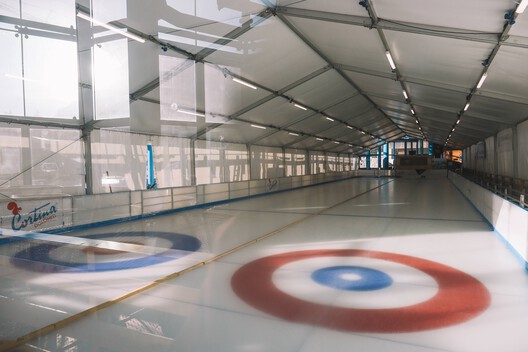
Winter Sports Centers in the Italian Alps
Five established Alpine towns in Northern Italy will host the mountain competitions across two distinct regions. In the Lombardy region, the renowned Valtellina Valley, famous for its mountain sports, will be a key hub. Bormio's technically demanding Stelvio slope is the venue for men's Alpine Skiing and the Olympic debut of Ski Mountaineering, while the nearby town of Livigno will host all Snowboard and most Freestyle Skiing events. In the Trentino-Alto Adige/Südtirol region, the Val di Fiemme, a valley with a special place in winter sports history, will be the center for Nordic disciplines, with Tesero hosting Cross-Country Skiing and Predazzo hosting Ski Jumping and Nordic Combined. Finally, the world-class venue of Anterselva (Antholz), especially significant in the biathlon world, will host all biathlon competitions. All of these locations boast a rich sporting heritage and will utilize their existing, modernized venues for the Games.
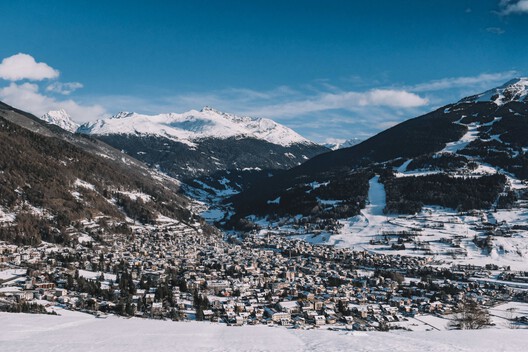
Bormio Stelvio Ski Center
The Stelvio Ski Centre in Bormio will host the men's Alpine skiing competitions and the Olympic debut of ski mountaineering. An existing and technically demanding venue, the Stelvio slope features a 3,230-meter Alpine course with a 63% maximum gradient.
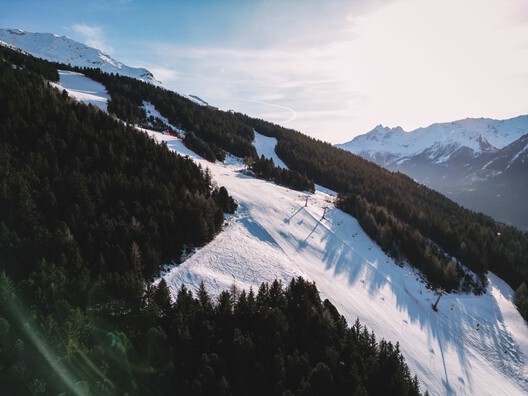
Livigno Aerials and Moguls Park
The Livigno Aerials & Moguls Park will host the Olympic freestyle skiing events of aerials and moguls. An existing competition site in the Livigno Valley, this venue features courses positioned near the slope's base for spectator visibility. The park includes a 235-meter moguls course and a 150-meter aerials course with three jumps.
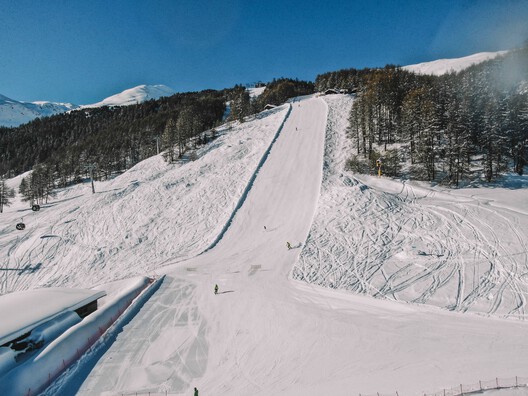
Livigno Snow Park
The Livigno Snow Park will host Olympic snowboard and freestyle skiing events, including big air, slopestyle, halfpipe, and ski cross. This existing venue features a unique design where multiple competition areas converge into a single finish zone, allowing spectators to view several events.
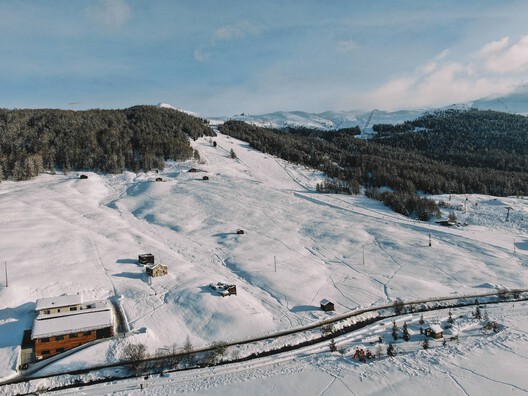
Predazzo Ski Jumping Stadium
The Predazzo Ski Jumping Stadium is the designated venue for the Olympic ski jumping and the jumping segment of the Nordic combined competitions. This existing facility, inaugurated in 1989, is a year-round training center for international teams. For the Milano Cortina 2026 Games, it has been renovated with a new judges' tower and upgraded snowmaking and lighting systems

Tesero Cross-Country Skiing Stadium
In Val di Fiemme, the Tesero Cross-Country Skiing Stadium is the venue for Olympic cross-country skiing and Nordic combined, as well as Paralympic biathlon and cross-country skiing. An existing facility, it has been significantly renovated with a rebuilt grandstand, new underground support areas, and modernized technical systems, including snowmaking and lighting.

Anterselva Biathlon Arena
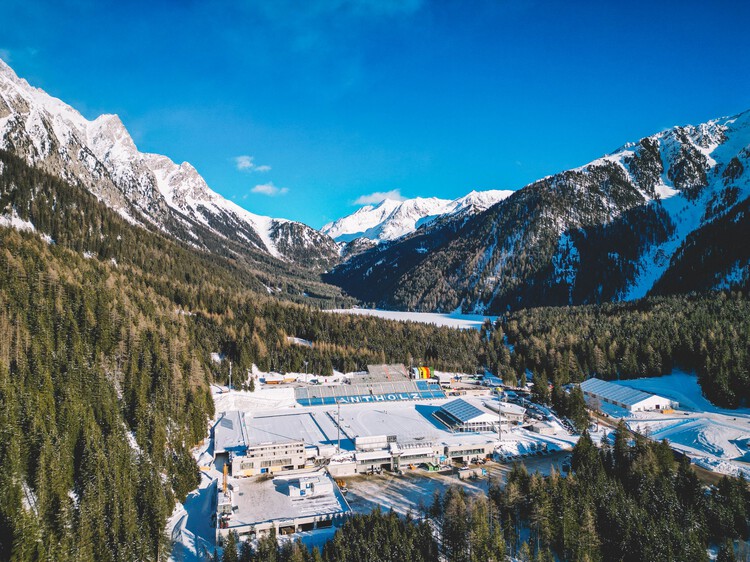
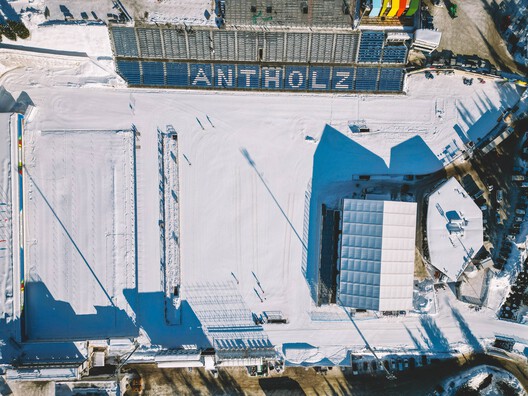
The Anterselva Biathlon Arena will host all biathlon events at an altitude of 1,600 meters. An existing facility used for international competitions since 1971, it will make its Olympic debut for Milano Cortina 2026. The venue has the largest spectator capacity of the Games at 19,000 and includes a renovated track.
Verona Olympic Arena
The historic Verona Arena, an iconic Roman amphitheater built in 30 AD, will host the Milano Cortina 2026 Olympic Closing Ceremony and the Paralympic Opening Ceremony. This ancient venue, which once staged gladiator battles, has been upgraded to improve safety and accessibility for over 12,000 spectators, continuing its long history of event hosting.

In addition to the various sports centers, Milan, Predazzo, Bormio, Livigno, and Cortina are preparing to accommodate athletes in the Olympic and Paralympic Villages. In Milan, Skidmore, Owings & Merrill (SOM) has designed the Olympic Village, located on the site of the former Porta Romana railway yard. Preparations for the event have also accelerated investments and large-scale urban transformations, including high-profile architectural projects such as Bjarke Ingels Group (BIG) and Atelier Verticale's CityWave office complex, featuring a 140-meter-long photovoltaic canopy anticipated to be Europe's largest integrated urban solar roof; a biophilic mixed-use development by Kengo Kuma & Associates in Milan's former Rizzoli district, an abandoned industrial site; and Herzog & de Meuron's new UniCredit headquarters in Milan, which forms part of the broader regeneration of the Scalo Farini district.
We invite you to check out ArchDaily's comprehensive coverage of Milano Cortina 2026.


