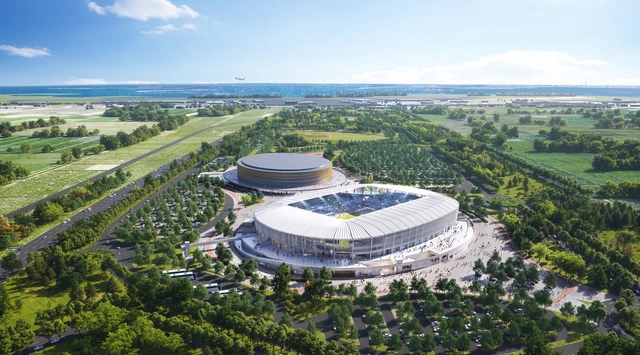
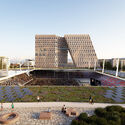
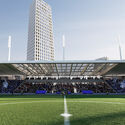
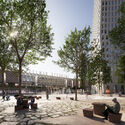
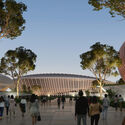
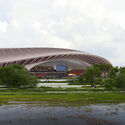
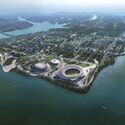
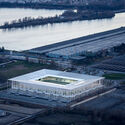
The Municipality of Venice has unveiled plans for a new 18,500-capacity stadium designed by Populous. The stadium will be built in the Bosco dello Sport in Tessera and is intended for football, Serie A rugby, and other events such as concerts. Maffeis Engineering and Populous have been commissioned for the design and engineering work by a consortium composed of Costruzioni Bordignon, Fincantieri Infrastrutture, and Ranzato Impianti, which was awarded the contract in March 2024. Soil Engineering, Seingim, and Gae Engineering are also collaborating on the project.
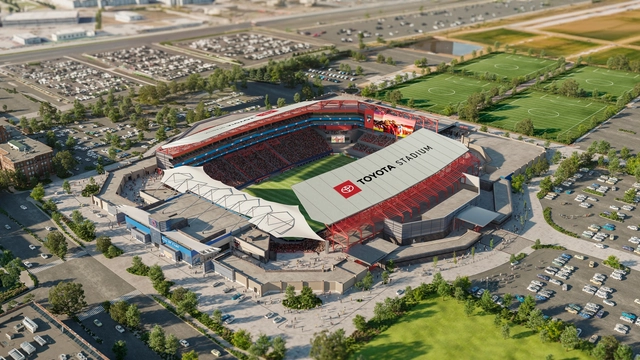
Renovation work has officially commenced at FC Dallas' Toyota Stadium in Frisco, Texas, with architecture firm HKS leading the redesign. Originally opened in 2005 with a seating capacity of approximately 20,000, the stadium is undergoing a phased transformation to improve functionality, expand amenities, and prepare for the 2026 FIFA World Cup, with the intention of hosting one of the teams for training. Construction began on the east side and will progress incrementally, allowing the venue to remain operational for home games throughout the process. Completion is scheduled for 2028.
OMA/David Gianotten, has won the competition to revitalize the historic Selman Stërmasi Stadium and its surrounding area in central Tirana, Albania. Originally built in 1956, the stadium is now being redesigned to not only expand the existing football grounds but also to foster stronger links between surrounding neighborhoods in Tirana. With the revitalization, the stadium aims to be a key connector between the Blloku and Komune a Parisit neighborhoods.
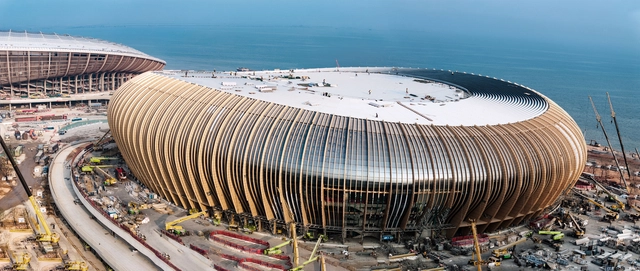
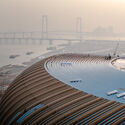
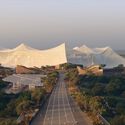
Designed by Zaha Hadid Architects in collaboration with the Guangdong Architectural Design & Research Institute, the Greater Bay Area Sports Centre in Nansha, China, is approaching completion. Construction began in August 2023, with the main structures of the stadium and arena topping out in February 2024. Roofing and curtain wall installations were finalized in February 2025, and the project has now entered its final phase of interior finishing and landscaping. The center is set for handover in June 2025, ahead of its role as a key venue for the China National Games in November.
Aerial render. Image Courtesy of Foster + Partners
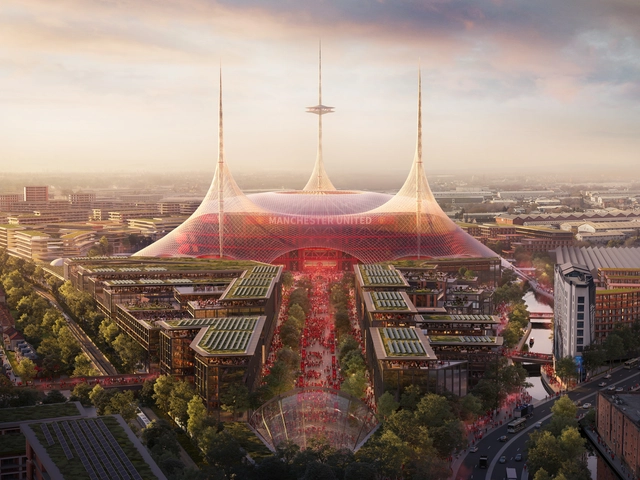
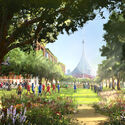
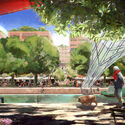
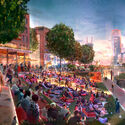
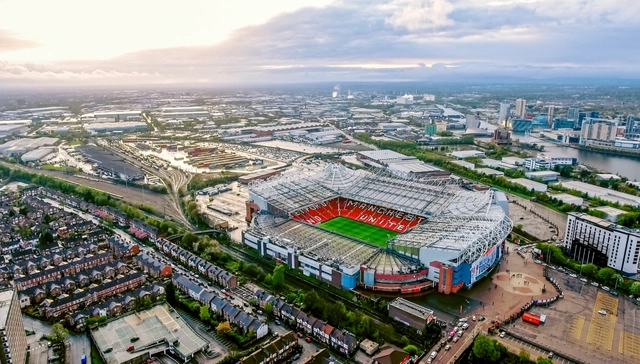
In September 2024, Foster + Partners announced its appointment by Manchester United for the development of a master plan for the Old Trafford Stadium District. The centerpiece of the master plan is a new stadium, set to become the largest football venue in the United Kingdom with a capacity of 100,000 seats. This week, the firm unveiled images of the stadium design along with surrounding public spaces, including parks, mixed-use developments, an open-air cinema, and a renovated train station. These images contain the illustrative concepts that will become the basis for more detailed feasibility, consultation, and planning work as the project enters new stages.
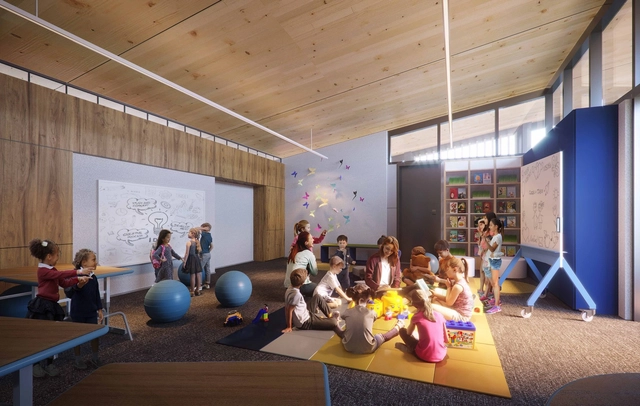
Westmark Lower School / NBBJ. Image Courtesy of NBBJ
Publicly occupied spaces can be overwhelming. Airports, schools, stadiums, and workplaces all feature environments with visual chaos that can be disorienting and stressful for individuals, especially those who are neurodiverse. The bombardment of stimuli, unpredictable movements, and competing visual information can create barriers to occupant comfort. Architects are regularly encouraged to create spaces that recognize and honor individual differences. Designing for neurodiversity is one way of championing inclusivity and extending principles of universal design.
Gensler, in collaboration with El Qalaa El Hamraa and Buro Happold, has revealed plans for a new stadium dedicated to Al-Ahly Football Club, a team widely recognized for its prominence in African and Middle Eastern football. The project, more than three decades in the making, envisions a state-of-the-art venue designed not only for football matches but also as a national landmark capable of hosting large-scale events, setting a new standard for sports architecture in the region.
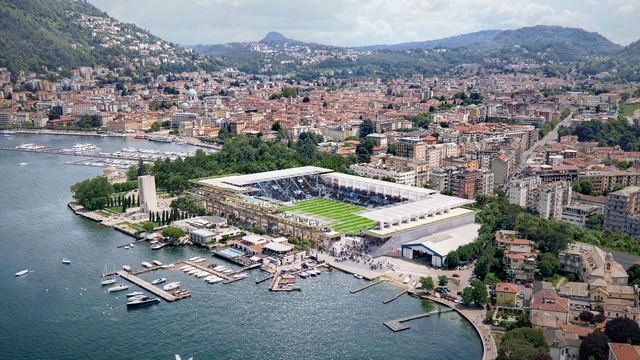
International architectural firm Populous has announced the initial phase of the redevelopment of Stadio Giuseppe Sinigaglia, in collaboration with Como 1907 and the Municipality of Como in Italy. The project aims to modernize the historic stadium while maintaining its role as a central hub for the community. The process begins with the submission of the Document of Feasibility of Project Alternatives (DOCFAP), a key step in evaluating potential design approaches. The approval process is expected to conclude by May 2026, marking the completion of the project's first stage.
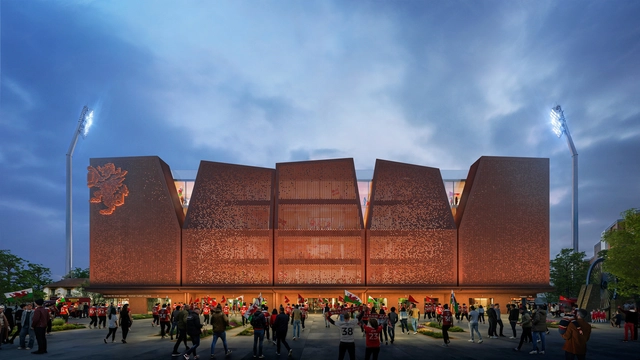
Wrexham Stadium Kop Stand - Facade. Image Courtesy of Populous
The term "Kop," traditionally referring to the summit of a hill or peak, reflects the origins of passionate fan gatherings in football stadiums. In the UK, a "Kop Stand" specifically designates a typically single-tiered stand situated at the goal end of a stadium, renowned for housing the loudest and most dedicated supporters of a football club. Sports and entertainment-focused architecture office Populous has just released the design of the new Kop Stand for Wrexham AFC's stadium. The proposal pays homage to Wrexham's architectural character by incorporating a brick façade pattern that mirrors the city's traditional building styles.
Aramco Stadium / Populous (Al Khobar). Image Courtesy of FIFA / Saudi Arabia 2024 Bid
Saudi Arabia was officially announced as the 2034 FIFA World Cup host. The country plans to build 11 new stadiums and refurbish four of its existing venues. The proposed host cities include Riyadh, Jeddah, Al Khobar, Abha, and the yet-unbuilt Neom, a 170-kilometer-long linear city proposed to be built on the Red Sea coast. Additionally, the plan involves 134 training sites across the country, with 73 newly built facilities.
Released on December 11, 2024, the announcement came as no surprise, given that only one bid was submitted for each of the 2030 and 2034 World Cup tournaments. Spain, Portugal, and Morocco have been confirmed as joint hosts for the 2030 event, while Saudi Arabia has been chosen to host the 2034 edition.
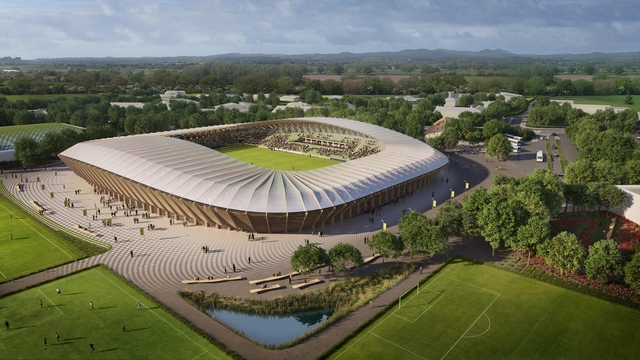
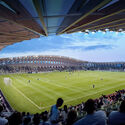
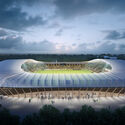
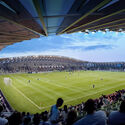
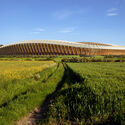
Zaha Hadid Architects has unveiled the design for Forest Green Rovers' Eco Park Stadium, located in Stroud, UK. As the first all-timber football stadium, the design uses sustainably sourced timber for key structural elements, including the framework, roof cantilevers, and cladding. The project combines innovative construction techniques with advanced material research to create a functional and environmentally considerate venue. Part of a larger development, the stadium is designed to integrate with its surroundings while offering facilities that benefit both the football club and the wider community.
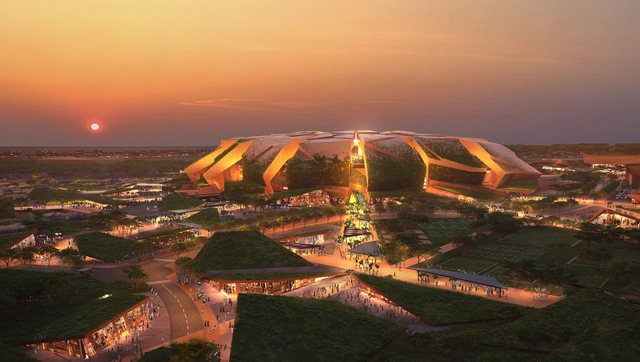
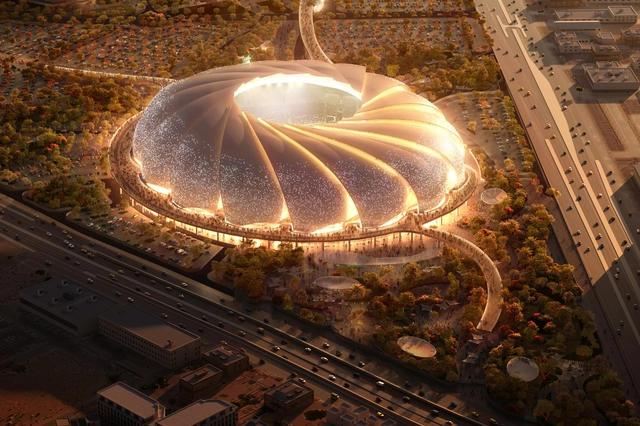
Populous has unveiled the design for the King Salman Stadium and Masterplan, set to become the largest-capacity stadium in Saudi Arabia and the primary headquarters for the Saudi Arabia national football team. Developed with the Royal Commission for Riyadh City and the Ministry of Sports, the stadium is located in northern Riyadh, adjacent to King Abdulaziz Park. Scheduled for completion in late 2029, the venue is also announced as one of the primary locations for the 2034 FIFA World Cup, set to be hosted by Saudi Arabia, whose bid includes the construction of 11 new stadiums and the refurbishment of 4 existing ones.
Foster + Partners has just announced its upcoming appointment by Manchester United to lead the development of a masterplan for the Old Trafford Stadium District, focusing on club-owned land surrounding the current stadium. The goal is to create a world-class football destination for Manchester United fans, integrated with a broader vision for a mixed-use development that benefits the local community. This transformation aims to attract new residents, increase job opportunities, and establish the area as a vibrant hub for visitors from Manchester, across the UK, and beyond.
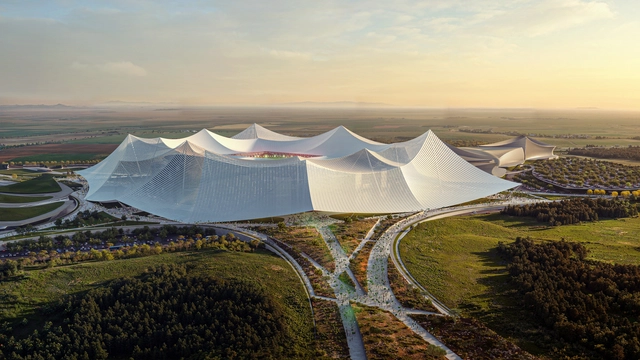
Courtesy of Oualalou + Choi | Hassan II Stadium in Casablanca, Morocco
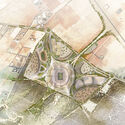
Populous and Oualalou + Choi have just released the design for the of Grand Stade Hassan II in Casablanca, Morocco. Set to be the largest football stadium globally, the stadium boasts a capacity of 115,000 people. Drawing inspiration from Morcco’s traditional ‘moussem,’ a type of social gathering, the design features a grand, tent-like roof that integrates dramatically into its forested surroundings.
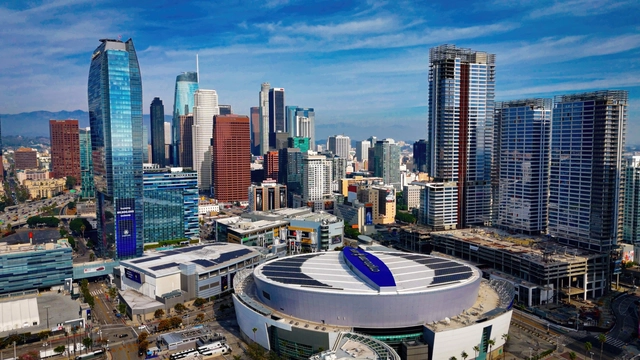
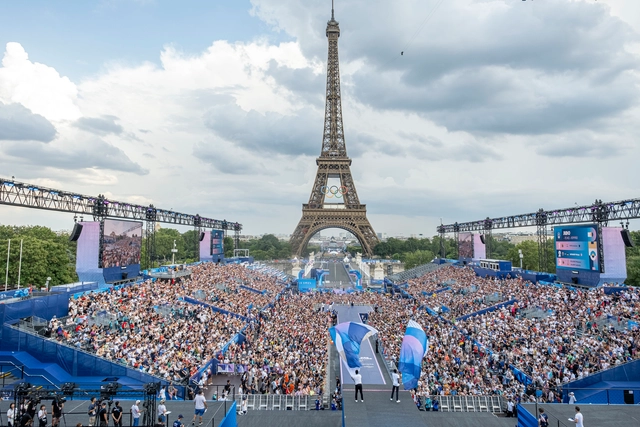
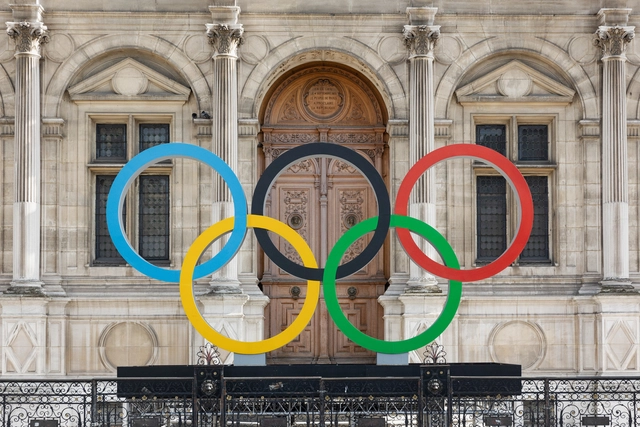
As the Paris 2024 Olympics draw to a close, the city has showcased a new model for hosting the iconic Games by integrating its landmarks and urban spaces into the event. As the spotlight now shifts to Los Angeles, the 2028 Summer Olympics present a different approach from a built environment and urban planning perspective. During the 2024 Olympics, Paris used its rich cultural heritage as a backdrop for competition, reimagining sports within the city's built environment. This approach not only highlighted the city's history and architecture but also minimized the need for new construction, focusing instead on temporary and innovative uses of existing spaces.
Officially the Games of the XXXIV Olympiad, LA28 is scheduled to take place from July 14–30, 2028. Los Angeles, a city with a deep Olympic history, will host the Games for the third time, following its previous times in 1932 and 1984. In contrast to the typical Olympic model, which often involves extensive new construction, Los Angeles is planning to leverage its existing infrastructure and venues spread across Greater Los Angeles, with most venues grouped in sports parks across Downtown Los Angeles, San Francisco Valley, Carson, Long Beach, and Oklahoma. No new permanent venue shave been announced to be built specifically for the Games. This strategy is designed to minimize environmental impact and financial costs, aligning with broader goals of sustainability and responsible urban development.
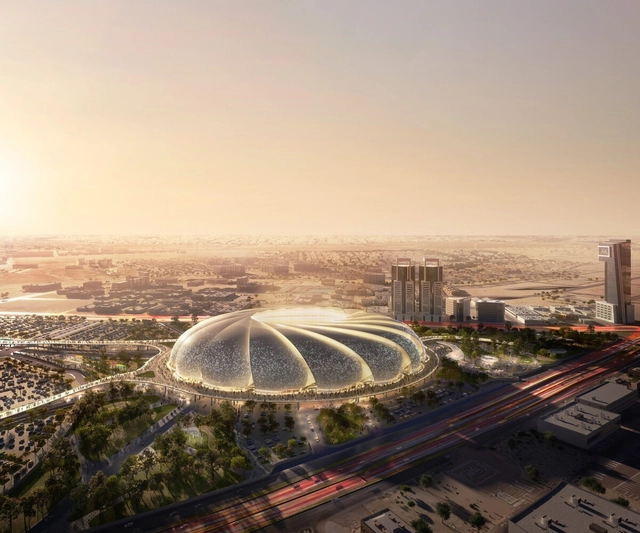
Sports-focused architecture office Populous has been confirmed as the lead designer of the Aramco Stadium, one of the main locations scheduled to host the upcoming 2027 AFC Asian Cup and the 2034 FIFA World Cup. The office has also been commissioned with the design of the surrounding master plan in Al Khobar, Saudi Arabia. The new 47,000-seat venue will be compliant with international standards for premier football competitions, aiming to establish Al Khobar as an international sporting destination.
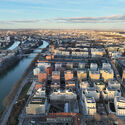
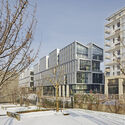
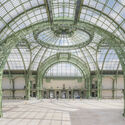
Rounding up the Olympic Games 2024 in Paris, a special focus is placed on the architectural language and phenomenon that transformed the city for its Olympic and upcoming Paralympic venues. Spread across the city and surrounding areas, Paris integrated iconic landmarks and modern facilities to host a diverse selection of Olympic sports. Beyond the sports venues, the interventions also included unique visitor centers and athlete's accommodations that will serve a purpose beyond the summer's events.
Guillaume Bontemps/Ville de Paris. Image Courtesy of Paris 2024 Olympic Games
The recent history of the city of Paris is entangled with that of the Olympic Games. In 1900, Paris hosted the second edition of the Games, starting a journey of urban adaptations and architectural developments that prepared the city for the event. Among the most important changes was the introduction of Line 1 of the metro, inaugurated in 1900 to link the locations of the Universal Exhibition with those of the Olympic Games in Vincennes. Just 24 years later, the city hosted one of the most influential editions of the Olympic Games. The event, the first to be broadcasted on the airwaves, contributed to a substantial rise in the popularity of the Games. It was also during this edition that the concept of the Olympic Village was born. Several of the infrastructures and venues built over a century ago are still in use in Paris, with some of them returning now as hosts of Olympic events.