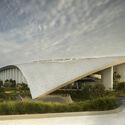
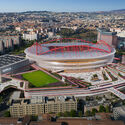
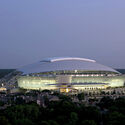
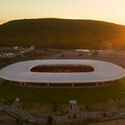
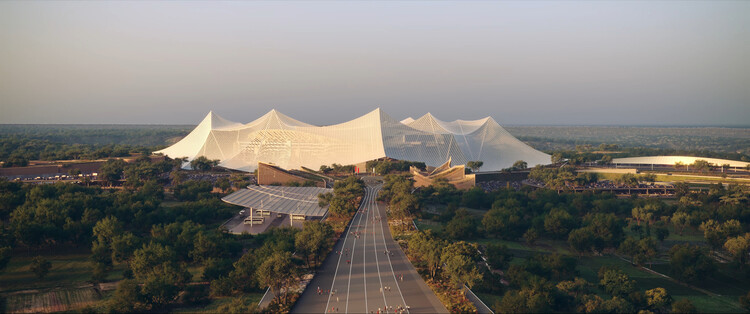
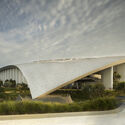
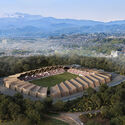
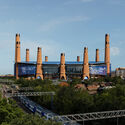
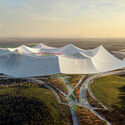
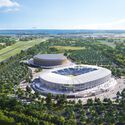
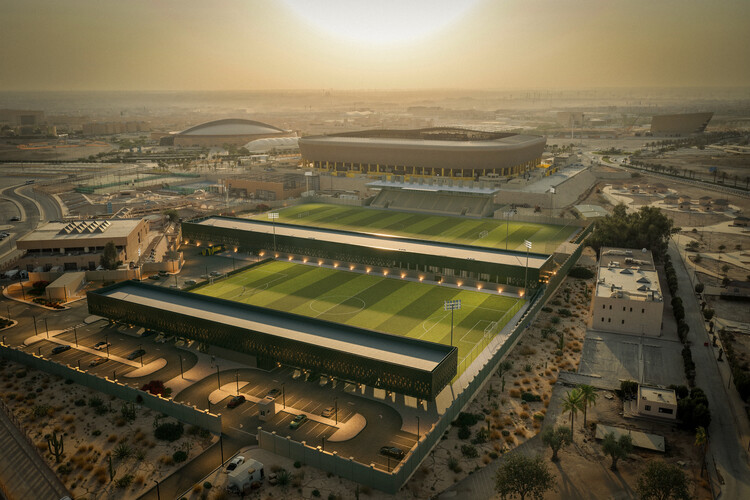
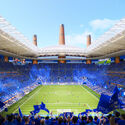
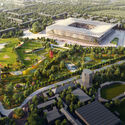
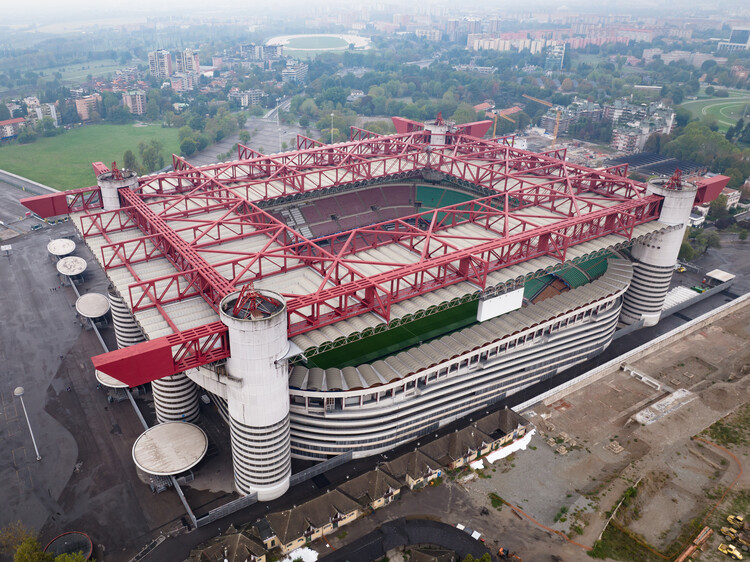
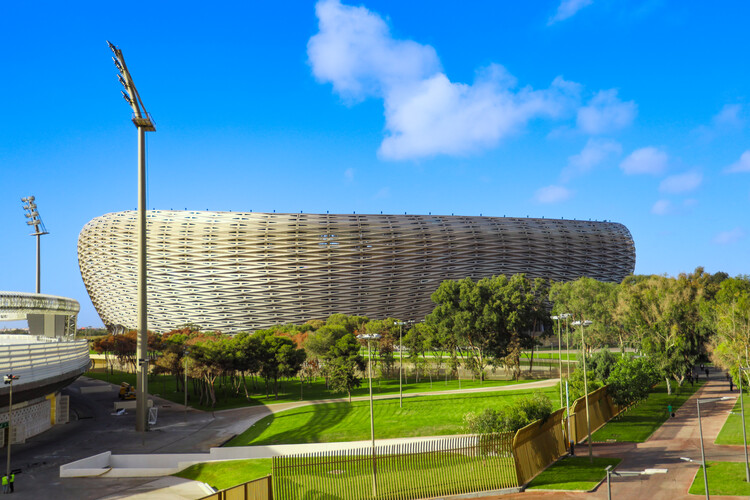
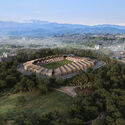
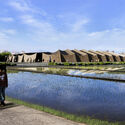
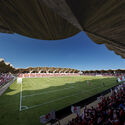
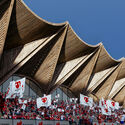
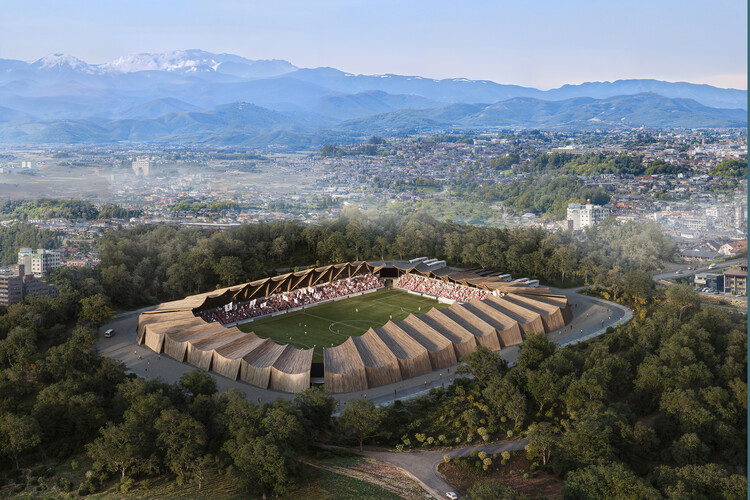
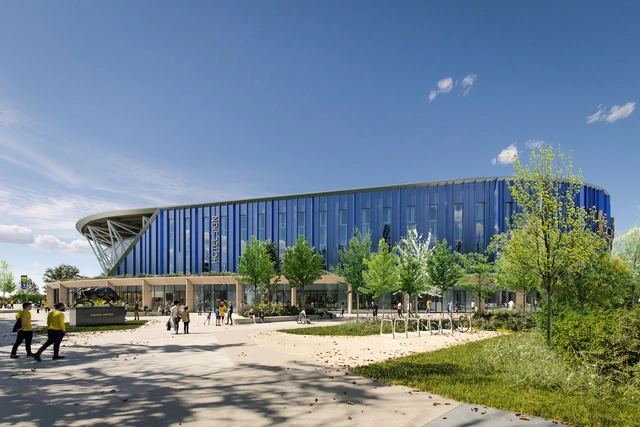
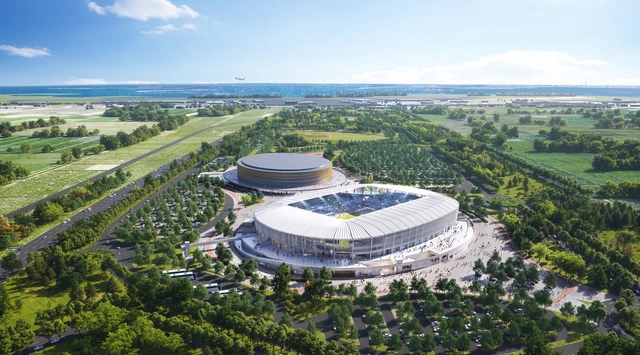
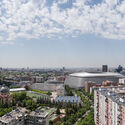
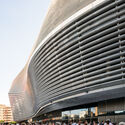
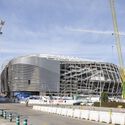
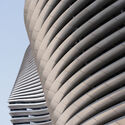
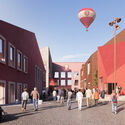
Grand Stade Hassan II in Morocco by Populous and Oualalou + Choi. Image Courtesy of Oualalou + Choi
The conclusion of the FIFA World Cup 2026 marks the end of the tournament's largest edition to date. Hosted across Canada, Mexico, and the United States, the competition expanded to 48 national teams and brought together sixteen host cities distributed across three countries. For decades, FIFA World Cups have served as catalysts for architectural production. Each edition has generated a distinct collection of stadiums, transportation investments, public spaces, and urban interventions that often remain part of their host cities long after the tournament concludes. While recent competitions have become associated with landmark stadium projects and ambitious national building programs, the 2026 edition followed a different trajectory, relying primarily on existing venues adapted to FIFA's technical and operational requirements.
The FIFA World Cup 2026 will take place from June 11 to July 19, 2026, across North America, with matches hosted at 16 venues in Canada, Mexico, and the United States. For the first time, the tournament is being co-hosted by three countries: 11 venues in the United States, 3 in Mexico, and 2 in Canada. Since the 2018 FIFA Congress selected the venues to host the 2026 World Cup, the three North American countries have been working to deliver the tournament. This edition will be the first to feature 48 competing teams, expanded from 32. Unlike the 2022 Qatar World Cup, which required the construction of entirely new stadiums, the three host countries already have the necessary infrastructure in place, though several venues are taking the opportunity to upgrade their facilities, including Mexico City's Estadio Azteca, Arlington's AT&T Stadium, and Toronto's BMO Field.
https://www.archdaily.com/993287/explore-the-full-list-of-football-stadiums-for-the-2026-fifa-world-cup-in-united-states-mexico-and-canadaArchDaily Team
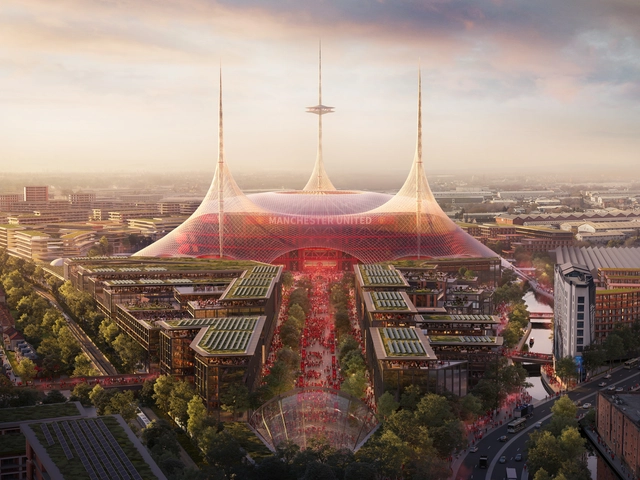
New Manchester United Stadium aerial render. Image Courtesy of Foster + Partners
During 2025, several sports infrastructure projects were announced that remain on our radar, most of which are scheduled for completion between 2028 and 2030. Located across Asia, Europe, Africa, the Middle East, and North America, these projects reflect contemporary masterplan strategies for the transformation of large sports venues within their urban contexts. Many of the stadiums are planned as part of broader redevelopment frameworks that include new public spaces, mixed-use programs, event facilities, and mobility upgrades, rather than as isolated structures. Designs led by international offices such as Populous, Foster + Partners, Heatherwick Studio, OMA, Gensler, AFL Architects, and VUILD illustrate a range of architectural, urban, and infrastructural responses to the evolving role of large sports facilities.
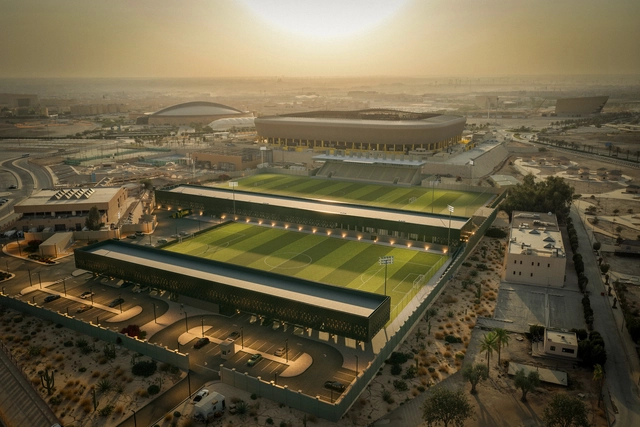
OODA announces the House of Nassr, a new integrated sports complex designed for Al Nassr FC in Riyadh, Saudi Arabia. Planned as a comprehensive facility supporting both athletic performance and club operations, the project brings together a high-performance training centre, administrative and media spaces, athlete support facilities, and social areas, with a hotel scheduled for a second phase of development. The complex occupies an area of approximately 4,000 square meters. While the overall project remains ongoing, the first phase has been completed in 2025, marking OODA's first realized project in Saudi Arabia.
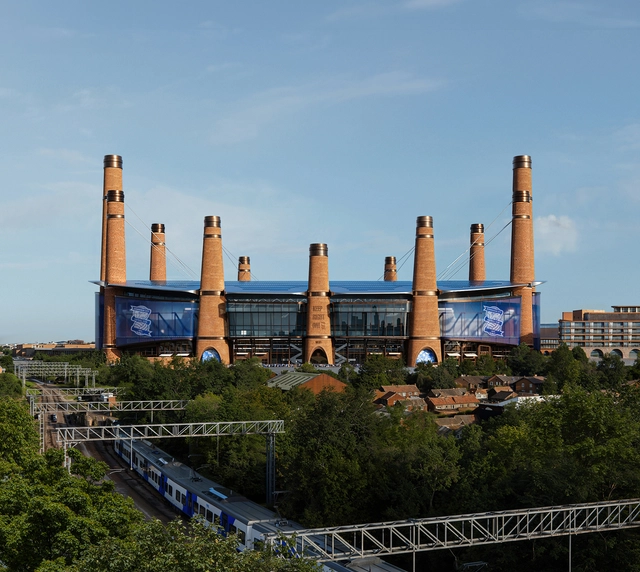
Heatherwick Studio and MANICA Architecture have released the design for Birmingham City Football Club's new stadium, set to anchor the forthcoming BirminghamSports Quarter in East Birmingham, England. The 62,000-seat venue, planned for Bordesley Green, forms part of a wider redevelopment strategy and coincides with the club's 150th anniversary. Developed through a competition led by filmmaker Steven Knight, the project aims to introduce a multifunctional sports and cultural venue integrated into its urban context.
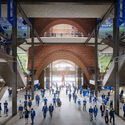
The Prince Moulay Abdellah Stadium in Rabat has officially opened as Morocco's new national stadium, following its inauguration by Crown Prince Moulay El Hassan on September 4, 2025. Designed by Populous, the stadium has a capacity of 68,700 and was developed under the direction of the National Agency for Public Facilities of Morocco to meet FIFA standards, enabling it to host matches up to the semi-finals of the 2030 FIFA World Cup. The redevelopment replaces the original 1983 stadium, positioning it as Morocco's flagship sports venue ahead of a series of international events.
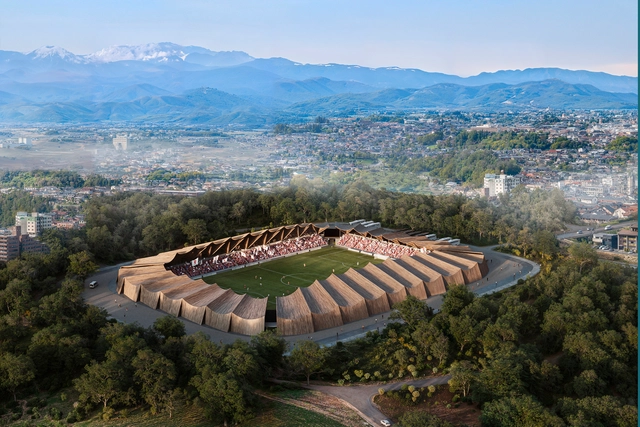
VUILD has presented the design for a wooden soccer stadium planned for Fukushima, Japan, as the future home of Fukushima United FC. Commissioned by SportX, the proposal combines community participation, an innovative timber structure, and sustainable strategies, positioning the stadium as both a functional sports venue and a potential symbol of renewal. Inspired by the Japanese tradition of Shikinen Sengu, the periodic rebuilding of shrines, the concept introduces three cycles: resources, community, and craftsmanship.
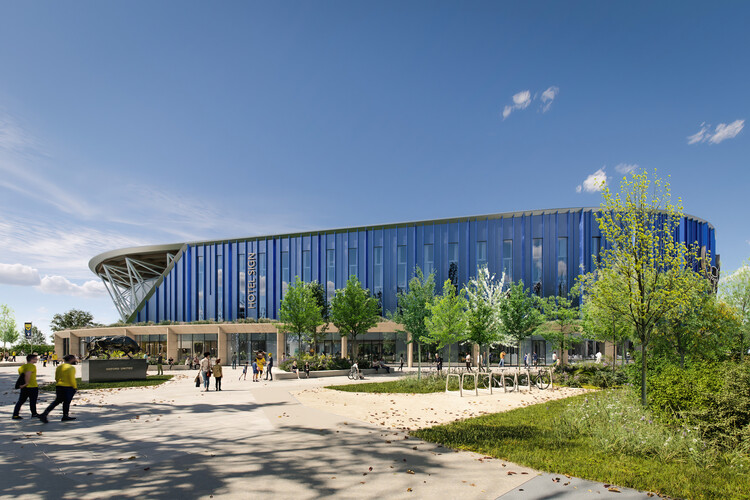
Oxford United Football Club's planning application for a new all-electric football stadium has been approved by Cherwell District Council. The scheme was developed by a team that includes AFL Architects, Mott Macdonald engineering services, Fabrik landscape design, and Ridge and Partners built environment consultants. Designed for a capacity of 16,000 spectators, the master plan also proposes a 1,000-person events space, a 180-bed hotel, a restaurant, a health and wellbeing centre, and a new public plaza with gardens.
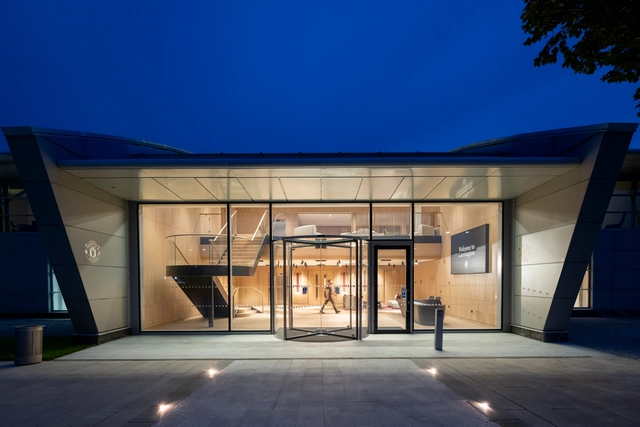
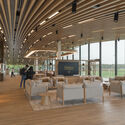
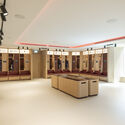
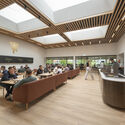
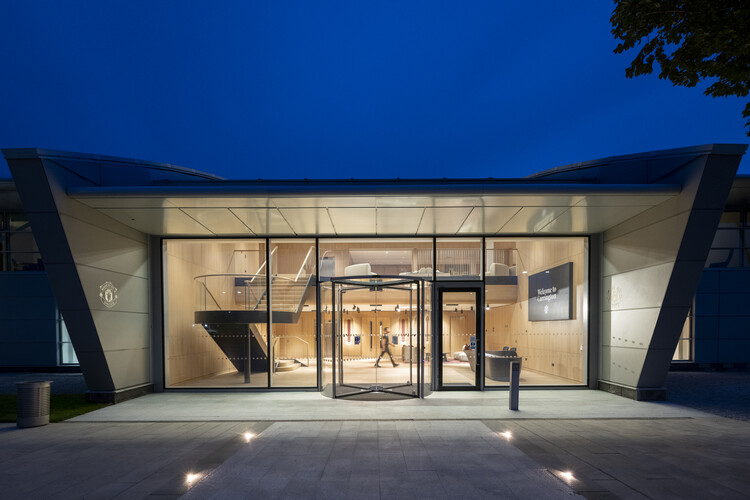
Foster + Partners has completed the modernization of Manchester United's men's first team building at the Carrington Training Complex. The project rethinks the 1999 structure to create a high-performance, collaborative environment for players and staff, integrating new facilities while retaining much of the original building's structure. The refurbishment introduces large windows and rooflights to bring natural light deep into the floor plate, complemented by timber panelling that adds warmth and a sense of permanence. Integrated MEP systems improve the building's operational performance, energy efficiency, and overall user experience.
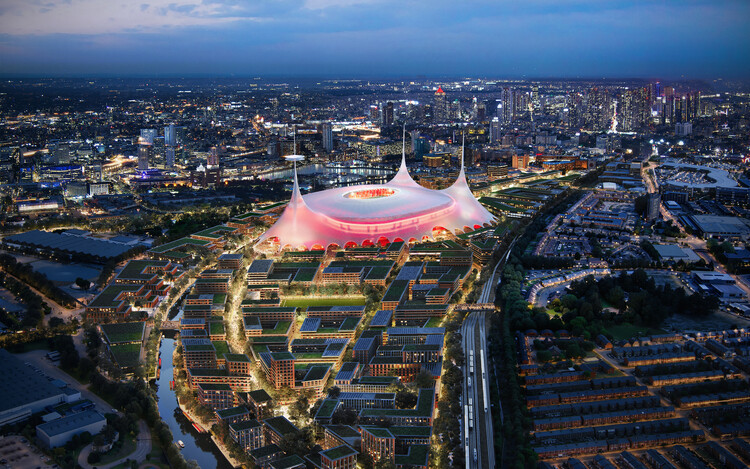
The Municipality of Venice has unveiled plans for a new 18,500-capacity stadium designed by Populous. The stadium will be built in the Bosco dello Sport in Tessera and is intended for football, Serie A rugby, and other events such as concerts. Maffeis Engineering and Populous have been commissioned for the design and engineering work by a consortium composed of Costruzioni Bordignon, Fincantieri Infrastrutture, and Ranzato Impianti, which was awarded the contract in March 2024. Soil Engineering, Seingim, and Gae Engineering are also collaborating on the project.
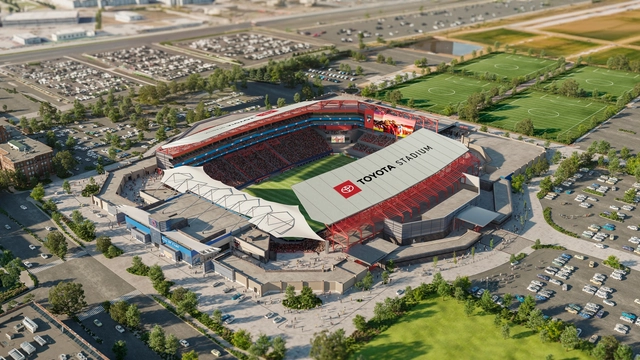
Renovation work has officially commenced at FC Dallas' Toyota Stadium in Frisco, Texas, with architecture firm HKS leading the redesign. Originally opened in 2005 with a seating capacity of approximately 20,000, the stadium is undergoing a phased transformation to improve functionality, expand amenities, and prepare for the 2026 FIFA World Cup, with the intention of hosting one of the teams for training. Construction began on the east side and will progress incrementally, allowing the venue to remain operational for home games throughout the process. Completion is scheduled for 2028.
Aerial render. Image Courtesy of Foster + Partners
In September 2024, Foster + Partners announced its appointment by Manchester United for the development of a master plan for the Old Trafford Stadium District. The centerpiece of the master plan is a new stadium, set to become the largest football venue in the United Kingdom with a capacity of 100,000 seats. This week, the firm unveiled images of the stadium design along with surrounding public spaces, including parks, mixed-use developments, an open-air cinema, and a renovated train station. These images contain the illustrative concepts that will become the basis for more detailed feasibility, consultation, and planning work as the project enters new stages.
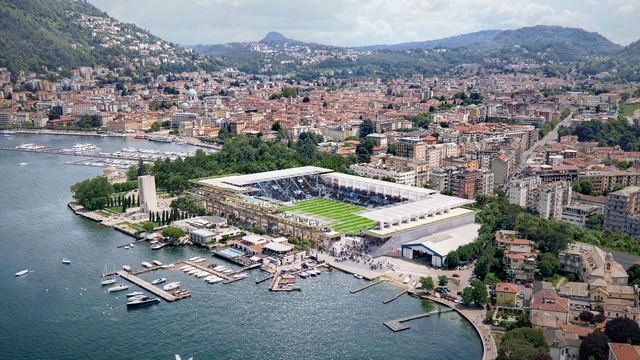
International architectural firm Populous has announced the initial phase of the redevelopment of Stadio Giuseppe Sinigaglia, in collaboration with Como 1907 and the Municipality of Como in Italy. The project aims to modernize the historic stadium while maintaining its role as a central hub for the community. The process begins with the submission of the Document of Feasibility of Project Alternatives (DOCFAP), a key step in evaluating potential design approaches. The approval process is expected to conclude by May 2026, marking the completion of the project's first stage.
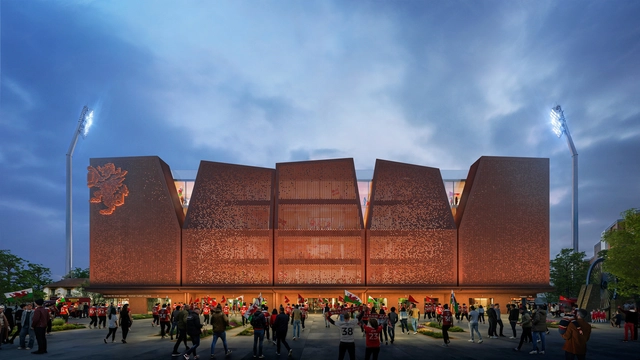
Wrexham Stadium Kop Stand - Facade. Image Courtesy of Populous
The term "Kop," traditionally referring to the summit of a hill or peak, reflects the origins of passionate fan gatherings in football stadiums. In the UK, a "Kop Stand" specifically designates a typically single-tiered stand situated at the goal end of a stadium, renowned for housing the loudest and most dedicated supporters of a football club. Sports and entertainment-focused architecture office Populous has just released the design of the new Kop Stand for Wrexham AFC's stadium. The proposal pays homage to Wrexham's architectural character by incorporating a brick façade pattern that mirrors the city's traditional building styles.
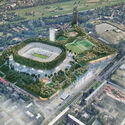
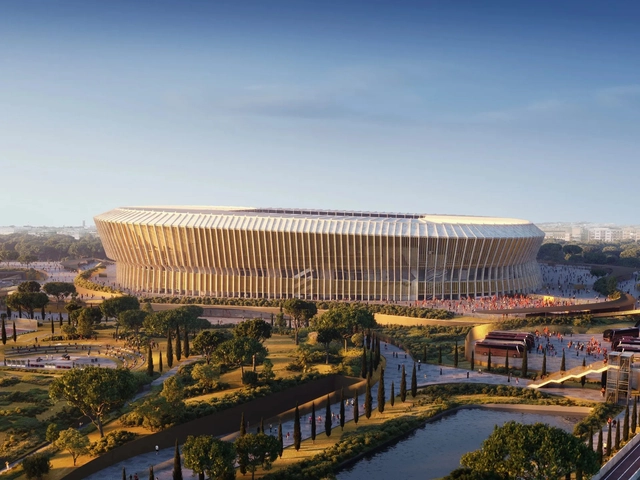
Italian football club A.S. Roma has released images showcasing its project for a new home stadium, designed by sports-focused architecture office Populous. In addition to improving the experience of fans, the design also aims to appeal to the broader community by providing a varied and multifunctional space. The stadium is set to become the permanent home of A.S. Roma, after having shared the Stadio Olimpico with a rival club since 1953.
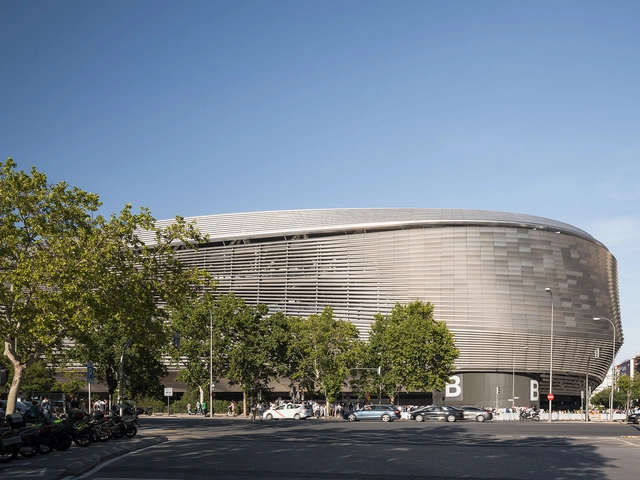
The Santiago Bernabéu Stadium is now recognized as a symbol of Madrid, Spain. Home to the Real Madrid football team, the stadium built in 1947 occupies a key position in the city, adjacent to a major transit artery. The stadium went through several refurbishments since its inauguration, most aimed at increasing the seating capacity. A major modernization process began in 2012, following an international competition. The winning design team is L35 Architects, in collaboration with GMP and Ribas & Ribas. The refurbishment project aimed to redefine the building’s relationship with the surrounding urban spaces, to improve accessibility, and to integrate more activities, from sporting to leisure, commercial, and socio-cultural functions.
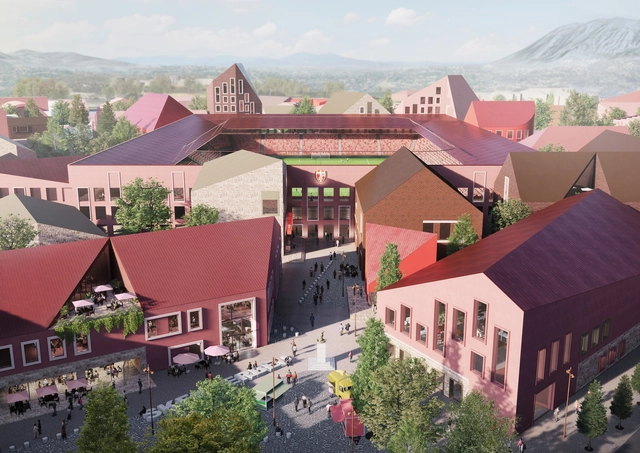
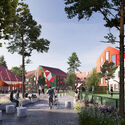
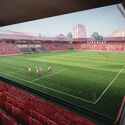
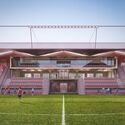
New Skenderbeu Stadium / CEBRA. Image Courtesy of CEBRA
Danish architecture office CEBRA has won an international competition for the design of the new Skenderbeu Stadium in Korça, Albania. The winning proposal sets the 10,000-seat stadium in a lively neighborhood to create an engaging environment for fans, active citizens, businesses, and visitors of the Albanian city. The masterplan proposes buildings and alleys inspired by the Korça typologies to create a familiar cultural experience both in and around the stadium.