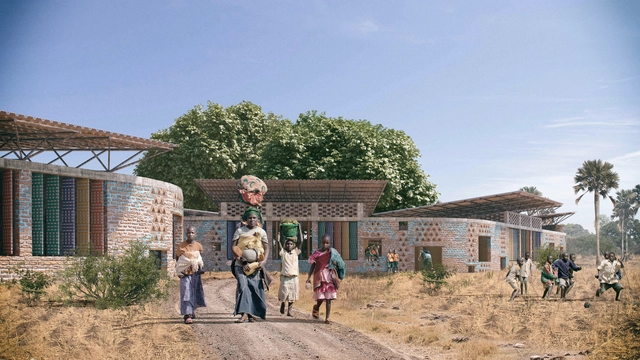
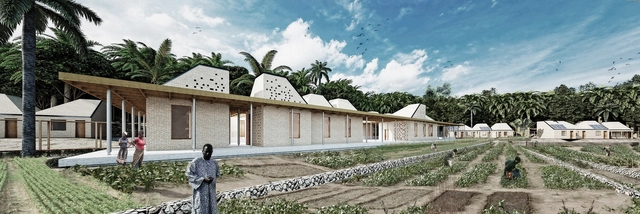
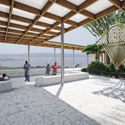
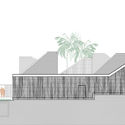
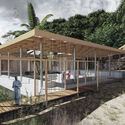
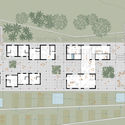
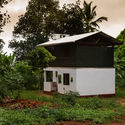
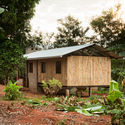
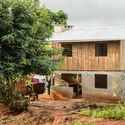
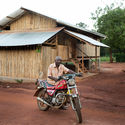
Many children in Africa are forced to bear the brunt of attending schools with poor ventilation that can easily overheat under the African sun. WAYAiR’s proposal for a new school in Ulyankulu tackles the climate issue and provide an “educational village” respecting the local heritage and identity of the town. WAYAiR is a group of like-minded educators that for the last 25 years have developed their unique school program in Poznan, Poland using an art based educational program and now wish to share their expertise worldwide.
Last September, Nigerian Afrobeat musician Wizkid played to a sold-out house at the Royal Albert Hall in London, joining a growing list of illustrious African musicians, such as Selif Kaita, Youssou Ndour, Miriam Makeba and others, that have performed at that prestigious venue. This event affirmed the unfolding cultural renaissance across the continent, but it also signified the rising global influence of African music, movies, fashion, cuisine and the arts.
Sadly, traditional African architecture, especially in Sub-Saharan Africa, has not profited from this renaissance and has instead steadily lost its appeal across the continent. In spite of its towering influence in the pre-colonial era, it has largely failed to develop beyond the crude earthen walls and thatch roof architecture; for this reason it has remained unattractive to homeowners who often associate it with poverty. Consequently, the neglect of indigenous architecture has resulted in the dearth of skilled craftsmen knowledgeable in the art of traditional building, a reality that has further dimmed hopes for a revival of this architectural style.
Hundred-year-old cultures give birth to communities, being transmitted through rhymes of those who are narrating it and interpreting the past through wisdom. One’s accomplishments result from rituals and metamorphosis, bonding the human being to its own roots through dance, history, music, colors, flavors, materials and landscapes. Space and matter relate themselves to the power of rituals, drawing together the lines of an architecture encharged of passing and preserving history.
Are we going to follow a model of unsustainable building and construction similar to what I witnessed in China—or can we develop a uniquely African model of sustainable, and equitable development? I'm optimistic we can.
In this recent TED Talk, Christian Benimana talks about his journey as an architect—growing up in Rwanda, studying in China, and finally returning to Africa to see the beginnings of a building boom very similar to what he witnessed in Shanghai. Given this background, he then explains why he and MASS Design Group founded the African Design Center, a school and innovation center that intends to be a catalyst for positive urban development on the continent.
Recently I spent part of a week in the company of a multidisciplinary group of academics and researchers from Europe, the US, and Africa, at a workshop entitled “The Practice and Politics of DIY Urbanism in Africa.” Jonathan Makuwira, a professor from the Malawi University of Technology, delivered a compelling paper on “Disability and Urbanism in Malawi,” highlighting the many challenges of the continent’s disabled population, using that city as a case study.
The lecture reaffirmed my sentiments on the gross inadequacies of urban public spaces for the disabled. It’s an issue that formed the basis for my 2016 entry for the Richard Rogers Fellowship at the Harvard Graduate School of Design (GSD), where I had proposed to use the fellowship to develop a prescriptive accessible design blueprint for public spaces in the city of Abuja.
Videos
Grand Prix winner: Umkhumbane Museum, South Africa / Choromanski Architects. Image Courtesy of Africa Architecture Awards
The winners of the inaugural Africa Architecture Awards have been announced. Established by St. Gobain with the goal of “stimulating conversations about African architecture as it cements its place in a global continuum,” the event represents the first ever Pan-African awards program of its kind, with more than 300 projects from 32 African nations being considered by a steering panel led by Professor Lesley Lokko, ambassador Phill Mashabane, advisor Zahira Asmal, and architect David Adjaye.
“The Africa Architecture Awards are very critical,” said Adjaye. “Now is the time to promote excellence and best practice on the continent. The Africa Architecture Awards are particularly important because this is the moment that a lot is happening on the continent in terms of development, in terms of the architecture that’s being produced.”
Africa is a diverse continent with different contexts that go beyond the stereotypes imagined and propagated by those who do not know it. These stereotypes also cover the architectural field. African architecture is always remembered for its beautiful vernacular projects or works by Keré, but other languages developed by architects on the continent are almost forgotten.
For this reason, in order to increase the panorama of contemporary architecture built in Africa, we have gathered here a selection of buildings that have been realized in fourteen different countries. Be inspired by the eighteen selected projects below.
With a modular composition inspired by traditional sub-Saharan African building typologies, MASA Studio’s safe lodging proposal for Tanzanian cancer victims has been selected as the winner of the Hostels for Hope competition, which called for solutions to issues of health and safety in regards to the rehabilitation of cancer victims away from home in rural Africa. Organized by Pink Ribbon Red Ribbon, an international foundation combatting women’s cancers, the competition responds to the unfortunate decision that thousands of Tanzanian women have to make every year – to travel great lengths for unaffordable treatment and lodging, or to remain at home unable to fight the disease.
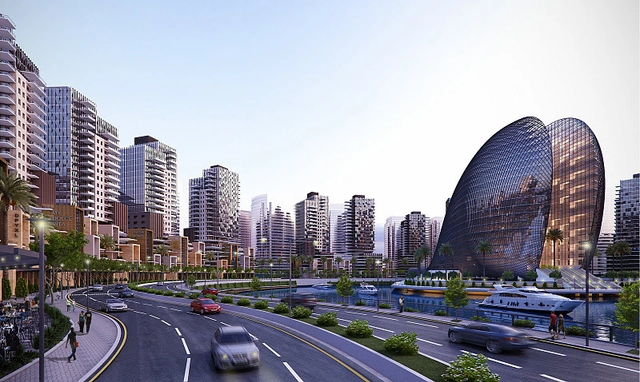
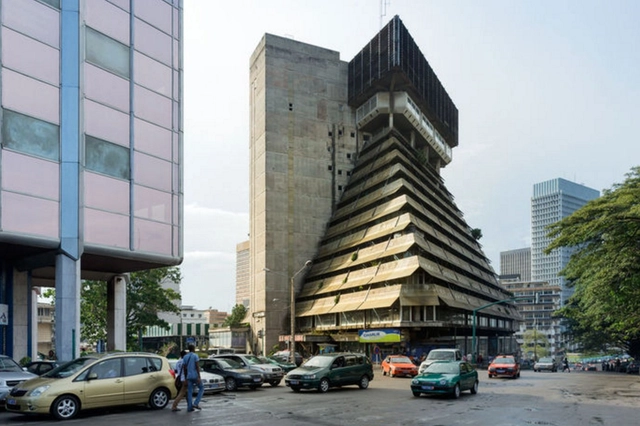
In the last two decades, the African narrative has changed phenomenally. The tired, age-old storyline—largely woven around the stereotypes of poverty, disease, and bloody civil wars—has been replaced with one celebrating the continent’s unprecedented economic growth and relative political stability. This new narrative is also about Africa’s gleaming skyscrapers, massive shopping malls, and ambitious “smart” cities being designed and built from scratch: Ebene Cyber City in Mauritius; Konza Technology City in Kenya; Safari City in Tanzania; Le Cite du Fleuve in DR Congo; Eko Atlantic in Nigeria; Appolonia City in Ghana, and others.
There are currently at least twenty of these new cities under construction in Africa and about twice that number in the works. These developments have permanently altered the continent’s urban outlook, and have offered it something different from the bland pastiche of colonial architecture that it was once known for. As a designer, I was initially excited by the quality of some of the architecture. Though I must admit that these new cities are eerie mimicries of similar developments in China, Singapore and even the UAE, and that they’re largely bereft of any cultural connection to Africa.
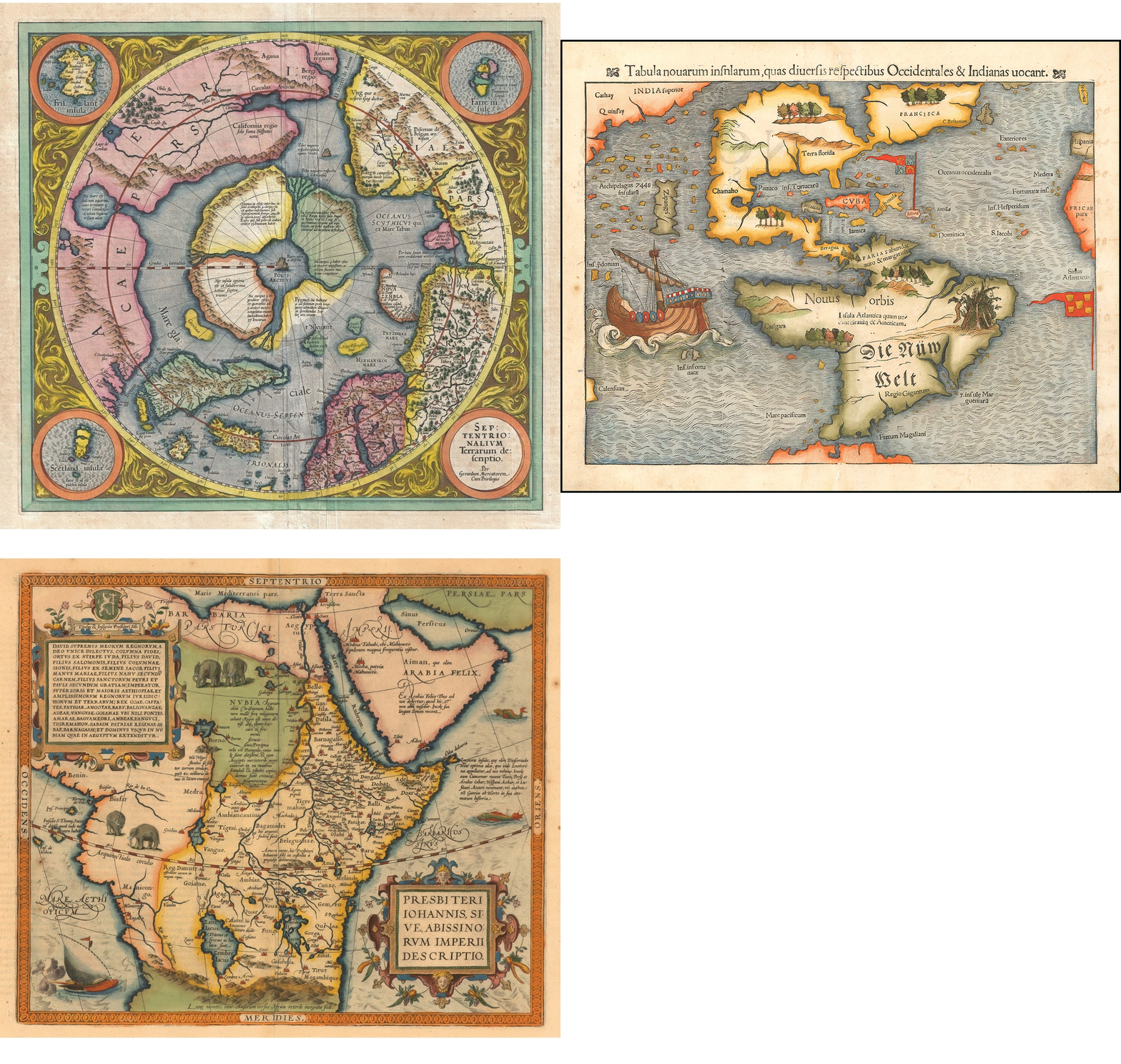
It's difficult to imagine an uncharted world. Today, GPS and satellite maps guide us around cities both familiar and new, while scanning and mapping techniques are gradually drawing the last air of mystery away our planet's remaining unexplored territories. At one time, however, cartography was based on little more than anecdotal evidence and a series of educated guesses. But map-making in the 16th and 17th Centuries was an art nonetheless, even if these examples testify to the fact that just because you're missing important facts, total fabrication may not be the best way forward.
https://www.archdaily.com/870609/these-maps-show-why-its-a-bad-idea-to-make-things-up-munster-ortelius-mercatorAD Editorial Team
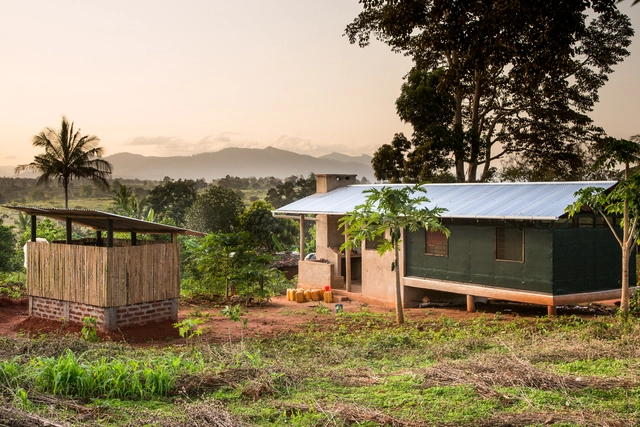
Architecture firm Ingvartsen Architects has turned their gaze towards “cultural exchange architecture”—not with the aim of exploring identity or experimenting with aesthetics, but with a practical purpose in mind: to minimize the spread of diseases. The Magoda Project combines Asian elements with traditional rural African building methods in the village of Magoda, in the Tanga region of Tanzania, taking shape in the form of eight prototype homes. The design goes to show that cultural exchanges in design and architecture can make great contributions towards problem solving for a humanitarian purposes, not only to improve health and hygiene, but also comfort and happiness.
A new exhibition opening later this month at Chicago's Graham Foundation seeks to explore the complex history and legacy of modernist architecture in sub-Saharan Africa during the 1960s and 1970s. Architecture of Independence: African Modernismwill feature nearly eighty buildings in commissioned photographs by Iwan Baan, Alexia Webster, and Manuel Herz. Alongside archival material, the exhibition "imparts a new perspective on the intersection of architecture and nation-building in Ghana, Senegal, Côte d’Ivoire, Kenya, and Zambia and investigates some of the most compelling yet under-studied examples of 1960s and 1970s architecture worldwide."
To submit photos and videos please email localizingcoordinates@gmail.com or SMS / WhatsApp to +1 315 314 2277
The story of the African built environment is often told through historical perspectives of colonization and political crises, emphasizing the difficulties that African people have faced. Economic perspectives such as poverty, development and globalization also create stereotypes of the continent. Often missing from these are the transformations in space that result from daily and repeated use. These transformations emerge from ideas exchanged between people and their movements through their neighborhoods, cities, regions and countries. The quality of spaces that we may find will paint a complex picture of Africa.
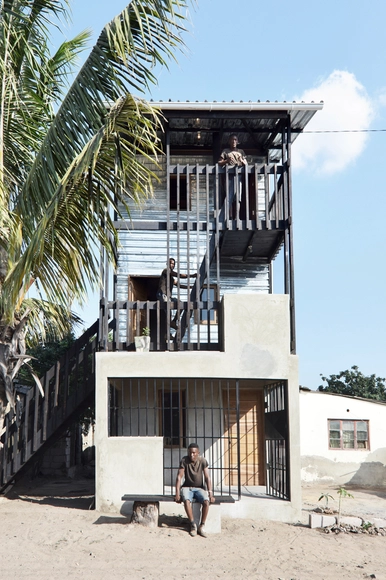
The Department of Human Settlements at the Royal Danish Academy of Fine Arts' School of Architecture, Design, and Conservation has developed a new low-income housing prototype for Maputo, Mozambique in southeast Africa as part of the Casas Melhoradas research project. The prototype reinterprets the area’s traditional “Casa de Madeira e Zinco,” which is made of wood and corrugated iron sheets, and the "Casa de Blocos," which is composed of concrete blocks.
In designing and building multiple successful public buildings in central Africa and around the world, MASS Design Group has employed and guided thousands of local craftsmen, curating the building process to inspire dignity. Now, they wish to help the African people obtain the skills necessary to guide the process themselves. At the United Nations Solutions Summit this Sunday Christian Benimana, a program director for the non-profit design studio, will present plans for what they are calling the “Bauhaus of Africa”: three “African Design Centers” to be built over the next 10 years in strategic locations throughout the continent. The design centers will house an education program tasked with training a new generation of African architects - a workforce certain to be indispensable as Africa enters a period of unprecedented urban growth.
By the year 2025, the urban population in Sub-Saharan Africa is predicated to increase by almost 70% -- a rapid urbanization that will inevitably affect the construction sector.
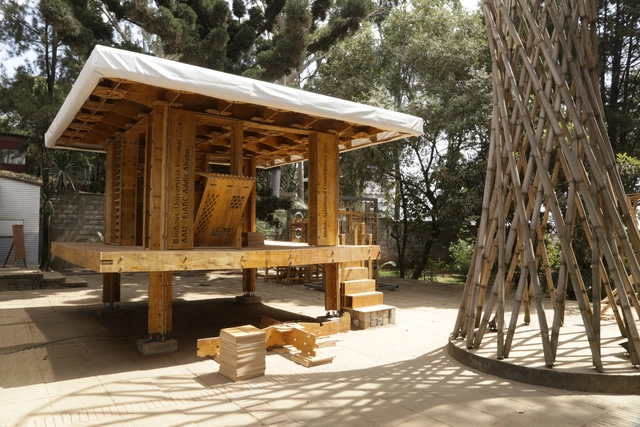
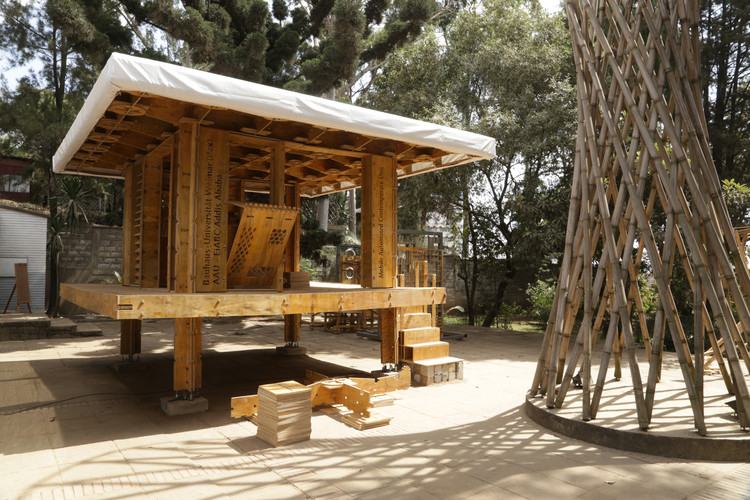
To address this expected growth and to help lay the foundations for a sustainable urban and social development, students from the Institute of Experimental Architecture at Bauhaus-Universität Weimar and EiABC (Ethiopian Institute of Architecture Building Construction and City Development) worked together to build three residential prototypes at a 1:1 scale for Addis Ababa: the capital of Ethiopia and the heart of hyper-urbanization. See all of the project details, below.
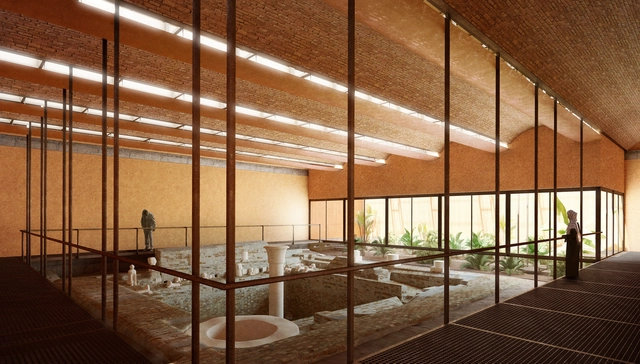
Rendered Interior View. Image Courtesy of Kéré Architecture
Kéré Architecture has placed first in a competition to design a protective shelter on the UNESCO-protected Meroe Royal Baths in Sudan, North Africa. Believed to have served nearby palaces from the great African Kingdom of Kush (now modern-day Sudan), the Meroe Royal Baths were listed as a UNESCO World Heritage Site in 2011 and is the focus of joint research by the German Archaeological Institute and the National Corporation for Antiques and Museums. Still marked by temples, palaces and over two hundred pyramids, the ruins of Meroe are a testimony to the exchanges of culture between the Mediterranean and Africa. Find out more about the proposal after the break.
The exhibition AFRICA is the third and last in the series architecture, culture and identity. It focuses on the area called sub-Saharan Africa – the part of Africa south of the Sahara Desert. Louisiana’s wish to mount this exhibition has its origin in a very simple observation: despite the fact that Africa is the world’s second-largest continent, surprisingly little contemporary culture from there comes our way.