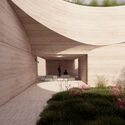
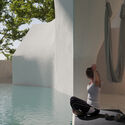
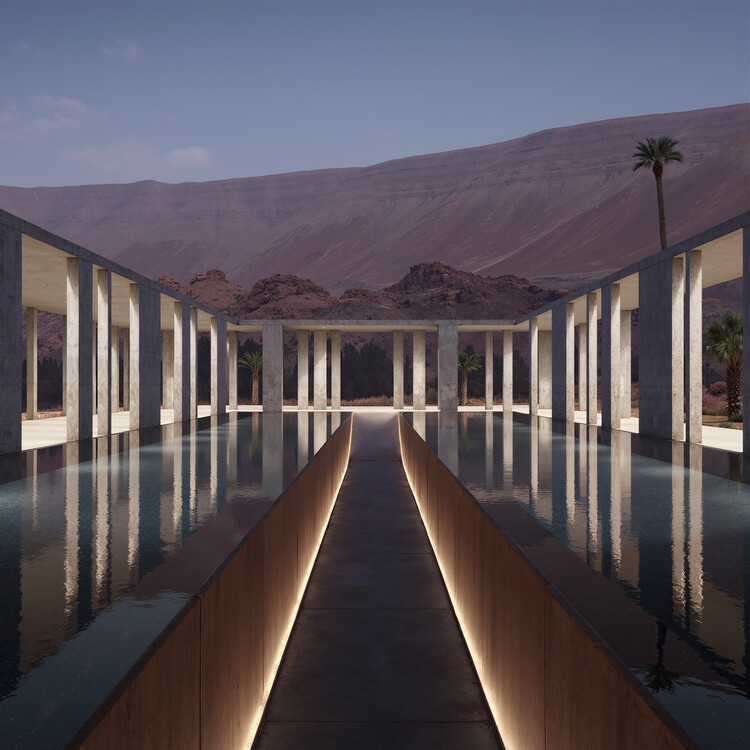
Residential architecture remains one of the most active fields for unbuilt architectural exploration, offering a lens through which architects rethink how domestic space can respond to landscape, climate, and contemporary patterns of living. In this Unbuilt edition, submitted by the ArchDaily community, the selected proposals bring together a range of residential projects that engage with houses, villas, and retreats as sites of withdrawal, mediation, and everyday inhabitation. Rather than treating the home as a fixed or isolated object, these projects approach it as a spatial framework that negotiates exposure, privacy, and connection to place.
Noted architect Thomas Kligerman celebrates the magic of summer, exploring the seaside setting and design of secluded cottages facing the Atlantic along the Rhode Island coast
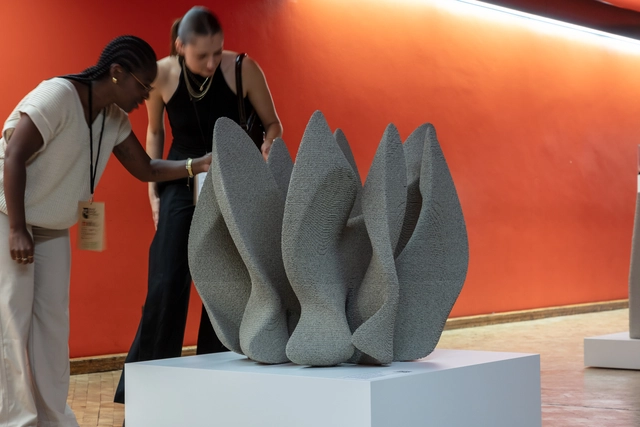
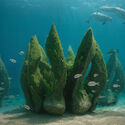
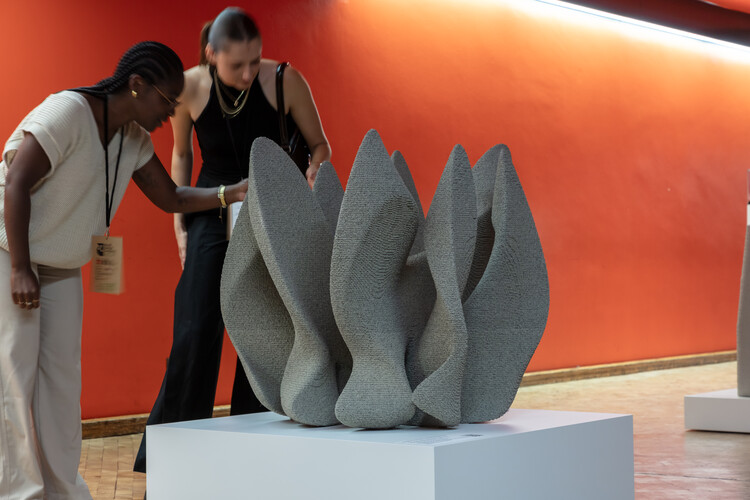
Zaha Hadid Architects' design for a digitally fabricated marine habitat in the North Lantau Marine Park conservation zone in Hong Kong was recently presented at the World Design Congress exhibition in London. The event took place at the Barbican Centre between September 9 and 10, one of the world's most recognized examples of Brutalist architecture. Its theme, "Design for Planet," called on designers and commissioners of design to take on their most critical brief to date: to design a regenerative future in the face of climate change and to examine design's role as a tool for environmental action. In this context, Zaha Hadid Architects presented Nereid, a digitally fabricated habitat developed with advanced 3D printing technologies by D-Shape, aimed at supporting the natural regeneration of marine ecosystems.
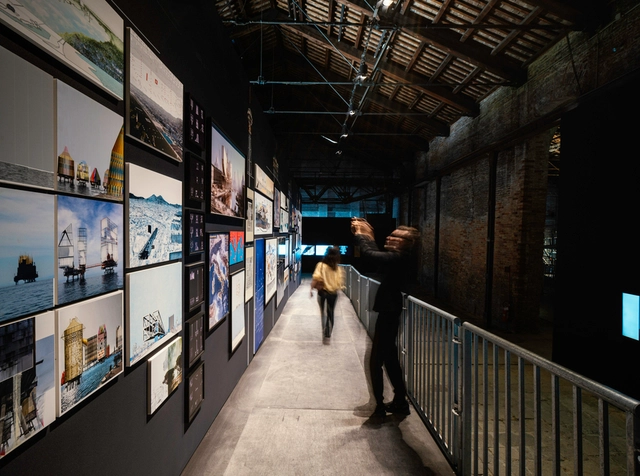
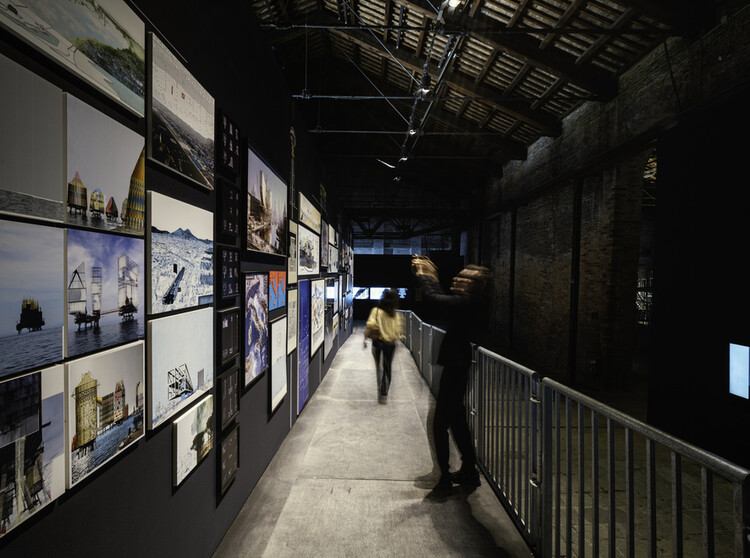
"La Quadreria" interior photo gallery. Italian Pavilion at the 2025 Venice Architecture Biennale. Image Courtesy of PCM Studio di Paola C. Manfredi
The Italian Pavilion at the 19th International Architecture Exhibition – La Biennale di Venezia is situated in the Tese delle Vergini of the Arsenale and is promoted by the Directorate-General for Contemporary Creativity of the Italian Ministry of Culture. This year, the Pavilion hosts architectural, scientific, and cultural reflections on the Mediterranean Sea and its neighboring oceans, in an exhibition titled "Terrae Aquae. Italy and the Intelligence of the Sea", curated by Architect and Professor Guendalina Salimei. The exhibition brings together projects from diverse actors in Italian society through an open call, whose objective was to rethink the boundary between land and water as an integrated system of architecture, infrastructure, and landscape. In response to the Biennale's central theme, the exhibition aims to stimulate the awakening of a collective intelligence capable of triggering a renewal in that relationship, starting from the Italian coast and expanding globally.
While Hong Kong is widely celebrated for its iconic harbor view, glittering skyline, and fast-paced urban lifestyle, its origins tell a different story—one deeply rooted in its relationship with water. Before transforming into a dense, vertical metropolis, Hong Kong's architectural identity was closely tied to its maritime context. Today, the city is often associated with slender, glass-clad towers that symbolize modernity. While visually striking in their pursuit of height and form, many of these buildings appear disconnected from their immediate environment, often overlooking natural site conditions, ecological responsiveness, and contextual sensitivity.
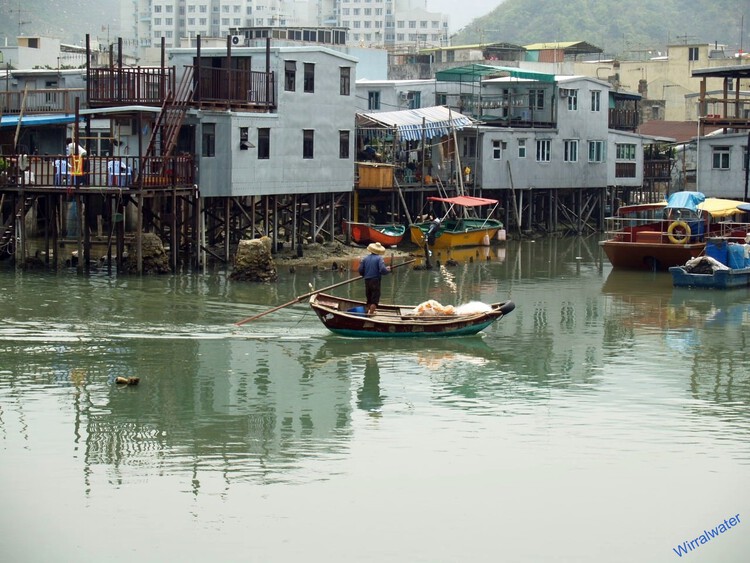
Historically, however, this was not the case. Hong Kong's earliest built environments—rural fishing villages in areas like Tai O, Aberdeen, and Shau Kei Wan—emerged through organic, community-driven spatial practices that engaged closely with their surroundings. These coastal and riverside settlements developed architectural systems tailored to the marine environment and to the rhythms of fishing life. Villages were sited around water, and construction strategies were adapted to fluctuating tides, terrain, and social use.
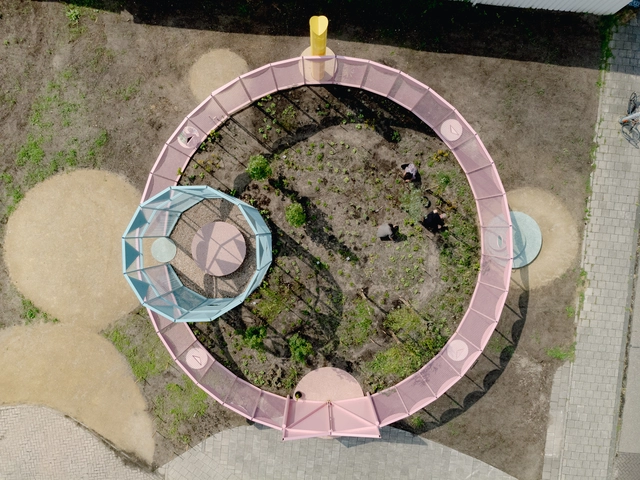
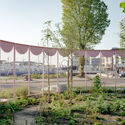
NDSM Lusthof / Studio Ossidiana. Image Courtesy of Studio Ossidiana, Riccardo de Vecchi
As climate instability reshapes design priorities, architecture is increasingly drawn into ecological debates not as a spectator but as a participant. Among the concepts gaining traction is rewilding, a practice rooted in the restoration of self-sustaining ecosystems through the reintroduction of biodiversity, the removal of barriers, and the rebalancing of human presence in the landscape. Though often associated with conservation biology, rewilding also opens up new spatial and architectural imaginaries — ones that challenge conventional notions of permanence, authorship, and use.
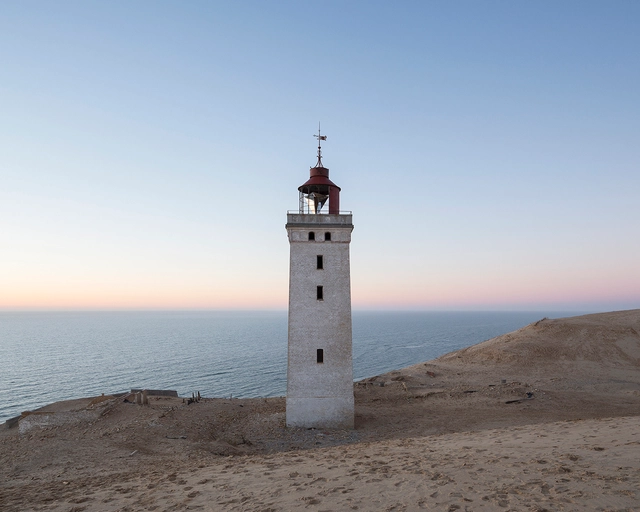
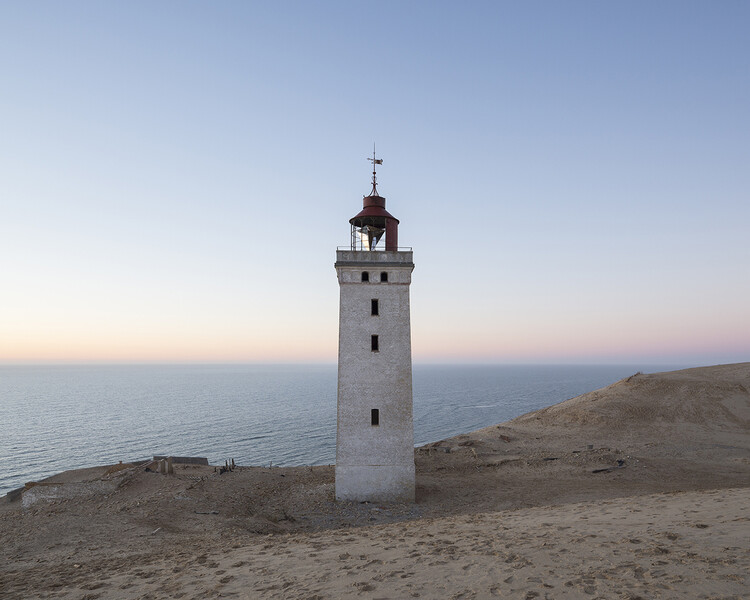
Lighthouses have stood along the margins of continents and islands for centuries as points of light in vast maritime territories. Rising in solitude from rocky cliffs, reefs, and headlands, these towers were tools for navigation and instruments of spatial clarity, shaping coastlines and marking the boundary between land and sea. Built to guide, warn, and locate, they constituted a global network of visibility long before the advent of digital mapping. Yet as maritime technologies evolved, many of these structures lost their original purpose. The typology, once essential, now stands at the edge of obsolescence. What remains is not merely an architectural relic, but a powerful spatial form — resilient, symbolic, and increasingly open to reinterpretation.
In this short video interview from the Louisiana Channel, Marc-Christoph Wagner interviews architect David Chipperfield in Galicia in April 2024, exploring his connection to the sea. The 2023 Pritzker Prize laureate speaks of his experience living for 30 years in a fishing village in Spain, delving into his connection to the place and the people's attitude towards the strength of the natural elements surrounding them.
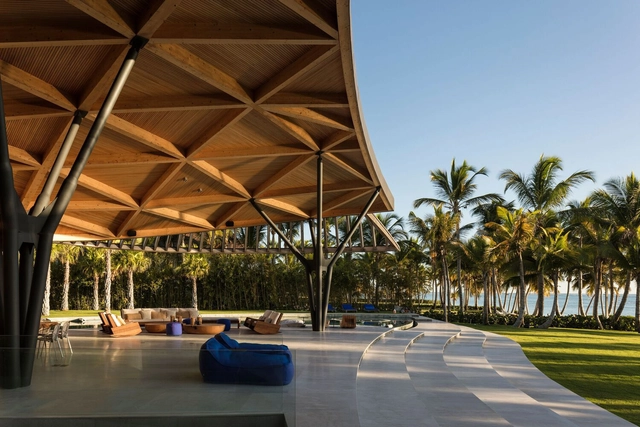
Beach houses along the Caribbean coast perfectly blend comfort, nature, and tranquility. With landscapes of white sands and crystal-clear waters, the Caribbean is home to some of the world’s most enchanting seaside retreats. Whether situated on popular islands like the Dominican Republic and Cozumel in Mexico or secluded spots like the untouched beaches of Costa Rica, these homes are designed to fully immerse guests in the lush natural surroundings, providing a uniquely serene experience.
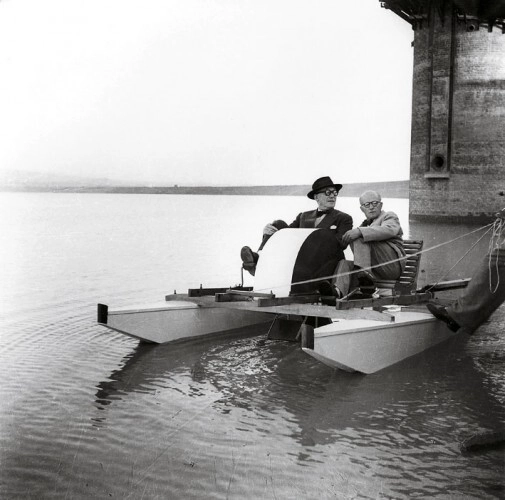
The relationship between architecture and naval design has been a fascinating interplay of form and function that has evolved significantly. Both disciplines have a shared history of innovation, aesthetics, and functionality that have informed and inspired each other. This "love affair" has seen architects drawing inspiration from boats, particularly in the modernist era when ships' streamlined, efficient designs influenced the aesthetic of buildings. Conversely, architectural principles have also been adapted to enhance the functionality and form of boats, demonstrating a reciprocal exchange that continues to shape both disciplines.
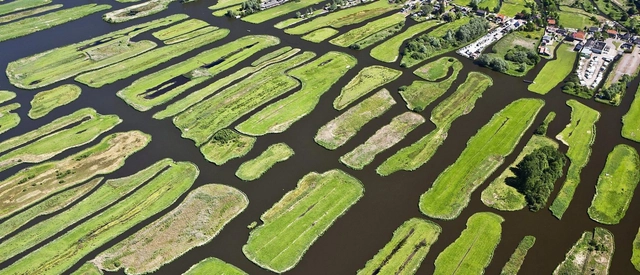
In April 1782, just six years after the Declaration of Independence was signed, John Adams arrived in Amsterdam as the first U.S. Ambassador to The Netherlands. Three months later, a consortium of Dutch bankers provided a 5 million guilder loan (equivalent to $150 billion today) to the new republic, a clear sign of my country’s confidence in the U.S. While I can’t provide a loan, as a Dutch water engineer I can offer something else to Americans: my country’s five centuries of experience living, working, and thriving below sea level. This is surely knowledge and knowhow that the U.S. will desperately need as water levels continue to rise and countless coastal communities are threatened.
https://www.archdaily.com/977124/sea-level-rise-could-the-netherlands-polder-system-work-in-theJan H. de Jager
Lantern- WERK, Snøhetta and Oluf Jørgensen A / S. Image Courtesy of MIR
WERK and Snøhetta have been selected as the winners of the maritime center competition on the harbor of Esbjerg, in Denmark. The proposal puts in place a glowing building entitled Lanternen or the Lantern, a new addition that will gather communal activities.
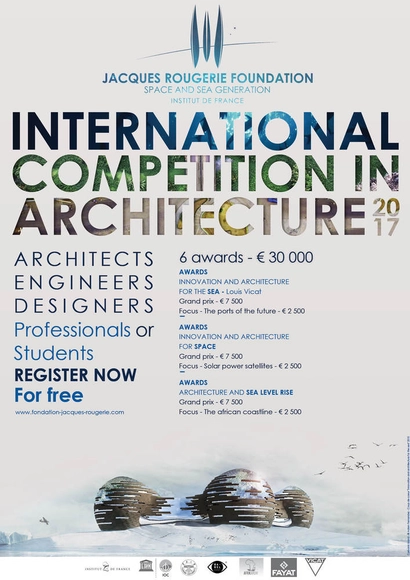
Established in 2011, the competition aims to foster the creativity of young architects by challenging them to complete “innovative, audacious and promising projects” that imagine new methods of sustainable development within the realms of sea and space.
Architectural submissions were awarded this year within three categories: Innovation and Architecture for the Sea, Innovation and Architecture for Space, and Architecture and Sea Level Rise. Within these categories, projects were selected in three disciplines: the overall Grand Prix, the “Focus” theme award, and the Coup de Coeur.
Call for action: International competition in architecture 2017
The architect, the engineer, the designer, all of them participate to the development and the construction of an upcoming world at their own level. Together, by looking further, beyond preconceived ideas and well-established concepts, these entrepreneurs, these creators, have the power to make up new rules, propose new directions: innovative facilities and housing bringing new living conditions, making room for new ways of moving, of consuming energy, to counter major environmental challenges of our era and others to come. The prizes of the Jacques Rougerie Foundation support and accompany this approach.
Innovation, architectural disruption, sustainable development and resilience against climate changes are the keywords of this 7th edition of the international competition in architecture of the Jacques Rougerie Foundation – Institut de France.
Architects, designers, engineers, artists, urban planners are given a unique opportunity to win one of the three prizes of the Jacques Rougerie Foundation - Institut de France by creating innovative and ambitious projects. These architectural projects based on emerging developments and a prospective vision should address some core issues of mankind: greater environmental, industrial and technical responsibilities, while taking sustainable development principles into account.
UPDATE: The submission deadline has been changed to February 7th, 2016.
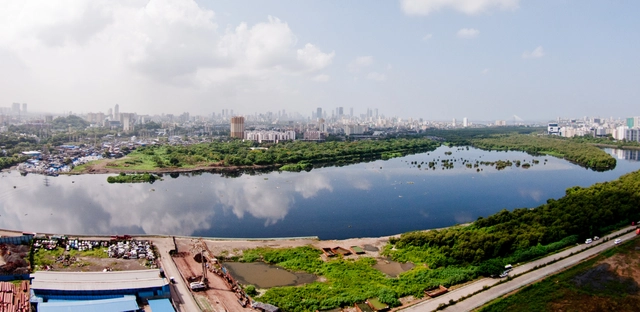
The Mumbai Metropolitan Region Development Authority (MMRDA) is looking for multi-disciplinary design teams that are capable of designing and delivering a technically demanding and environmentally sensitive makeover in the heart of India’s Financial Capital, Mumbai. There are no competition fees to be paid and all submissions will be exclusively done through the competition portal. Five shortlisted entries from the first stage will each receive Rs. 5,00,000 and the eventual winner will receive Rs. 50,00,000 as part of a contract.
A-lab of Oslo, Norway and SEA of Copenhagen, Denmark) have collaborated for the winning design proposal in a competition for a new urban development on Skien Brygge, Norway. The former harbor area, which occupies four hectare, is the site of a new urban community. The site is defined by the water’s edge on the west and a steeply rising landscape on the east.