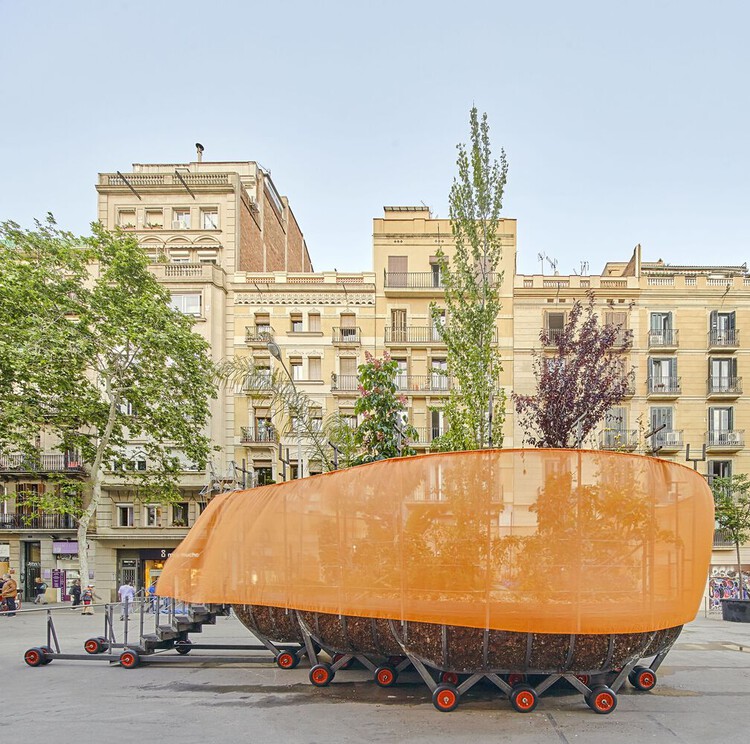
Architects are trained to choose materials, compare their properties, and decide how they should be used. Some practices are taking on a different task: developing the material itself.
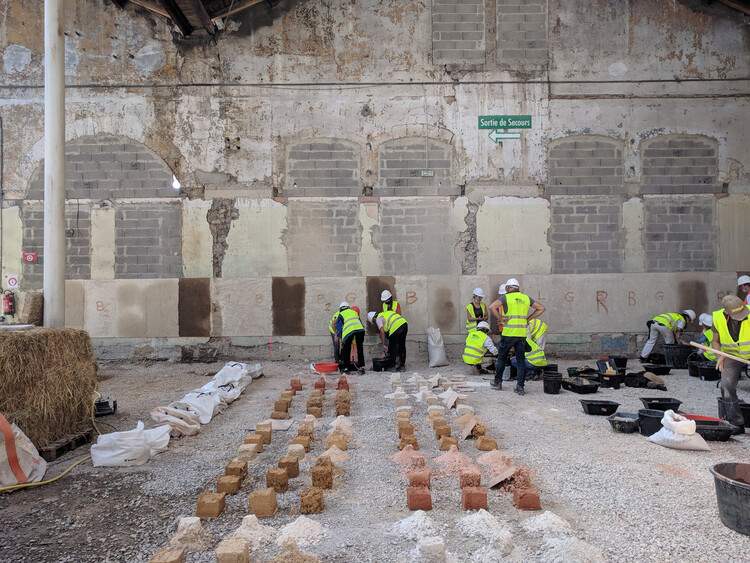
For Material Cultures, BC architects, and Studio Ossidiana, this can begin with hemp grown for construction, earth excavated from building sites, or mixtures of concrete, pigment, stone, and shells. Their work connects material research with processing, fabrication, and construction.
Architectural prototypes are often used to test decisions before construction begins. But in some practices, prototyping begins while those decisions are still taking shape. Moving an idea from drawing into matter introduces questions that depend on making itself: how a material can be cut or joined, how much a piece weighs, how an assembly comes together, whether parts can be reused, or even what form the project should take.
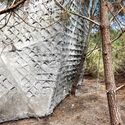
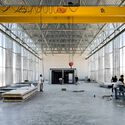
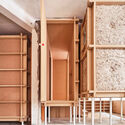
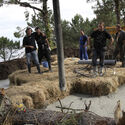
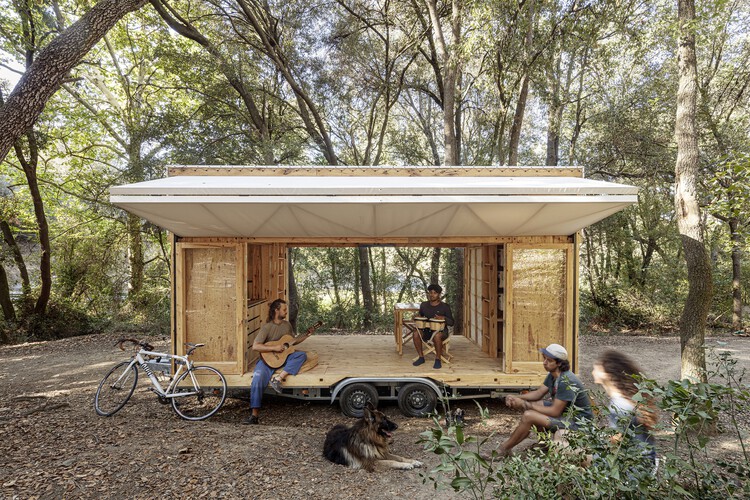
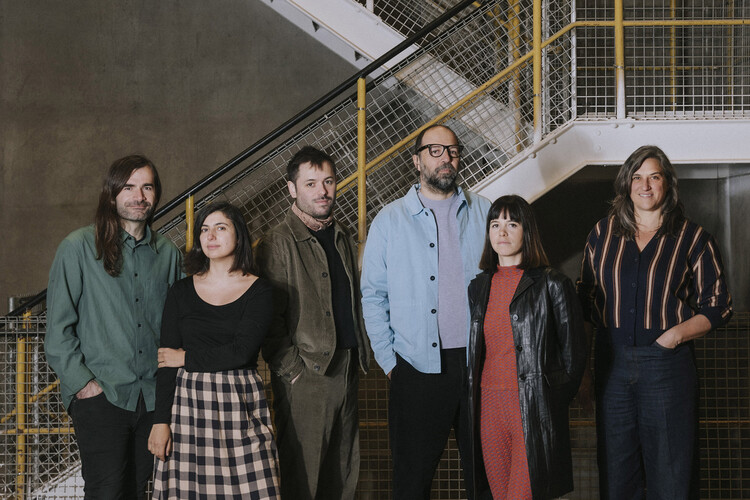
TAKK, salazarsequeromedina, and Ensamble Studio each make physical experimentation part of their design process, but they ask different things of it. For TAKK, prototypes help test how materials and components come together as a construction system. For salazarsequeromedina, models and built systems remain open to dismantling, recombination, and later uses. Ensamble Studio uses physical experiments to generate geometry and construction knowledge that can move into engineering and full-scale building. What distinguishes these approaches is not simply that they prototype, but what each practice expects to learn through the prototype.
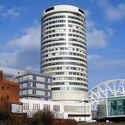
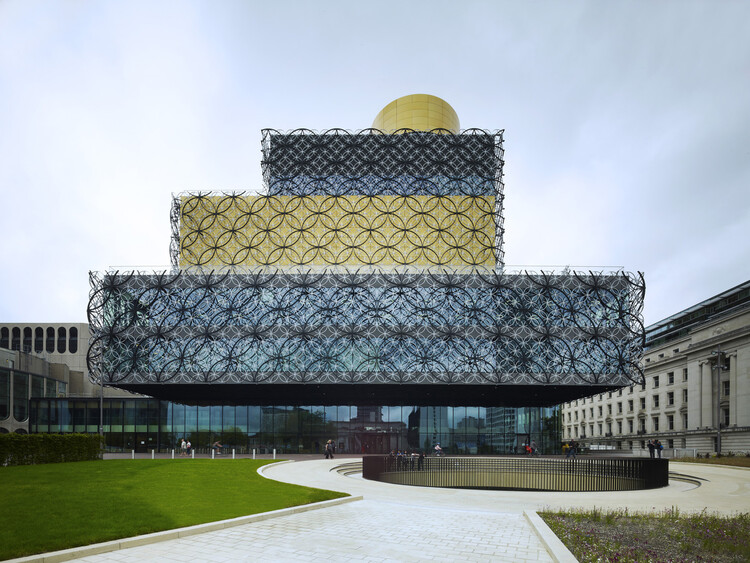
The architecture of Birmingham reflects the city's history as one of the first industrial centers of England. The wealth generated in the city and the surrounding region led to the grandeur of the Victorian era in the nineteenth century. Heavy bombardment during the Second World War caused widespread destruction. This was followed by rapid reconstruction in the 1950s-70s, introducing rational modernism and brutalist ambition, which characterizes large parts of the city center today. A few decades later, erasure returned to Birmingham, with reconsideration of some of the decisions of the mid-twentieth century. Famously, the Bullring Centre and the Birmingham Library were torn down to make way for twenty-first-century redevelopments, adding new layers of richness to the city's built environment.
In a slim volume with a yellow-edged cover, recently published by the Porto-based imprint Circo de Ideias, the architect Paulo Martins Barata (a founding partner of Promontório) makes a deceptively bold claim that the architecture produced in Europe since the Great Recession belongs to neither of the two camps that structured the twentieth century's fiercest disciplinary debate.
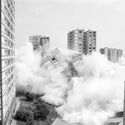
The Language of Metamodern Architecture borrows its title, with evident irony, from Charles Jencks' 1977 The Language of Post-Modern Architecture, the book that famously declared modern architecture dead at 3:32 pm on July 15, 1972, with the demolition of Pruitt-Igoe. His wager is that another death, never officially certified, occurred somewhere around 2008, and that architecture has been living, mostly unaware, in what grew up around the grave.
Few conditions have shaped contemporary architectural discourse as profoundly as uncertainty. Across international biennials, exhibitions, and forums, architecture increasingly imagines its relationship to the world through flexibility, reversibility, and responsiveness—qualities intended to engage with climate emergencies, political instability, and unprecedented human mobility. Buildings are designed to transform, infrastructures to evolve, and cities to accommodate conditions that appear increasingly unpredictable. This emphasis on agility has expanded the discipline's capacity to engage with environmental change, offering valuable strategies for a world in constant transformation.
Yet this evolution points to a deeper shift in how architecture mediates the human condition. Architecture has long functioned as a mechanism for existential orientation—a way for human consciousness to carve an intelligible coordinate out of an indifferent cosmos, anchoring memory and identity to a fixed point. Within much contemporary architectural discourse, uncertainty increasingly appears less as an external condition to be mitigated than as the horizon from which architectural thinking begins. Spatial experience is increasingly shaped by environments designed around the persistence of flux, where static reference points give way to conditions of continuous transformation.
Illustration in turquoise tones featuring a grid inspired by ceramic tiles, the title "Tile of Spain Awards", the categories "Architecture" and "Interior Design", and the website tileofspainawards.com.
Showcase your project at the 25th Tile of Spain Awards
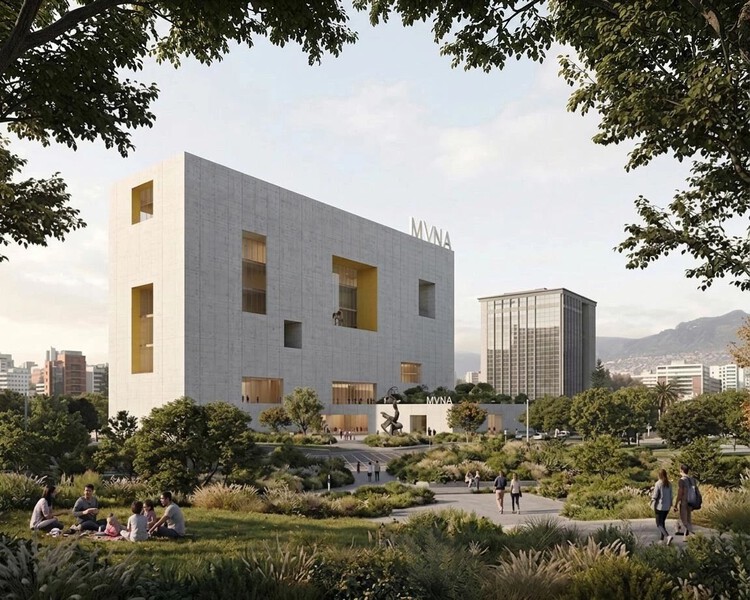
National Museum of Ecuador Proposal (MuNA). Image Courtesy of Studio Campo Baeza
The announcement of the winning proposal for Ecuador's new National Museum (MuNA) sparked one of the country's most significant architectural debates in recent years. The public response has since reshaped the competition itself while also raising broader questions about how a national museum gives architectural form to an interpretation of a nation. While the discussion began with a single design, it exposed a challenge that extends far beyond Ecuador.
National museums are not simply asked to represent a nation. They are asked to give it architectural form. Yet identity cannot be built directly. Before it becomes architecture, it must first be interpreted and translated through architectural decisions.
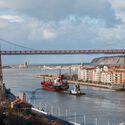
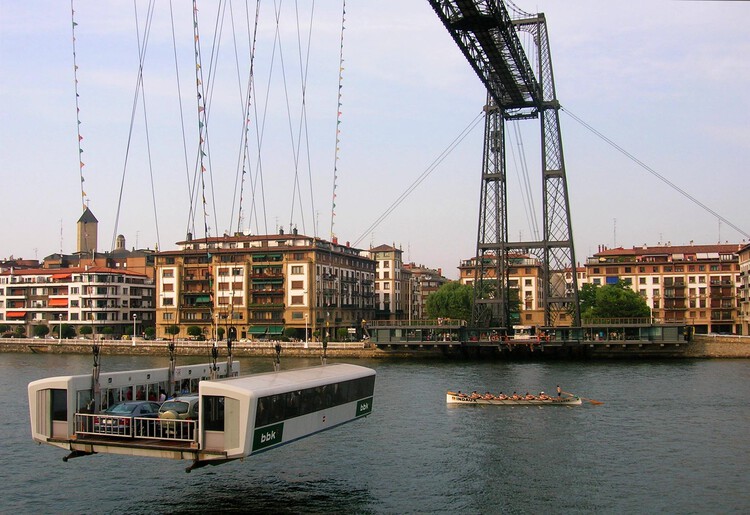
A trainera under the transporter Bizkaia Bridge. Image via Wikipedia user: Javier Mediavilla Ezquibela Licensed under CC BY-SA 3.0
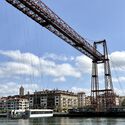
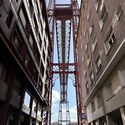
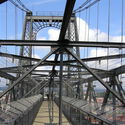
What role do transportation infrastructures play in shaping the culture and economy of societies? How do they bridge cultural, ideological, and geographic divides while transforming the lives of the communities they serve? One of the most remarkable iron structures of the European Industrial Revolution stands west of Bilbao, spanning the Nervión River at the mouth of the Ibaizabal Estuary. It is the Bizkaia Bridge, which combines nineteenth-century ironworking traditions with the innovative use of lightweight alternating-twist steel cables. Recognized as the world's first transporter bridge, it became a model for similar structures built throughout Europe, Africa, and the Americas.
Constructed to connect the opposite banks of the Nervión estuary, it was the first bridge in the world to allow ships, passengers, and vehicles to cross simultaneously by means of a suspended gondola. This innovative system improved communication between two small seaside resort towns while allowing uninterrupted navigation through one of Europe's busiest inland ports.
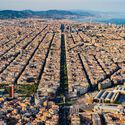
Barcelona has just become the first city in the history of the UIA World Congress of Architects to host the event twice. Thirty years separate the two editions, and the distance between them says as much about architecture's changing self-understanding as anything spoken from a stage. In 1996, the congress placed the city at the center of the debate, consolidating a post-Olympic urban model that would go on to be studied and contested for decades.
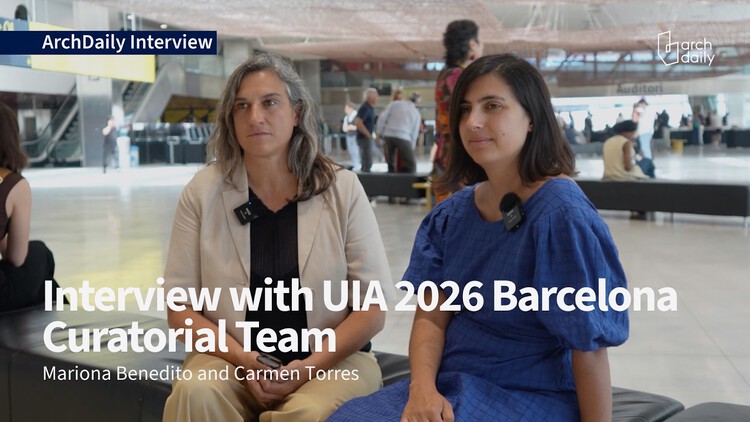
As Barcelona hosts the UIA World Congress of Architects for the second time in its history, thirty years after the 1996 edition, the city becomes a site for reflecting not only on architecture but also on the changing conditions under which it operates. Titled Becoming. Architectures for a Planet in Transition, and developed by the six-member curatorial team of Pau Bajet, Maria Giramé, Mariona Benedito, Tomeu Ramis, Pau Sarquella, and Carmen Torres, the 2026 Congress expands the discussion beyond the city toward planetary questions, addressing architecture through ecological, social, political, and material systems rather than as an isolated discipline. During the opening day of the Congress, ArchDaily spoke with Mariona Benedito and Carmen Torres, two members of the curatorial team, about how this edition revisits Barcelona's architectural legacy, why uncertainty has become central to architectural thinking, and what they hope participants will take away from the event.
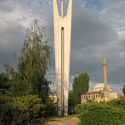
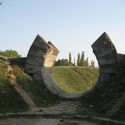
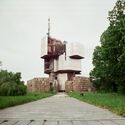
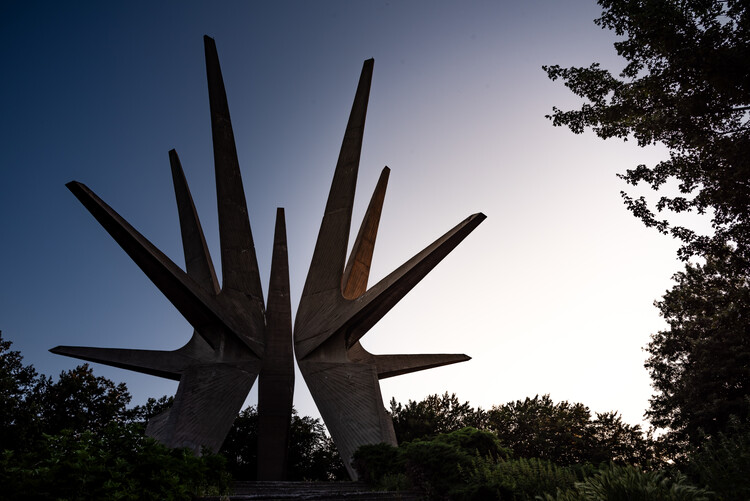
A monument is usually the most conservative building a state will commission. It is expected to stabilize memory, to make history legible, and to give public form to a shared narrative. Eastern Europe's twentieth century produced an entire body of work from the Baltic to the Balkans that resisted precisely those expectations, challenging the conventional relationship between monument, memory, and representation. Commonly grouped under the name spomeniks, these architectural exercises are perhaps the best-known examples of a much broader landscape of memorial architecture that emerged across the region. These were societies emerging from occupation, civil conflict, or revolution, and none of them possessed a single symbolic language capable of accommodating the complexity of their histories. Rather than searching for new heroes or new icons, many architects and artists turned to space itself as the medium through which remembrance could be constructed.
These monuments occupy an unusual position between sculpture and architecture. At one scale, they read as deliberate abstract compositions arranged with the clarity of a drawing by Kandinsky. At another, they seem less resolved, as if testing the limits of a spatial language still in formation. Their forms often appear caught between certainty and experimentation, the same monument readable as a controlled geometric object and as an open-ended search for how collective memory might inhabit space. But these readings coexist and give many of these works their enduring ambiguity.
Barcelona is the first city in the history of the UIA World Congress of Architects to host the event twice. The 1996 edition, Present and Futures: Architecture in Cities, arrived at a charged moment, when the post-Olympic city was consolidating an urban model that would become one of the most studied and contested in contemporary urbanism, and when architecture was learning to think through the large metropolis as its primary site of inquiry. Thirty years later, the same city reopens the question under a different condition: one in which the built environment can no longer be understood as a self-contained object, but only through the wider ecological, material, and political systems that sustain it. The theme of the 2026 Congress — Becoming. Architectures for a Planet in Transition — does not abandon the urban concerns of 1996; it reopens them from a planetary scale.
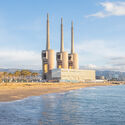
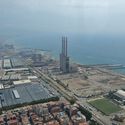
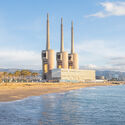
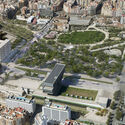
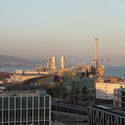
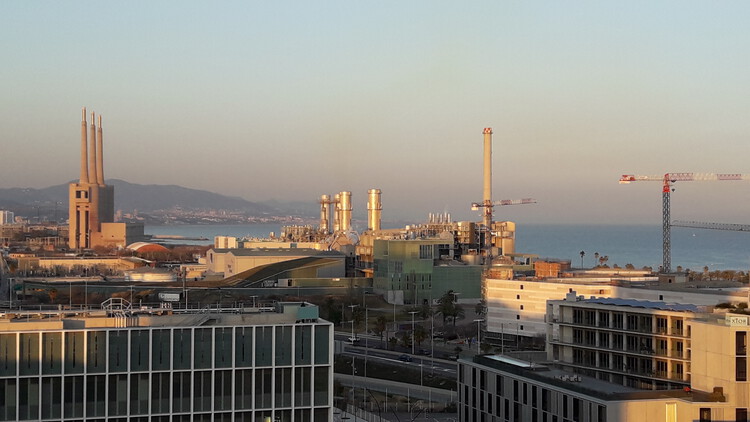
The curatorial team behind this edition, formed by Pau Bajet, Maria Giramé, Mariona Benedito, Tomeu Ramis, Pau Sarquella, and Carmen Torres, approaches architecture as a critical and transformative tool rooted in territory, working across practice, research, and teaching. Their program structures the Congress around six interconnected thematic lines (Becoming More-than-human, Becoming Circular, Becoming Embodied, Becoming Interdependent, Becoming Hyper-Conscious, and Becoming Attuned) and distributes it across three venues of very different characters — Les Tres Xemeneies del Besòs, the Disseny Hub at Glòries, and the CCIB — each chosen for what it represents as much as for what it can hold.
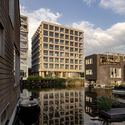
With forty-eight psychogeriatric beds and sixty-eight wheelchair-accessible apartments, accommodation for informal caregivers, and space for bedside care, the De Keyzer building opened in Amsterdam in 2011. Its program had been conceived entirely for elderly people requiring assistance, but shortly after completion, the building was sold to an investment fund, and the apartments began to be rented to young families with children.
For the project's architects, Tom Frantzen and Karel van Eijken, the episode could have been interpreted as a failure of prediction. Instead, it became a confirmation. "It showed, very clearly, that buildings can end up being used in completely different ways than originally intended," Frantzen recalls. The transformation was only possible because the apartments were generous and because the structure allowed for uses more diverse than those anticipated in the original program. Had the building been designed solely for its initial function, the change of use would likely have required a destructive renovation or, in the extreme, demolition.
Every three years, the International Union of Architects' (UIA) World Congress lands in a different city, under a different theme set years in advance. A quick mapping of these host cities reveals a deliberate pattern: throughout the decades, the UIA has purposefully chosen a wide range of venues across all continents, rendering each edition a snapshot of what mattered in that specific place, at that exact moment. The result of this geographic rotation has been a diverse kaleidoscope of conversations, analyzing the profession from countless angles and adapting it to changing times. But 2026 is different; this time the UIA is repeating a host city for the first time: Barcelona, under the theme "Becoming. Architectures for a planet in transition".
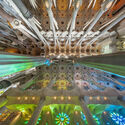
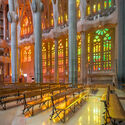
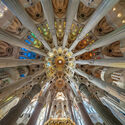
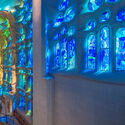
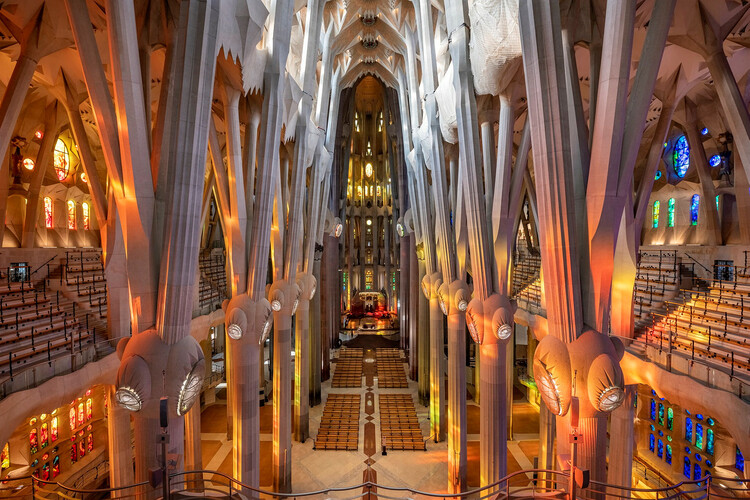
It is afternoon in the summer, and the nave of the Sagrada Família is saturated with warm colors. Shafts of amber and crimson sweep across the stone floor, shift as a cloud passes over Barcelona, then deepen again. Around you, visitors slow without quite realizing it. Some raise their phones — not to capture the architecture, but to step into the light itself, positioning themselves in a pool of orange or gold as if the colours were something you could wear.
They are, without knowing it, doing exactly what Gaudí intended: surrendering, however briefly, to the sensation of being bathed in something larger than themselves.
What architecture leaves in the ground outlasts what it puts in the air. A demolished building disappears from the skyline in a matter of days, but its foundations remain embedded in the soil for generations. The contamination caused by an industrial complex does not clear when the complex is torn down. The legal boundaries inscribed across colonial territory do not dissolve when the colonial administration ends. The ground holds what architecture quickly forgets.
This is what makes soil so uncomfortable as a subject. The discipline tends to orient itself upward, toward the form, the façade, the spatial experience of inhabitation. The ground is where architecture begins and, in a certain sense, where it ends: the point at which building becomes geology, legal title becomes territorial claim, and construction becomes extraction. Treating soil as a medium rather than a datum means acknowledging that the acts of building carry consequences that run deeper than the visible object above grade.