
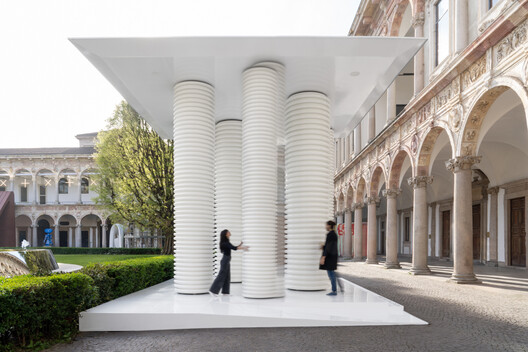
This past year marked a period of introspection for architecture. As 2025 unfolded, the discipline, confronted with evolving environmental and social realities, entered a broader turning point in how it understands its role and how users engage with it. Throughout the year, exhibitions shifted focus away from buildings as isolated objects toward a broader understanding of relationships between ecology, equity, everyday life, and collective imaginaries. Across institutions and cities, they operated less as showcases and more as discursive platforms: places where architecture was not only presented, but also imagined, questioned, and collectively redefined.
While exhibitions have long functioned as sites of discourse, politics, and community, this role became more explicit in 2025. As Carlo Ratti noted in an ArchDaily interview during the pre-opening of the Venice Architecture Biennale 2025, exhibitions today can "hybridize the way that people come together," an ambition that echoed across cities and institutions as exhibitions evolved into spaces for debate, experimentation, and collective reflection. Exhibitions are places where architects and designers meet, where conversations unfold openly with the public, and where ideas emerge through spontaneous exchanges among passersby. Exhibitions became spaces where architectural discourse extended beyond professional circles, opening conversations to broader publics through everyday encounters, shared experiences, and informal exchanges.

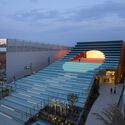
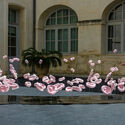
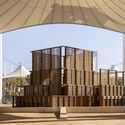
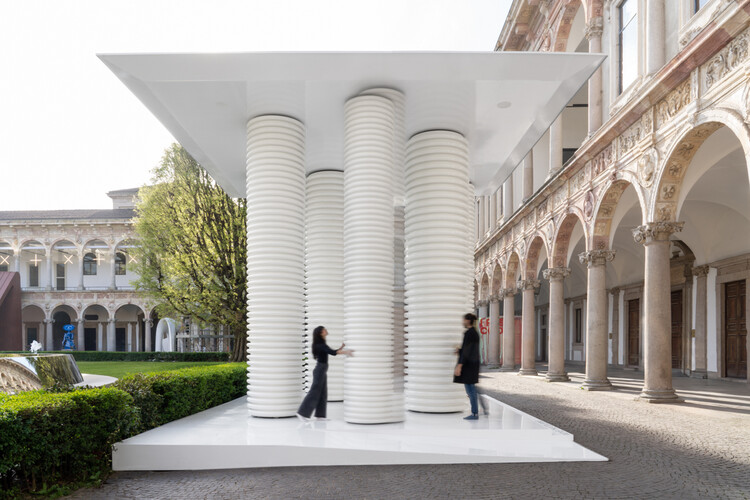
More than temporary displays, exhibitions have increasingly operated as interfaces between architecture and society. They translate complex spatial, environmental, and political questions into experiences that can be accessed, questioned, and discussed beyond disciplinary boundaries. By occupying museums, streets, pavilions, and public spaces, exhibitions amplify architectural thinking, reaching wider audiences and turning design into a shared cultural conversation rather than a closed professional debate.
Related Article
The Architecture Agenda: Inside the Key Events of 2026Throughout the year, exhibitions adopted a wide range of approaches, expanding not only in themes but also in formats, scales, and modes of engagement. Topics ranged from planetary ecologies and energy futures to everyday domestic rituals, urban repair, cultural memory, and public participation. Some exhibitions operated as research platforms, others as spatial experiments or civic invitations, while many combined archival material, installations, performances, and public programs. This diversity reflected a growing understanding of exhibitions not as fixed formats, but as adaptable tools for addressing different questions within the discipline. By embracing this duality, exhibitions contributed to expanding their own disciplinary role. Rather than replicating standard models, many events tested new strategies, choosing dialogues over authorship and experiences over representation. In doing so, exhibitions did not simply mirror architectural debates; they actively shaped how architecture is communicated, discussed, and understood by wider audiences, reinforcing exhibitions as critical infrastructures for the discipline's evolution.
Below is a curated reading of the themes explored through architectural exhibitions in 2025. Rather than isolated moments, these events collectively reveal recurring concerns shaping contemporary architectural discourse, from ecological and climatic conditions to situated knowledge, civic engagement, and public participation. Taken together, they offer a lens through which to understand how exhibitions have become key sites for architectural thought, experimentation, and cultural exchange.
Ecologies and Regenerative Futures
Within this set of exhibitions, ecological thinking emerged not as a singular concern but as a shared framework. Rather than focusing solely on sustainability metrics or technological fixes, these events reframed architecture as part of interconnected environmental systems—where soil, water, energy, biodiversity, and climate act as active design agents. This marked a shift toward regenerative logics grounded in long-term responsibility rather than short-term solutions.
This orientation became visible across a wide spectrum of exhibitions responding to intensified climatic conditions, resource scarcity, and environmental vulnerability. From large-scale international events addressing energy transition and infrastructural resilience to more research-driven exhibitions focused on solar systems, landscapes, and ecological cycles, a common ambition emerged: to situate architecture within broader environmental processes rather than outside of them. The recurrence of these themes across biennials, triennials, and thematic platforms throughout 2025 points to a global reorientation—one in which architecture is increasingly understood as an ecological practice embedded within, and accountable to, the environments it transforms.
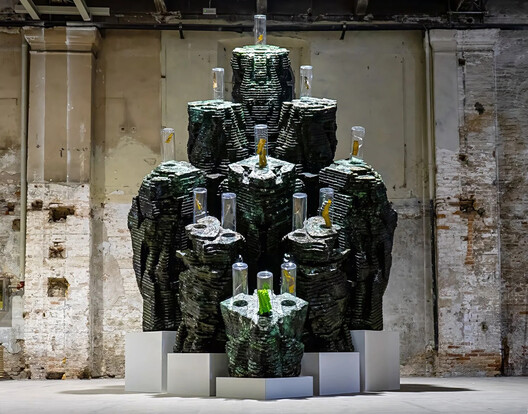
Venice Architecture Biennale 2025
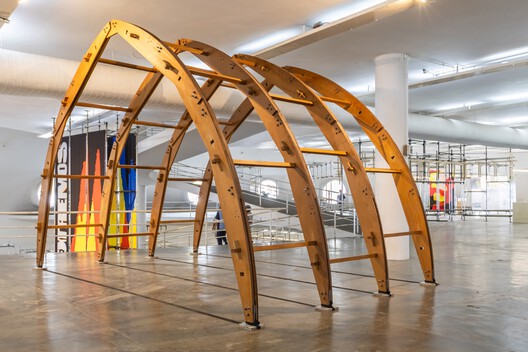
São Paulo Architecture Biennial 2025
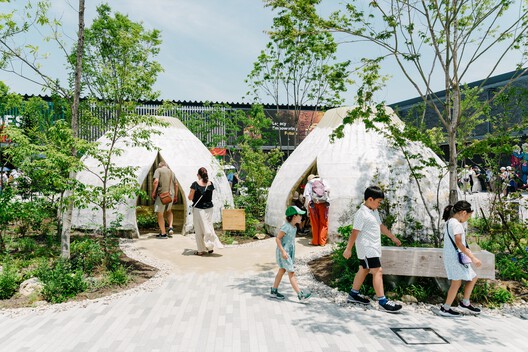
Expo Osaka 2025
Lisbon Architecture Triennial 2025
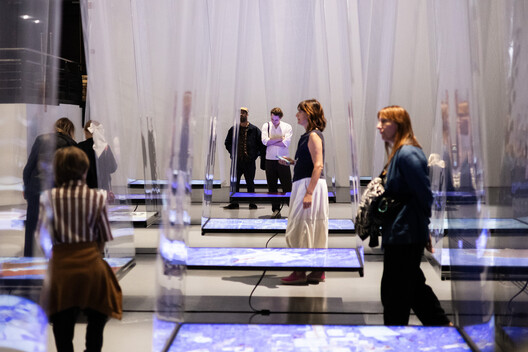
Solar Biennale
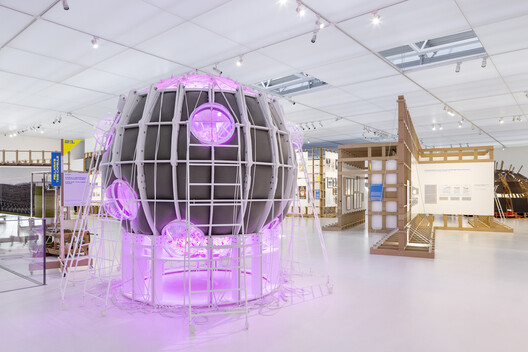
2025 Versailles Biennale of Architecture and Landscape
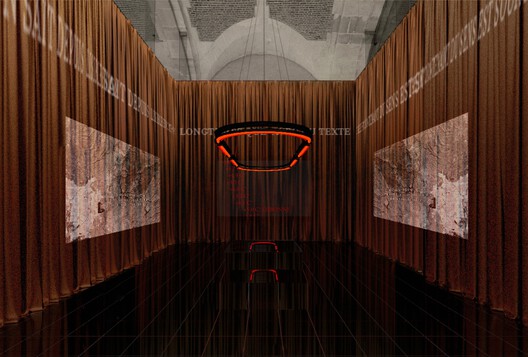
Situated and Decentered Practices
Numerous exhibitions this year challenged established canons by presenting practices rooted in their respective territories, cultures, and knowledge systems. Rather than presenting architecture as a universal language, these events emphasized situated approaches, ones shaped by local histories, climate, material traditions, and social structures. Across regions, exhibitions increasingly turned to ancestral techniques, collective processes, and context-driven design as valid and necessary forms of architectural production.
This shift toward decentered practices was reflected in the growing visibility of exhibitions emerging outside traditional Euro-American centers. From biennials in the Middle East, Latin America, Central Asia, and the Mediterranean to initiatives that emphasize regional narratives and long-term cultural contexts, 2025 marked a noticeable redistribution of architectural attention. Events such as the Islamic Arts Biennale, BAL 2025, and the Bukhara Biennial, as well as initiatives in Istanbul and Beirut, have positioned architecture within broader frameworks of memory, identity, and territorial knowledge. Together, they revealed a shared ambition across exhibitions worldwide: to expand what counts as architectural practice, and to recognize design practices rooted in place, community, and lived experience as central to the discipline's future.
Islamic Arts Biennale 2025
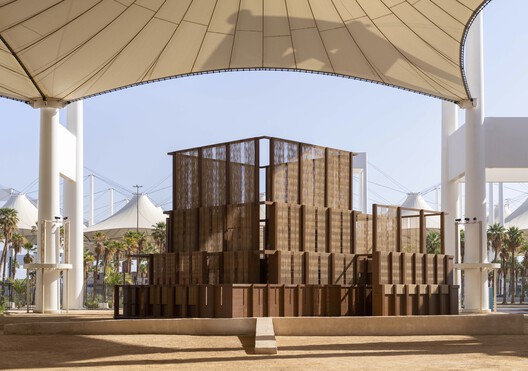
WeDesign Beirut 2025
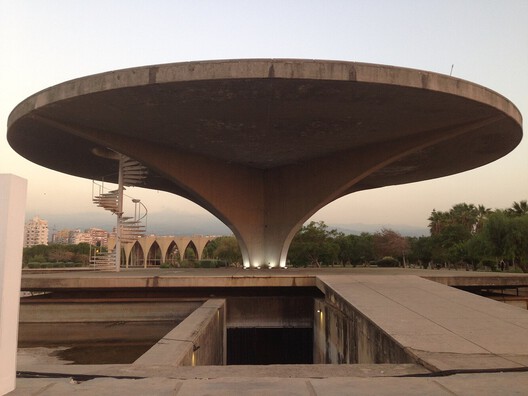
BAL 2025: Latin American Architecture Biennial
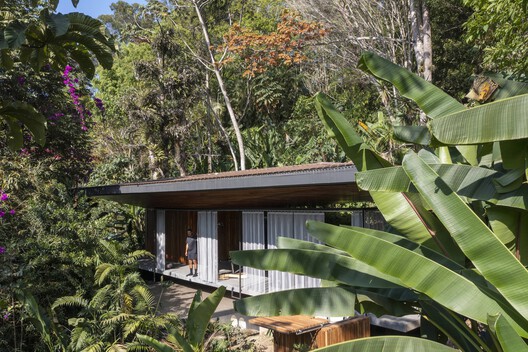
Istanbul Design Biennial
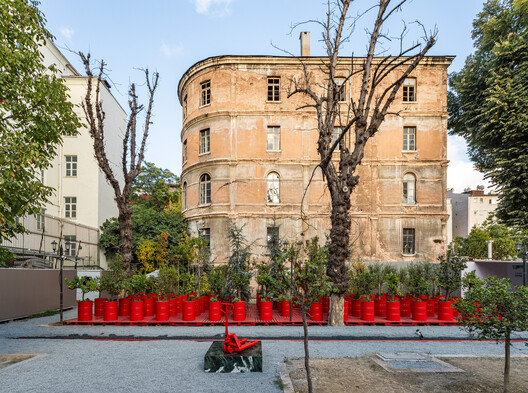
Bukhara Biennial
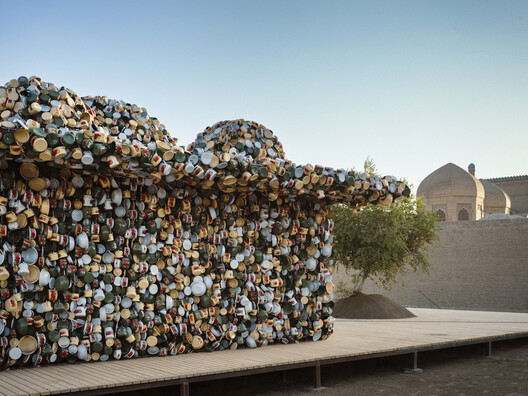
Everyday Spaces and Domestic Scales
In many exhibitions this year, the domestic sphere was reframed as a shared and accessible space rather than a private or purely aesthetic one. Interiors, objects, and everyday rituals became lenses to examine how design shapes social structures, inclusion, and ways of living. Rather than focusing on singular design icons, these events emphasized spatial experiences rooted in daily life, highlighting how domestic environments mediate relationships between individuals, communities, and broader cultural values.
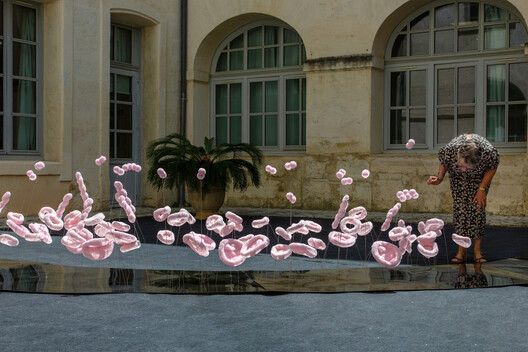
This approach was especially visible across major design weeks, where the boundaries between architecture, interiors, and design were intentionally blurred. NYCxDESIGN, under the theme Design is for Everyone, emphasized inclusivity and accessibility, positioning everyday environments as tools for social participation. At Milan Design Week, architect-designed objects and spatial installations explored materiality, light, and atmosphere at the scale of daily life. Dutch Design Week highlighted research-driven and speculative practices addressing social and environmental futures. At the same time, trade fairs such as Maison&Objet expanded domestic narratives beyond individual products to engage questions of atmosphere, material culture, and contemporary ways of living. The Festival des Architectures Vives further extended these concerns into courtyards, thresholds, and intimate urban spaces within historic fabrics.
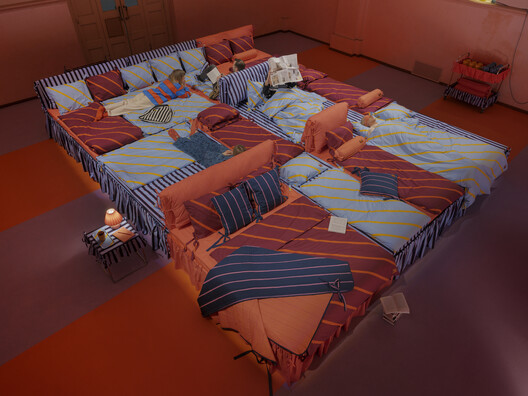
Milan Design Week 2025
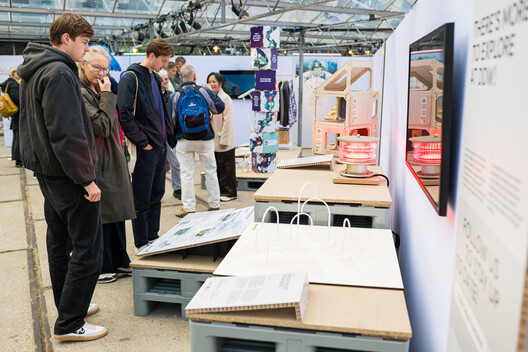
Dutch Design Week 2025
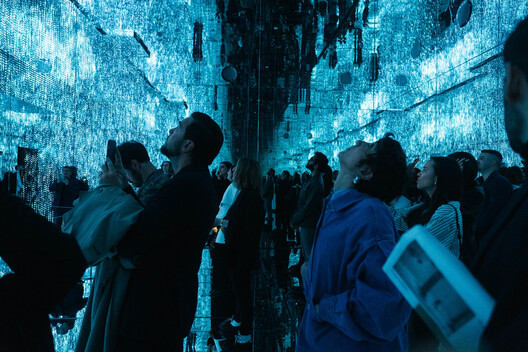
NYCxDESIGN 2025
Maison&Objet
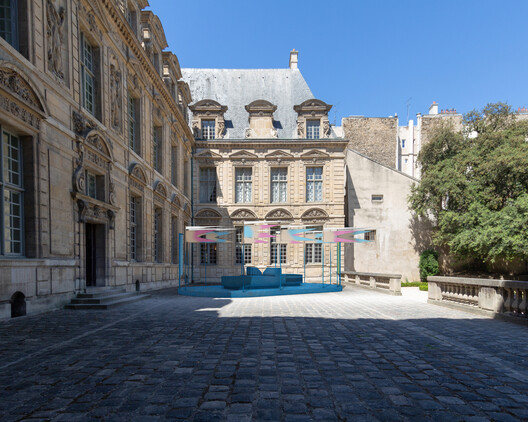
Festival des Architectures Vives 2025
Urban Experiments as Civic Repair
Cities have long served as sites for architectural experimentation, but in 2025 they were increasingly approached as grounds for repair. Rather than proposing large-scale masterplans, many exhibitions treated the urban fabric as a testing space for rebuilding social connection, using temporary installations, public structures, and collaborative processes to reimagine how shared spaces function. Architecture emerged less as a fixed solution and more as a civic practice capable of operating through small-scale, adaptive gestures.
This approach unfolded across multiple urban scales. Large biennials such as the Chicago Architecture Biennial and the Seoul Biennale of Architecture and Urbanism framed cities as living laboratories, addressing social, political, and environmental pressures through research-driven installations, exhibitions, and public programs embedded within real urban contexts. At a more immediate, street-level scale, initiatives like Concéntrico in Logroño and the TAC! Urban Architecture Festival focused on temporary and site-specific interventions in streets, squares, and underused urban spaces, demonstrating how modest spatial actions can activate public space, invite participation, and encourage collective use. Together, these events reveal a shared direction in 2025: urban experimentation as a form of civic repair, grounded in participation, adaptability, and care.
Chicago Architecture Biennial 2025
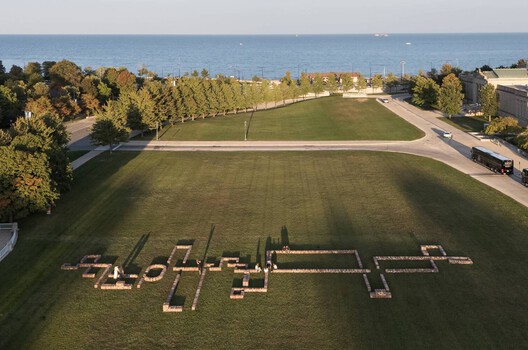
Seoul Biennale of Architecture and Urbanism 2025
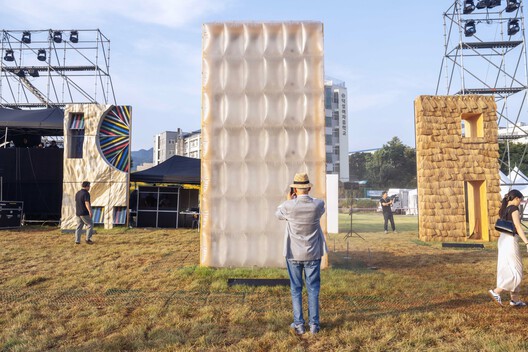
Concéntrico (Logroño) 2025
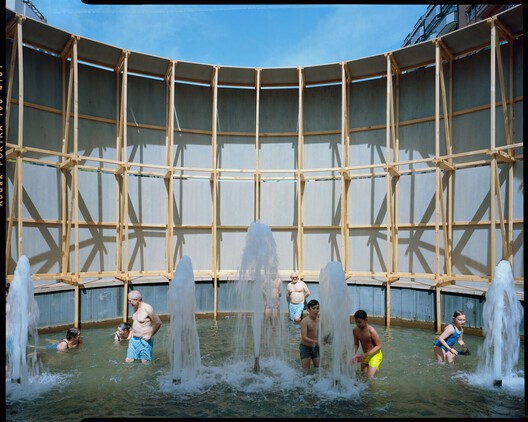
TAC! Urban Architecture Festival
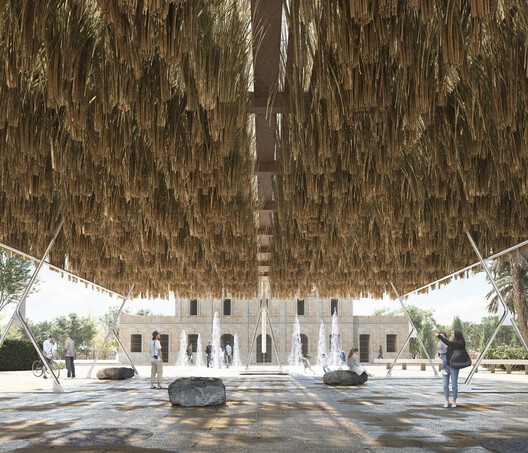
Opening the Discipline to the Public
Architectural exhibitions stepped beyond professional circles and into public life. Alongside biennials and large-scale platforms, a growing number of events deliberately addressed broader audiences, prioritizing access, participation, and dialogue as central strategies. Architecture was framed less as a specialized discourse and more as a shared cultural practice embedded in public space. The emphasis shifted away from presenting architecture as an object of expertise toward creating encounters, conversations, and collective learning, redefining who gets to engage with architectural ideas and how they are experienced.
This approach was visible in events that actively invited public participation. Open House Europe's Annual Summit reimagined cities as open invitations, combining tours, public exhibitions, and inclusive dialogues around design and urban equity. The Copenhagen Architecture Biennial transformed closed buildings into shared experiences through extensive city-wide open-house initiatives. Meanwhile, the London Design Biennale and MEXTRÓPOLI turned museums and plazas into arenas for global design debate, activating installations, talks, workshops, and performances accessible to diverse audiences. In these contexts, architecture moved beyond a specialised discourse to become a shared cultural conversation, an open invitation for people to imagine, question, and participate in shaping the built environment.
Open House Europe Annual Summit 2025
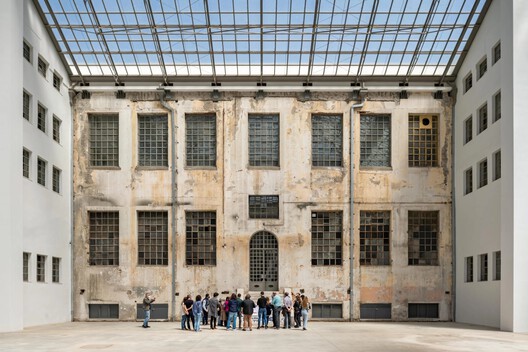
London Design Biennale 2025
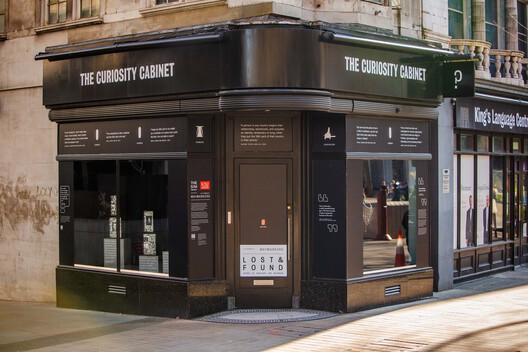
MEXTRÓPOLI 2025
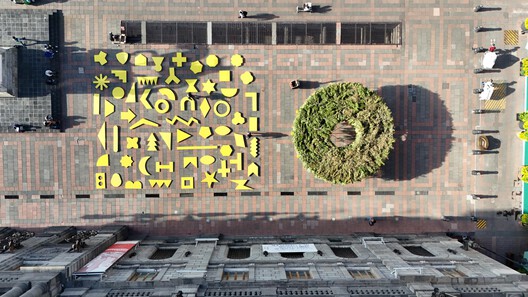
Copenhagen Architecture Biennial
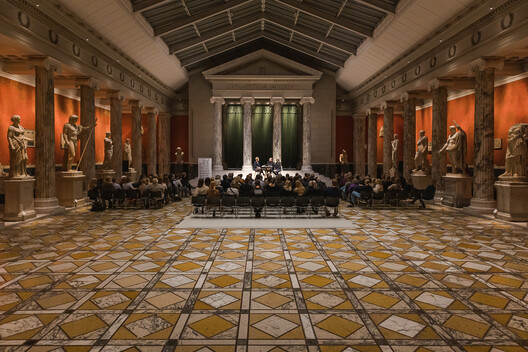
These exhibitions revealed design's power to unite, expanding architecture beyond disciplinary boundaries through experimentation, dialogue, and public engagement. Rather than advancing a single narrative, they reflected a broader cultural reorientation, framing architecture not as a finished product but as a relational practice shaped by communities, ecosystems, and everyday life. In doing so, exhibitions reaffirmed their role as critical spaces where architectural ideas are collectively questioned, negotiated, and reimagined.
This article is part of the ArchDaily Topic: Year in Review, proudly presented by GIRA.
GIRA sets the standard where architectural design meets intelligence. From the defining moments of 2025 to the innovations shaping 2026, we create smart solutions that elevate living and working environments with timeless aesthetics. Join us in shaping the future of architecture and interior design — where vision becomes reality.
Every month we explore a topic in-depth through articles, interviews, news, and architecture projects. We invite you to learn more about our ArchDaily Topics. And, as always, at ArchDaily we welcome the contributions of our readers; if you want to submit an article or project, contact us.