
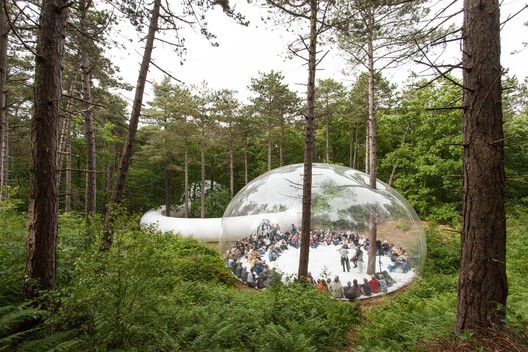
The phenomenon known in biology as convergent evolution describes how distant species can develop similar structures when confronted with comparable challenges. Dolphins and ichthyosaurs, for example, are separated by millions of years of evolutionary history, yet both evolved nearly identical hydrodynamic bodies. Architecture has its own parallels: A-frame structures emerged independently in both the European Alps and Japan, even without direct cultural exchange, as spontaneous responses to snow, wind, and material scarcity.
The construction industry today faces major challenges related to labor shortages, rising material costs, supply chain instability, and increasing regulatory and sustainability demands, all in a context of low productivity and slow digitalization. These pressures make it harder to deliver projects on time, on budget, and with the required environmental performance. Yet, their outcomes converge around a shared set of values: circularity, responsibility, regeneration, and material intelligence. Discussions around building retrofits, adaptive reuse, low-carbon design, territorial resilience, biodiversity, or Indigenous knowledge systems may seem to belong to separate agendas, yet all point toward the same shift: rethinking architecture through the lens of ecological limits and social reciprocity. The paths vary, but the direction is the same.
More than a retrospective, this article looks back at 2025 to understand what we believe will pave the way forward. It explores how these forces are shaping four central fronts of architectural practice and shows how the convergence of these movements may define the architecture of the coming years.
Radical Circularity: Waste and Material Memory
by Agustina Iñiguez
While the effects of the climate crisis, rising energy demand, and the construction sector's carbon emissions continue to challenge the global built environment, 2025 is shaping up to be a year that—beyond addressing these issues—shows a growing and more urgent focus on the environmental impact of materials and their ecological footprints. From waste management to the adoption of efficient, circular practices, the reuse of structures and materials highlights an alternative to demolition that opens the door to rethinking, repurposing, and reinterpreting the production cycles and processes that shape today's buildings.
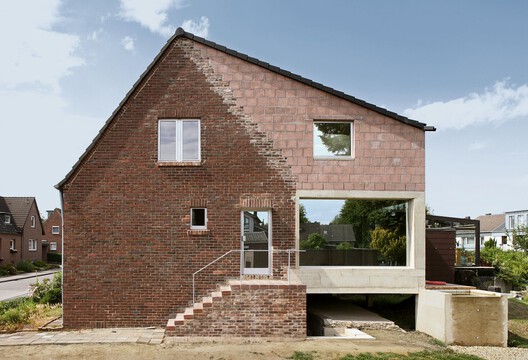
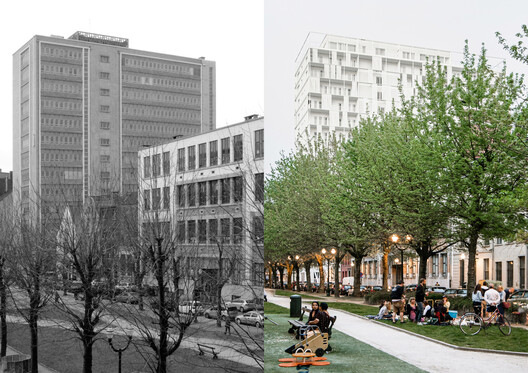
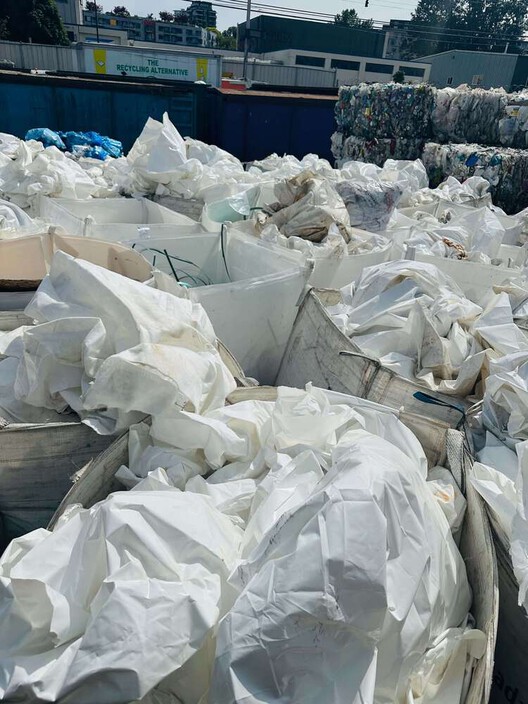
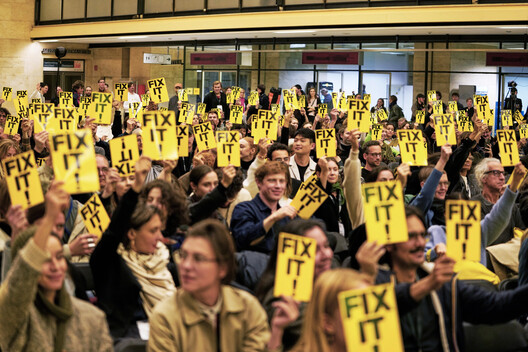
Why discard tons of labor, time, and embedded stories when materials could be transformed in ways that protect the environment and preserve collective memory? Much like the HouseEurope! initiative, winner of the 2025 OBEL Award, which argues for a paradigm shift by asserting that reuse should be the rule, not the exception. The architecture of reuse and regeneration calls for coordinated dialogue across regulatory systems, policies, and incentives that prioritize material longevity and promote practices aligned with renewable energy, resource efficiency, and more. Starting in 2026, the expansion of the Federal Plastics Registry will require construction material suppliers to report detailed information on plastics production, recycling, and disposal—reshaping construction management and driving material innovation.
Every project is built from layers of use, human labor, experiences, and cultures that together create a repository of time. Conservation and preservation practices require both technical expertise and a sensitivity to heritage, contributing to a construction narrative that recovers the value of authorship over standardization. From structural integrity to material continuity, the rise of 3D scanning and digital modeling supports the documentation of structural and material conditions, while methodologies and tools such as Life Cycle Assessment (LCA), Building Information Modeling (BIM), and material passports make it possible to translate the potential for reuse from an abstract idea into measurable data.
In seeking a balance between reuse and demolition, growing awareness of the industry's environmental impact encourages alignment with ecology, culture, and design intelligence to advance progress and improve quality of life for countless generations around the world.
Living Materials: Biomaterials and Architecture as Cultivation
by Kiana Buchberger
Alongside circularity, 2025 brought renewed attention to living materials—those that grow, transform, and return to natural cycles. Rather than focusing solely on what happens to materials at the end of their life, research and experimentation began to reframe architecture as part of ongoing processes of growth, transformation, and renewal. Mycelium, algae, bacterial processes, agricultural by-products, and bio-based composites have moved beyond speculation into prototypes, installations, and early building systems, pointing to an approach that cultivates materials as living, evolving systems within broader ecological cycles.
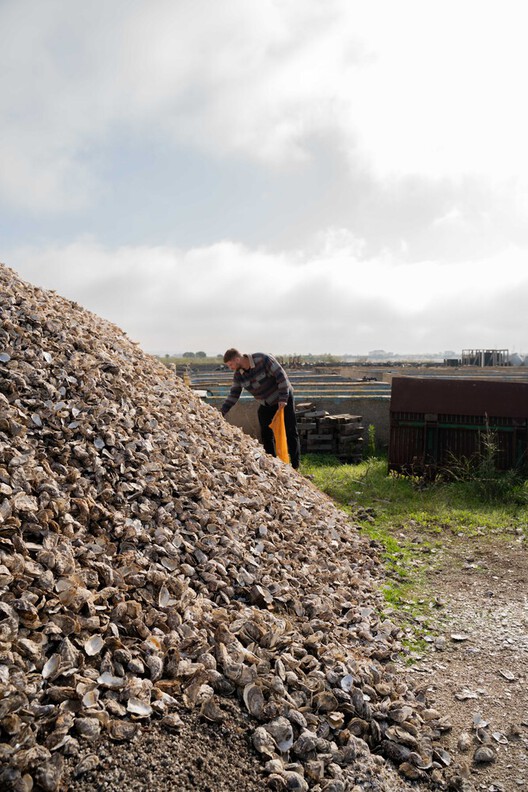
All materials are embedded in systems of extraction, production, and disposal that leave ecological and social traces. While circular design considers how materials can re-enter production cycles, living materials broaden the conversation by revealing ecologies where waste from one system nourishes another. Organic by-products, such as shells, fibers, and agricultural residue, are treated not as surplus, but as starting points for new material lifecycles.
This approach guides projects from biofabrication labs to site-specific installations. In Lisbon, regenerative tiles made from oyster shells and seaweed reinterpret the azulejo tradition while embedding ecological storytelling. Rooted in local food systems and coastal ecologies, the project demonstrates how waste streams, cultural memory, and environmental repair can converge within a single material practice, where heritage is reactivated through experimentation.
Similar approaches are being experimented with in initiatives merging vernacular knowledge, agriculture, and biotechnology. Hybrid Habitats reimagine date palm by-products as responsive architectural systems, combining low-tech construction traditions with microbial pigments, parametric design, and climate-responsive performance. These experiments position materials as mediators between ecosystems, communities, and technology, framing the preservation, transmission, and reinvention of local knowledge as strategies for resilience.
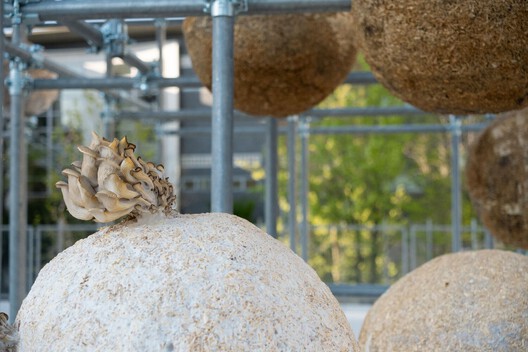

Across schools, biennales, and experimental practices, many explorations remain small in scale: pavilions, prototypes, temporary structures. However, advances in AI-assisted design, robotic fabrication, and materials science are accelerating feedback loops between biological growth, testing, and construction, increasing the likelihood that cultivated materials will move into larger and more permanent projects.
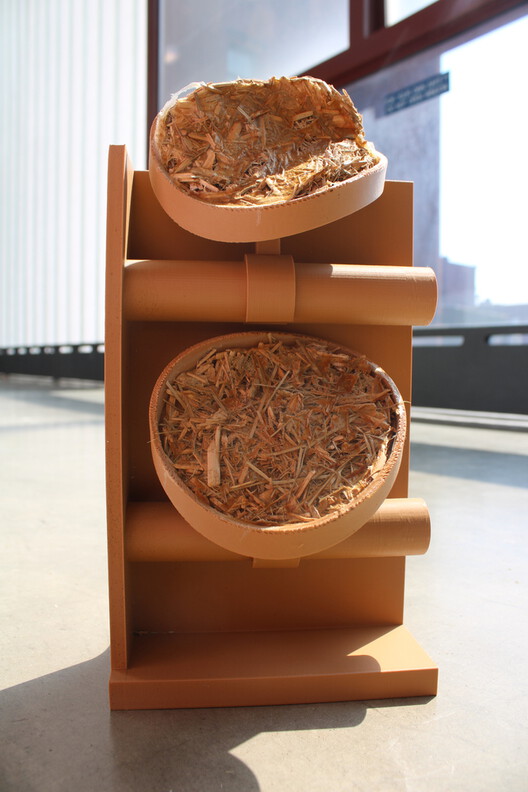
Cultivated materials are emerging as a key area of innovation: grown, fermented, or regenerated rather than manufactured, shaped by local ecologies and collective expertise. Still, significant barriers remain. Regulations, certification systems, and public trust are calibrated for concrete, steel, and glass. Scaling bio-based construction will require new standards, shared knowledge, and a reconsideration of permanence itself.
Carbon, Metrics, and Digital Tools for Material Decisions
by Eduardo Souza
Above all, an architect has always been a negotiator. Between the client's ambitions, the available budget, site conditions, urban regulations, materials, construction systems, and legislation, a good project emerges from this continuous and often exhausting mediation. Yet restrictions are not enemies of the process; they often open unexpected paths and guide choices in more intentional ways. Rather than limiting, they provide direction, help structure priorities, and make each decision more grounded.
With growing concerns about the climate crisis and the impact of the construction industry, carbon has become an omnipresent element in architectural practice. It essentially functions as a common denominator between impact metrics and indicators of greenhouse gas contributions, revealing the real weight of every material choice we make.
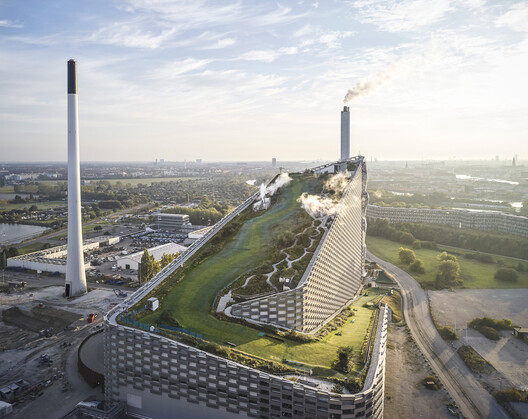
In this context, tools such as life-cycle assessments, material databases, carbon calculators, AI-assisted analysis, and parametric workflows have become the backbone of responsible specification. They are also becoming increasingly available and accessible to designers. Much more than technical instruments, they offer a map that helps reveal consequences that were previously invisible, allowing for more informed decisions from the earliest stages of design.
These tools bring clarity where intuition once dominated. Early-stage platforms, such as CarbonSpace's sketch-level analysis or Construction Material Pyramid made in Denmark, show how emissions can be estimated from the first lines on paper. The Barcelona Method demonstrates how climate data can inform maintenance and retrofit strategies for historic buildings, preventing carbon stranding and opening new opportunities for preservation. Together, these approaches show how information can expand, rather than constrain, creativity.
The future of material decision-making lies in the coexistence of sensibility and evidence. Data provides direction, and architectural thinking shapes how it is applied. Looking ahead, architects will increasingly design with data, which means cultivating the ability to read a project through multiple lenses at once. It means treating information not as a restriction but as an ally. Above all, it means understanding that carbon and other environmental metrics are no longer abstractions, but project parameters that define the future performance, resilience, and meaning of our buildings.

Materiality, Local Identity, and Geographies of Construction
by Tatevik Avetisyan
Data can be read by those who speak the language. And if materials have long formed architecture's alphabet, 2025 pushed us to read between the lines. Across continents, projects made it clear that materials are not neutral building blocks but territorial actors—shaped by climate, extraction, labor, and the cultural narratives attached to them. This isn't a nostalgic return to the vernacular; it's a more precise understanding of how a place is materially assembled.
Álvaro Cunqueiro Hospital in Vigo and other recent works of Spanish architecture have shown how familiar materials—such as brick, stone, timber, and tile—can be deployed with a new level of technical intent. Ceramics and quarried stone were treated as environmental systems, valued for their thermal mass, durability, and minimal transport footprint. Here, material intelligence meant aligning building physics with geographic logic. Mexico offered its own interpretation of the same idea, also referenced by Edmund Sumner in his book Casa Mexicana. Volcanic stone, adobe, fired brick, and tropical woods appeared in structures tuned to humidity, seismic forces, and community-based construction knowledge.
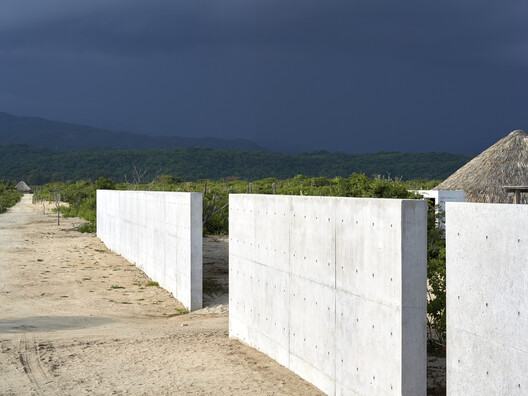
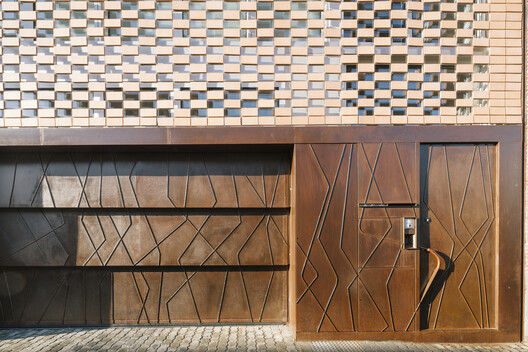
Taken together, these examples point to a broader truth: materials carry maps. Brick reveals geology and labor; timber reflects forestry practices and biodiversity; stone traces political economies and export routes; tile traditions mirror both historic trade patterns and today's carbon accounting. Understanding these relationships is quickly becoming a baseline requirement for responsible design.
Looking ahead to 2026, the central question shifts from "What performs best?" to "At what territorial cost, and for whom?" This calls for a closer look at the geopolitics of materials—whether Andalusian ceramics, Mexican volcanic stone, coastal timber economies, or regenerative earth industries—while also acknowledging the realities behind them: extraction, land rights, labor conditions, and ecological impact. It also means exploring how local materials can evolve through prefabrication, digital fabrication, and hybrid assemblies. Ultimately, materials are no longer just items in a catalog. They represent negotiations between geography and ambition. In 2026, materiality will depend less on global availability and more on local coherence, turning architecture into a kind of territorial literacy, where every choice carries a story of origin, impact, and belonging.
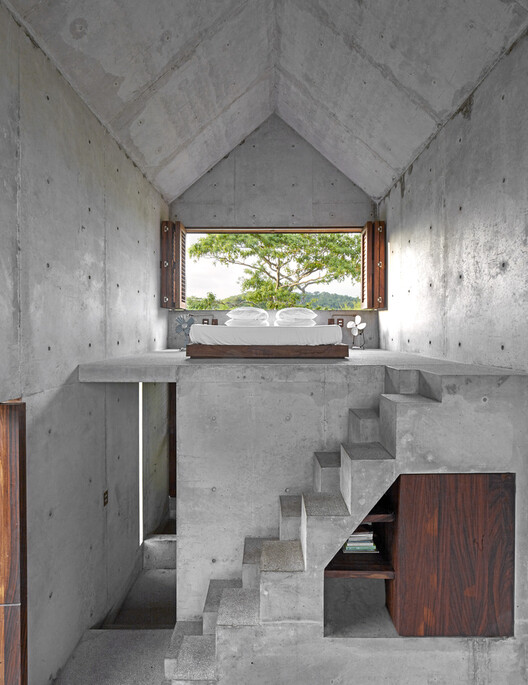
In 2025, architecture is defined by how it engages with materials, place, and ecology. From circular and living materials to carbon-conscious design and locally informed construction, projects are responding to environmental and social challenges with intelligence and care. While strategies differ, they share a common goal: creating resilient, responsible buildings rooted in the stories and systems that surround them.
This article is part of the ArchDaily Topic: Year in Review, proudly presented by GIRA.
GIRA sets the standard where architectural design meets intelligence. From the defining moments of 2025 to the innovations shaping 2026, we create smart solutions that elevate living and working environments with timeless aesthetics. Join us in shaping the future of architecture and interior design — where vision becomes reality.
Every month we explore a topic in-depth through articles, interviews, news, and architecture projects. We invite you to learn more about our ArchDaily Topics. And, as always, at ArchDaily we welcome the contributions of our readers; if you want to submit an article or project, contact us.