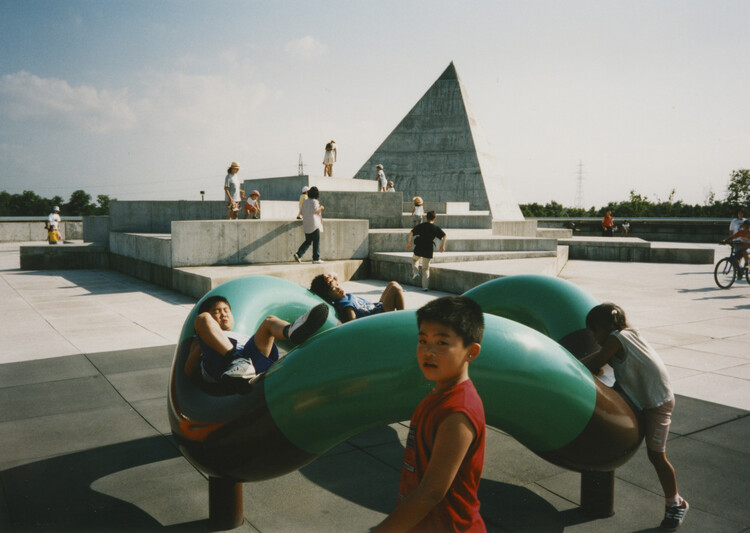
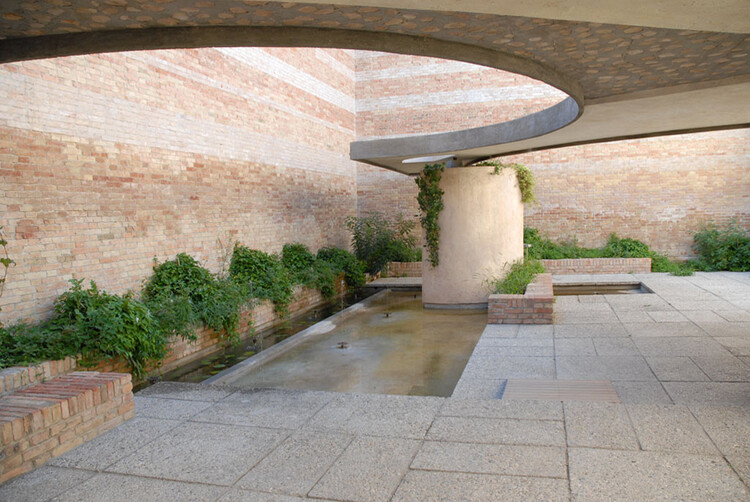
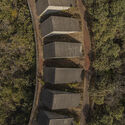
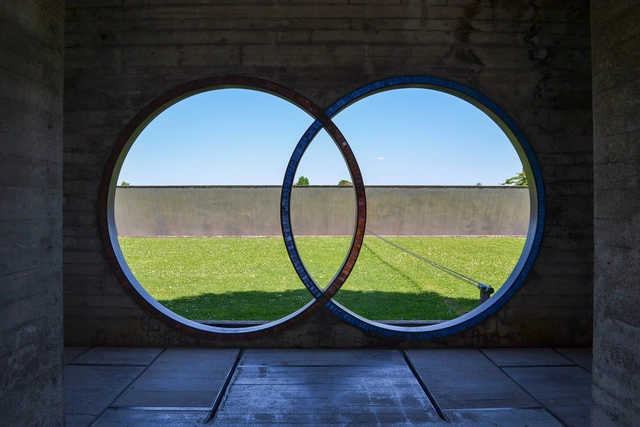
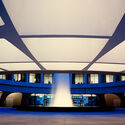
Giardino delle Sculture / Carlo Scarpa. Image by Jean-Pierre Dalbéra [Flickr under license CC BY-NC 2.0]
When we think of Venice, familiar images come to mind: Piazza San Marco, winding canals, and the reflection of Byzantine domes on still waters. Few, however, imagine that among those reflections lies a discreet chapter of Italian modernity — the architecture of Carlo Scarpa.
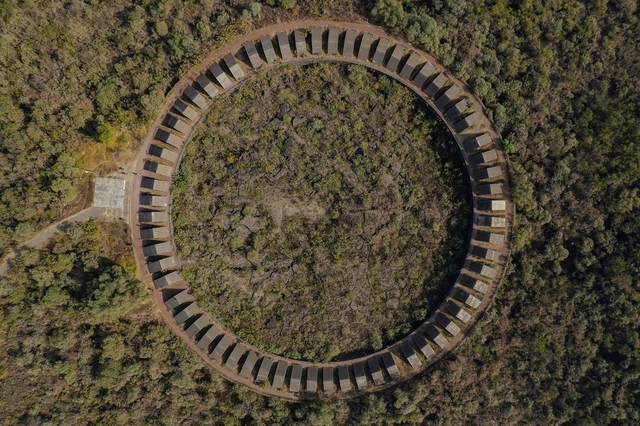
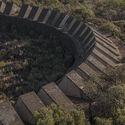
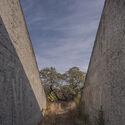
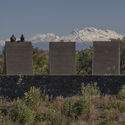
Espacio Escultórico de la UNAM. Image Cortesía de Andrés Cedillo
Integrating contemporary art with the landscape in a dialogue between human creation and the natural environment, the Sculpture Space of the National Autonomous University of Mexico (UNAM) represents one of the most important public artworks in Latin America. Both the Sculpture Space and the Pedregal de San Ángel Ecological Reserve at UNAM in Mexico City have recently been awarded the Carlo Scarpa International Prize for Gardens 2023-2024, granted by the Benetton Foundation for Studies and Research based in Treviso, Italy. They were recognized for their high natural, historical, and cultural value as works of preservation and collective art that emerged from a lava surface where new neighborhoods and UNAM’s University City were developed.
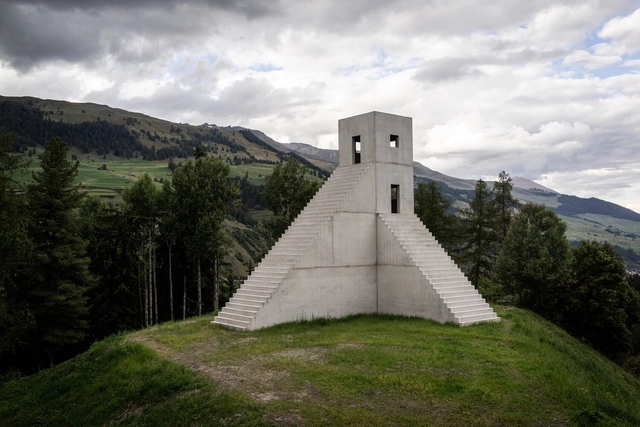
House to Watch the Sunset, concrete. Image Courtesy of Alma Zevi
Alma Zevi has developed a book offering an intimate and definitive account following the career of Swiss sculptor, painter, and architect Not Vital. This comprehensive book delves into Vital's pomading life, seeking and building homes in various cities, from Paris, New York, Beijing, and Rio de Janeiro. The book explores the artist's seminal sculpture practice and architectural projects, featuring a catalog of over 450 sculptures and related works. Drawing on archival material and personal interviews with the artist, Zevi seeks to provide a portrait of his career to date.
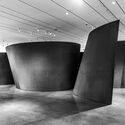
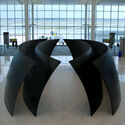
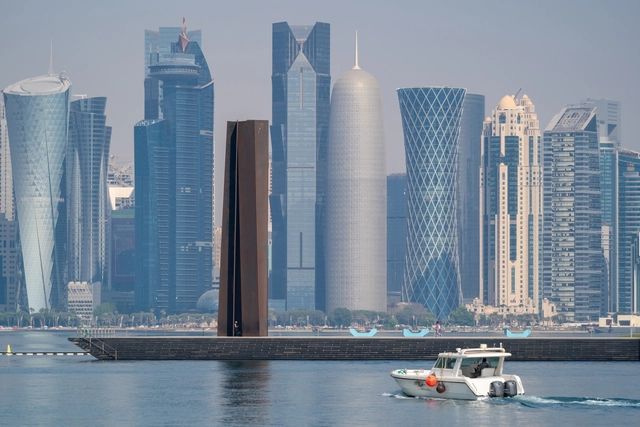
Renowned sculptor Richard Serra, known for his monumental steel structures that reshaped the landscape of contemporary art, passed away at the age of 85 at his residence in Orient, N.Y. His groundbreaking works, characterized by massive tilting corridors and spirals of steel, offered viewers a unique experience, inviting them to navigate through and around the imposing forms to fully comprehend their essence. Because of this invitation to explore space, materiality, and site, the artist has been long-recognized in the architectural community, earning him the Architectural League of New York President’s Medal in 2014, becoming the first artist to receive the honor.
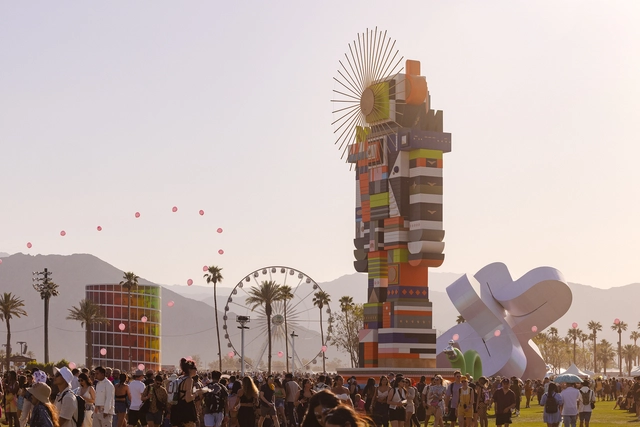
Music Festivals can provide artists, designers, and architects a platform to present their work to large crowds. The sheer scale of these installations, the space for artistic exploration, and the vast audience they reach can give designers the opportunity of a lifetime to showcase their ideas. Through scale, color, imagery, and lighting, these installations create lasting impressions on the people who attend these events and those who see them through news coverage or social media. Some themes explored this year included reframing familiar things in unfamiliar ways, large-scale abstract geometries at the intersection of technology and art, and the use of innovative new materials.
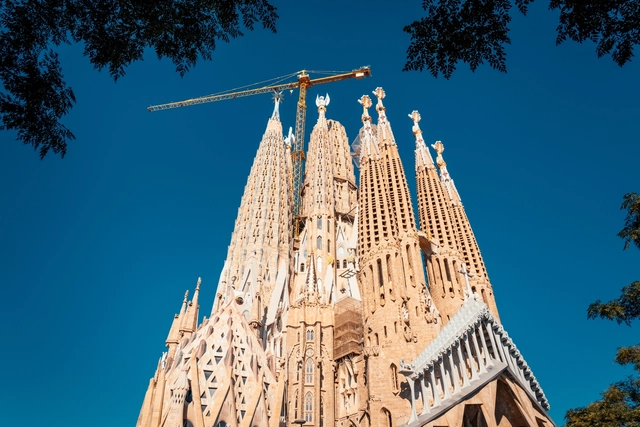
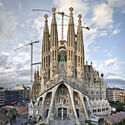
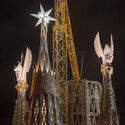
Sagrada Familia, Antonio Gaudi’s famous yet incomplete landmark, is moving forward toward completion. As of last week, five out of the six central towers have been fully constructed. Since this January, when the towers of Evangelists Luke and Mark were finished, two additional towers, dedicated to Evangelists Matthew and John, have been crowned with statues by sculptor Xavier Medina-Campen, marking their completion. The Junta Constructora del Temple Expiatori de la Sagrada Família, the foundation overseeing the construction, announced a special Mass on November 12 to mark the inauguration, initiating the illumination of the four towers all throughout the Christmas season.
Natural light is one of the most critical elements in architecture. Although unbuilt and difficult to control, it plays a crucial part in defining how space is perceived in terms of scale, textures, materiality, and overall atmosphere. Natural light also impacts the emotions people feel in a space, whether lack of light makes us feel fear and anxiety or ample light makes us feel safe and ethereal. As much as light impacts architecture, architecture also impacts light. Through framing vistas, creating 3D massings that cast sculptural shadows, and carving voids from solids that create unique light projections, many architects have mastered design techniques that utilize light in a way that seamlessly integrates it within a building- and perhaps one of the best to do this was the Venetian architect, Carlo Scarpa.
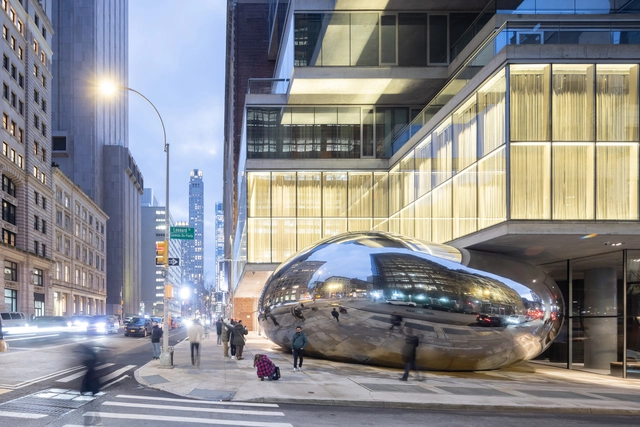
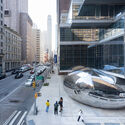
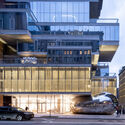
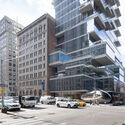
On January 31st, construction scaffolding and barriers were disassembled from the site at 56 Leonard Street, revealing Anish Kapoor’s first permanent artwork in New York City. The 48-foot-long, 19-foot-tall, 40-ton sculpture is nestled partially beneath the Herzog & de Meuron-designed residential building in the Tribeca neighborhood in Lower Manhattan. The mirrored sculpture is reminiscent of Kapoor;’s work called Cloud Gate, also known as “The Bean,” in Chicago, US.
The Second Studio (formerly The Midnight Charette) is an explicit podcast about design, architecture, and the everyday. Hosted by Architects David Lee and Marina Bourderonnet, it features different creative professionals in unscripted conversations that allow for thoughtful takes and personal discussions.
A variety of subjects are covered with honesty and humor: some episodes are interviews, while others are tips for fellow designers, reviews of buildings and other projects, or casual explorations of everyday life and design. The Second Studio is also available on iTunes, Spotify, and YouTube.
Artists are frequently inspired by land — be it painter Robert S. Duncanson’s renditions of American landscapes, or William Kentridge’s subversions of colonial-era British paintings depicting African vistas. Some artists, though, have preferred to work directly with the land, creating structures that sit on landscapes, or carving into the land itself. This art style — formally termed as Land Art — gained prominence in 1960s and 70s United States, in the context of the rise of the environmental movement amidst civil rights and antiwar protests, and as artists looked to separate themselves from the art market.
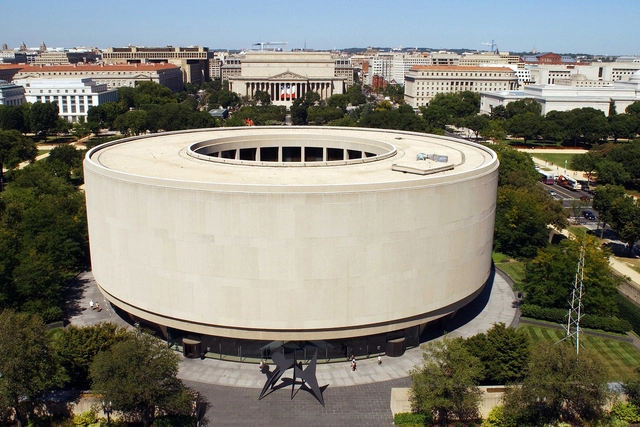
Hirshhorn Museum. Image Courtesy of Hirshhorn Museum
The Smithsonian’s Hirshhorn Museum and Sculpture Garden has selected Skidmore, Owings & Merrill and Selldorf Architects to jointly develop the modernization plan for the Hirshhorn Museum’s interior and plaza. As the first renovation in the last fifty years, the museum plans to upgrade its galleries and public spaces in order to fit the contemporary requirements of a public museum of modern art. It also represents a response to the increased attendance during the past five years. The federal contract was awarded following a competitive process by Smithsonian Facilities in consultation with the Hirshhorn. The concept design, to be submitted in 2023, will be subject to a public consultation process.
The first full-size London Design Festival (LDF) for three years, and the event’s 20th anniversary year, this was meant to be a celebration. But life, as the saying goes, had other plans. Rocked by the news of HRH Queen Elizabeth II’s passing, the country, and indeed the world started the London Design Festival in a period of mourning. Having reigned over the densest period of design innovation in human history, however, her majesty was no stranger to change.
With long-running themes like sustainability, materials, economic crises, and digital futures never higher in the public’s consciousness, LDF ’22 wasn’t just a professional meet and greet, but a chance to share some much-needed positivity with design enthusiasts, as well as locals, just passing by. Here are the most interesting and talked-about installations and talks from nine days of reflection on the past and hope for the future.
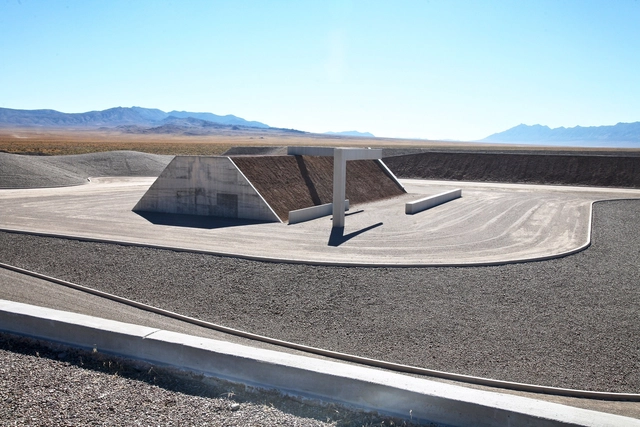
Michael Heizer’s immense sculpture the City, an ambitious artwork of an extraordinary size, will begin to accept visits from the public beginning September 2, 2022. The announcement was made by the Triple Aught Foundation, the not-for-profit organization responsible for managing the long-term oversight and maintenance of Michael Heizer’s immense sculpture. The artwork, a mile and a half long and nearly half a mile wide, is located in a remote stretch of the high Nevada desert. Work on the structure began in 1972 when the artist was 27 years old.
Historic art movements and their visual characteristics have considerably paved the way for modern day architecture. For years, architects have been borrowing techniques and stylistic approaches to create their own architectural compositions, merging both disciplines together. Cubism, one of the most influential styles of the twentieth century, and heavily criticized for its experimentation with its non-representational art approach, is perhaps the most significant architecture inspiration. Just as the radical art movement rejected the then-rooted concept that art should mimic nature, architects found themselves following suit and designing structures that borrow Cubism’s avant-gardist features, creating buildings that, to this day, stand as iconic landmarks of the practice.
Chinese artist and activist Ai Weiwei unveiled the Arch, a cage-like sculpture in front of the National Museum of Stockholm. The 12-meter-tall stainless steel structure features at its center silhouettes of two people holding one another, appearing to break through the steel bars of the cage. The artwork was created to symbolize refugee stories and is seen as an ode to freedom. The sculpture is installed outside Nationalmuseum national gallery on the Blasienholmen peninsula in Stockholm’s archipelago. It will remain there for one year, after which, it will be moved to a yet undisclosed location in the city.
Architecture in its broadest sense concerns itself with the uprooting of structures that are permanent, cementing themselves within the greater cultural context and history of its humanity, however, where do we place the creation of structures that are designed with the intention to be disassembled. How much meaning and value can these structures hold, knowing they were never designed to last, but to simply take up space for a moment?
The Glyptothek Museum will showcase the first exhibition dedicated to Santiago Calatrava's array of sculptures and paintings inspired by Greek Antiquity. Running from June 21st to October 23rd, "Beyond Hellas: Santiago Calatrava in the Glyptothek" traces the architect's career as a sculptor, highlighting the influence of histories and cultures on Calatrava's design process.
Talking to the Louisiana Channel, Danish professor, sculptor, and artist Bjørn Nørgaard outlines the philosophy that underpins his work and reflects upon his architectural projects. Nørgaard describes in the film, a co-production with Munkeruphus, the strong influence of his mentor in the 1960s - German artist Joseph Beuys - whose theories formed a key part of Nørgaard's evolution and ethos as an artist. The concept of "die soziale Plastik", or social sculpture, would go on to shape Nørgaard's approach to architecture and other forms of art - its main philosophy being that every part of life can be approached creatively.