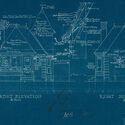
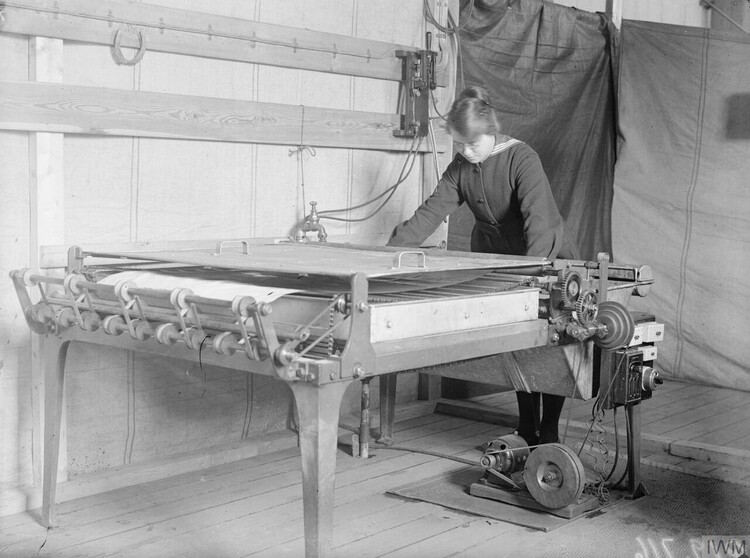
Architecture's design process has always been shaped by the tools at hand. We once drew with pen and ink on fragile sheets, copied by blueprint and guarded against smudges and tears; then Mylar arrived, making revisions and preservation easier and nudging drawings toward a leaner, more deliberate economy of lines. Computer-aided drafting followed, speeding coordination and changing how we think about scale and precision. Today, AI adds another layer—gathering information in seconds and spinning images on command—promising new efficiencies while raising fresh questions about authorship and craft. What we make, and how we make it, has evolved with each tool; the history of our methods is the history of our ideas.
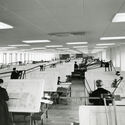
Beginning in the post-war era, Mylar (developed in the 1950s) eased drawing reproduction and hastened the shift from blueprint to whiteprint processes. Before Mylar, simply preserving drawings—keeping an idea intact, legible, and undamaged—was a significant task. Post-war design priorities often leaned toward efficiency, simplicity, and an industrial minimalism aligned with reconstruction needs. The tools reinforced this: architectural work remained predominantly hand-drawn, where every line took time to lay down and even more time to erase. That labour sharpened the economy of drawing; each stroke had to earn its place.
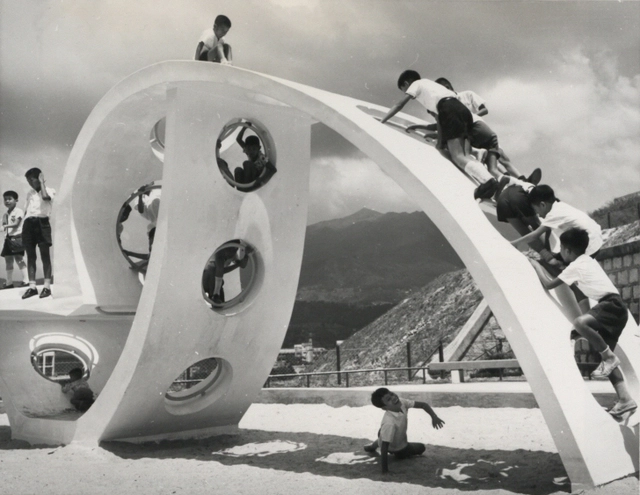
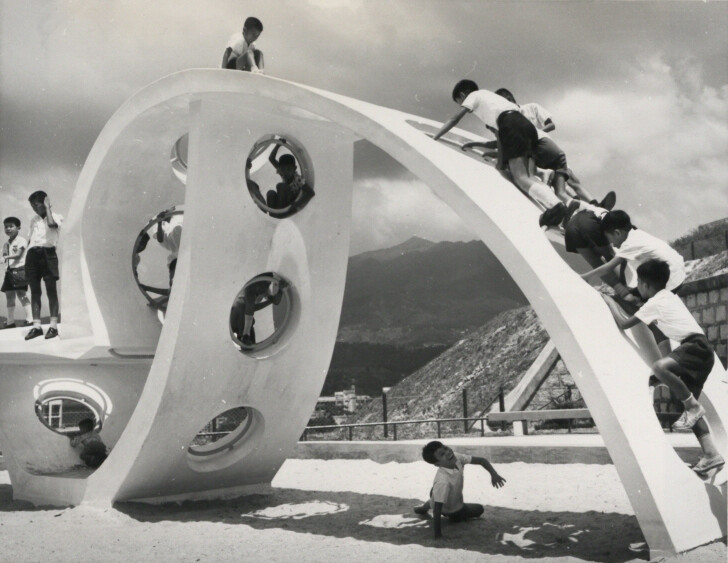
When we think about cities and urban life, we often focus on infrastructure, culture, commerce, nightlife, and density. In metropolises where there seems to be an endless array of activities—especially for adults—play rarely enters the conversation. Yet, the act of playing should be considered a vital part of urban life. Play directly influences how we shape our future cities—starting with how children engage with their environments. The experience of play, and more specifically, the design and presence of playgrounds, leaves lasting impressions on how young people grow up in cities. These spaces form a child's first, physical connection to the urban landscape. In this way, play deserves far more attention in conversations around urban wellness, livability, and the design of public space.
Situated in one of the fastest-developing regions over the past decade—the southern part of China, including Hong Kong and the Greater Bay Area—urban growth has been driven by an overwhelming wave of commercial ambition. Projects here are often designed for maximum density, height, and efficiency, resulting in developments of enormous scale that can easily span several acres. Prioritizing transit-oriented development, these complexes frequently take the form of sprawling malls built directly above major transportation hubs. Designed to disorient and prolong foot traffic to encourage economic activities, these mega-structures have become commonplace in cities like Hong Kong and Shenzhen.
While this typology of megastructures offers clear advantages—economic efficiency, high development returns, and convenience for transit users—it almost invariably ignores its urban context and environment. These developments often turn a blind eye, deliberately so, to their environmental footprint and the city's walkability. At such overwhelming scales, the human walking experience is diminished, if not outright neglected. Pedestrians become interiorized—trapped within the insulated world of these complexes.
The way we perceive and experience spaces extends beyond aesthetics—they directly influence our emotions, thoughts, and even creativity. Spacious environments with high ceilings often evoke a sense of freedom and inspiration, while smaller, enclosed spaces encourage focus and introspection. This is not merely a subjective impression but a scientifically studied phenomenon. In the 1960s, anthropologist Edward T. Hall introduced the term "Cathedral Effect" to describe how ceiling height impacts cognition and behavior. More recent research has expanded on this idea, demonstrating how architecture shapes decision-making and emotional states in various contexts.
The world certainly looks different through the eyes of a young child; enormous, intriguing, and somewhat overwhelming, and it has long been believed that what we encounter as children shapes our perspective of the world. When asked about his childhood memories in Switzerland, Peter Zumthor shared that the memories of his youth contain the deepest architectural experience, which has become reservoirs of the architectural atmospheres and images that he explores in his work as an architect today.
Having a complete understanding of how children change and grow physically and psychologically throughout their childhood requires an in-depth observation of different factors, such as their hereditary traits and genetics, the interactions they have with other children and adults, as well as the environment they are living, playing, and learning in. In celebration of World Children's Day on November 20th, we look at how architects and designers stimulated children's autonomy and promoted their mental and physical well-being through architecture and interior design. This initiative aligns with the theme of World Architecture Day 2024: "Mobilizing the Next Generation for Urban Transformation," emphasizing the crucial role that thoughtful design plays in shaping a sustainable and inclusive future for our cities and the communities within them.
In his latest TED Talk, Thomas Heatherwick decries a condition affecting areas of the city defined by monotonous buildings, or what he calls “an epidemic of boringness.” While recognizing the functionality which drove these designs, he states that functionality alone cannot ensure that the structures become active parts of urban life, as they often fail to provoke an emotional response from passers-by. Heatherwick explains that, in his view, this emotional function, or the ability of buildings to mean something to their users and visitors, is essential. When it succeeds, architecture can positively contribute to the quality of life and well-being of its residents, promote social cohesion and contribute to a sense of identity. So how can architecture provoke a positive emotional connection and provide an enjoyable backdrop to the communities it serves?
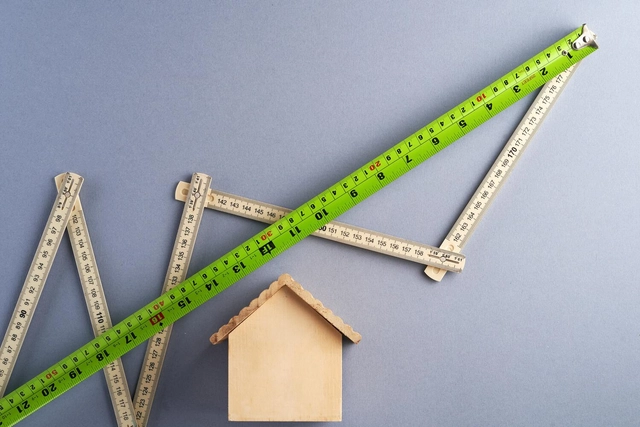
Animals measure distances and weight for their survival. On the other hand, stemming from their need to communicate to live in society, humans created languages and, later, established the standards of measuring. Whether for moving around, portioning food, making tools, or calculating the weight of objects and animals, measurement standards arise from this need that was already present in human activities in the age of chipped stone and has been with us ever since. Nowadays, most of the world's population uses meters and centimeters to measure distances. These standards come from the need to establish comparisons that allow trade between peoples and also from political and social disputes.
In the introduction of Cities for People, Jan Gehl stated clearly that most cities have neglected the human aspect when planning the built space. While technologies have allowed us to build large, our focus shifted from creating architecture for humans to erecting structures that look like they are meant for a different kind of species. Top-down urban planning decisions have ignored scales adapted to the senses and organic growth, and new ideologies prioritized speed, functionality, and profitability.
Dictating our city experience, scale, this major spatial component related to the human dimension, stimulates our senses, and influences our well-being. In this article, we lay down historical changes and underline scientific facts to highlight how scale can impact our daily city life, guided by Eden of the Orient, a series of photos by Belgian photographer Kris Provoost, portraying a battle of scale in Hong Kong.
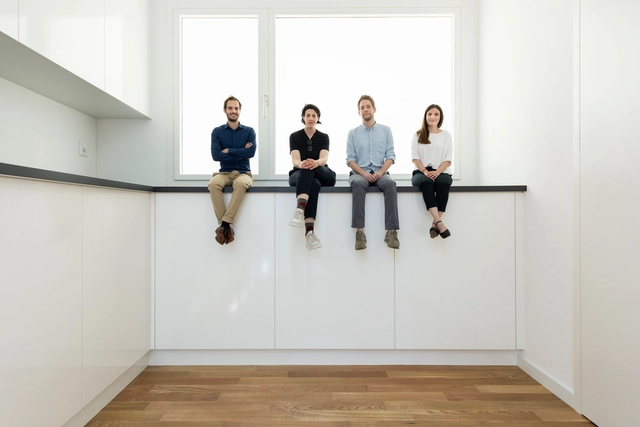
Scale is a very important referential element in built environments. Once manipulated, however, it becomes a key tool that completely changes the way we experience architecture. One of the most prominent projects that put scale at the forefront was the Svizzera 240: House Tour, the Swiss pavilion at the 2018 Venice Biennale, a project that triggered people's behaviors and perception of space, and left them feeling as though they were experiencing an "Alice in Wonderland". The project was awarded with the Golden Lion award for best National Pavilion, described by the Biennale organization as "a compelling architectural installation that is at once enjoyable while tackling the critical issues of domestic space".
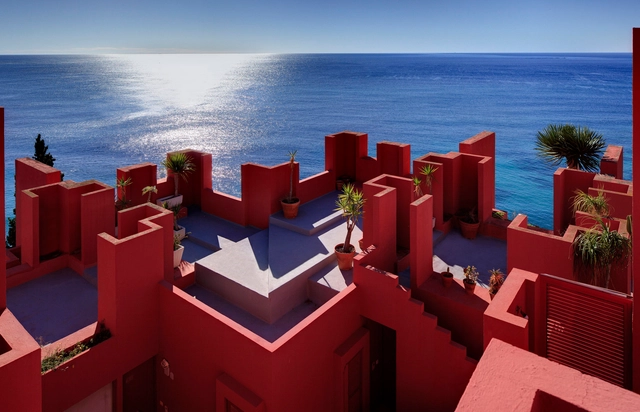
In their recent interview for the Time Space Existence video series, Plane-Site, through the support from the European Cultural Centre, interviewed Spanish architect Ricardo Bofill. The series will be exhibited in the biennial exhibition in Venice, opening May 21-22, 2020.
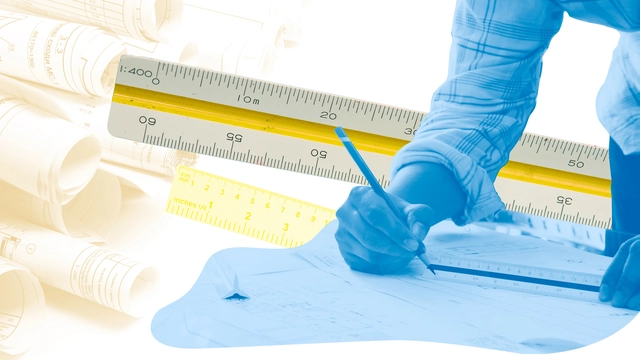
The work of an architect and urban planner can take on many forms thanks to the diverse curricular composition of most graduate courses, with subjects that deal with designing in different scales and contexts. From great urban plans to home renovations, and the metropolis to furniture design, these branches deal with different objects, however, all in common are the use of drawing and models as a tool for representation.
Whatever the project may be, drawing is the way to represent reality, ideas, speculations, and conceptions. Scale, a factor that establishes the level of reading one must make of these representations, determines the link between the real world and the dimensions of the drawing or model. For instance, the scale 1:1 is also known as “full size.”
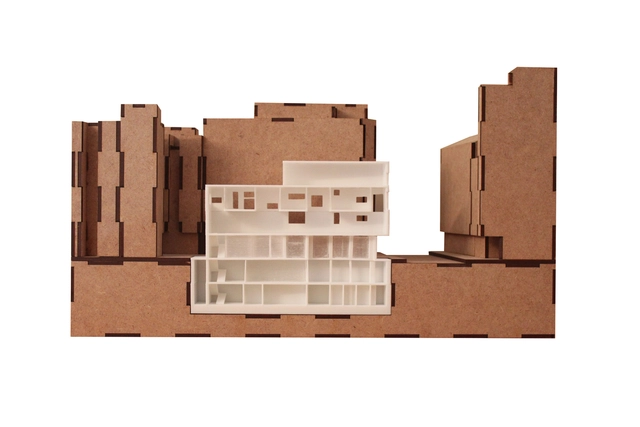
3D printing is here to stay. Every day we see articles that show us the latest accomplishment using 3D printers. From bridges printed entirely in 3D to 3D replicas of lost architecture or for something silly machines that print pizzas. We are fascinated and impressed by everything they can do, but still, regard them as something without real life application. In the field of architecture we see it as the next revolution that will save us the time spent on making models, but ... why limit it to only that?