

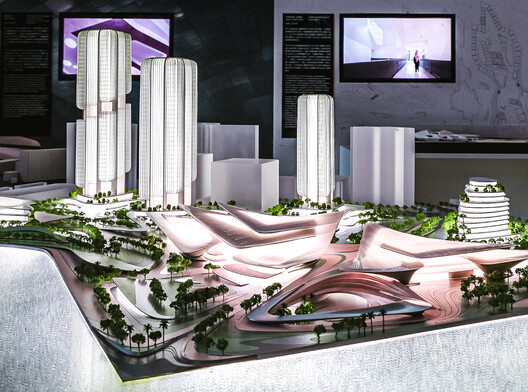
"Architecture of Possibility: Zaha Hadid Architects" at the Museum of Contemporary Art and Urban Planning (MOCAUP) in Shenzhen, China, presents a comprehensive overview of the evolution of Zaha Hadid Architects' work over recent decades. On view until April 10, 2026, the exhibition is structured through chronological and thematic narratives that highlight the studio's multidisciplinary research and design methodologies. The exhibition, now open to the public, showcases the office's work in the Shenzhen area and its involvement with new Artificial Intelligence technologies. Particular emphasis is placed on the integration of artificial intelligence (AI), immersive and interactive design tools, and virtual environments, which together form an expanding digital design ecosystem.
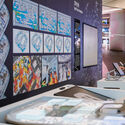


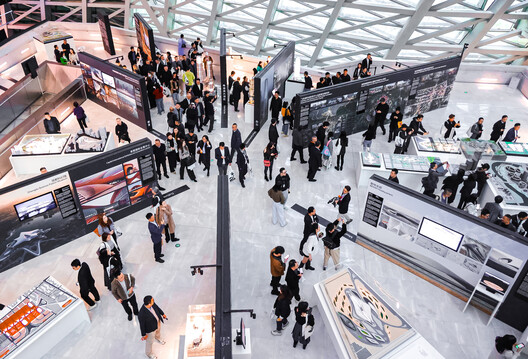
The exhibition also traces ZHA's long-standing relationship with China, beginning with Zaha Hadid's first visit in 1981 and extending through five decades of work in the country. Particular attention is given to the Greater Bay Area, one of the world's most rapidly transforming urban regions, where the practice has completed or is developing more than 25 projects. These include the Shenzhen Science and Technology Museum, the Henderson Tower in Hong Kong, and the Morpheus Hotel in Macau, alongside ongoing developments such as the Shenzhen Institute for Financial Technology, Tower C at the Shenzhen Bay Super Headquarters Base, and the West Kowloon High-Speed Rail Terminus Development. Cultural and civic projects, including the Greater Bay Area Sports Centre in Guangzhou, GO PARK Sai Sha in Hong Kong, and the upcoming Yidan Center for the Chen Yidan Foundation, further demonstrate the studio's engagement with the region's evolving urban life.
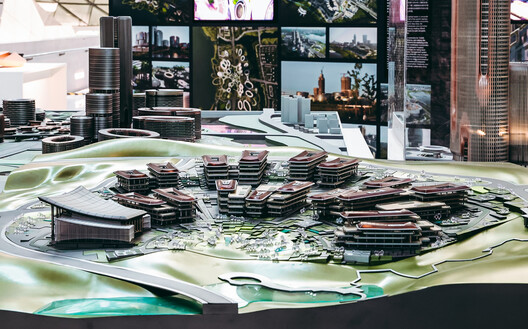
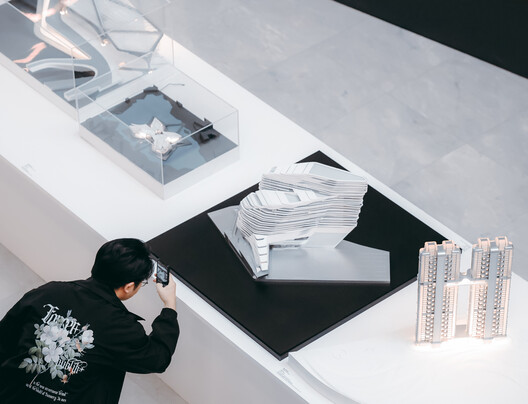
A significant portion of the exhibition is dedicated to ZHA's research collaborations with global leaders in AI computing. Through machine learning and data-driven digital technologies, the practice explores complex geometrical, environmental, and behavioral models to inform design decisions. The exhibition presents how cyberspaces and metaverse environments developed using video game technologies enable virtual exploration and real-time configuration of architectural space. These tools integrate 3D models with virtual reality, enabling architects, clients, and stakeholders to collaboratively experience and refine projects. Robotics and Digital Fabrication (RDF), alongside advances in Architectural Geometries, are also showcased as key drivers transforming contemporary design and construction processes.
Related Article
The Plan and the Prompt: How AI Is Rewiring Design and Practice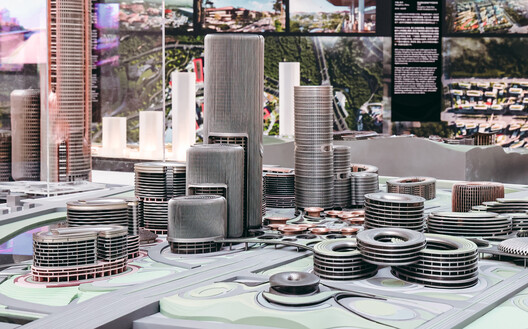
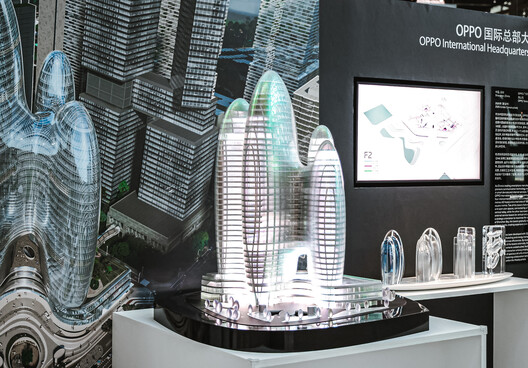
Organized across five thematic zones, ZHA City: Greater Bay Area District, Metrotopia, Brainstorming, Interactive Plan Configurator, and Exhibition Digital Twin, the exhibition investigates ZHA's approach to cybernetic architecture and emerging technologies. Alongside the Shenzhen exhibition, recent news from the practice includes winning the international competition to design Malpensa Hospital in Italy, the Yidan Center in Shenzhen reaching full height, and the construction of the final segment of the Danjiang Bridge in Taipei, marking another milestone in the studio's ongoing global work.


