1. ArchDaily
  2. Sydney

Sydney: The Latest Architecture and News

From Diplomacy to Mobility: Six Legislative Responses Cities Are Using to Confront Climate Change

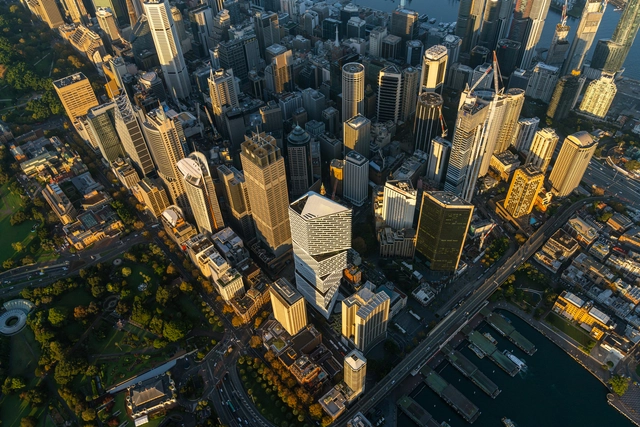
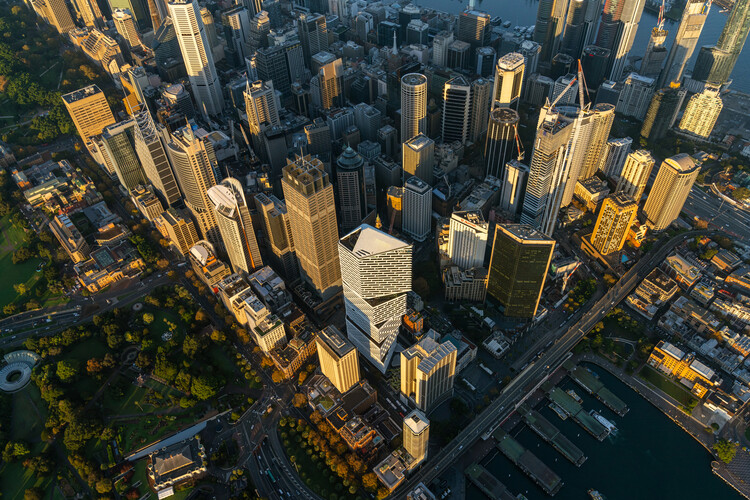
From building codes to mobility restrictions and new diplomatic roles within city governments, climate policy is increasingly being shaped at the local level through a widening range of legislative and institutional tools. Cities as varied as Sydney, Boston, New York, Paris, Miami, and dozens across Latin America are adopting targeted strategies that reflect their distinct environmental pressures and governance structures. These initiatives range from all-electric and net-zero construction requirements, to traffic-control measures designed to curb the social costs of private vehicle use, to emerging forms of urban diplomacy that coordinate responses to rising temperatures and biodiversity loss. Together, these approaches illustrate how territorial management is evolving in response to the accelerating climate crisis, and how local governments are experimenting with regulation and collaboration to confront challenges that are at once global and deeply place-specific.

From Diplomacy to Mobility: Six Legislative Responses Cities Are Using to Confront Climate Change - Imagen 1 de 4From Diplomacy to Mobility: Six Legislative Responses Cities Are Using to Confront Climate Change - Imagen 2 de 4From Diplomacy to Mobility: Six Legislative Responses Cities Are Using to Confront Climate Change - Imagen 3 de 4From Diplomacy to Mobility: Six Legislative Responses Cities Are Using to Confront Climate Change - Imagen 4 de 4From Diplomacy to Mobility: Six Legislative Responses Cities Are Using to Confront Climate Change - More Images+ 1

Foster + Partners Presents "Civic Vision" Exhibition at Sydney’s Parkline Place

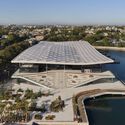
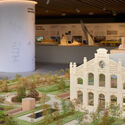
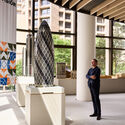
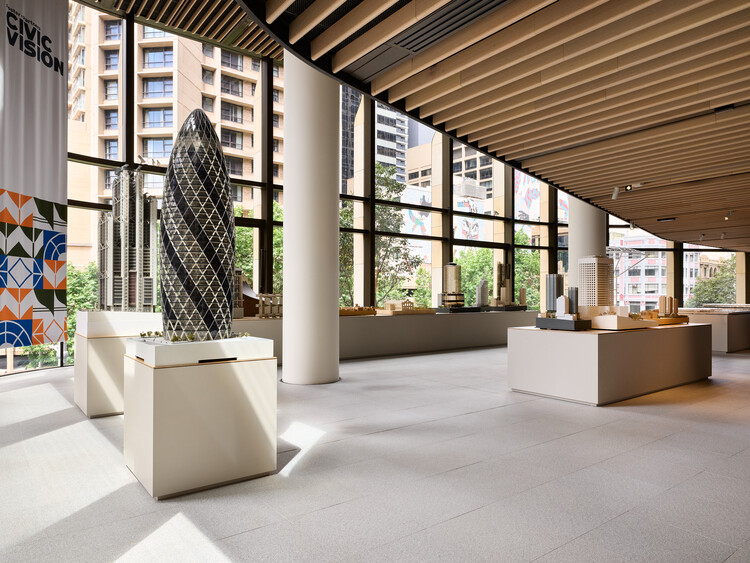
Foster + Partners has opened Civic Vision, the first comprehensive exhibition of the practice's work to be presented in Australia. On view until December 21, 2025, at Parkline Place, the firm's latest completed project in Sydney, developed by Investa on behalf of Oxford Properties Group and Mitsubishi Estate Asia, the exhibition offers an in-depth overview of Foster + Partners' global portfolio since its founding in 1967 by Norman Foster. It explores the evolution of the practice's design approach and its exploration of civic architecture across different contexts and scales.

Foster + Partners Presents "Civic Vision" Exhibition at Sydney’s Parkline Place - Image 1 of 4Foster + Partners Presents "Civic Vision" Exhibition at Sydney’s Parkline Place - Image 2 of 4Foster + Partners Presents "Civic Vision" Exhibition at Sydney’s Parkline Place - Image 3 of 4Foster + Partners Presents "Civic Vision" Exhibition at Sydney’s Parkline Place - Image 4 of 4Foster + Partners Presents Civic Vision Exhibition at Sydney’s Parkline Place - More Images+ 19

Barangaroo South Masterplan by RSHP and Lendlease Completes a 15-Year Transformation of Sydney’s Western Waterfront

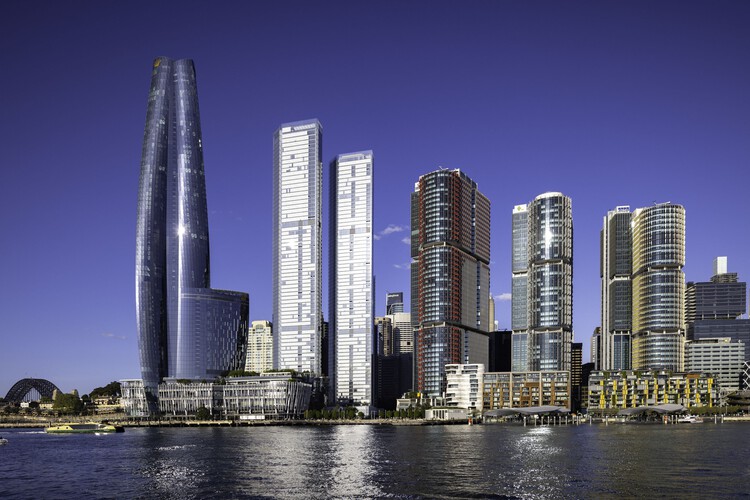
RSHP has announced the completion of the Barangaroo South Masterplan in Sydney, marking the realization of a 15-year redevelopment that has reconnected the city's north-western harbour edge to its urban core. Once a disused container port, the 22-hectare site has been transformed into a mixed-use, carbon-neutral precinct, integrating commercial, residential, and public spaces along the waterfront. Developed in collaboration with Lendlease following an international design competition, the masterplan is organized into three zones: Barangaroo South, a high-density extension of the Central Business District; Barangaroo Reserve, a reconstructed natural headland that reintroduces native landscapes to the harbour; and Barangaroo Central, a low-density residential area linking the northern and southern ends of the development.

Barangaroo South Masterplan by RSHP and Lendlease Completes a 15-Year Transformation of Sydney’s Western Waterfront - Imagem 1 de 4Barangaroo South Masterplan by RSHP and Lendlease Completes a 15-Year Transformation of Sydney’s Western Waterfront - Imagem 2 de 4Barangaroo South Masterplan by RSHP and Lendlease Completes a 15-Year Transformation of Sydney’s Western Waterfront - Imagem 3 de 4Barangaroo South Masterplan by RSHP and Lendlease Completes a 15-Year Transformation of Sydney’s Western Waterfront - Imagem 4 de 4Barangaroo South Masterplan by RSHP and Lendlease Completes a 15-Year Transformation of Sydney’s Western Waterfront - More Images+ 10

ReclaYm House / Luigi Rosselli Architects

ReclaYm House / Luigi Rosselli Architects - HousesReclaYm House / Luigi Rosselli Architects - Interior Photography, Houses, Arch, Lighting, ChairReclaYm House / Luigi Rosselli Architects - Interior Photography, Houses, ArchReclaYm House / Luigi Rosselli Architects - HousesReclaYm House / Luigi Rosselli Architects - More Images+ 26

Sydney, Australia

Snøhetta and Hassell’s Harbourside Redevelopment Moves Forward with Public Domain Approval in Sydney

The NSW Independent Planning Commission has approved the public domain works for Sydney's Harbourside redevelopment, marking a significant milestone for the project designed by Snøhetta in collaboration with Hassell and Mirvac. First unveiled in December 2021 as the winning entry in an international design excellence competition, the scheme aims to transform Harbourside at Darling Harbour into a new, iconic destination at the heart of the city. The proposal reimagines the waterfront at Tumbalong / Darling Harbour with more than 11,200 square meters of renewed public space, featuring significant trees, planted areas, sculptural sandstone pathways, and integrated public artworks.

Snøhetta and Hassell’s Harbourside Redevelopment Moves Forward with Public Domain Approval in Sydney - Image 1 of 4Snøhetta and Hassell’s Harbourside Redevelopment Moves Forward with Public Domain Approval in Sydney - Image 2 of 4Snøhetta and Hassell’s Harbourside Redevelopment Moves Forward with Public Domain Approval in Sydney - Featured ImageSnøhetta and Hassell’s Harbourside Redevelopment Moves Forward with Public Domain Approval in Sydney - Image 3 of 4Snøhetta and Hassell’s Harbourside Redevelopment Moves Forward with Public Domain Approval in Sydney - More Images

Woods Bagot Completes Western Sydney International Airport, with Concept Design by Zaha Hadid Architects and COX Architecture

The first photos of the recently completed Western Sydney International (Nancy-Bird Walton) Airport (WSI) have just been unveiled, marking the delivery of Australia's first major airport in over half a century. The design was developed with Zaha Hadid Architects and COX Architecture involved in the initial design concept, and Woods Bagot as the leading design and delivery as part of Multiplex's design team. The terminal presents a new model for airport design, one that is grounded in its setting, responsive to its context, and oriented toward the future of travel. Located in Badgerys Creek on the Cumberland Plain, the terminal is positioned to serve as a long-term gateway to Greater Sydney. While major construction has concluded, final fit-outs of the terminal's retail precinct and airline lounges will be completed closer to the airport's official launch, as commercial agreements continue to progress. Western Sydney International Airport is on track to begin operations, including domestic, international, and air cargo services, in late 2026.

Woods Bagot Completes Western Sydney International Airport, with Concept Design by Zaha Hadid Architects and COX Architecture - Imagem 1 de 4Woods Bagot Completes Western Sydney International Airport, with Concept Design by Zaha Hadid Architects and COX Architecture - Imagem 2 de 4Woods Bagot Completes Western Sydney International Airport, with Concept Design by Zaha Hadid Architects and COX Architecture - Imagem 3 de 4Woods Bagot Completes Western Sydney International Airport, with Concept Design by Zaha Hadid Architects and COX Architecture - Imagem 4 de 4Woods Bagot Completes Western Sydney International Airport, with Concept Design by Zaha Hadid Architects and COX Architecture - More Images+ 10

Architecture Now: 3XN, Foster + Partners, and More Redefine Redevelopment and Community Design

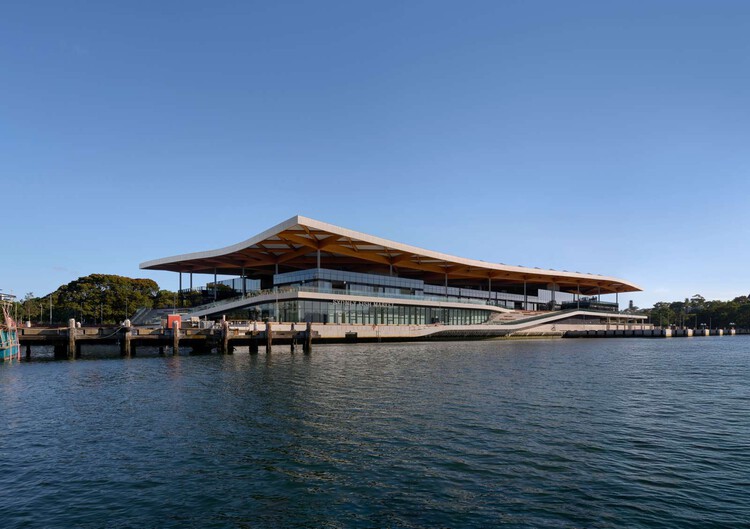
This month's architecture news highlights a strong focus on sustainability, adaptive reuse, and innovative community-centered design. From environmentally responsive urban developments to cultural and recreational spaces, architects are redefining how buildings interact with their surroundings. Notable examples include 3XN's Sydney Fish Market redevelopment, which integrates public accessibility with climate-sensitive design, and CambridgeSeven's Seneca Park Zoo expansion, which blends conservation efforts with immersive visitor experiences. Whether it's the creation of high-performance sports facilities in Portland or the transformation of historic sites into contemporary hubs, these projects showcase the evolving role of architecture in shaping communities. Read on to discover the latest architectural news and developments.

Parkline Place Commercial Tower / Foster + Partners

Parkline Place Commercial Tower / Foster + Partners - Sustainability & Green Design
Courtesy of Foster + Partners

Parkline Place Commercial Tower / Foster + Partners - Sustainability & Green DesignParkline Place Commercial Tower / Foster + Partners - Sustainability & Green DesignParkline Place Commercial Tower / Foster + Partners - Sustainability & Green DesignParkline Place Commercial Tower / Foster + Partners - Sustainability & Green DesignParkline Place Commercial Tower / Foster + Partners - More Images+ 26

Darlington Public School / fjcstudio

Darlington Public School  / fjcstudio - Schools Darlington Public School  / fjcstudio - Schools Darlington Public School  / fjcstudio - Interior Photography, Schools Darlington Public School  / fjcstudio - Interior Photography, Schools , LightingDarlington Public School  / fjcstudio - More Images+ 27

Sydney, Australia
  • Architects: fjcstudio
  • Year Completion year of this architecture project Year:  2023
  • Manufacturers Brands with products used in this architecture project
    Manufacturers:  EQUITONE, Brickworks

From Sydney’s Urban Revival to Dubai’s Waterfront Towers: Architecture Now Highlights from Foster + Partners, Beta Realities, and More

In recent weeks, a series of significant architectural developments have been unveiled, highlighting the work of diverse architecture studios across the globe. These projects, announced between late September 2024 and early 2025, focus on transformative masterplans, housing solutions, and public spaces. Prominent firms such as Foster + Partners, ACPV ARCHITECTS Antonio Citterio Patricia Viel, and fjcstudio are at the forefront of these initiatives. In Dubai, Foster + Partners revealed the Regent Residences, a pair of residential waterfront towers. Meanwhile, ACPV ARCHITECTS announced three projects in Taichung, Taiwan, combining Italian design with Eastern philosophies to create green, community-focused urban spaces. In Sydney, fjcstudio's masterplan for Midtown aims to reshape the city's urban core with two 80-storey mixed-use towers, enhancing connectivity and public engagement. These projects demonstrate the diverse scales and contexts in which architects continue to innovate, shaping cities and communities worldwide.

From Sydney’s Urban Revival to Dubai’s Waterfront Towers: Architecture Now Highlights from Foster + Partners, Beta Realities, and More - 1 的图像 4From Sydney’s Urban Revival to Dubai’s Waterfront Towers: Architecture Now Highlights from Foster + Partners, Beta Realities, and More - 2 的图像 4From Sydney’s Urban Revival to Dubai’s Waterfront Towers: Architecture Now Highlights from Foster + Partners, Beta Realities, and More - 3 的图像 4From Sydney’s Urban Revival to Dubai’s Waterfront Towers: Architecture Now Highlights from Foster + Partners, Beta Realities, and More - 4 的图像 4From Sydney’s Urban Revival to Dubai’s Waterfront Towers: Architecture Now Highlights from Foster + Partners, Beta Realities, and More - More Images+ 4

“A Building Can Become This Organic, Soft, Beautiful Thing That You Want to Touch and Hug”: In Conversation with Chris Bosse

Chris Bosse started LAVA, Laboratory for Visionary Architecture, with his partners Tobias Wallisser and Alexander Rieck the year Watercube, the Aquatics Centre for the 2008 Beijing Summer Olympics was completed. Bosse was one of the leading designers of Watercube when he worked at PTW Architects in Sydney. Now LAVA employs about 100 people in four offices in Ho Chi Minh City, Sydney, Stuttgart, and Berlin. There are also two satellite offices in Honduras and Parma, Italy, led by former associates. Projects range from furniture to houses and hotels to master plans, urban centers, and airports in the Middle East, Central America, Europe, Australia, and Vietnam.

“A Building Can Become This Organic, Soft, Beautiful Thing That You Want to Touch and Hug”:  In Conversation with Chris Bosse - Image 1 of 4“A Building Can Become This Organic, Soft, Beautiful Thing That You Want to Touch and Hug”:  In Conversation with Chris Bosse - Image 2 of 4“A Building Can Become This Organic, Soft, Beautiful Thing That You Want to Touch and Hug”:  In Conversation with Chris Bosse - Image 3 of 4“A Building Can Become This Organic, Soft, Beautiful Thing That You Want to Touch and Hug”:  In Conversation with Chris Bosse - Image 4 of 4“A Building Can Become This Organic, Soft, Beautiful Thing That You Want to Touch and Hug”:  In Conversation with Chris Bosse - More Images+ 11

“I Want to Get Down to the Roots of Things”: Interview with Kim Utzon

Kim Utzon started his small architectural practice, Kim Utzon Arkitekter, in Copenhagen in 1987, choosing to work primarily in Denmark and neighboring Sweden, to keep close ties with family and be able to reflect effectively on regional building traditions. Kim is the youngest son of Jørn Utzon (1918-2008), the Pritzker Prize-winning architect whose most celebrated buildings include the Sydney Opera House (1973), Bagsværd Church near Copenhagen (1976), and the Kuwait National Assembly Building (1982). Kim’s brother Jan Utzon is a practicing architect and his sister Lin Utzon is a ceramic artist.

“I Want to Get Down to the Roots of Things”: Interview with Kim Utzon - Image 1 of 4“I Want to Get Down to the Roots of Things”: Interview with Kim Utzon - Image 2 of 4“I Want to Get Down to the Roots of Things”: Interview with Kim Utzon - Image 3 of 4“I Want to Get Down to the Roots of Things”: Interview with Kim Utzon - Image 4 of 4“I Want to Get Down to the Roots of Things”: Interview with Kim Utzon - More Images+ 33

The Global City and the (de)Evolution of the Public Realm

This article was originally published on Common Edge.

In October 2011, inspired by the Arab Spring revolutions, thousands of people in Australia and in many other cities in the world started to occupy public spaces. In Sydney, where I live, this occupation took place in Martin Place, appropriately enough right outside the Reserve Bank of Australia. This widely publicized protest was an attempt to promote a pro-democracy, civil liberty, social justice message, and to protest against corporate greed and economic inequality.
All of which begged a central question: Was it an occupation of our public space, or was it a reclamation of our public space from governmental and corporate dominance?

The Global City and the (de)Evolution of the Public Realm - Image 1 of 4The Global City and the (de)Evolution of the Public Realm - Image 2 of 4The Global City and the (de)Evolution of the Public Realm - Image 3 of 4The Global City and the (de)Evolution of the Public Realm - Featured ImageThe Global City and the (de)Evolution of the Public Realm - More Images

Totoro House / CplusC Architects + Builders

Totoro House / CplusC Architects + Builders - Exterior Photography, Houses
© Murray Fredericks

Totoro House / CplusC Architects + Builders - Interior Photography, Houses, Facade, Table, ChairTotoro House / CplusC Architects + Builders - Interior Photography, Houses, Table, ChairTotoro House / CplusC Architects + Builders - Exterior Photography, HousesTotoro House / CplusC Architects + Builders - Exterior Photography, Houses, FacadeTotoro House / CplusC Architects + Builders - More Images+ 35

How to Change Cities With Culture: 10 Tips Using UNESCO

This article, written by Svetlana Kondratyeva and translated by Olga Baltsatu for Strelka Magazine, examines the most interesting cases of the role of culture in sustainable urban development based on the UNESCO report.
UNESCO published the Global Report on Culture for Sustainable Urban Development in the fall of 2016. Two UN events stimulated its creation: a document entitled Transforming our World: the 2030 Agenda for Sustainable Development, which emphasizes seventeen global goals for future international collaboration, was signed in September of 2015 at the Summit in New York. Habitat III, the conference held once in twenty years and dedicated to housing and sustainable urban development, took place in Ecuador in October of 2016. The question of culture’s role in urban development, and what problems it can solve, was raised at both events. To answer it, UNESCO summarized global experience and included successful cases of landscaping, cultural politics, events, and initiatives from different corners of the world in the report.
How to Change Cities With Culture: 10 Tips Using UNESCO - Image 6 of 4