1. ArchDaily
  2. Brazilian modern architecture

Brazilian modern architecture: The Latest Architecture and News

Eduardo Longo’s Futuristic Spherical House in São Paulo to Open for ABERTO5 Exhibition

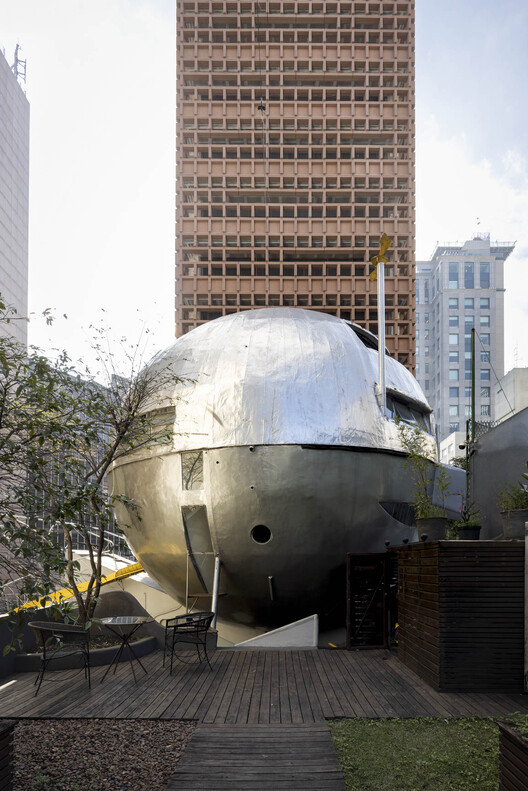
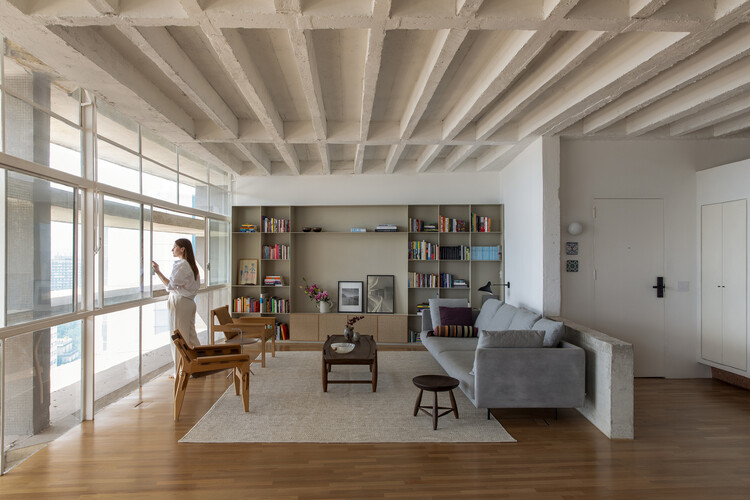
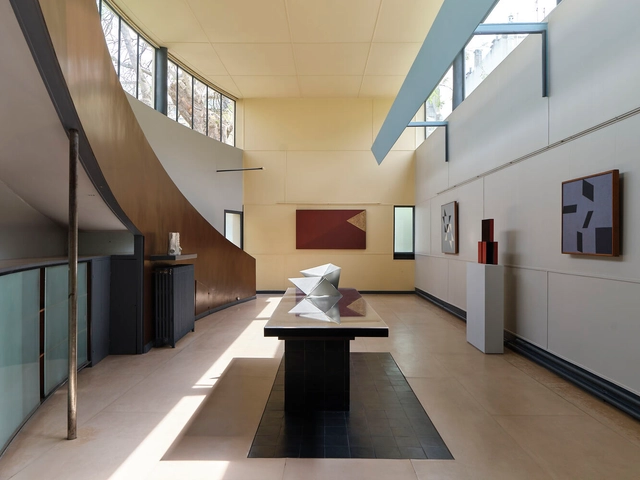
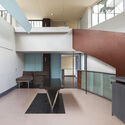
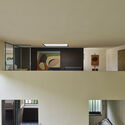
From 7 March to 31 May 2026, Brazilian architect Eduardo Longo's Casa Bola will open to the public for the first time. The futuristic ball-shaped house in São Paulo will host one of the two parts of the ABERTO5 exhibition, alongside a project on Faria Lima, a major avenue at the heart of the city featuring landmarks by architects such as Ruy Ohtake and Isay Weinfeld. Founded in 2022, ABERTO is an exhibition platform that promotes the encounter of architecture, art, and design in Brazil and internationally. After its first international exhibition at Maison La Roche in Paris, ABERTO returns to São Paulo for its fifth edition, presenting over 60 art and design pieces by 50 Brazilian and international artists. According to architect and curator Fernando Serapião, Casa Bola represents one of the most radical works of Brazilian architecture, challenging conventional domestic space and reflecting Eduardo Longo's experimental vision for housing.

Eduardo Longo’s Futuristic Spherical House in São Paulo to Open for ABERTO5 Exhibition - Image 1 of 4Eduardo Longo’s Futuristic Spherical House in São Paulo to Open for ABERTO5 Exhibition - Image 2 of 4Eduardo Longo’s Futuristic Spherical House in São Paulo to Open for ABERTO5 Exhibition - Image 3 of 4Eduardo Longo’s Futuristic Spherical House in São Paulo to Open for ABERTO5 Exhibition - Image 4 of 4Eduardo Longo’s Futuristic Spherical House in São Paulo to Open for ABERTO5 Exhibition - More Images+ 5

Inside the Construction of Niemeyer’s Cristo Rei Cathedral in Belo Horizonte, Seen Through Paul Clemence’s Lens

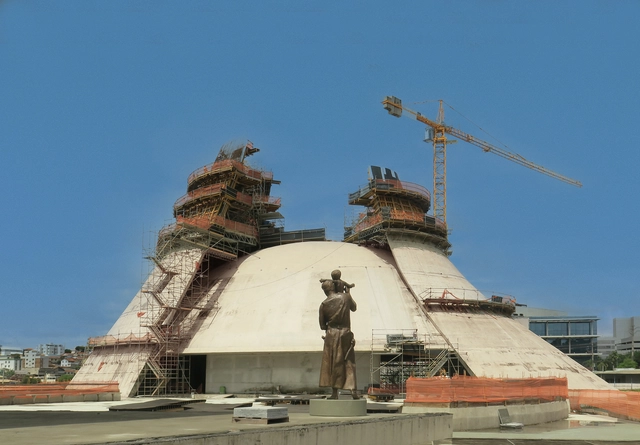
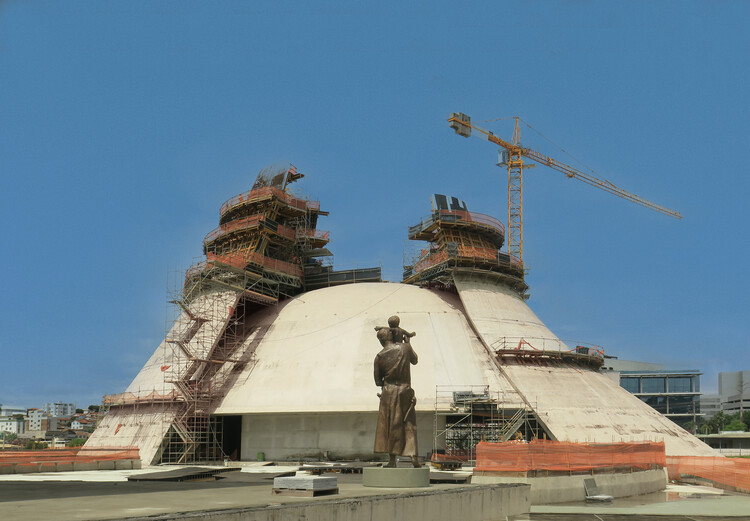
The Cristo Rei Cathedral is Oscar Niemeyer's design for the cathedral of Belo Horizonte, the capital of the state of Minas Gerais in southeastern Brazil. Conceived between 2005 and 2006, it is one of the late architect's final projects in the country. The design features a domed structure approximately 60 meters in diameter, suspended by two towering elements rising 100 meters high. Niemeyer referred to the project as a "square," consisting of a cathedral with a capacity for 3,000 people and an external altar designed to accommodate up to 20,000 worshippers for mass and public events. Construction began in 2013 and is still ongoing. Earlier this year, photographer Paul Clemence visited the site, documenting the building process and capturing the emergence of Niemeyer's signature curves.
Inside the Construction of Niemeyer’s Cristo Rei Cathedral in Belo Horizonte, Seen Through Paul Clemence’s Lens - Image 1 of 4Inside the Construction of Niemeyer’s Cristo Rei Cathedral in Belo Horizonte, Seen Through Paul Clemence’s Lens - Image 2 of 4Inside the Construction of Niemeyer’s Cristo Rei Cathedral in Belo Horizonte, Seen Through Paul Clemence’s Lens - Image 3 of 4Inside the Construction of Niemeyer’s Cristo Rei Cathedral in Belo Horizonte, Seen Through Paul Clemence’s Lens - Image 4 of 4Inside the Construction of Niemeyer’s Cristo Rei Cathedral in Belo Horizonte, Seen Through Paul Clemence’s Lens - More Images+ 23

Generations of Change: Women Who Redefined Landscape Architecture

Women have played a pivotal role in the evolution of landscape architecture, overcoming the constraints of a male-dominated profession to introduce groundbreaking ideas and fresh perspectives. From early pioneers to contemporary leaders, their work has reshaped how we interact with public and private spaces, intertwining aesthetics, functionality, and sustainability in innovative ways.

In the late 19th and early 20th centuries, female landscape architects carved out their place in the profession, emphasizing harmony between built structures and natural landscapes. Their projects showcased a deep commitment to community and ecological balance, setting the stage for an inclusive and thoughtful approach to design that continues to inspire the field today.

Generations of Change: Women Who Redefined Landscape Architecture - Image 1 of 4Generations of Change: Women Who Redefined Landscape Architecture - Image 2 of 4Generations of Change: Women Who Redefined Landscape Architecture - Image 3 of 4Generations of Change: Women Who Redefined Landscape Architecture - Image 4 of 4Generations of Change: Women Who Redefined Landscape Architecture - More Images+ 31

Architecture Classics: Crematorium at Vila Alpina / Ivone Macedo Arantes

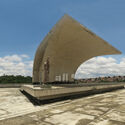
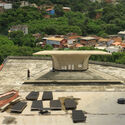
Architecture Classics: Crematorium at Vila Alpina / Ivone Macedo Arantes - Religious BuildingsArchitecture Classics: Crematorium at Vila Alpina / Ivone Macedo Arantes - Religious BuildingsArchitecture Classics: Crematorium at Vila Alpina / Ivone Macedo Arantes - Religious BuildingsArchitecture Classics: Crematorium at Vila Alpina / Ivone Macedo Arantes - Religious BuildingsArchitecture Classics: Crematorium at Vila Alpina / Ivone Macedo Arantes - More Images+ 15

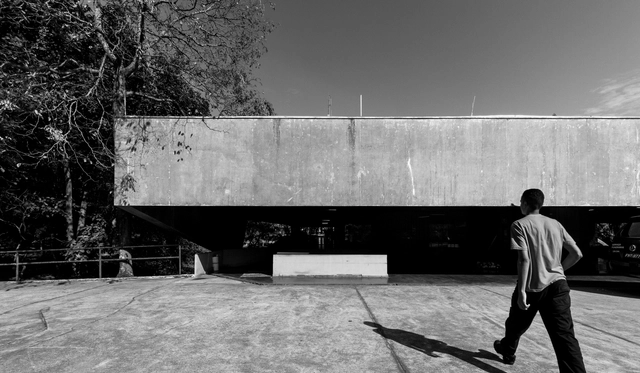
The Jayme Augusto Lopes Crematorium, popularly known as Crematorium of Vila Alpina, is located in Jardim Avelino, on the east side of the city of São Paulo. It was designed by architect Ivone Macedo Arantes - at the time an employee of the Cemetery Department of the City of São Paulo - and was inaugurated in 1974. It is considered to be the first crematorium in Brazil and Latin America and one of the largest in the world.

Iconic Columns in Modern Brazilian Architecture

Subscriber Access | 

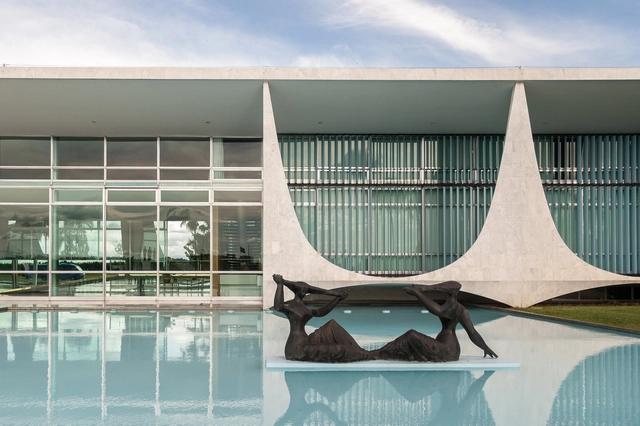
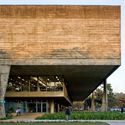
Of Le Corbusier's five points of modern architecture (the ribbon window, free design of the façade and ground plan, a roof garden, and pilotis), pilotis are perhaps the most used element in Brazilian modern architecture.