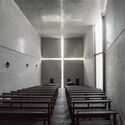
Taschen's new book, published in October 2025, Tadao Ando. Sketches, Drawings, and Architecturepresents an in-depth exploration of the Japanese architect Tadao Ando's creative process, bringing together over 750 sketches, drawings, models, and technical plans developed over nearly five decades. Created in close collaboration with Ando himself, the book provides a rare view into how his ideas take shape, from the immediacy of the first pencil lines to the precision of architectural drawings that define his built works. Through these materials, the publication highlights Ando's enduring focus on the relationship between hand, thought, and space.
If we ever wonder what the future could look like, all we have to do is take a look into our past, and observe how far we have come since thousands, a hundred, or even ten years ago. Life was radically different back then and it will be just as different in the future. And since we are well aware that the future merely resembles the present, we have the possibility to shape our future the way we want to. TASCHEN's latest BIG book installment Formgiving. An Architectural Future History explores the past, present, and future, drawing a timeline of the built environment from taking shape to giving form.
This essay by Alan Hess about the iconic Capitol Records building in Los Angeles was originally published as "The Architecture of the Capitol Records Tower." It is part of the book 75 Years of Capitol Records, published by TASCHEN, which is scheduled for release in February.
The president of Capitol Records was certain that a serious company could not operate out of a building that looked like the stack of records in a jukebox. So when Welton Becket, the new headquarters’ architect, showed him a model of the multistoried circular tower, Wallichs was annoyed. It would look like an advertising gimmick, Wallichs said, in a city where hot dogs were sold out of buildings shaped like hot dogs. Becket countered that the circular floor plan was more cost-efficient for the amount of usable space than a standard rectangular office building. Unimpressed, Wallichs told Becket to go back and design a conventional building.
The myth that a stack of records inspired the Tower has never died, though. As soon as the building opened, Hollywood columnist Bob Thomas wrote about it as “a monstrous stack of records.” Wallichs went on a public offensive from the start: “There was no intentional relationship between the shape of phonograph records and the circular design of the Tower” he insisted to the Chicago Tribune.
Taschen’s latest volume draws together the architectural underdogs that, despite their minute, whimsical forms, are setting bold new trends for design.
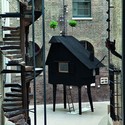
When economies falter and construction halts, what happens to architecture? Rather than indulgent, personal projects, the need for small and perfectly formed spaces is becoming an economic necessity, pushing designers to go further with less. In their new volume Small: Architecture Now!, Taschen have drawn together the teahouses, cabins, saunas and dollhouses that set the trends for the small, sensitive and sustainable, with designers ranging from Pritzker Laureate Shigeru Ban to emerging young practices.
Last Wednesday we told you we were giving away two copies of Yes is More, the world’s 1st architectural monograph in an eBook edition tailored to the Apple iPad. Now, thanks to BIG and Taschen, two happy reigstered users will enjoy this great eBook. The winners are Danny Taft and Maryanne Friend, and will be contacted at their e-mails. Congratulations, and remember you can register right here and enjoy the benefits!
Registering at ArchDaily can bring you many benefits. And now, it could bring you one more. Next Wednesday, thanks to BIG and Taschen, we are giving away two copies of Yes is More, the world’s 1st architectural monograph in an eBook edition tailored to the Apple iPad (of course, you can also enjoy it in the new iPad 2!)