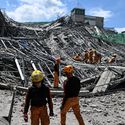
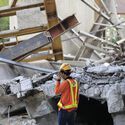
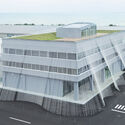
Buildings must change faster than they were built to. Shifting tenant needs, tightening climate policies, and rising office vacancies expose the cost of static stock: waste, noise, downtime, and—in the worst case—stranded assets. The consequence is clear: buildings across typologies must be designed to adapt over time. The inaugural Adaptable Building Conference (ABC), taking place on January 22, 2026, at the Nieuwe Instituut in Rotterdam, brings the industry together to turn adaptability from principle into practice.
Innovation is thriving around the world—and the latest results from the A' Design Award & Competition make that clear. The 2024–2025 edition has recognized 1,823 remarkable designs from 115 countries across 157 creative fields. From architecture and product design to fashion and communication, these entries highlight what happens when imagination meets craftsmanship.
Chosen by an international jury of design experts, this year's winners offer fresh perspectives and bold ideas. The A' Design Award isn't just about recognition—it's about celebrating original thinking and the creative minds reshaping how we interact with the world.
The Second Studio (formerly The Midnight Charette) is an explicit podcast about design, architecture, and the everyday. Hosted by Architects David Lee and Marina Bourderonnet, it features different creative professionals in unscripted conversations that allow for thoughtful takes and personal discussions.
A variety of subjects are covered with honesty and humor: some episodes are interviews, while others are tips for fellow designers, reviews of buildings and other projects, or casual explorations of everyday life and design. The Second Studio is also available on iTunes, Spotify, and YouTube.
This week David and Marina of FAME Architecture & Design discuss the responsibilities and roles of the Design Architect and the Architect of Record (AOR) also known as the Executive Architect when working together during each project phase from pre-design to concept design; schematic design; design development; construction documentation; bidding; and construction. They two also discuss legal liabilities; fee differences; knowledge overlap; and more.
https://www.archdaily.com/1025778/the-second-studio-podcast-executive-architect-and-design-architect-roles-explainedThe Second Studio Podcast
Over-providing traditionally implies offering more than is necessary, often carrying a negative connotation due to the potential for excess and waste. However, could there be scenarios within the built environment where over-providing proves advantageous? The question critically examines how overprovisioning might enhance a building's flexibility and adaptability to diverse and evolving conditions.
The underlying assumption of accurately providing what is needed for a building is that stakeholders—including owners, architects, and designers—can accurately predict and cater to a structure's current and future needs. This assumption, however, is challenging to realize, as societal, economic, and cultural shifts frequently occur in unpredictable ways. In this context, over-providing emerges as a counterintuitive yet potentially beneficial strategy. As buildings and structures inevitably transform, those designed with inherent adaptability reduce the need for costly renovations or complete rebuilds.
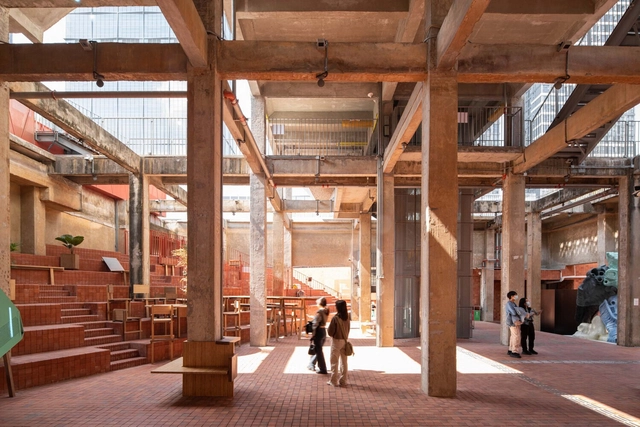
How have architecture and building design adapted to unforeseen future uses? As cities evolve, their needs for buildings inevitably change. Buildings may transition between cultural, commercial, industrial, and office functions depending on a city's identity and economic activity. In a world that is becoming increasingly dynamic and fast-paced, it's essential to consider the challenges static structures face when required to meet new demands. Cities have repurposed these static structures in ways not anticipated during their original design, with many successes in repurposing industrial buildings. Unlike structures designed with flexibility in mind, most manufacturing facilities were not initially intended for multiple uses. Yet, how have cities, communities, and occupants used these spaces, and what are the challenges of transforming a building’s existing uses?
The Second Studio (formerly The Midnight Charette) is an explicit podcast about design, architecture, and the everyday. Hosted by Architects David Lee and Marina Bourderonnet, it features different creative professionals in unscripted conversations that allow for thoughtful takes and personal discussions.
A variety of subjects are covered with honesty and humor: some episodes are interviews, while others are tips for fellow designers, reviews of buildings and other projects, or casual explorations of everyday life and design. The Second Studio is also available on iTunes, Spotify, and YouTube.
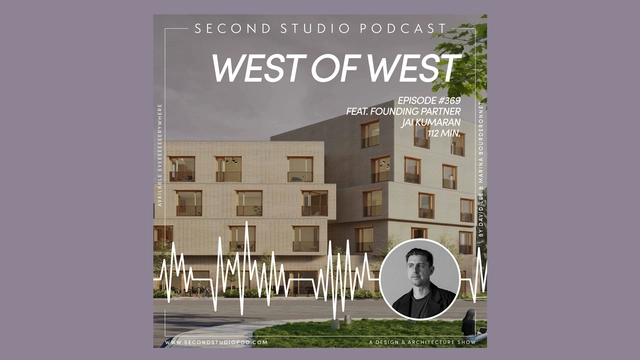
This week David and Marina of FAME Architecture & Design are joined by Architect Jai Kumaran, founding partner of West of West to discuss his background; the influence his father’s work had on his career; attending architecture school; why he pursued a master’s degree; starting and growing an office; exploring project types; branding in architecture; and more!
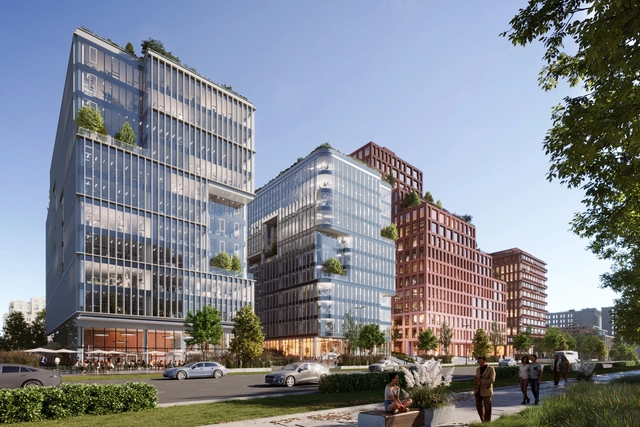
MVRDV and Orange Architects collaborate on the NUVO project, a new mixed-use complex to be built in Ukraine’s capital, the team of architects has revealed their design for three of the buildings that will become part of NOVO. Commissioned by Kovalska, the project is now restarting after work was put on hold due to the active conflict in Ukraine. The two firms are collaborating to refine the master plan initiated by APA Wojcehowski Architects.
Image created using AI under the prompt: An emotive and detailed illustration of the texture of various types of architectural insulation. Image via DALL.E 2
Although more related to evolutionary aspects than to architecture itself, the inherent physical fragility of human beings has required, since prehistoric times, that we protect our bodies and our buildings from external elements. As an example, beginning with the primitive huts used in the earliest forms of domestic architecture, furs were employed as an exterior covering to restrict the flow of air and, consequently, regulate the interior environment.
Subsequently, we have observed an evolution that clearly shows advances in insulation techniques, going from vernacular materials such as adobe to an increase in the thickness of walls using stone or brick, finally reaching the cavity walls developed in the 19th century, which left a small air chamber between an exterior and an interior face of the wall. Its later popularization led to the introduction of insulation between both faces, a system that is widely recognized and used today and has laid the foundations for further developments in this field.
https://www.archdaily.com/1008656/a-glimpse-into-the-evolution-of-insulation-materials-in-architectureEnrique Tovar
Bate Borisov Arena / OFIS Architects. Image Courtesy of Euramax
Building envelopes create a physical boundary or shell integrated to the outer skin of a structure, separating indoor and outdoor environments. By assembling architectural components such as walls, roofs, windows and doors, the building is enclosed to provide protection and insulation, playing a determining role in the energy efficiency, comfort, structure, and durability of the project. Through multiple styles and shapes, they are key to giving character to a building, its visual appearance and integration with the surrounding environment.
Maintaining the fundamental functions of an envelope while playing with aesthetic possibilities, Euramax’s tailor-made metal cladding solutions create unconventional, colorful envelopes for designing with innovative geometries, patterns, and configurations.
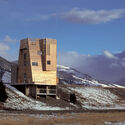
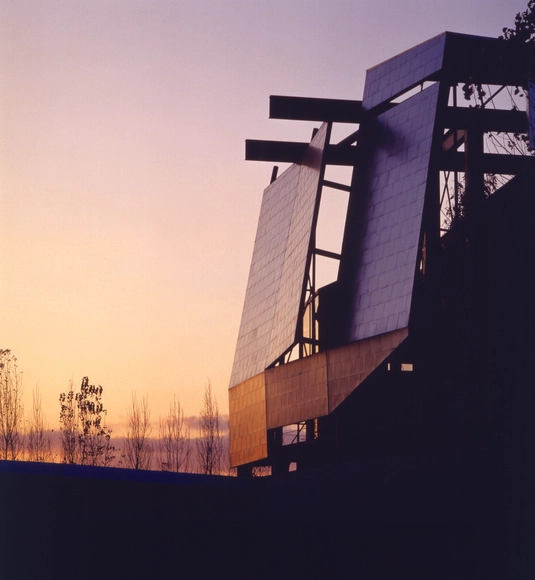
Carlson-Reges House (1992-1996). Image Courtesy of Michael Rotondi
Michael Rotondi’s buildings—museums, civic centers, education facilities, monasteries, restaurants, and residences—evoke kinetic mechanisms that fold, hinge, twist, and split open. They express the architect’s feelings, thinking, and mood at the time they had been designed, and, on some occasions, during their assembly and construction. Rotondi was born in 1949 in Los Angeles.
He established his RoTo Architects, a research-based firm in his native city, in 1991 after co-heading Morphosis for 16 years with Thom Mayne. Parallel to his practicing career, the architect has been teaching and lecturing at SCI-Arc, Southern California Institute of Architecture, which he co-founded in 1972, led its graduate program from 1978-1987, and was the school’s second director for a decade from 1987 to 1997.
Although it was originally published in 2019,this essay by Randy Nishimura, lightly updated, serves as a rebuttal of sorts to Duo Dickinson’s recent Common Edge piece, “The Architectural Pandemic of the ‘Stick Frame Over Podium’ Building.” Dickinson likens the building type to a plague; Nishimura offers a contrarian’s perspective.
A recent spate of articles bemoaning the proliferation of 5-over-1 apartment buildings caught my attention. Outlets such as Bloomberg, Common Edge, Crosscut, and Curbed have all commented on the building type, the common thread being a reproach for their ubiquity, sameness, and inexpensive construction. Some of the critiques rightfully point to the confluence of multiple factors—evolving building codes, a lack of developable land, rising construction costs, and an acute lack of affordable housing—that have given rise to countless examples of the type across the country. The same dynamics are in play here in my hometown of Eugene, Oregon, so we naturally have our share of 5-over-1 developments.
It is difficult to measure, observing a completed building, the amount of work, resources and knowledge that were deposited there. All decisions made influence in some way the performance of the building and its durability. As for the execution details, not all architects allow the dissemination of their constructive solutions. There are professionals, however, who go against the grain and focus on disseminating knowledge, identifying common design decisions that can lead to pathologies (such as leaks, rot, corrosion, mold and odors) and more economical ways to avoid them. This is the idea behind Building Science Fight Club, an Instagram profile whose purpose is to explain some issues and critically analyze certain constructive details and ways of installing materials. We spoke with Christine Williamson, creator of the platform, about her journey. See the full interview below:
The new headquarters of the building materials manufacturer HeidelbergCement consists of three interconnected building sections of different heights. The atrium of each building section provides plenty of light and luminance. The building was opened in June 2020 and provides up to 1,000 employees with a state-of-the-art work environment. The architectural firm AS+P Albert Speer + Partner based in Frankfurt was responsible for the project as a general planner, and carried out the design in collaboration with W+Architektur, with the latter providing the consulting office for the client’s project manager.
PERI, one of the leading formwork and scaffolding manufacturers worldwide - and the building materials manufacturer HeidelbergCement - combined their architectural and concrete expertise for the execution of this project. In doing so, the existing limits of PERI’s concrete construction offerings were pushed. The architectural highlights of the project were successfully realized using special PERI formwork elements.
Jeffry Burchard explores in his essay the "opportunity found by extending the life and purpose of viable existing buildings", that have shaped our cities. Arguing that "we have an abundant supply of buildings", the author proposes four essential steps to transform existing buildings.
Focusing on the different typologies of houses, this week’s curated selection of Best Unbuilt Architecture highlights conceptual projects submitted by the ArchDaily Community. From urban developments to tiny homes, this article explores the topic of residential architecture and presents approaches from all over the world.
Featuring a cabin amidst the verdant forested region of northern Iran, a development in Georgia that offers an 80% recreational space to 20% housing ratio, and a project in Paris that re-questions our urban reality, and rethinks traditional forms of housing, this roundup tackles a multitude of scales. In addition, it underlines a collection of beach houses in Greece, Italy, Argentina, and Latvia each responding to a different landscape and topography. Other ideas underlined include the renovation of existing developments in Moscow, a residential-led transformation of a former factory in Manchester, and a family of blocks grouped around an elevated communal garden in the Netherlands.

ARC House. Image Courtesy of M.E architecture studio
Houses and Villas are the most researched topics on ArchDaily. Putting together a curated selection of conceptual interventions, this week’s Best Unbuilt Architecture focuses on the residential sector. From all over the world, this group presents proposals submitted by our readers.
This article highlights a floating terraces project from India, a lodge in Ethiopia, a seasonal home for an Iranian family in Germany, and a residential compound in Saudi Arabia. Beach houses in Greece, Croatia, and the U.S. are also featured, showcasing different approaches for the same program. Moreover, more futuristic interventions include the Mountain House on the rocky cliffs of British Columbia, and the blue house, an aquarium-like type of home.
This week’s curated selection of best unbuilt architecture features conceptual residential projects submitted by our readers from all around the world. Highlighting innovative designs, approaches, and compositions, this roundup puts together a series of inspiring interventions that offer a fresh look on the typical house structure.
In the following article, ArchDaily has gathered ideas from Poland, France, Hungary, Iran, and the United States. Grouped under one common theme, the feature includes a new take on the typical building complex, an attempt to shorten the transitional gap between a house and an apartment, and a collection of modular residential models that can be implemented anywhere. Moreover, it also showcases Christophe Benichou’s latest intervention, “The Pleated House” located in the Hautes Alpes in France, a hyper-sustainable house on the beach and a structure completely erased and integrated into the natural landscape.