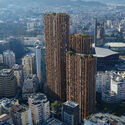
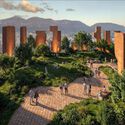
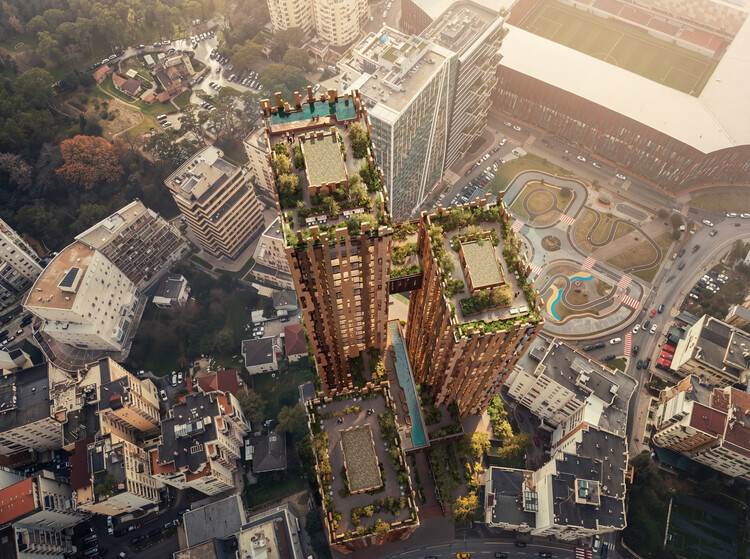
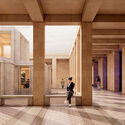
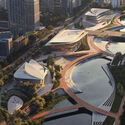
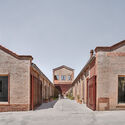
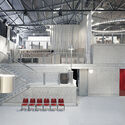
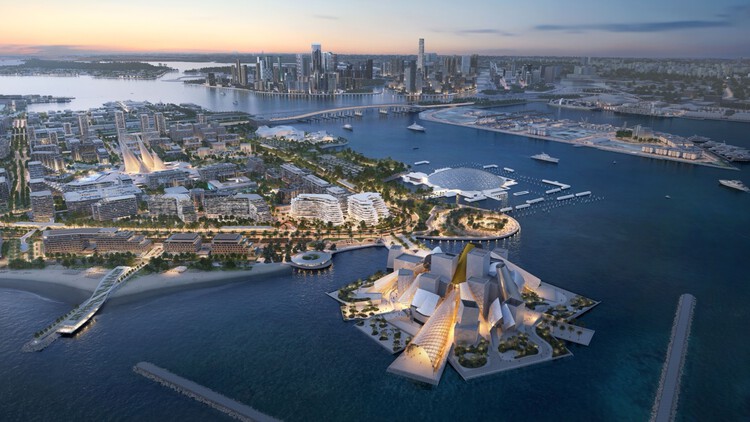
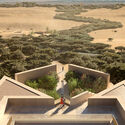
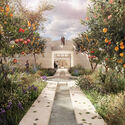
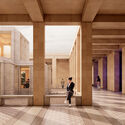
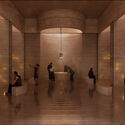
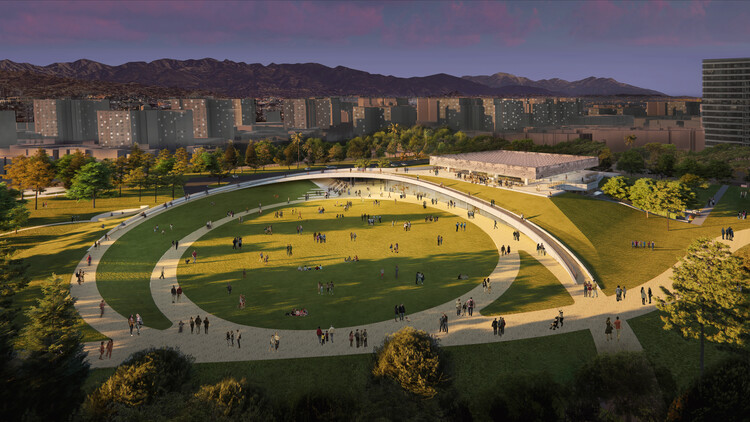
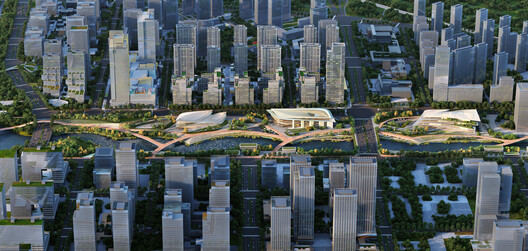
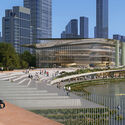
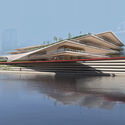
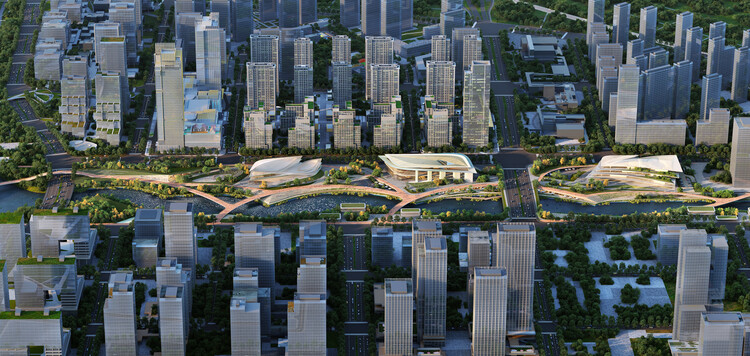
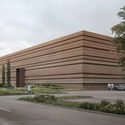
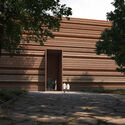
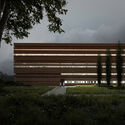
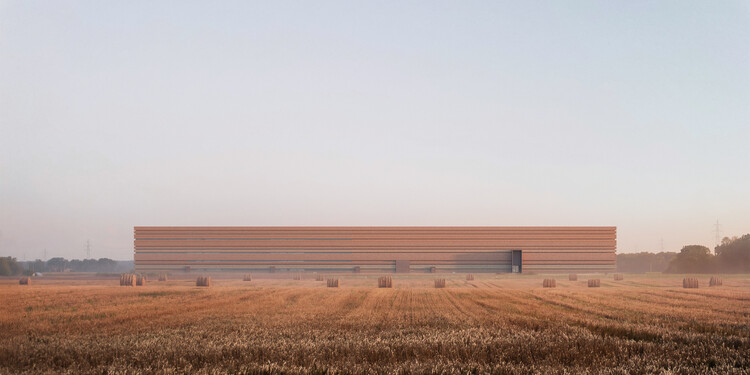
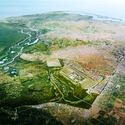
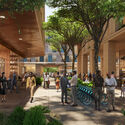
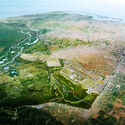
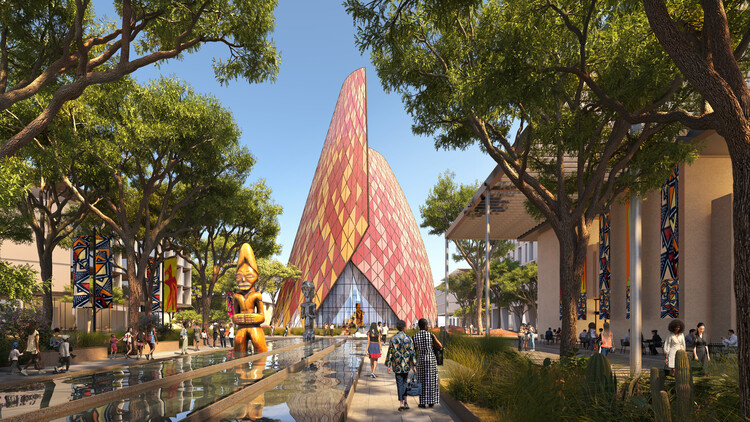
Rojkind Arquitectos, in collaboration with artist Pedro Reyes, SON Architects, Motus Holdings, and ASAB, has been selected as the winner of the mixed-use component in the International Concept Design and Build Competition for the redevelopment of the Zyber Hallulli site in Tirana, Albania. Organized by the Albanian Investment Corporation in partnership with the National Agency for Territorial Planning, the competition was launched in September 2025, with the jury announcing its decision on January 29, 2026. The proposal led by the Mexico-based office was awarded the mixed-use development, while a separate Mexican practice, Taller Héctor Barroso, was selected to design CASA FAMILIA, a new children's campus to be built on a greener, more child-oriented site.
Baccarat Residence . Image Courtesy of Sou Fujimoto Architects
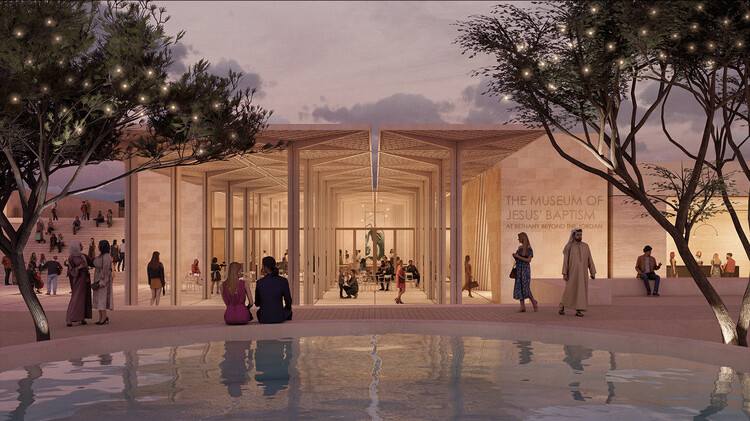
This week's news landscape brought together diverse approaches to built and cultural heritage, ranging from the design of a Museum of Jesus' Baptism at a UNESCO World Heritage Site in Jordan to major transformations of modern industrial sites and the development of major cultural districts. The World Monuments Fund's support for 21 locally led heritage projects foregrounds conservation strategies that reinforce the role of architecture in safeguarding both material and intangible heritage. Across this week's highlighted projects, adaptive reuse, landscape integration, and the reconfiguration of civic space emerge as recurrent strategies for extending the life and relevance of existing built environments. The projects also reflect broader contemporary concerns, including material research in timber construction, zero-waste urban installations, large-scale residential efficiency, and infrastructure upgrades linked to global events like the Olympic Games. Framing these developments within a wider territorial perspective, discussions on relocating capital cities worldwide offer an example of how geopolitical discourses continue to shape architecture, revealing the evolving relationship between the built environment and structures of power over time.
The Renovation of Tianbao Cave District of Erlang Town by Liu Jiakun, the 2025 Pritzker Architecture Prize laureate. Image Courtesy of Arch-Exist
As the architecture community looks ahead to the announcement of the 2026 Pritzker Architecture Prize, anticipation is once again building around who will be named this year's laureate. While the official date has yet to be confirmed, the annual reveal traditionally takes place in early March, marking one of the most closely watched moments in the architectural calendar. Established in 1979 by the Hyatt Foundation, the Pritzker Architecture Prize is widely regarded as "the profession's highest honor." Each year, it recognizes a living architect, or architects, whose work demonstrates a consistent and significant contribution to humanity and the built environment. Over the decades, the award has reflected shifting priorities within the discipline, highlighting practices engaged with social equity, environmental responsibility, material experimentation, and cultural continuity.
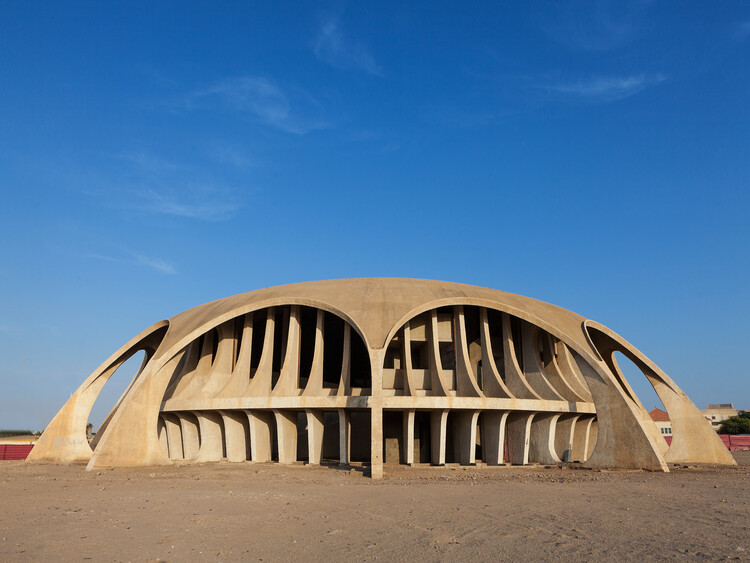
World Monuments Fund (WMF) is an independent organization dedicated to safeguarding treasured places around the world that enrich lives and foster mutual understanding across cultures and communities. On February 10, WMF announced a $7 million commitment to support 21 heritage preservation projects launching in 2026. These investments advance work at sites included on the 2025 World Monuments Watch, WMF's nomination-based advocacy program, while also supporting new phases of conservation, planning, and training at additional heritage sites across five continents. The selected sites reflect a wide chronological and geographic range, from ancient cultural landscapes to modern architectural landmarks. The projects highlight the diversity of global heritage, spanning Mughal gardens and Ottoman religious complexes to modernist cinemas, industrial mining landscapes, Indigenous cultural routes, and sacred shrines, and point to the long-term cultural knowledge embedded in its preservation.
The Milano Cortina 2026 Winter Olympics officially opened on Friday, February 6, with a ceremony staged across four locations in northern Italy. The main opening event took place at San Siro Stadium, one of Milan's most significant modernist landmarks, and combined dance and performing arts, referencing Italian culture with performances by international artists, including pop star Mariah Carey. Although several competitions had already begun on February 4, the opening ceremony marked the start of a broader programme of sporting, social, and cultural events distributed across Milan and the three Alpine host areas: Cortina d'Ampezzo, Valtellina, and Val di Fiemme. The Games are scheduled to run until February 22, concluding with a closing ceremony at the Verona Arena, ahead of the Paralympic Games, which will take place from March 6 to 15. As a large-scale international event, the Olympics place significant demands on sports infrastructure, transportation networks, accommodation, and tourism capacity, offering early indications of the longer-term urban, architectural, and territorial impacts the Games may leave behind.
New renderings released by WEISS/MANFREDI reveal updated plans for the ongoing transformation of the La Brea Tar Pits in Los Angeles, a comprehensive redesign that integrates the museum, landscape, and active excavation areas into a continuous public and research-oriented campus. Alongside the design update, the Natural History Museums of Los Angeles County (NHM) has announced the creation of the Samuel Oschin Global Center for Ice Age Research, a new initiative supported by the Samuel Oschin Family Foundation, which advances the site's long-term redevelopment. The transformation project is led by WEISS/MANFREDI as design lead for the museum and park, with Gruen Associates serving as executive architect and landscape architect, and Kossmanndejong (KDJ)responsible for exhibition design. Fundraising efforts are ongoing, with the project positioned for completion ahead of the 2028 Olympic Games in Los Angeles.
The recently inaugurated exhibition matière en résonance ("resonant matter") brings together a wide range of models and a curated selection of photographs to present sauerbruch hutton's ongoing exploration of timber. The exhibition starts from the premise that while the age of concrete defined the twentieth century, the early twenty-first century has seen a worldwide resurgence of timber, a much older building material. Timber is presented as offering "a different version of modernity" and as the subject of renewed interest that reawakens long-standing collective imaginaries. Over more than two decades, the Berlin-based architecture practice has explored the possibilities of timber construction, from façade elements to load-bearing structures and modular systems. The exhibition reflects the results of this sustained investigation, reinforcing both technical innovation and the embodied qualities of timber across a diverse range of European contexts. The exhibition will be on view from 3 to 28 February 2026 at the Galerie d'Architecture de Paris.
Across history, the relocation of capital cities has often been associated with moments of political rupture, regime change, or symbolic nation-building. From Brasília to Islamabad, new capitals were frequently conceived as instruments of centralized power, territorial control, or ideological projection. In recent decades, however, a different set of drivers has begun to shape these decisions. Rather than security or representation alone, contemporary capital relocations are increasingly tied to structural pressures such as demographic concentration, infrastructural saturation, environmental risk, and long-term resource management. As metropolitan regions expand beyond their capacity to sustain population growth and administrative functions, governments are turning to spatial reconfiguration as a means of addressing systemic urban imbalance.
Zaha Hadid Architects has released images of its design for the redevelopment of the waterfront along the Zhedong Canal in Hangzhou's Xiaoshan District, China. The Qiantang Bay Central Water Axis project envisions a sequence of landscaped parklands, terraces, and gardens along the canal basin, proposing the transformation of former industrial areas into a green corridor extending toward the city center. The proposal adds to other recent design initiatives in the area, including Snøhetta's Qiantang Bay Art Museum, planned at the confluence of the Qiantang River and the Central Water Axis, as well as Zaha Hadid Architects' Grand Canal Gateway Bridge, a pedestrian bridge intended to connect the firm's 800,000-square-meter Seamless City masterplan on the east and west banks of the Grand Canal.
The European Commission and the Fundació Mies van der Rohe have announced the seven finalist projects for the 2026 European Union Prize for Contemporary Architecture - Mies van der Rohe Awards, supported by the European Union's Creative Europe programme. The selection follows the announcement of 410 nominated works in November and a shortlist of 40 projects revealed in early January. Of the seven finalists, five have been selected in the Architecture category and two in the Emerging category. According to the jury chaired by Smiljan Radić, the finalist projects are exemplary contributions to the future of European architecture, demonstrating how the discipline can respond simultaneously to specific local conditions and broader social, cultural, and environmental challenges. The selected works range from interventions in former industrial sites, small villages, and peripheral urban areas to carefully calibrated projects within larger cities. Across these varied contexts, the projects show how architecture can transform overlooked or ordinary settings into inclusive, high-quality spaces for living, learning, and social exchange.
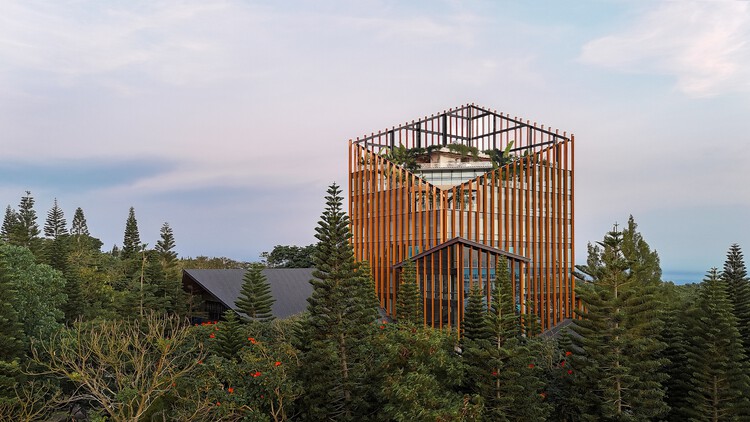
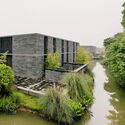
Tagaytay City Hall / WTA Architecture and Design Studio. Image Courtesy of WTA Architecture and Design Studio
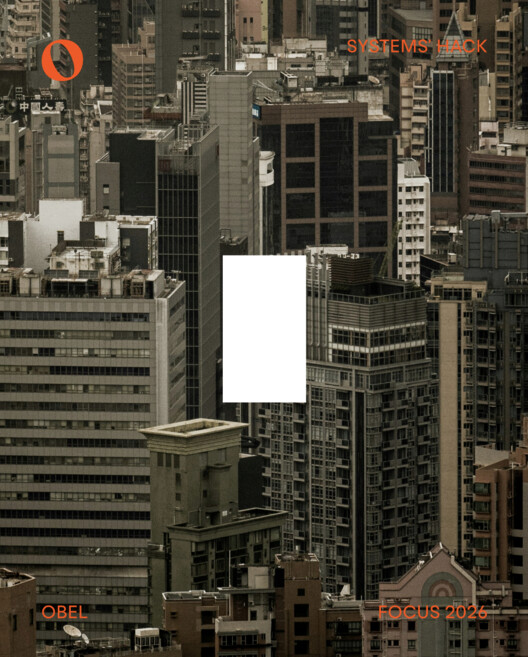
This week's architecture news brings together a series of announcements that reflect how the discipline is engaging with larger structural and institutional frameworks. The OBEL Foundation's introduction of Systems' Hack as the theme for its 2026 cycle foregrounds architecture's relationship to the systems that organize contemporary life, from infrastructure to resource flows. At the scale of the design industry, Salone del Mobile.Milano's outline of its 2026 framework, including OMA's involvement in the Salone Contract master plan, signals an evolving understanding of major fairs as long-term cultural and economic infrastructures rather than standalone events. Running alongside these agenda-setting developments, the final days of nominations for the 2026 ArchDaily Building of the Year Awards underscore the role of collective evaluation and public participation in shaping contemporary architectural discourse.
Sordo Madaleno, in collaboration with építész stúdió and Buro Happold, has been selected to design the 43,000-square-meter New Debrecen Collection Center for the Hungarian Museum of Natural History. Debrecen, Hungary's second-largest city, is currently the focus of significant urban and university-related development, including plans to relocate the Hungarian Museum of Natural History from Budapest to the edge of Debrecen's Great Forest. The proposed Collection Center is conceived as a facility dedicated to the controlled storage and study of more than 11 million objects, drawing conceptual inspiration from traditional Hungarian clay vessels, structures historically used to protect and preserve. The project would mark the first European cultural commission for the Mexican architecture practice, which operates studios in London and Mexico City.
There's only one week left to nominate your favorite projects for the 2026 Building of the Year Awards! This is your chance to recognize the best architecture from around the world in 15 categories, from housing to educational projects, offices, interiors and more.
https://www.archdaily.com/1038334/last-days-to-nominate-for-the-2026-archdaily-building-of-the-year-awardsDaniela Porto
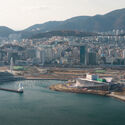
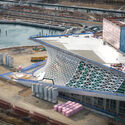
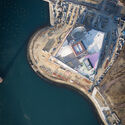
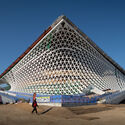
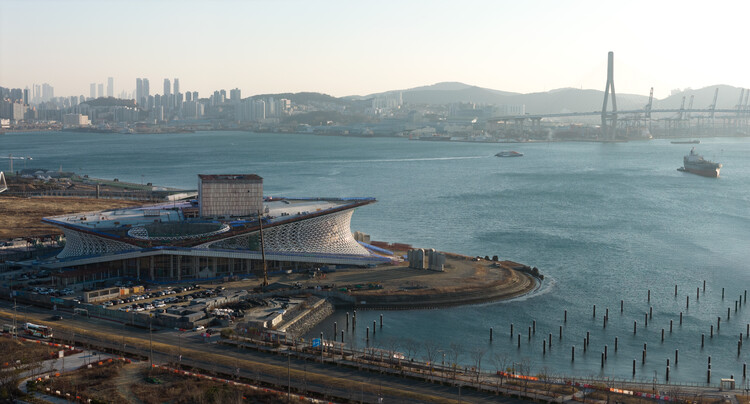
Commissioned in 2012 following an international design competition, Snøhetta's BusanOpera House is under construction on the city's North Port waterfront, with major works scheduled for completion in late 2026 and an opening planned for 2027. Conceived as the first opera house in South Korea's second-largest city, the project redefines the traditional opera house as an open and inclusive civic institution. Rather than operating solely as a venue for performance, the building is envisioned as a public destination that supports everyday use, collective experience, and long-term cultural engagement within Busan's evolving urban landscape.
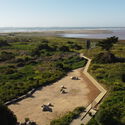
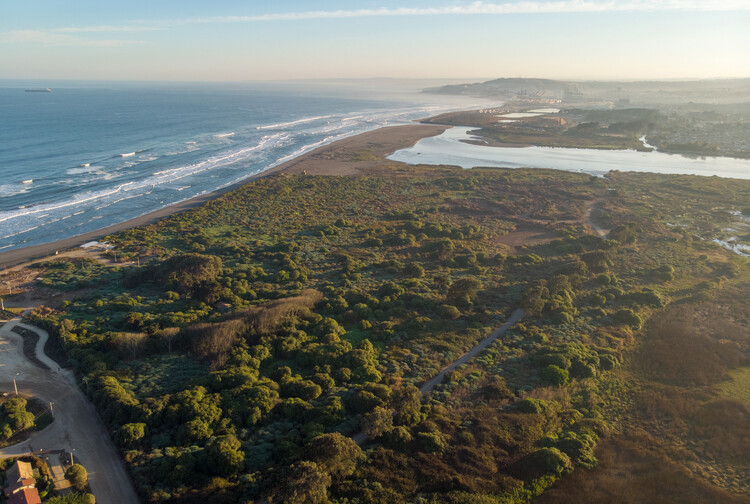
Santuario de la Naturaleza Humedal Río Maipo. Image Courtesy of Fundacion Cosmos
Observed annually on February 2, World Wetlands Day marks the adoption of the Ramsar Convention in 1971 and provides an international framework for recognizing the role of wetlands in environmental protection and sustainable development. The 2026 edition is held under the theme "Wetlands and traditional knowledge: Celebrating cultural heritage," drawing attention to the long-standing relationships between wetland ecosystems and the cultural practices, knowledge systems, and governance structures developed by communities over centuries. The theme highlights how inherited ecological knowledge, often embedded in rituals, seasonal calendars, land-use practices, and spatial organization, has shaped resilient interactions between human settlements and water-based landscapes.
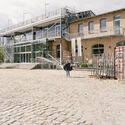
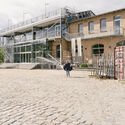
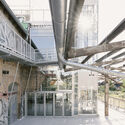
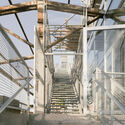
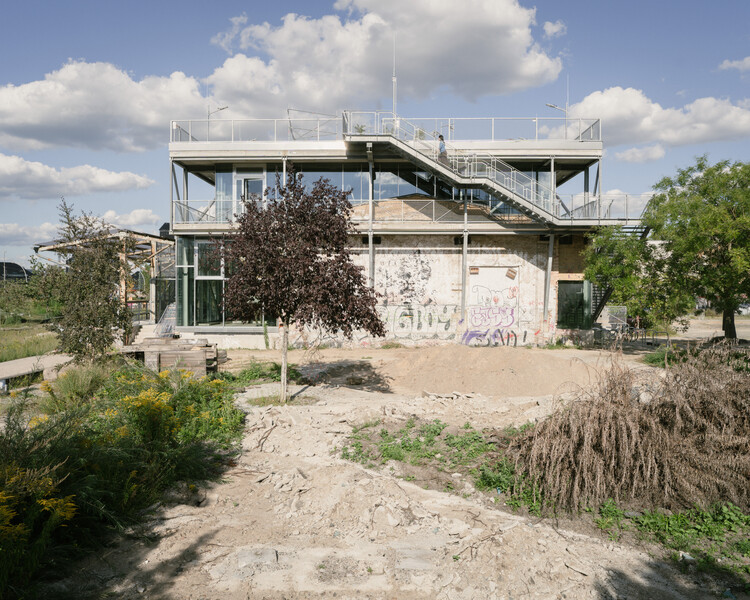
The 20th edition of the DAM Preis 2026 has been awarded to Peter Grundmann Architekten for the ZK/U Center for Art and Urbanistics, an adaptive reuse project in Berlin, Germany. The project transforms a former single-story warehouse at a freight station in Berlin-Moabit into a cultural meeting place. The jury recognized the practice's transformative approach, highlighting the use of an above-average amount of manual labor and a modest budget to encase the existing hall in a lightweight steel-and-glass structure and add an additional floor. Developed in close collaboration with the non-profit association KUNSTrePUBLIK e. V., the project supports a wide-ranging public program established at the former freight station since 2012, including exhibitions, performances, artist residencies, repair workshops, neighborhood markets, and public viewings. Peter Grundmann Architekten was selected through a Europe-wide tender process and commissioned to build the acclaimed extension in 2019.
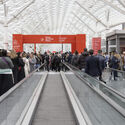
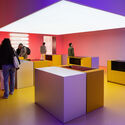
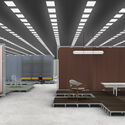
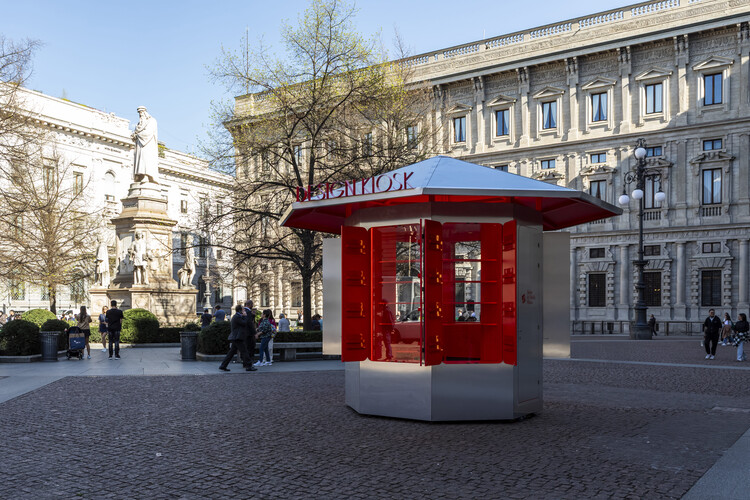
Salone del Mobile.Milano has announced the framework for its 64th edition, scheduled to take place from April 21 to 26, 2026, at Fiera Milano, Rho. The upcoming edition will bring together more than 1,900 exhibitors from 32 countries across over 169,000 square meters of exhibition space, highlighting the fair's continued scale and international reach. Beyond its quantitative dimension, the 2026 Salone positions itself as an evolving cultural and economic infrastructure, increasingly structured around long-term strategies rather than isolated events. The program reflects a growing emphasis on accessibility, curatorial depth, and cross-sector dialogue, pointing at the Salone's role not only as a marketplace for the industry but also as a platform where architectural thinking, industrial production, and global dynamics intersect within a single, coordinated framework.
Nearly one week before the start of the Milano Cortina 2026 Winter Olympics, the organizing committee has released official information on the event's Cultural Olympiad: an arts and culture programme accompanying the Olympic and Paralympic Games. The programme is recognized by the IOC as one of the three pillars of the Olympic Movement, alongside sport and education. Conceived as a widespread platform involving territories, institutions, and communities across Italy, the Cultural Olympiad aims to highlight the Italian Alps and Milan's cultural heritage while promoting Olympic values through art, history, and participation beyond the official sports venues.
The OBEL Foundation has announced "Systems' Hack" as the focus of its 2026 cycle, setting the conceptual framework that will guide the foundation's activities and the selection of the next OBEL Award. Founded in 2019, OBEL recognises architecture's potential to act as a tangible agent of positive social and ecological change, supporting approaches that expand how the built environment is defined and shaped. The 2026 theme calls on architecture to critically engage with the systems that underpin contemporary society, including infrastructure, energy, food, water, education, and information, and to examine how these interconnected networks might be reconfigured in response to accelerating global challenges.
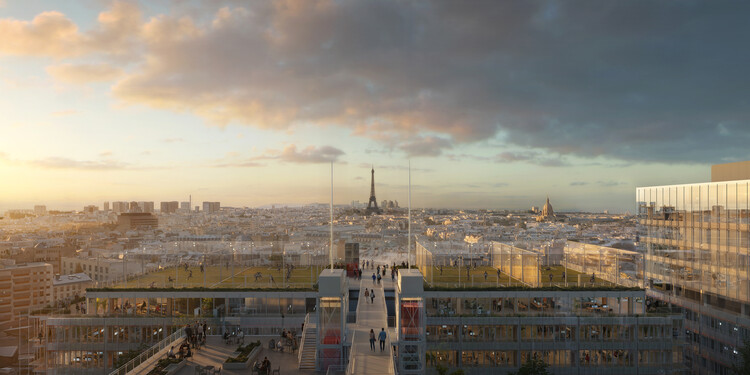
Montparnasse Commercial Centre and CIT Tower redevelopment project, 2026. Image Courtesy of RPBW
This week's news compilation opens with two international commemorations, the International Day for Clean Energy and the International Day of Education, alongside a major archaeological discovery in Fano, Italy, where excavations have revealed a basilica described by Vitruvius, linking contemporary architectural discourse with deep historical continuity. Across this week's broader architecture news landscape, a central theme emerges around the advancement of civic architecture conceived as open, publicly engaged infrastructure, with cultural and institutional projects increasingly designed to strengthen their relationship with the city and everyday urban life. At the same time, renewed global attention turns toward Africa, where large-scale transport infrastructure and the conservation of modernist landmarks reflect interests in the region and the reassessment of the continent's architectural heritage. Complementing these narratives, this week's highlights also include a new model for car-free urban districts, co-designed public landscapes grounded in indigenous knowledge, and a residential development responding to regional context, reflecting how architecture is negotiating public space, civic responsibility, and territorial identity across diverse geographies.
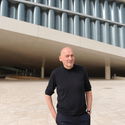
The Royal Institute of British Architects (RIBA) has announced that Irish architect, educator, and writer Níall McLaughlin will receive the 2026 Royal Gold Medal for Architecture. Awarded on behalf of His Majesty the King, the Royal Gold Medal is among the significant international distinctions in architecture, recognizing a sustained contribution to the advancement of the discipline through built work, education, and critical discourse. In announcing the award, RIBA noted McLaughlin's long-standing influence across architectural practice and pedagogy, citing a career that spans more than three decades and reflects a consistent engagement with the cultural, environmental, and social dimensions of architecture.
Foster + Partners, in collaboration with Angola's Ministry of Transport, has unveiled the master plan for the Icolo e Bengo Aerotropolis, a large-scale development planned around the recently completed Dr. Antonio Agostinho Neto International Airport. The proposal organizes business, research, residential, and hospitality programs within a landscape-led framework structured around the airport. Development is planned to proceed in phases, beginning with the business and cultural district located to the north of the site.
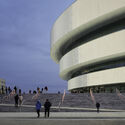
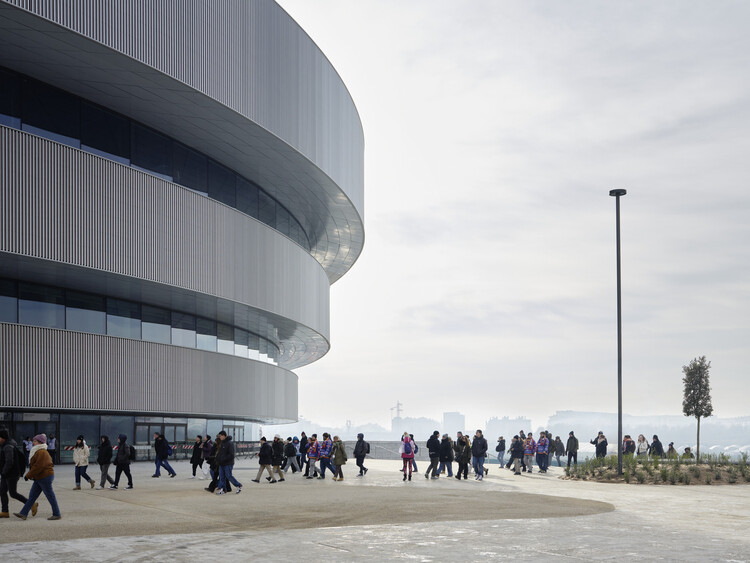
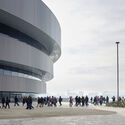
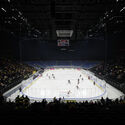
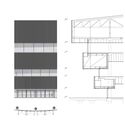
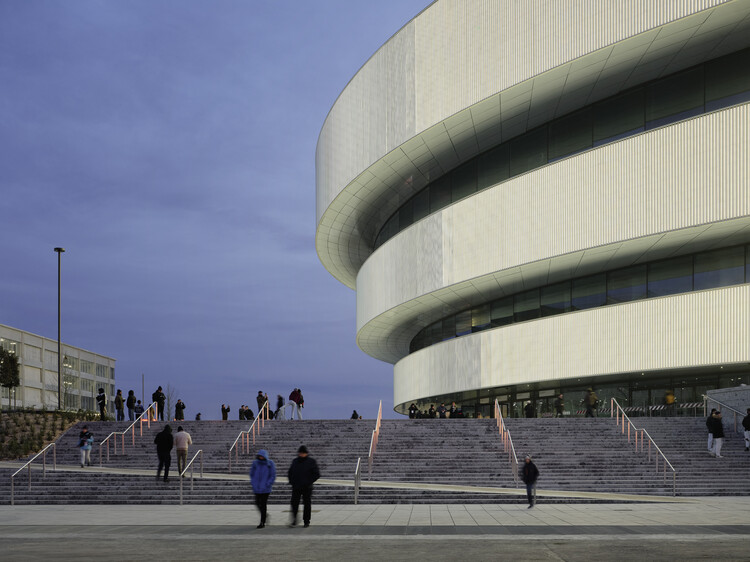
David Chipperfield Architects has released new images of the Ice Hockey Arena in Milan, one of the host sports venues for the 2026 Milano Cortina Winter Olympics. The project, currently in its testing phase, was commissioned to Arup and David Chipperfield Architects in 2021. The first images of the elliptical amphitheatre arena were released in 2022, ahead of the start of construction in 2023, which was scheduled for completion in 2025. The new sports and cultural events venue has a capacity of 16,000 spectators, 12,000 seated and 4,000 standing, and is a centrepiece of a broader urban redevelopment project originally designed by Foster + Partners for Milano Santa Giulia, a district in the south-east of Milan, just a few kilometres from the city centre and connected to the high-speed rail network and motorway.