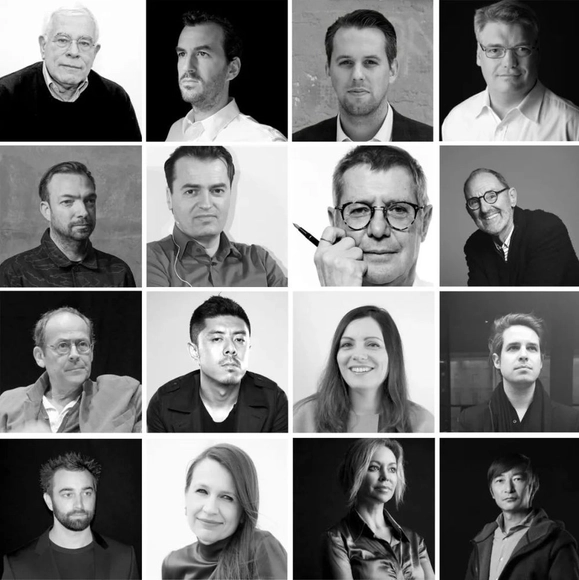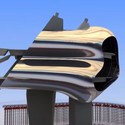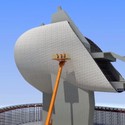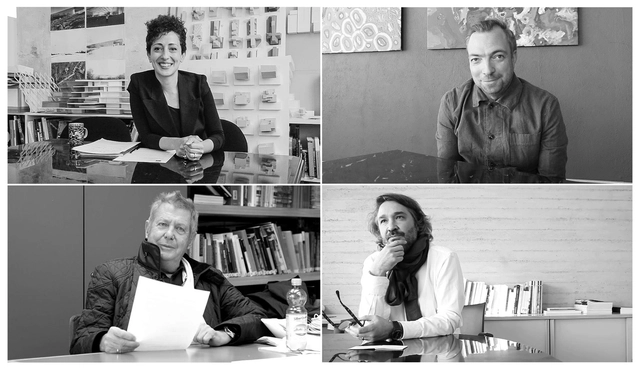
Simple in form but complex in substance, “What is Architecture?” remains an existential question for a lot of architecture students and young professionals. In an attempt to define this ever-changing interrogation and expose the different visions out there, the interview series: WIA – What is architecture? asks four, straightforward, questions to world-leading architectural designers and thinkers. Seeking to uncover their opinion on what architecture is and what it can do, these short videos reveal responses to “What is architecture? What can architecture do? What is your architectural position? and What is your design method?”.
Europe in the 1960s was an incubator for emerging provocative architecture radicals who defied traditional architecture dogma in favor of counterculture that transcended time and space. Coop Himmelb(l)au, a Vienna-based faction of this movement, questioned the clean lines, rigidity, and literal nature of modernist architects of the time. While the firm is known for their rebellious spirit and aggressive forms that are generated through state-of-the-art 3D software and technologies, it’s important to acknowledge the work that the firm did shortly after their inception in 1968, and how their early oeuvre still relentlessly breaks the status quo of modern-day practice and academic discourse.
Videos
Peter Eisenman, Patrik Schumacher, and Alisa Andrasek among the speakers that participated at Digital Futures. Image Courtesy of Digital Futures
Like most functions in recent months, this year’s Digital FUTURES, which is held annually since 2011 at Tongji University in Shanghai, had to move online due to the pandemic. The organizers took this as an opportunity to give the event a global dimension, turning the festival into what they rightfully call the most significant worldwide event for architectural education ever staged, with a 24/7 display of workshops, lectures and panel discussions involving some of the most prominent architects and educators. Here is an overview of the festival, together with a selection of lectures from Digital FUTURES World.
Wolf Prix. Image Courtesy of NewSchool and AIAS San Diego
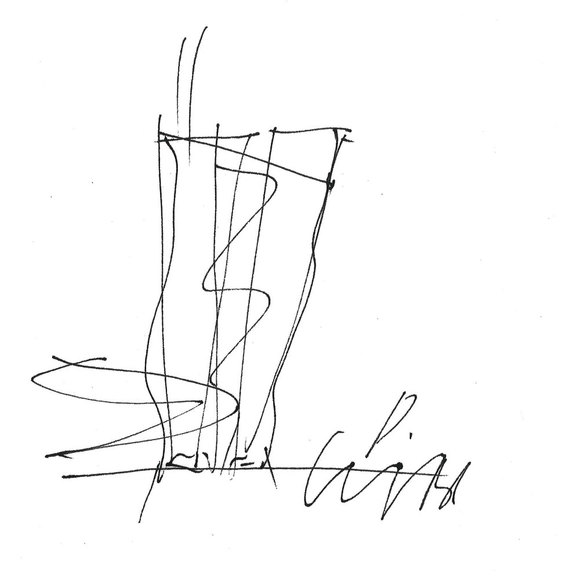
The napkin sketch has always had its place in architecture. In 2015, some of the world's more respected architects donated their very own conceptual doodles to the NewSchool of Architecture & Design and San Diego American Institute of Architecture Students (AIAS) in an effort that helped raise thousands to fund scholarships and programs for architecture students.
"The event was a big success,” said David Garcia back then, a NewSchool architecture undergraduate and fundraising chair for the AIAS event. “Personally, this project means a lot to me, and not just because of the time and involvement, but because this is a nice way to bring students and their favorite architects together, even if it's just through a sketch. Plus, since it's a fundraiser, the proceeds have been a great help to the success of the chapter.”
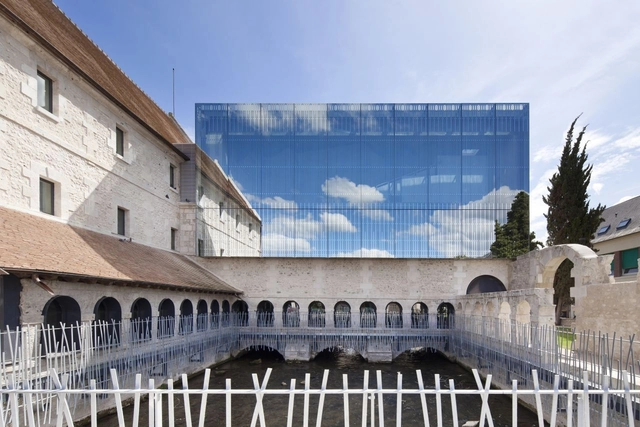
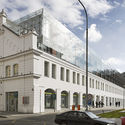
When an extension on an existing historical building is requested, often architects opt for glass, transparent and reflective interventions. Some decide to stay neutral and subtle when dealing with an older structure, while others choose a bold and outspoken design to manifest their contemporary character. With each project having its own conceptual motivation and reasoning, the outcomes are different and diverse.
Read on for some relevant examples, each responding to a different program.
There’s no doubt that one of the best things about architecture is its universality. Wherever you come from, whatever you do, however you speak, architecture has somehow touched your life. However, when one unexpectedly has to pronounce a foreign architect’s name... things can get a little tricky. This is especially the case when mispronunciation could end up making you look less knowledgeable than you really are. (If you're really unlucky, it could end up making you look stupid in front of your children and the whole world.)
To help you out, we’ve compiled a list of 22 architects with names that are a little difficult to pronounce, and paired them with a recording in which their names are said impeccably. Listen and repeat as many times as it takes to get it right, and you’ll be prepared for any intellectual architectural conversation that comes your way.
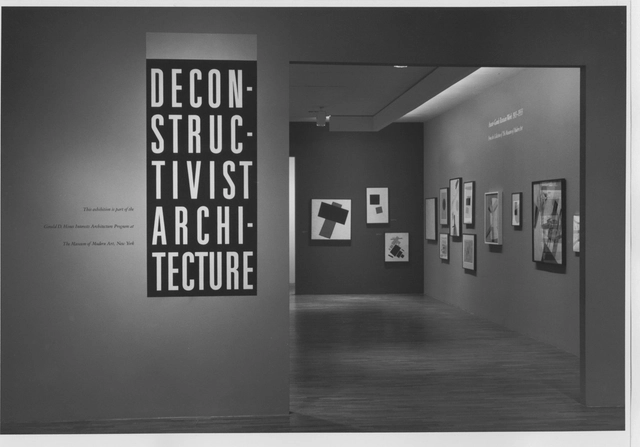
View into the exhibition (1988). Photographer unknown. Image via MoMA
When Philip Johnson curated the Museum of Modern Arts’ (MoMA) 1932 “International Exhibition of Modern Architecture,” he did so with the explicit intention of defining the International Style. As a guest curator at the same institution in 1988 alongside Mark Wigley (now Dean Emeritus of the Columbia GSAPP), Johnson took the opposite approach: rather than present architecture derived from a rigidly uniform set of design principles, he gathered a collection of work by architects whose similar (but not identical) approaches had yielded similar results. The designers he selected—Peter Eisenman, Frank Gehry, Zaha Hadid, Rem Koolhaas, Daniel Libeskind, Bernard Tschumi, and the firm Coop Himmelblau (led by Wolf Prix)—would prove to be some of the most influential architects of the late 20th Century to the present day.[1,2]
In response to a conservative and sometimes fragmented building industry, some architects believe that improving and automating the construction process calls for a two-front war: first, using experimental materials and components, and second, assembling them in experimental ways. Extra-innovative examples include self-directed insect-like robots that huddle together to form the shape of a building and materials that snap into place in response to temperature or kinetic energy.
The automation battle has already been fought (and won) in other industries. With whirring gears and hissing pneumatics, rows and rows of Ford-ist mechanical robot arms make cars, aircraft, and submarines in a cascade of soldering sparks. So why shouldn’t robotic construction become commonplace for buildings, too?
"If you only think in architectural terms, only architecture will come out." - Wolf Prix
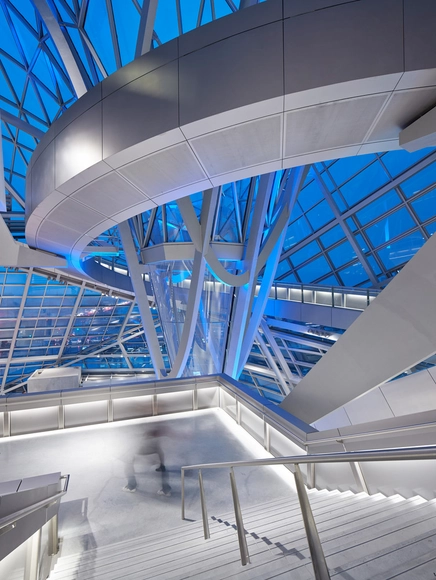
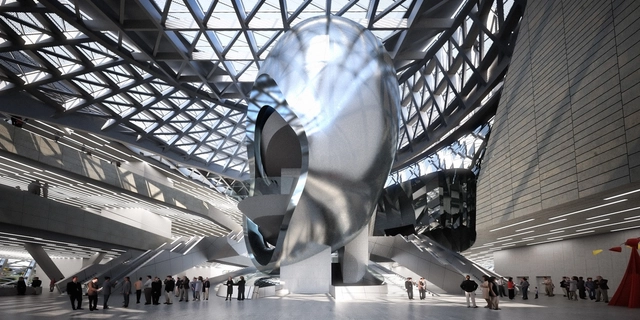
Inspired by space suits, Formula One circuits, and many other "mind expanding machines," Wolf D. Prix of Coop Himmelb(l)au explains the thought process that went behind their design of the Musée des Confluences in Lyon, France. With spiraling ramps and bridges throughout, the museum allows visitors to explore the space "freely," despite the constraints of gravity, and, in a sense, "conquer space." Read on for Spirit of Space's full interview with Prix.
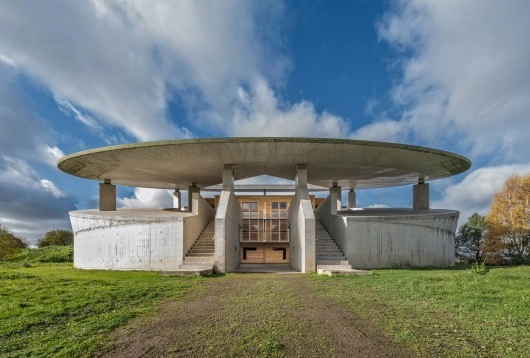
One of the best acoustically responsive concert halls in the world, Coop Himmelb(l)au's House of Music in Aalborg has been a lively center for music and creative exchange since its opening in 2014. Based off of the simple, yet powerful courtyard typology and inspired by Le Corbusier’s La Tourette, the 1,300-seat concert hall is embraced by a U-shaped education center and enhanced by a careful overlapping of public and performance areas. This has allowed the building to live up to its name, becoming an animated House of Music where music is not only heard, but seen.
This video is the first of a series by Spirit of Space. You can watch Coop Himmelb(l)au's Wolf Prix talk about his intentions behind the House of Music, after the break.
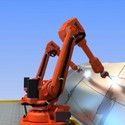
With a recently released animation entitled “We Start the Future of Construction,” Coop Himmelb(l)au announced their intention to take digital fabrication to a radical new scale, demonstrating how technology is impacting almost every aspect of the architectural profession. The advent of building information modeling and other modeling software has transformed how architects and engineers navigate the construction process, allowing us to achieve increasingly complex forms that can be modeled with the aid of CNC machining and 3D Printing, but still there remains a wide gap between the technologies available to architects and those employed by builders. When it comes to a building’s actual construction we have been limited by the great costs associated with non-standard components and labor - but now, the automated practices that transformed manufacturing industries could revolutionize how we make buildings.
Last week, ArchDaily sat down with co-founder, Design Principal and CEO of Coop Himmelb(l)au, Wolf D. Prix for his thoughts on the future of construction and the role of the architect in an increasingly technological practice. Read on after the break to find out how robots could impact architectural design, construction, and the future of the profession.
In the early years of COOP HIMMELB(L)AU, Raimund Abraham was a role model - later on a friend. On the occasion of the Austrian government "Staatspreis" awarded to Raimund Abraham, Wolf D. Prix held the speech of honor, and characterized him as one of the main representatives of the Austrian architectural approach of celebrating space.
Highly regarded as both an academician and practitioner, Wolf Prix is an architect’s architect. And he’s a Guinness World Record holder! (The Busan Cinema Center boasts the world’s longest cantilever roof). We sat down with the Austrian architect and learned that not only does he welcome the unforeseeable results of rule-breaking, but he also borrows models of strategy and organization from soccer:
"Of course nowadays the architect as a single genius is over. I think we have to learn how to communicate and work in a team. Therefore, I just rearranged the organization of our office along the idea of the football team, FC Barcelona. Barcelona plays a beautiful game, very clever and very intelligent—they always play in a triangle system and then Messi or Xavi breaks the rules and plays street football with unforeseeable rules. This is the way we work in our office and this is the way that we design."