1. ArchDaily
  2. Hotel

Hotel: The Latest Architecture and News

Visualizing an Art Deco Icon: The Reimagined Waldorf Astoria

 | Sponsored Content

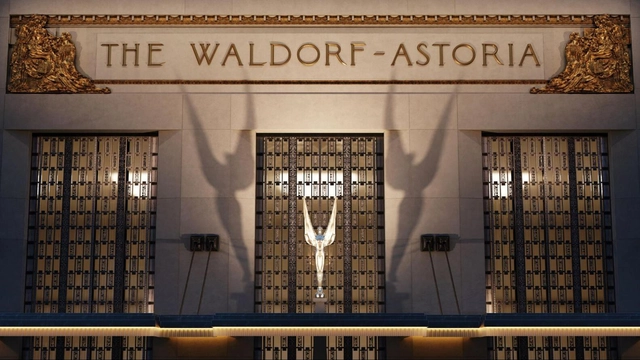
The quintessential symbol of Manhattan, Waldorf Astoria New York officially reopened for the public this year after an extensive renovation. Over its long history, the property has undergone numerous transformations, from its 19th-century beginnings to the modern landmark that stands between Park Avenue and Lexington Avenue.

Reimagining a building that pioneered modern hospitality—a jewel in New York's skyline—posed a challenge that required close collaboration between preservationists, 3D visualizers, architects, and designers. Together, they worked to preserve its protected architectural heritage while meeting contemporary expectations for craftsmanship and comfort.

World Building of The Year and Interior of The Year revealed at World Architecture Festival 2025

Subscriber Access | 

The Holy Redeemer Church and Community Centre of Las Chumberas by Fernando Menis in La Laguna, Spain has been declared the World Building of the Year at the 2025 World Architecture Festival (WAF).

The ultimate accolades of World Building of the Year supported by GROHE, World Interior of the Year, Future Project of the Year and Landscape of the Year were announced today as hundreds of architects from across the world convened at a grand finale Gala Dinner at Miami Beach Convention Center in Florida. A host of Special Prizes, including the American Beauty Prize supported by the Royal Fine Art Commission Trust, were also announced at the closing event to celebrate the eighteenth edition of the festival. The announcement follows the final day of WAF, in which prize winners across all 43 categories have been competing for the winning titles.

MVRDV Designs Spherical Landmark for Tirana’s New Asllan Rusi Sports Palace

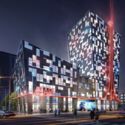
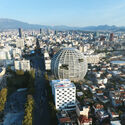
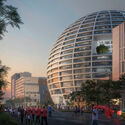
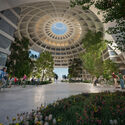
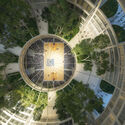
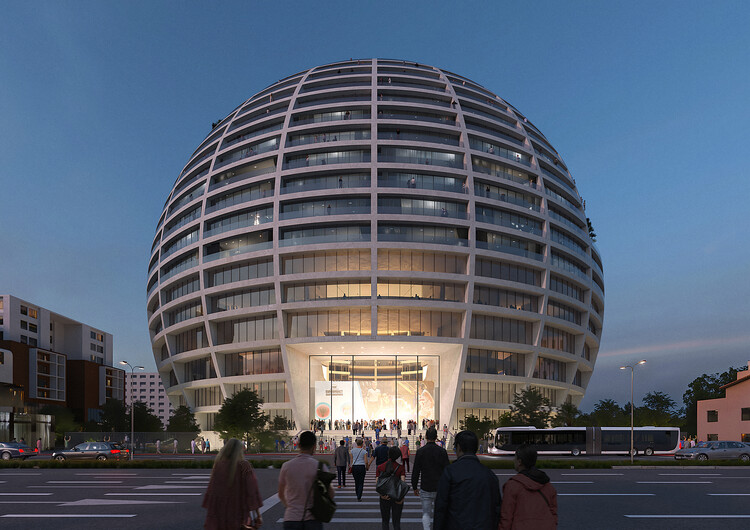
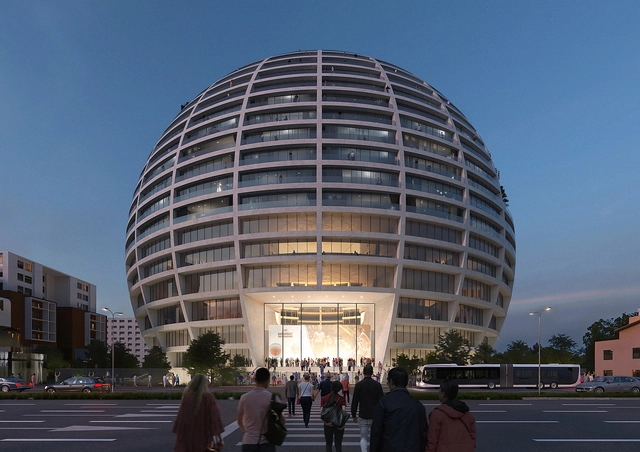
Tirana, the capital of Albania, is experiencing a rapid transformation driven by the long-term urban strategy outlined in the Tirana 2030 (TR030) Master Plan. Developed in 2017 by Stefano Boeri Architetti, UNLAB, and IND [Inter.National.Design] through a competition organized by the Ministry of Urban Development, the plan's objectives include increasing urban density, improving public infrastructure, and integrating green spaces and open areas into the urban fabric. It is in this dynamic setting that MVRDV has won the international competition for Tirana's new Asllan Rusi Sports Palace. Conceived as a mixed-use development, the project, named The Grand Ballroom, combines a 6,000-seat arena for basketball and volleyball with residential apartments, a hotel, and ground-level retail. With its spherical form exceeding 100 metres in diameter, the design adds a distinctive landmark to Tirana's growing collection of ambitious architectural projects.
MVRDV Designs Spherical Landmark for Tirana’s New Asllan Rusi Sports Palace - Imagen 1 de 4MVRDV Designs Spherical Landmark for Tirana’s New Asllan Rusi Sports Palace - Imagen 2 de 4MVRDV Designs Spherical Landmark for Tirana’s New Asllan Rusi Sports Palace - Imagen 3 de 4MVRDV Designs Spherical Landmark for Tirana’s New Asllan Rusi Sports Palace - Imagen 4 de 4MVRDV Designs Spherical Landmark for Tirana’s New Asllan Rusi Sports Palace - More Images+ 5

From Yakushima to Toronto: Architecture Now Highlights New Projects Shaping Hospitality, Public Life, and Infrastructure

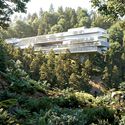
As cities and infrastructures evolve to meet shifting cultural, environmental, and social demands, new architectural projects are redefining how public spaces and civic institutions operate. This edition of Architecture Now brings together proposals spanning different contexts and scales: on Yakushima Island, Jean Nouvel embeds a boutique retreat for NOT A HOTEL into a UNESCO-listed forest landscape; in New York City, Rossetti and WSP are preparing a major renovation of Arthur Ashe Stadium to expand capacity and enhance the visitor experience; in Toronto, Diamond Schmitt and gh3* have broken ground on a mass-timber, net-zero paramedic station; and across the English Channel, Hollaway Studio is leading a transformation of LeShuttle's UK and French terminals into more seamless and sustainable gateways. Together, these projects reflect how design is being used to adapt existing systems and landscapes to new forms of public life.
From Yakushima to Toronto: Architecture Now Highlights New Projects Shaping Hospitality, Public Life, and Infrastructure - Imagen 1 de 4From Yakushima to Toronto: Architecture Now Highlights New Projects Shaping Hospitality, Public Life, and Infrastructure - Imagen 4 de 4From Yakushima to Toronto: Architecture Now Highlights New Projects Shaping Hospitality, Public Life, and Infrastructure - Imagen 2 de 4From Yakushima to Toronto: Architecture Now Highlights New Projects Shaping Hospitality, Public Life, and Infrastructure - Imagen 5 de 4From Yakushima to Toronto: Architecture Now Highlights New Projects Shaping Hospitality, Public Life, and Infrastructure - More Images+ 11

From Japan to Saudi Arabia: 8 Unbuilt Hospitality Projects Redefining the Future of Hotels and Resorts

Subscriber Access | 

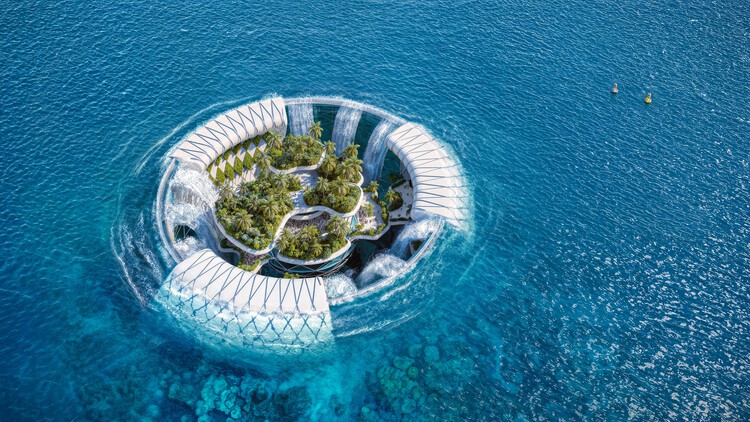
In contemporary architecture, hotel design is no longer defined solely by luxury and accommodation. Instead, it is becoming a platform to explore questions of identity, ecology, and cultural meaning. Beyond providing rooms and amenities, hotels today aim to create immersive experiences that connect travelers to local traditions, landscapes, and communities. In this curated selection of unbuilt hospitality projects, submitted by the ArchDaily community, speculative and competition-winning proposals offer a glimpse into the future of hospitality, where sustainability and storytelling are as central as comfort and style.

From Japan to Saudi Arabia: 8 Unbuilt Hospitality Projects Redefining the Future of Hotels and Resorts - Imagen 12 de 4From Japan to Saudi Arabia: 8 Unbuilt Hospitality Projects Redefining the Future of Hotels and Resorts - Imagen 16 de 4From Japan to Saudi Arabia: 8 Unbuilt Hospitality Projects Redefining the Future of Hotels and Resorts - Imagen 21 de 4From Japan to Saudi Arabia: 8 Unbuilt Hospitality Projects Redefining the Future of Hotels and Resorts - Imagen 9 de 4From Japan to Saudi Arabia: 8 Unbuilt Hospitality Projects Redefining the Future of Hotels and Resorts - More Images+ 48

Foster + Partners Reveals Design for Mixed-Use Development in Central Seoul, South Korea

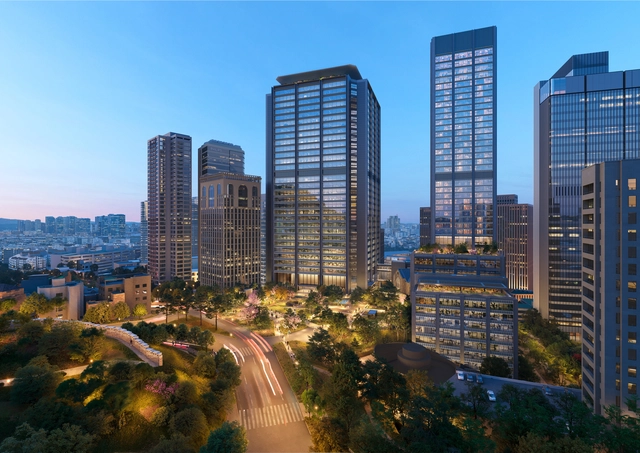
Foster + Partners has released images of the proposed design for IOTA Seoul I, a mixed-use development in Seoul, South Korea. The project would be located between Seoul Station and Namsan, a 270-meter-high peak in the Jung-gu district in the south-central part of the city. The site has been described by the architects as a landmark location due to its historical significance as one of Seoul's gateways for travelers arriving by train.

Foster + Partners Reveals Design for Mixed-Use Development in Central Seoul, South Korea - Image 1 of 4Foster + Partners Reveals Design for Mixed-Use Development in Central Seoul, South Korea - Image 2 of 4Foster + Partners Reveals Design for Mixed-Use Development in Central Seoul, South Korea - Image 3 of 4Foster + Partners Reveals Design for Mixed-Use Development in Central Seoul, South Korea - Image 4 of 4Foster + Partners Reveals Design for Mixed-Use Development in Central Seoul, South Korea - More Images+ 2

Foster + Partners Reveals Central Crossing Mixed-Use Development in Hong Kong

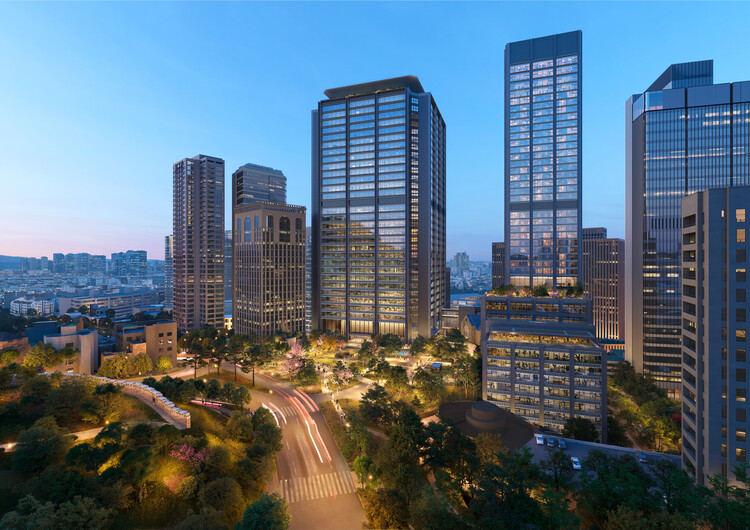
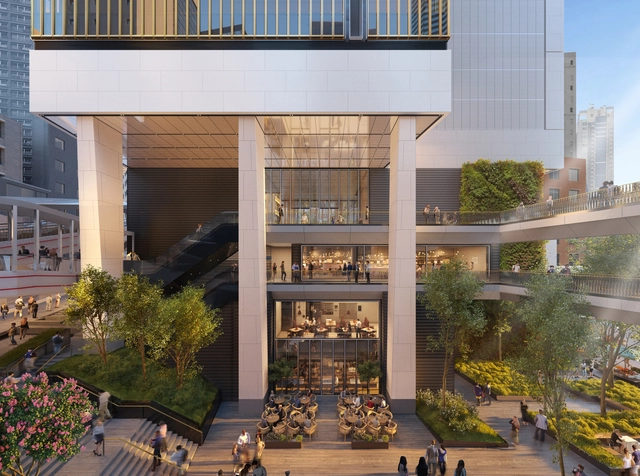
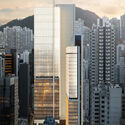
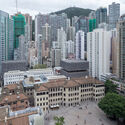
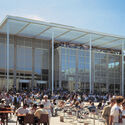
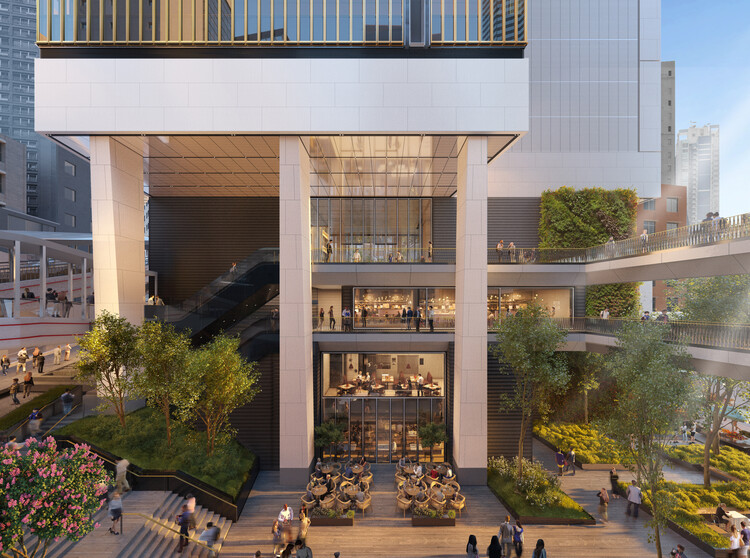
Foster + Partners has unveiled designs for Central Crossing, a new mixed-use development in the heart of Hong Kong's Central district. Located at 118 Wellington Street and bordered by Graham, Gage, and Cochrane Streets, the project is a joint venture between Wing Tai Properties Limited and CSI Properties Limited. Positioned within a triangle formed by the historic landmarks Tai Kwun, PMQ, and Central Market, the site offers a rare opportunity to build within one of the city's most vibrant and historically layered neighborhoods. Central Crossing continues Foster + Partners' ongoing engagement with historical contexts, following earlier interventions such as the Carré d'Art in Nîmes and the extension to the Royal Academy in London. The project seeks to balance sensitivity to its urban fabric with an architectural presence, contributing to the evolving identity of Central.

Foster + Partners Reveals Central Crossing Mixed-Use Development in Hong Kong - Image 1 of 4Foster + Partners Reveals Central Crossing Mixed-Use Development in Hong Kong - Image 2 of 4Foster + Partners Reveals Central Crossing Mixed-Use Development in Hong Kong - Image 3 of 4Foster + Partners Reveals Central Crossing Mixed-Use Development in Hong Kong - Image 4 of 4Foster + Partners Reveals Central Crossing Mixed-Use Development in Hong Kong - More Images

Swan Taps, Checkered Seashell Fixtures, and the New Frontier of Bespoke Design

 | Sponsored Content

At the heart of design lies the intersection of technique and creativity—a space where ideas take shape and environments are reimagined. In a world prevalent with mass-produced objects, the focus is shifting toward something more deliberate, where every decision opens up new possibilities and allows design to break free from the conventional. Think of the LC1 armchair by Le Corbusier or Mies van der Rohe's Barcelona chair—not simply furniture, but outcomes that illustrate a studio-driven freedom where ideas, materials, and finishes are allowed to converse, not conform. These pieces don't just fill a room; they reimagine it. This spirit of innovation now extends to every detail, from kitchen to bathroom fittings, where the range of choices—materials, form, and function—becomes an opportunity to craft something truly unique.

From the Hills of Athens to the Craters of Mars, Discover 8 Award-Winning Competition Proposals from the ArchDaily Community

Subscriber Access | 

Architectural competitions have long offered a space for experimentation: platforms where ideas can be tested, typologies reimagined, and critical questions addressed through design. Freed from some of the constraints of commercial commissions, competition entries often reflect ambitious visions for how architecture can respond to environmental, cultural, and social challenges. Whether focused on future habitats, public institutions, or small-scale community infrastructure, these proposals give shape to the values and priorities driving architectural thinking today.

This month's Unbuilt selection brings together eight competition-winning projects submitted by the ArchDaily community. Each received first, second, or third place in recent local and international competitions. The featured proposals span a wide range of programs and geographies: a sustainable library in Lima, a Martian habitat exploring closed-loop systems, an adult orphanage designed for empowerment in India, a new French school in Athens, and a placemaking initiative in Singapore rooted in local folklore. While varied in scale and scope, they all highlight architecture's capacity to engage context, foster inclusion, and propose new ways of inhabiting space.

From the Hills of Athens to the Craters of Mars, Discover 8 Award-Winning Competition Proposals from the ArchDaily Community - Image 7 of 4From the Hills of Athens to the Craters of Mars, Discover 8 Award-Winning Competition Proposals from the ArchDaily Community - Image 8 of 4From the Hills of Athens to the Craters of Mars, Discover 8 Award-Winning Competition Proposals from the ArchDaily Community - Image 33 of 4From the Hills of Athens to the Craters of Mars, Discover 8 Award-Winning Competition Proposals from the ArchDaily Community - Image 41 of 4From the Hills of Athens to the Craters of Mars, Discover 8 Award-Winning Competition Proposals from the ArchDaily Community - More Images+ 44

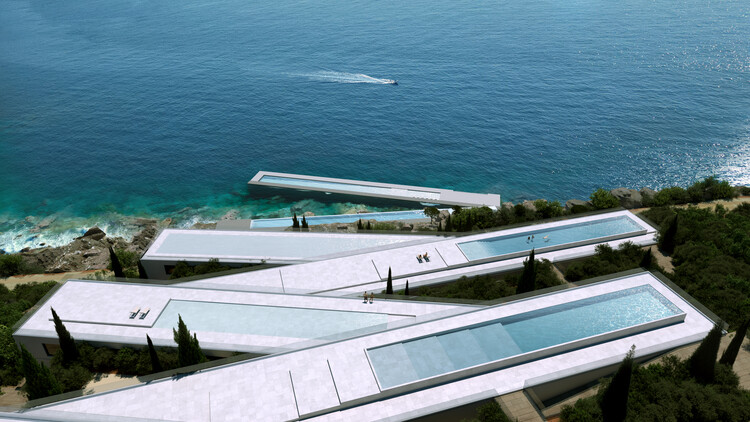
From the Cliffs of Saudi Arabia to the Vineyards of Santorini, Discover 8 Unbuilt Hotel Proposals from the ArchDaily Community

Subscriber Access | 

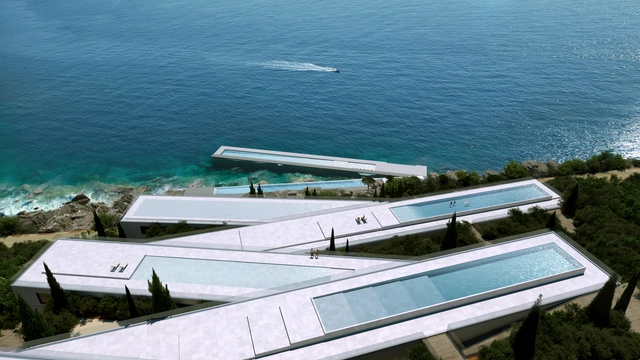
Hotels are increasingly being designed as more than just places for accommodation. As expectations around travel shift, architects are approaching hospitality projects as opportunities to explore ideas of context, experience, and identity. Whether integrated into remote landscapes or inserted into dense urban environments, these proposals examine how architecture can shape the guest experience through spatial organization, material selection, and connection to place. The hotel becomes a framework not only for rest, but for interaction with the surroundings, with others, and with the design itself.

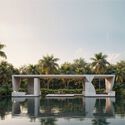
Each month, ArchDaily's editors curate a selection of unbuilt projects around a shared typology or theme. Submitted by firms of all scales from around the world, these proposals represent the diversity of approaches within our global architecture community. This month's selection focuses on hotels, ranging from the sculptural Pistachio Villas in Ubud to the modular Dubai Edition Hotel and the vineyard-rooted Terra Dionysia in Santorini. Together, they reflect a wide spectrum of architectural thinking around hospitality, from landscape integration and cultural references to questions of density and public space. Submissions are open to everyone.

From the Cliffs of Saudi Arabia to the Vineyards of Santorini, Discover 8 Unbuilt Hotel Proposals from the ArchDaily Community - Imagen 18 de 4From the Cliffs of Saudi Arabia to the Vineyards of Santorini, Discover 8 Unbuilt Hotel Proposals from the ArchDaily Community - Imagen 24 de 4From the Cliffs of Saudi Arabia to the Vineyards of Santorini, Discover 8 Unbuilt Hotel Proposals from the ArchDaily Community - Imagen 40 de 4From the Cliffs of Saudi Arabia to the Vineyards of Santorini, Discover 8 Unbuilt Hotel Proposals from the ArchDaily Community - Imagen 51 de 4From the Cliffs of Saudi Arabia to the Vineyards of Santorini, Discover 8 Unbuilt Hotel Proposals from the ArchDaily Community - More Images+ 48

Next-Gen Living: Customizable, High-Quality Bathroom Design Within Reach

 | Sponsored Content

Every detail in the construction of an environment has a significant impact. The layout, composition, furniture, color range, and materials work together to create a cohesive and immersive experience in the perception of space. In bathroom design, this integration extends beyond aesthetics, aiming to ensure that every choice— from materiality to the form of furniture— contributes to economically viable, functional spaces with an aesthetic that doesn't rely on exclusivity. Architects and designers can shape diverse settings without sacrificing quality or visual coherence by focusing on cost-effectiveness and well-resolved solutions. In this sense, a democratic approach to design becomes a tool for creating environments where quality, functionality, and affordability are core principles.

From Helsinki’s Landmark Bridge to London’s Urban Regeneration: Recent Updates from Knight Architects, Foster + Partners, and More

In recent weeks, a series of notable architectural projects have been announced, reflecting a broad spectrum of design approaches aimed at enhancing urban life, infrastructure, and environmental sustainability. From cultural venues to large-scale masterplans and infrastructural advancements, these developments highlight how architecture continues to shape cities and communities. Among them, Knight Architects' Kruunusillat Bridge in Helsinki marks a milestone as Finland's tallest and longest bridge, designed to support sustainable mobility. Meanwhile, Unibail-Rodamco-Westfield's masterplan for Croydon sets out a vision for a vibrant mixed-use district, integrating historic preservation with contemporary urban renewal. At Kew Gardens, Mizzi Studio's Carbon Garden introduces a new permanent installation that explores carbon cycles through landscape design. This collection of recent announcements underscores the evolving priorities in architecture, from connectivity and urban regeneration to climate-conscious interventions.

Building Among the Branches: A Showcase of Contemporary Treehouse Architecture

Subscriber Access | 

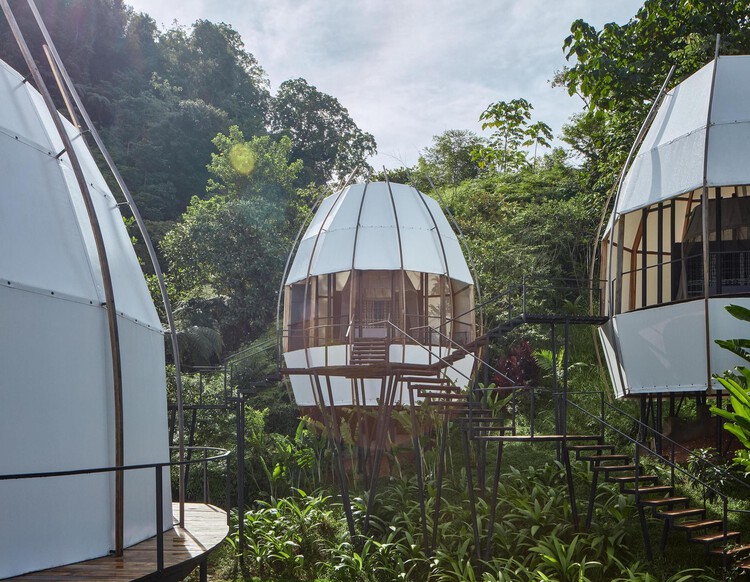
Despite their whimsical appearance, treehouses offer a unique platform for structural innovations and design explorations. Traditional treehouses rely on the trunks of trees for structural support, but, in order to ease the load supported by the tree, contemporary projects often introduce additional systems, such as stilts to maintain the image while offering additional support. One of the key advantages of elevating them in this way is the reduced environmental footprint. Treehouses can be designed to leave the forest floor untouched, preserving small-scale ecosystems. By freeing up the ground below, they minimize disruptions to native flora and fauna, allowing nature to thrive undisturbed. Similarly, many architects use the local topography to create seamless connections, incorporating ramps, stairs, or bridges that integrate with the landscape. These solutions not only improve accessibility but also enhance the overall experience creating an architectural promenade that moves between the treehouse and its surroundings.

"This sensitivity to the environment is reflected not only in the structural design but also in the careful selection of materials. The use of natural materials like wood, also helps the structure blend with its environment. Some designers have gone further by employing alternative materials such as mirrored panels to reflect the surrounding forest and mask the treehouse's presence entirely, demonstrating that the choice of material can contribute to creating a project that feels like an extension of its setting rather than an imposition on it. This collection highlights notable examples from Sweden, Denmark, Indonesia, and France, showcasing their diverse approaches.

Building Among the Branches: A Showcase of Contemporary Treehouse Architecture - Imagen 1 de 4Building Among the Branches: A Showcase of Contemporary Treehouse Architecture - Imagen 2 de 4Building Among the Branches: A Showcase of Contemporary Treehouse Architecture - Imagen 3 de 4Building Among the Branches: A Showcase of Contemporary Treehouse Architecture - Imagen 4 de 4Building Among the Branches: A Showcase of Contemporary Treehouse Architecture - More Images+ 6