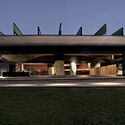
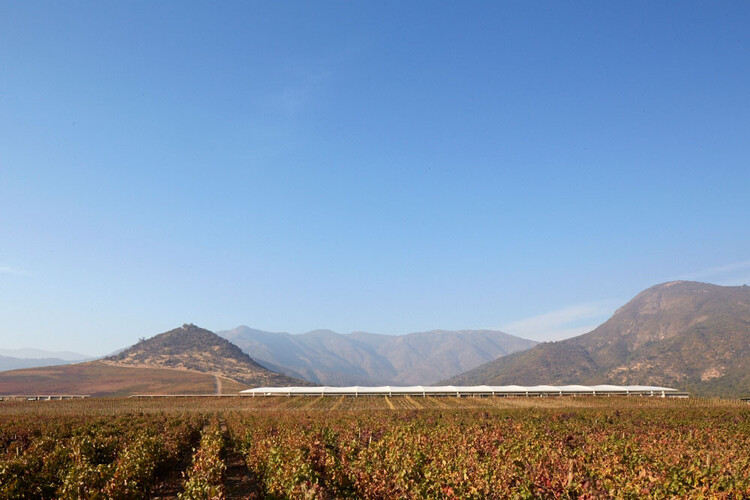
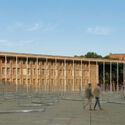
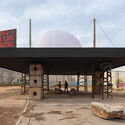
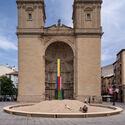
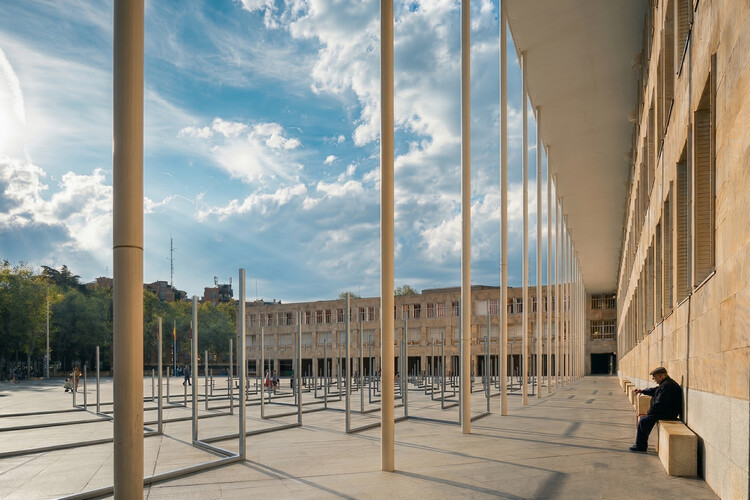
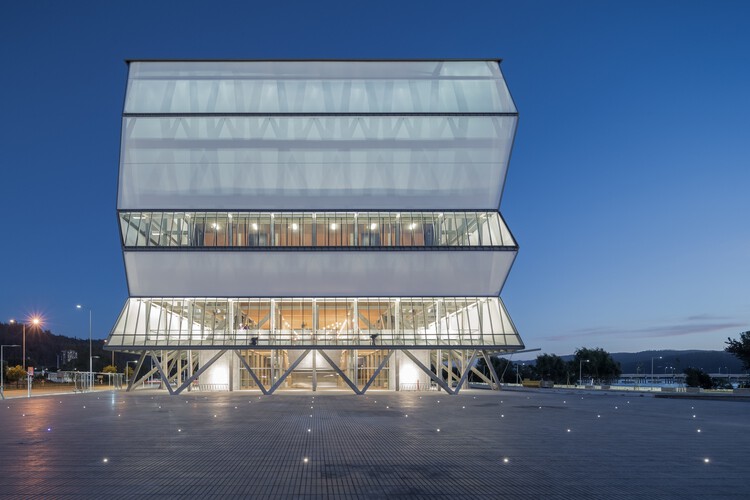
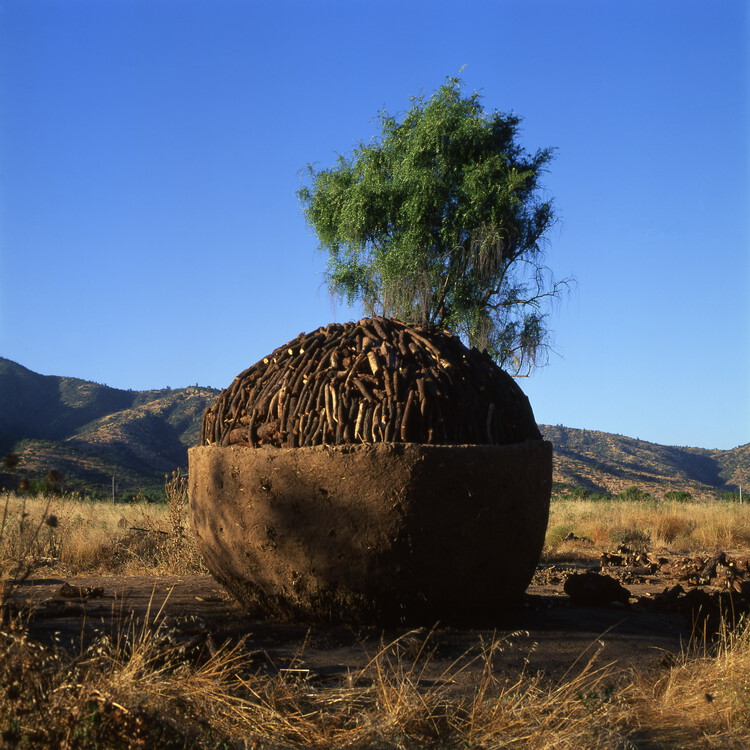
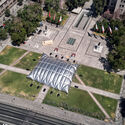
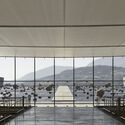
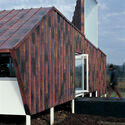
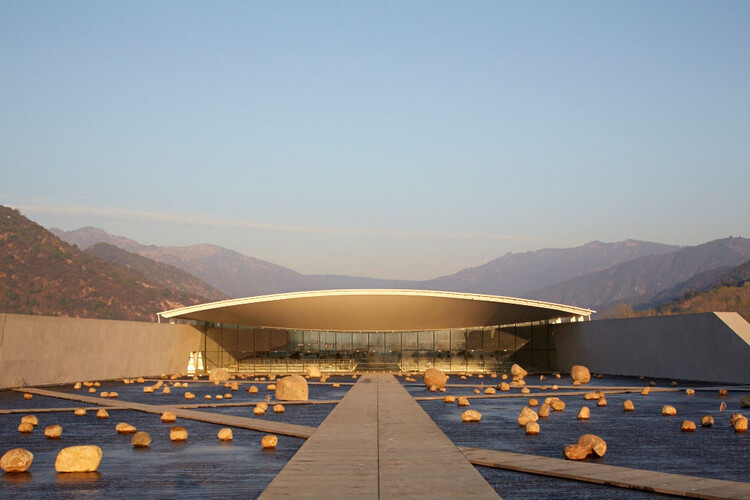
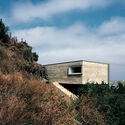
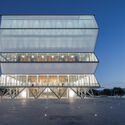
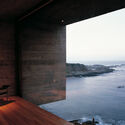
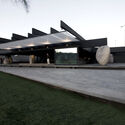
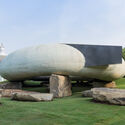
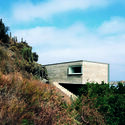
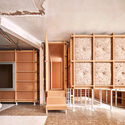
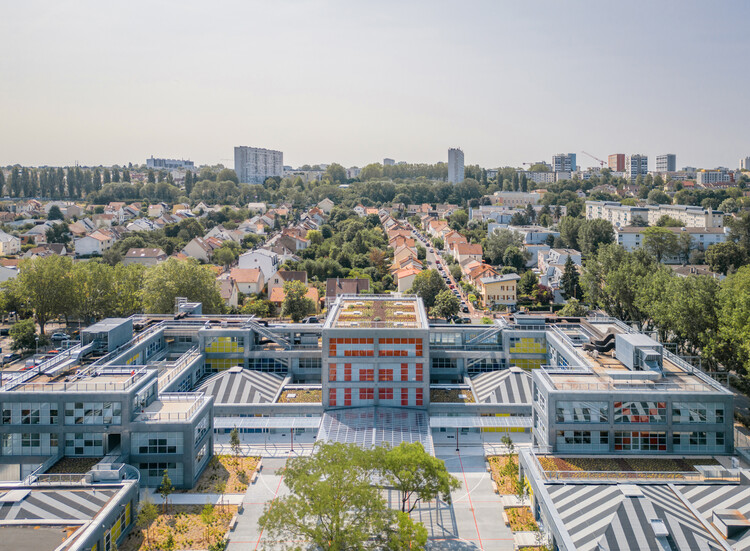
Carbonero House (1998). Melipilla, Chile. Image Courtesy of Smiljan Radić
Chilean architect Smiljan Radić Clarke has developed a body of work that resists easy categorization. His buildings often seem both ancient and provisional, carrying a monumental presence while retaining an unexpected sense of fragility. Stone, concrete, timber, fabric, and fiberglass are combined in unexpected ways, producing architectures that hover between permanence and ephemerality. Rather than pursuing a stable formal language, the 2026 Pritzker laureate approaches architecture as an open field of experimentation, where material behavior and structural perception are constantly tested.
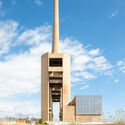
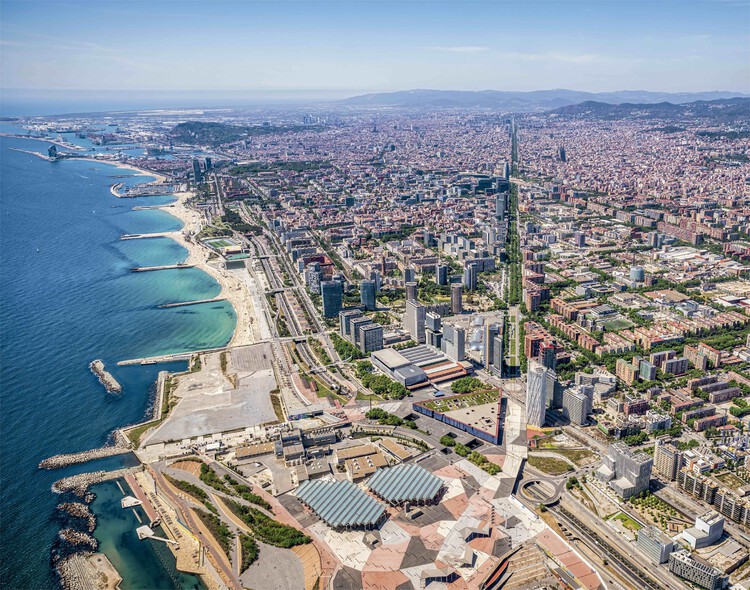
More than three decades after previously hosting the event, Barcelona is set to welcome the UIA World Congress of Architects 2026 Barcelona (UIA2026BCN), bringing the global architectural community back to the city between 28 June and 2 July 2026. Organized under the theme "Becoming. Architectures for a Planet in Transition," the Congress is expected to gather approximately 10,000 participants from over 130 countries, including practitioners, researchers, and students. Rather than being confined to a single venue, the event will unfold across multiple locations along the Mediterranean seafront, among them the Three Chimneys complex, positioning the city itself as an active platform for exchange, discussion, and public programming.
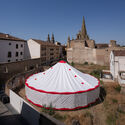
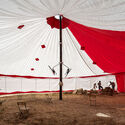
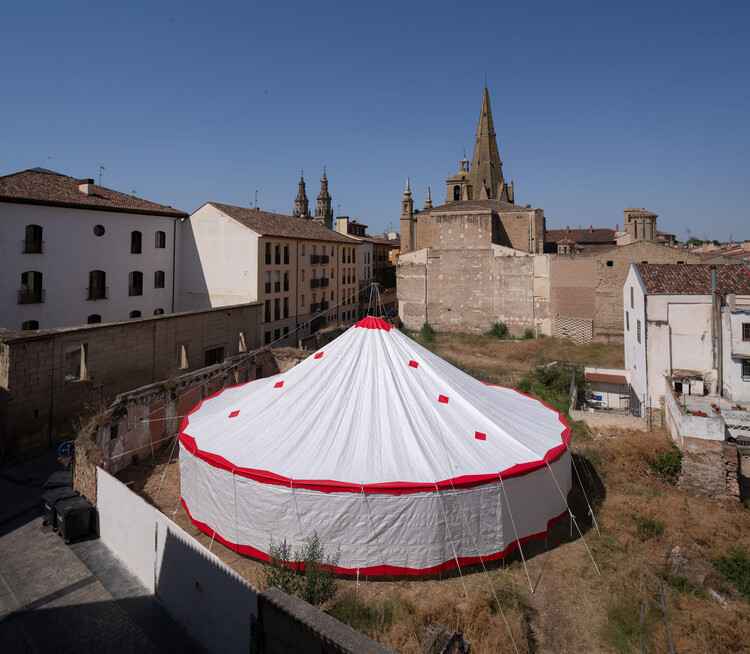
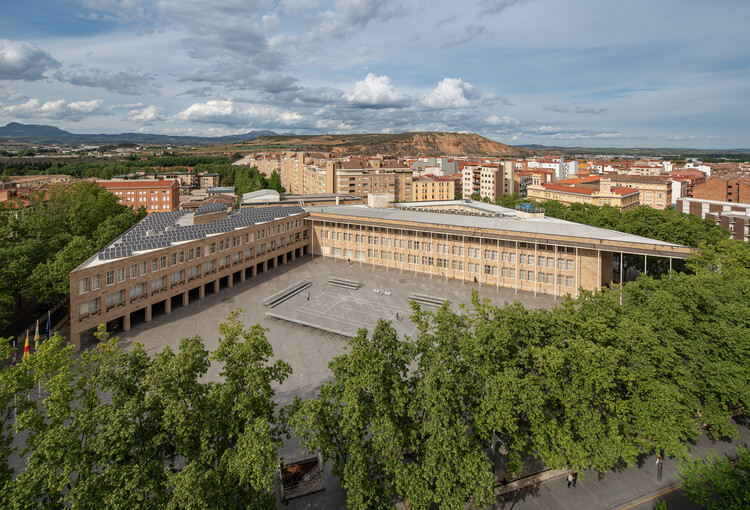
Concéntrico, the Spanish laboratory for urban innovation exploring new ways of inhabiting public space through temporary urban installations, presented the program for its upcoming edition on March 17th, along with its main lines of work for the 2025–2026 season. The festival invites architects, designers, artists, and researchers from different geographies to propose interventions that activate squares, streets, riverbanks, and vacant spaces in the city. This year's edition includes the participation of Smiljan Radić, the recently awarded Pritzker Architecture Prize laureate, who will develop a light, foldable, and temporary structure built from industrial plastic fabrics following the concept of a "poor circus." Another 26 teams, including three practices selected through the festival's international open calls, will intervene in Logroño's public space from June 18 to 23, 2026, with projects ranging from climate-responsive structures to ephemeral public space activations.


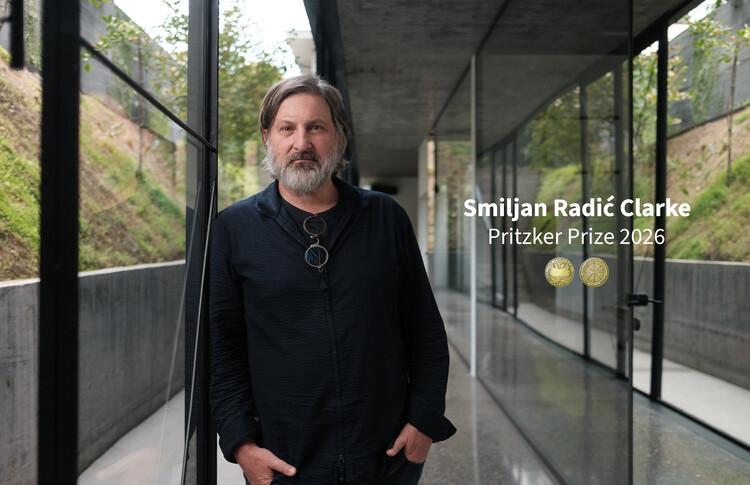
The 2026 Pritzker Price Award has been awarded this year to the Chilean architect of Croatian descent, Smiljan Radić Clarke. Born in Santiago, Chile, in 1965, his practice evokes a geography of extremes, shaped by the tectonic tension between the staggering weight of the Andes and the seismic instability of the territory. After graduating from the Pontifical Catholic University of Chile and pursuing further studies in aesthetics in Venice, Smiljan Radić Clarke established his base in Santiago. From there, he has developed one of the most singular visions in contemporary architecture. His work privileges the intensity of the moment through a fragile architecture. Within it, the building operates as a temporary and tactile refuge that places the spectator in a state of aesthetic uncertainty, oscillating between ancestral ruin and avant-garde artefact.
Smiljan Radić Clarke, the 2026 Pritzker Prize winner, is a contemporary Chilean architect known for his experimental approach to design, with a practice that balances the elemental with the intimate, the monumental with the fragile. Over the course of more than three decades, Radić has developed an architecture that resists repetition and conventional stylistic categorization, favoring instead deeply site-specific, materially attuned, and culturally reflective interventions.
His work negotiates between permanence and impermanence, memory and imagination, creating buildings that are as much about human experience and emotion as they are about structure and form. Across residences, cultural institutions, and temporary installations, Radić's architecture foregrounds the interplay between context, materials, and the subtle gestures that shape how spaces are inhabited and perceived.
Courtesy of Tom Welsh for The Pritzker Architecture Prize
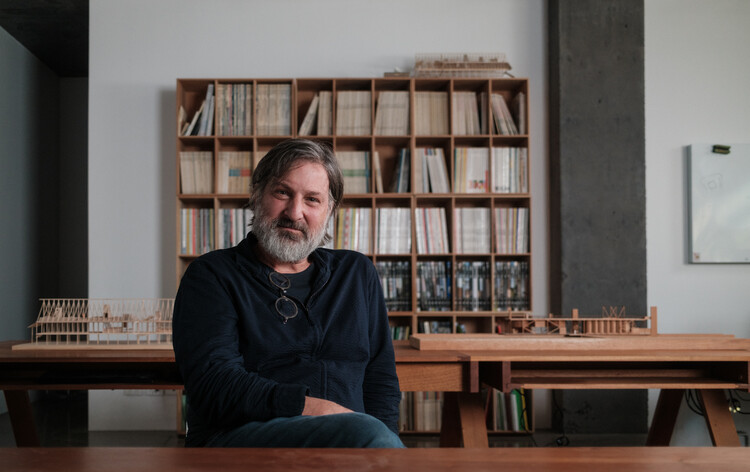
Chilean architect Smiljan Radić Clarke has been announced as the laureate of the 2026 Pritzker Architecture Prize, regarded as one of the highest honors in the field of architecture. The award recognizes Radić for a body of work that explores architecture through material experimentation, spatial perception, and a careful engagement with landscape and context. Born in Santiago, Chile, where he continues to live and work, Radić leads the practice Smiljan Radić Clarke, established in 1995. As the second Chilean to receive the prize, after Alejandro Aravena in 2016, he joins a distinguished list of previous laureates, including Liu Jiakun in 2025, Riken Yamamoto in 2024, David Chipperfield in 2023, and Diébédo Francis Kéré in 2022.
Radić's architecture operates within a territory where the phenomenological experience of space precedes explanation. His buildings often appear quiet, elemental, and resistant to easy verbal interpretation, encouraging visitors to experience them through movement, atmosphere, and perception rather than through formal expression.
As the architecture community looks ahead to the announcement of the 2026 laureate of the Pritzker Architecture Prize, anticipation once again gathers around what is widely regarded as the profession's highest honor. Founded in 1979 by Jay Pritzker and administered by the Hyatt Foundation, the prize recognizes a living architect whose body of work demonstrates a consistent and significant contribution to humanity and the built environment.
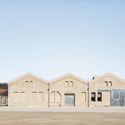
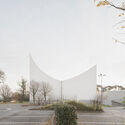
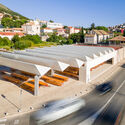
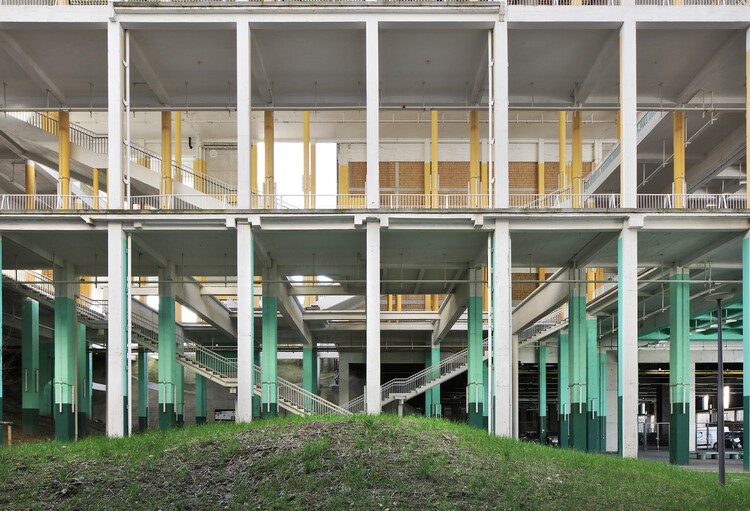
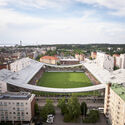
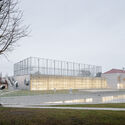
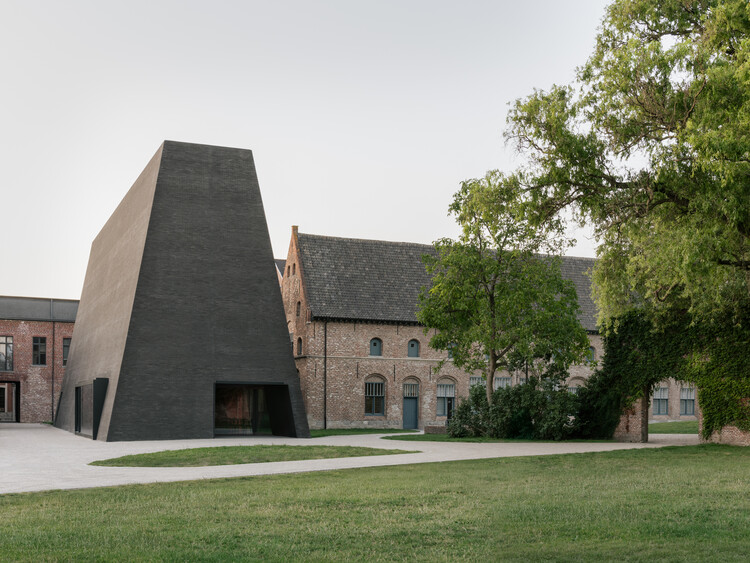
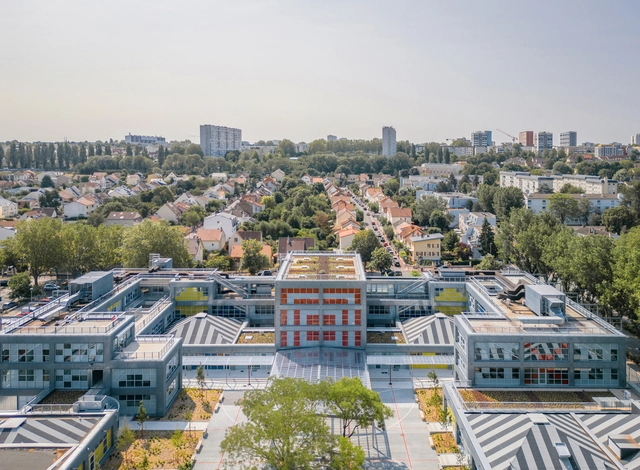
The European Commission and the Fundació Mies van der Rohe have announced the seven finalist projects for the 2026 European Union Prize for Contemporary Architecture - Mies van der Rohe Awards, supported by the European Union's Creative Europe programme. The selection follows the announcement of 410 nominated works in November and a shortlist of 40 projects revealed in early January. Of the seven finalists, five have been selected in the Architecture category and two in the Emerging category. According to the jury chaired by Smiljan Radić, the finalist projects are exemplary contributions to the future of European architecture, demonstrating how the discipline can respond simultaneously to specific local conditions and broader social, cultural, and environmental challenges. The selected works range from interventions in former industrial sites, small villages, and peripheral urban areas to carefully calibrated projects within larger cities. Across these varied contexts, the projects show how architecture can transform overlooked or ordinary settings into inclusive, high-quality spaces for living, learning, and social exchange.
The EUmies Awards are organized annually by the Fundació Mies van der Rohe and the European Commission, with the support of the European Union's Creative Europe Programme. Based on the principle that "architecture is not merely a technical or aesthetic matter, but a cultural, environmental, and democratic issue," this 19th cycle of the Prize brings together 410 works from 40 countries and 143 regions across Europe. Beyond recognizing contemporary architecture projects, the Awards also aim to reflect European values such as cultural diversity, sustainability, democracy, and solidarity. This year, most nominated works (23%) are residential projects, including both collective and single-family housing, followed by cultural (13%) and educational (12%) programs. The selection shows a balance between transformations of existing buildings (44%) and new construction (56%), while 12% of the nominees are transnational works and 33% of the studios are 10 years old or younger, underscoring the growing visibility of emerging practices.
"The taste of the apple lies in the contact of the fruit with the palate, not in the fruit itself," Jorge Luis Borges once said. The taste is not something inherent in itself; its experience is the result of an encounter. Similarly, emotions are not contained within architecture, but are only felt through the encounter of the body with the space, when it becomes a place. How does the environment affect how we feel? This is the question that drives the duo of artists and filmmakers Ila Bêka and Louise Lemoine in their latest endeavor, the book "The Emotional Power of Space," which will be released on May 17th in an event preceding the opening of the Venice Architecture Biennale 2023.
After the interruption of the 2019 edition due to the Social crisis in Chile, the Chilean Architecture Biennial returned to Santiago in January 2023 under the theme of 'Vulnerable Habitats', addressing issues such as "the emergence of the housing deficit in a context in which slums, informality, and illegal land takeovers have increased in recent years" and "the vulnerability and deterioration of public spaces; the urgent protection of tangible heritage; and environmental vulnerability in a context of a climate crisis."
As part of our yearly tradition, we have asked our readers who should win the 2023 Pritzker Prize, the most important award in the field of architecture.
For those who don't know, the Pritzker Prize is funded by Jay Pritzker through the Hyatt Foundation in the United States and has been awarded to living architects, regardless of their nationality, whose built work "has produced consistent and significant contributions to humanity through the art of architecture."
Founded in 1541 by the Spanish conquistador Pedro de Valdivia on indigenous settlements in the valley of the Mapocho River, Santiago is the capital and most populated city of Chile. This South American city is enframed by the Andes Mountains to the east and the Chilean Coast Range to the west, in addition to 26 island hills (cerros islas) scattered throughout the city. Some of these island hills have been converted into urban parks, such as Santa Lucía and San Cristóbal, while Chena, Calán, and Renca are in the process of expansion.
The Solo Houses project has just announced the incorporation of the Venta d'Aubert Winery in Crete, Spain, and the construction of a hotel designed by Chilean architect Smiljan Radic. Solo Hotel will become the centerpiece of the community and a catalyst for tourism and cultural activities around the project.
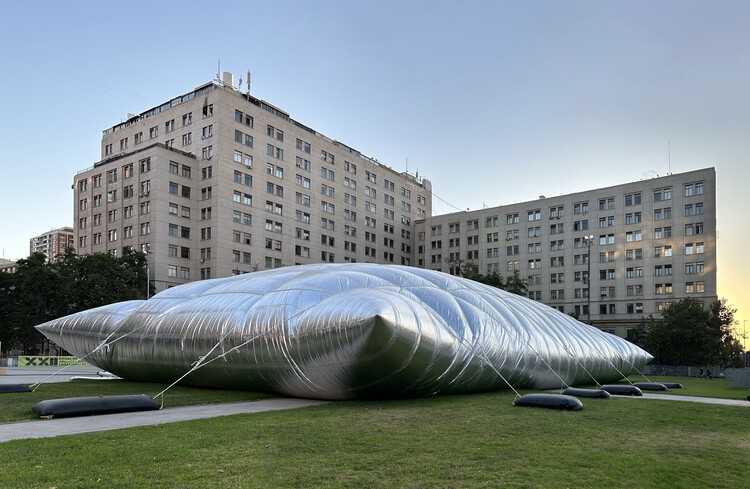
An inflatable and soft body—a silver balloon—scatters towards the sidewalk in the heart of Santiago, Chile. People walk by touching the strange artifact, curiously looking at the object moving over the public space. Behind the pillow, the Gabriela Mistral Gallery disappears.
Chilean architect Smiljan Radic has designed and installed a perfectly transparent dome for Alexander McQueen's Spring / Summer 2022 fashion show earlier this week in London.
The proposal consisted of traveling a modular oak lamella shed to Dubai, originally built in Chile back in the mid-twentieth century. At the time of its official presentation in 2019, the architects defined the project as "a primitive mark on the ground, as nomadic tribes have done for centuries in this now globalized desert [Dubai]. This physical and cultural dimension is necessary to adapt the pavilion as a friendly and austere space."