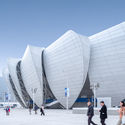


Text description provided by the architects. To create a world-class sporting venue for the city of Hangzhou — one of the most prosperous cities in China that has tripled in size over the past decade — design firm NBBJ prioritized sustainability and human experience with a focus on much-needed public space for urban recreation. In 2018, an average two tons of CO2 were emitted for every ton of steel produced. Featuring an iconic lotus-petal design, the Hangzhou Olympic Sports Center uses 67% less steel than Beijing’s National Stadium (the Bird’s Nest). The 80,000-seat Olympic-sized main stadium and 10,000-seat tennis court were designed via parametric scripts to save resources, get fans closer to the field and maximize sightlines to both the game itself and the Quiantang River.