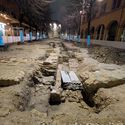
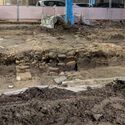
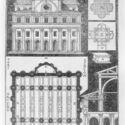
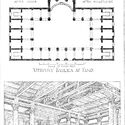
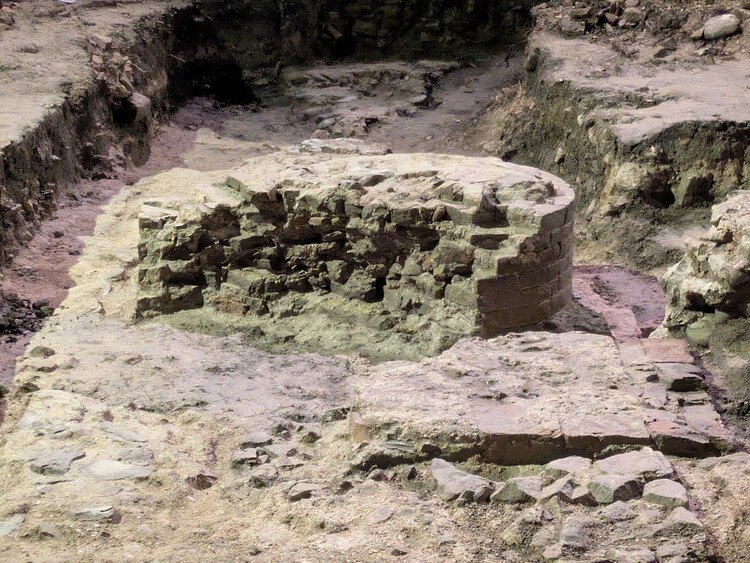
Archaeological excavations in Fano, Italy, have revealed the basilica described by Vitruvius in De Architectura, a finding of major architectural significance, as it represents the only structure that can be attributed with certainty to the Roman architect. Identified during redevelopment works in Piazza Andrea Costa, the discovery provides rare physical evidence of Vitruvian theory translated into built form and offers new insights into Roman architectural design, proportions, and construction practices. The announcement was made during a press conference at the Montanari Media Library, attended by representatives of local, regional, and national institutions, including Italy's Minister of Culture Alessandro Giuli.
The circular economy, including the reuse of building materials, is fast becoming a key component in the fight against carbon emissions. This involves designing to minimize waste and utilize materials that can be reused at the end of the building's life. On the opposing side, the reuse of materials from partially or wholly demolished buildings can also reduce waste and carbon emissions that would have resulted from using virgin materials. Sustainability purposes aside, the reuse of building materials has a centuries-old history, both for symbolic reasons and simply out of necessity.
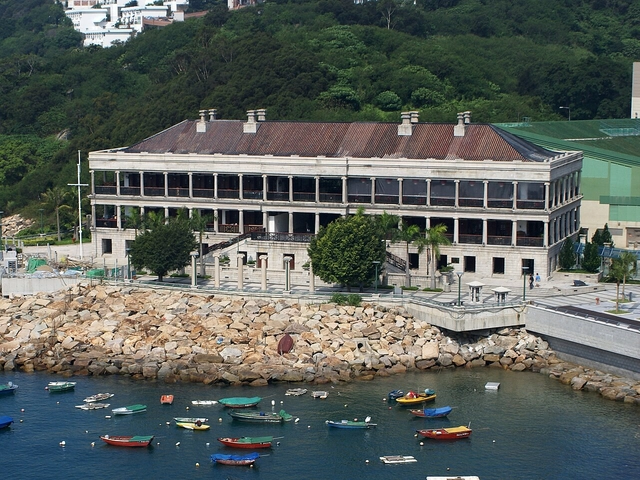
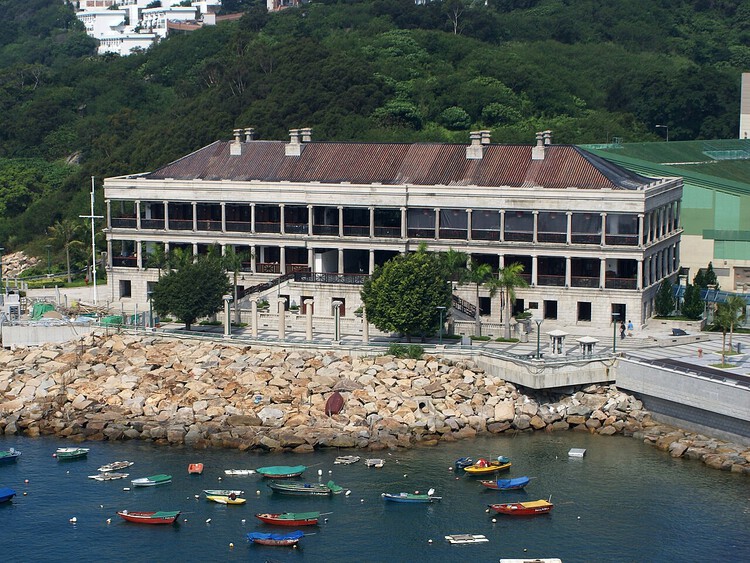
In preserving architecture, there are many possible approaches—ranging from treating a building as a static monument, meticulously restoring it in situ to the point of limiting public access, to more adaptive strategies that reprogram and modify interior spaces while retaining key architectural elements such as materiality and structural form. Yet one method stands apart, both in ambition and in controversy: to deliberately dismantle a building—brick by brick—meticulously label and document each part, and store it until a new site, purpose, or narrative emerges. Then, to reassemble it anew, possibly for an entirely different use. Though the original context is lost, this strategy aims to preserve cultural significance through transformation rather than stasis. This is the story of Murray House in Stanley, Hong Kong.
Originally constructed in 1846 as officers' quarters for the British military in Central, Murray House was one of the earliest examples of neoclassical architecture in Hong Kong—a unique and enduring trace of the city's colonial past. Its robust granite colonnades and symmetrical façade stood as a symbol of classical permanence. During the Japanese occupation of Hong Kong in 1941, the building's function was repurposed as the command center for the Japanese military police. It survived the war and continued to house various government departments throughout the postwar decades.
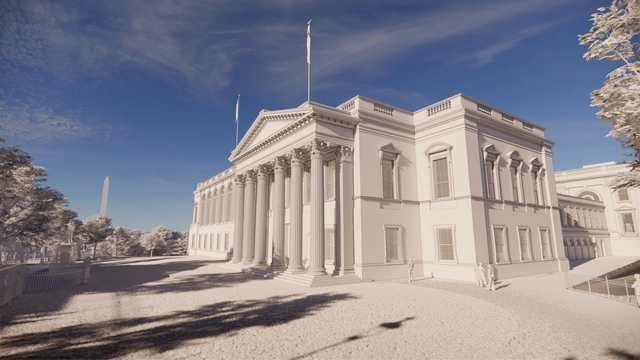
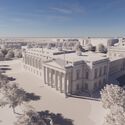
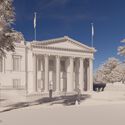
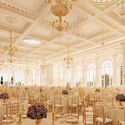
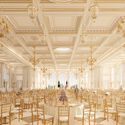
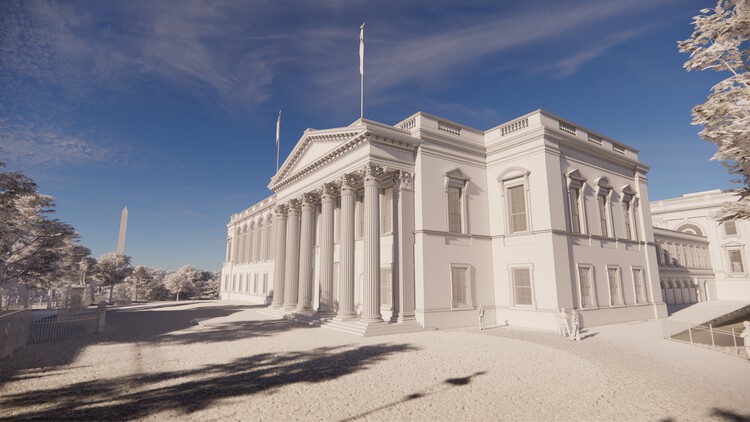
The White House has unveiled plans for a new permanent event space on its historic grounds. Intended to address long-standing spatial limitations for large-scale ceremonial functions, the proposed White House State Ballroom will provide a venue with an expanded capacity. McCrery Architects, a Washington-based firm recognized for its work in classical architecture, was initially appointed as lead architect. Clark Construction will oversee the build, with engineering support provided by AECOM. The construction is scheduled to begin in September 2025, with completion planned within the current administration.
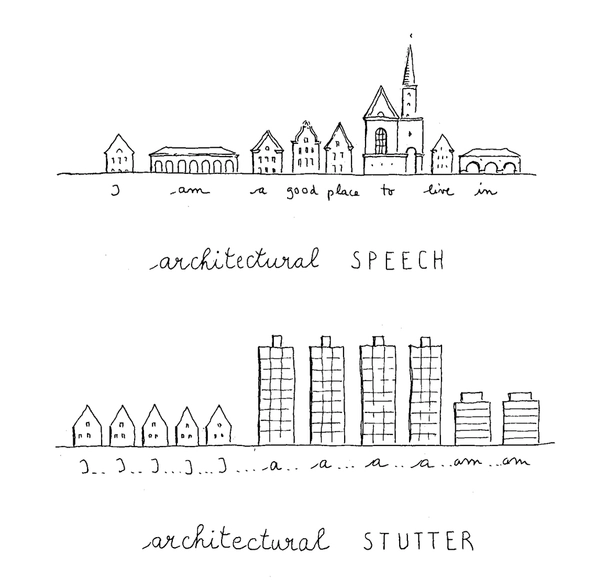
Léon Krier's Sketches. Image Courtesy of MIT Press
Léon Krier, the Luxembourg-born architect and urban theorist renowned for his critical stance against modernist planning and his influential role in the New Urbanism movement, passed away on June 17, 2025, at the age of 79. Known for his uncompromising critique of modernist planning and his vision for human-scaled, walkable communities, Krier leaves behind a substantial body of built work, theoretical writing, and educational influence.
Over a career spanning several decades, Krier advocated for a return to classical architecture and human-scaled urbanism, positioning himself as a leading critic of sprawling suburban development and high-rise modernism. His advocacy for walkable, mixed-use neighborhoods and his insistence on the cultural and social value of architecture challenged the prevailing norms of late 20th-century urban planning.
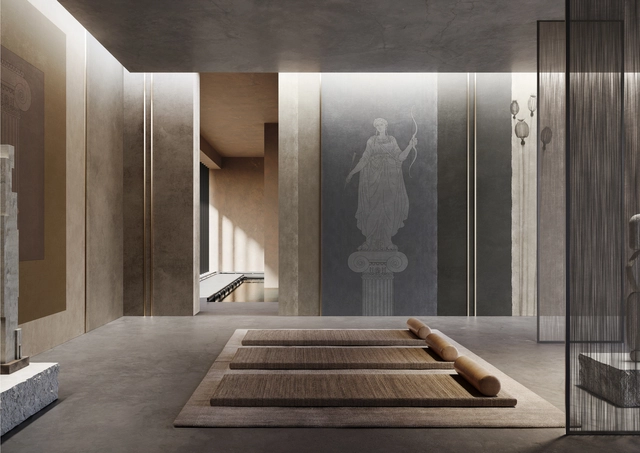
Diana - Arcadia Collection. Image Courtesy of Glamora
Greek and Roman cultures laid the foundations for modern civilization, leaving a lasting legacy in philosophy, literature, mathematics, and art. Although their contributions in these areas are significant, they are sometimes overlooked. However, in disciplines such as sculpture and architecture, their influence has remained almost unchanged, deeply rooted in the classical ideals of beauty. This is exemplified by canonical works such as the Parthenon, the Roman Pantheon, and the Discobolus, which continue to captivate with their proportion, symmetry, and detail. Consequently, it is unsurprising that Greco-Roman classicism remains significant due to its aesthetic timelessness, revitalized throughout different periods, from neoclassicism to contemporary proposals.
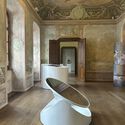
In this modern context, the Greco-Roman mythology, epic tales, and classical architectural concepts inspire a fresh perspective on reimagining interior aesthetics. Embracing an avant-garde take on neoclassicism, a new wave of modern interiors adopts sharp strokes to define figures and details, such as pilasters and capitals, echoing the sinopia of historic wall frescoes. These designs transform monumentality into cozy and elegant atmospheres. By blending historical and contemporary references, they provide innovative figurative solutions that craft poetically scenic spaces. Arcadia collection exemplifies this approach, standing out as a tribute to classicism and presenting a unique visual narrative through its wall coverings.
https://www.archdaily.com/1020629/modern-interiors-with-a-historical-touch-figurative-wall-coverings-for-scenographic-spacesEnrique Tovar
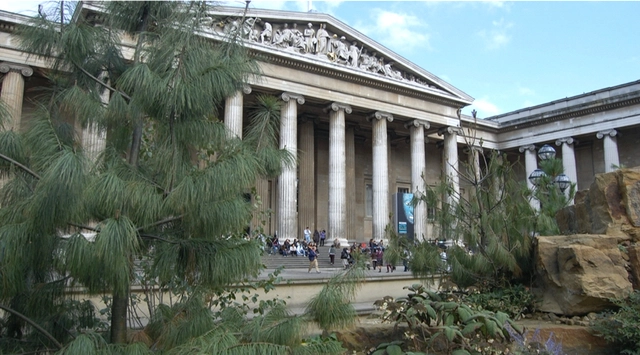
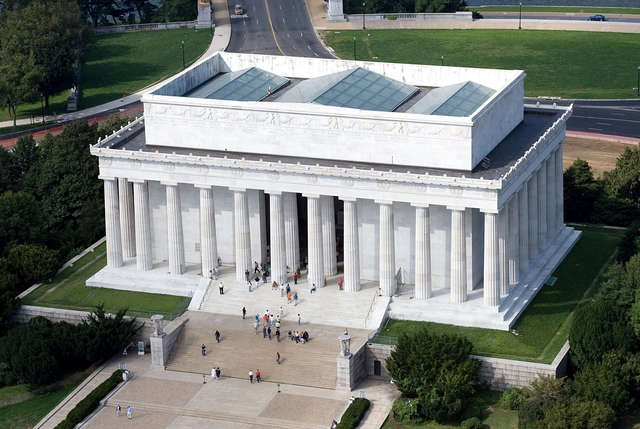
The pillar has adorned many of the greatest monumental examples of Western architecture since antiquity, from the Doric columns of the Parthenon to the Corinthian capitals of the Pantheon portico. In the West, the legacies of these classical forms have permutated over the centuries and into modern times: the Doric columns of the Lincoln Memorial, the Ionic columns of the British museum portico, and the Villa Savoye’s pilotis are just a few examples of the classical column’s continued transformation and use over the last few centuries. Today, the round pillar continues to be used in modern design, both functionally and aesthetically. Below, we look into these elements in more detail, including their materials, construction, structural qualities, and several contemporary examples of their use.
https://www.archdaily.com/948544/round-pillars-in-architecture-from-the-classical-column-to-the-modern-sculptural-supportLilly Cao
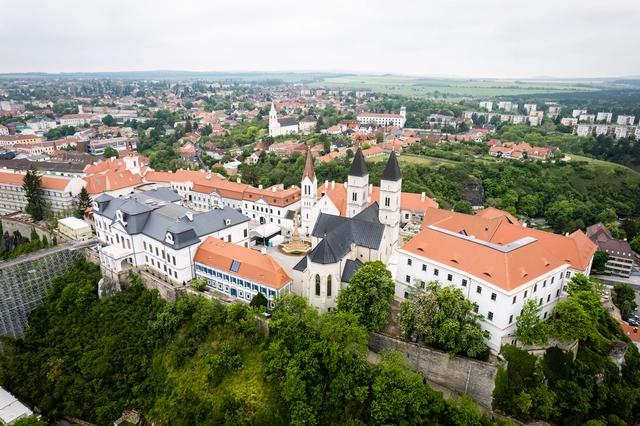
Though lesser known, the Hungarian city of Veszprém is one of the oldest and most important cities in the country. Designated as the European Union Capital of Culture for 2023, Veszprém boasts a longstanding history, visible through its evolving, yet well-preserved architectural monuments. In fact, one of the first notable observations as one walks through the city streets is its eclecticism and layers of historically diverse buildings, that sporadically arise. Despite the difference in styles and architectural languages, they collectively tell the story of the county and its spiritual and political relevance. Its pedestrian-friendly streets, many parks and public spaces, connect the Veszprém monuments, as one delves into a historic promenade.
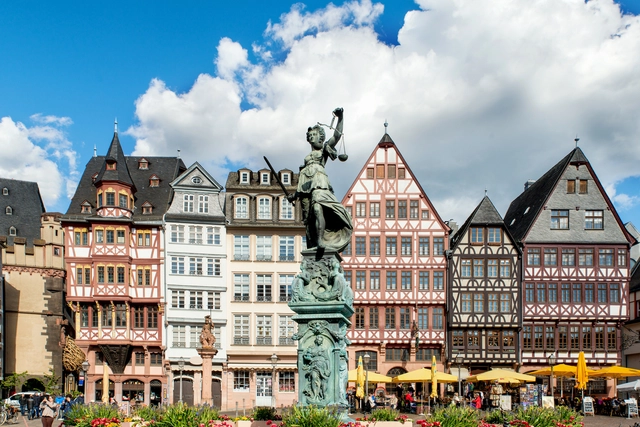
The architectural identity and urban fabric of the old city of Frankfurt has grown organically over centuries. Shops, bars, and craftsmen's workshops have always attracted a lot of visitors to the area between the Cathedral, or "Dom" in German, and the Römer, the main square in the center of Frankfurt. Historically, the area included buildings of many different styles, such as Gothic, Renaissance, Baroque and Classical architecture, which most locals only knew about from black and white photographs, the town’s famous miniature model in the historic museum, or stories passed down through generations.
However, the quarter’s picturesque buildings and alleyways, were almost entirely destroyed during the Second World War, but the collaborative work of the community and local authorities have made it seem as though time before the war stood still. The entire quarter was reconstructed exactly as its original plans, bringing Frankfurt’s medieval history back to life and creating what is now known as the Neue Alstadt, a project considered by some to be controversial.
Funded by Andrew W. Mellon and the National Endowment for the Humanities foundations as part of the Open Book Program, a collection of classic books, published between 1964 and 1998 are now available online as open access e-books through the MIT Press Open Architecture and Urban Studies book collection.
Those who reject Classical and traditional architectures out of hand fail to recognize their important biophilic qualities, emerging from evolution and refinement over centuries to produce some of the most successful, well-loved and enduring places in the world — like the British Museum in London. Photo: Michael Mehaffy
A draft of an executive order titled “Making Federal Buildings Beautiful Again” is moving forward towards possible signing by President Donald J. Trump. The proposed document favors Classical Greco-Roman design typologies for federal buildings in Washington, DC and elsewhere throughout the USA. This order would revise the current rules that regulate the design of federal buildings contracted through the GSA (General Services Administration — a Federal agency managing the construction, administration, and upkeep of US Government buildings and real estate). It was initiated by the National Civic Art Society, a Washington, DC based nonprofit organization that disapproves of what the US government has been building for decades. According to the New York Times, the chairman of the National Civic Art Society, Mr. Marion Smith, stated that: “For too long architectural elites and bureaucrats have derided the idea of beauty, blatantly ignored public opinions on style, and have quietly spent taxpayer money constructing ugly, expensive, and inefficient buildings.”
https://www.archdaily.com/934164/three-comments-on-the-executive-order-making-federal-buildings-beautiful-againMehaffy, Michael W., Nikos A. Salingaros, and Ann Sussman
A new executive order by Donald Trump has the potential to make new federal architecture in the United States follow the classical style. Called "Making Federal Buildings Beautiful Again", the order would require rewriting the Guiding Principles for Federal Architecture, issued in 1962, to ensure that “the classical architectural style shall be the preferred and default style” for new and upgraded federal buildings.
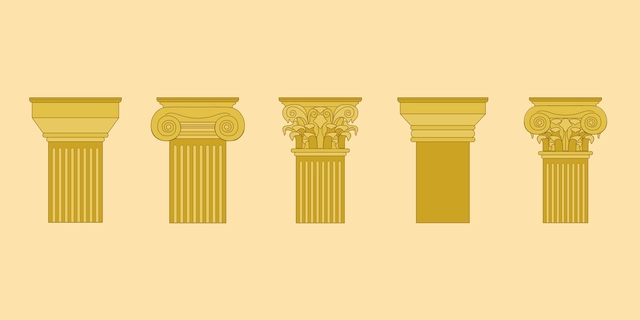
Whether it's to start analyzing a detail or impressing someone in conversation, understanding a classical building begins with an awareness of the different classical orders of architecture. In the historical records of architecture, the first account of the orders was written by Vitruvius: "[...] The orders came to provide a range of architectural expressions, ranging from roughness and firmness to slenderness and delicacy. In true classical design, order choice is a vital issue—it is the choice of tone," [1] which for the author, synthesizes the "architecture grammar." [2]
According to John Summerson, author of The Classical Language of Architecture, "[...] a classic building is one whose decorative elements derive directly or indirectly from the architectural vocabulary of the ancient world—the 'classical' world [...]. These elements are easily recognizable, such as, for example, the five standard types of columns that are used in a standardized way, the standard treatments of openings and pediments, or, still, the standardized series of ornaments that are employed in classical buildings." [3]
Focusing on excellence in classical and new traditional design, the Institute of Classical Architecture & Art’s (ICAA) Stanford White Awards recognize achievement in architecture, interiors, landscape, urbanism, and building craftsmanship & artisanship throughout New York, New Jersey, and Fairfield County, Connecticut. The awards program is named for Stanford White (1853-1906), of the distinguished New York firm McKim, Mead & White, whose legacy of design excellence and creativity in architecture and the related arts continues to serve as a source of inspiration and delight.
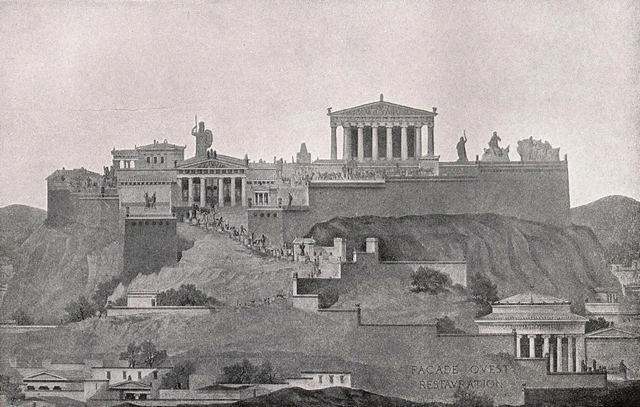
An elevation of the entire Acropolis as seen from the west; while the Parthenon dominates the scene, it is nonetheless only part of a greater composition. ImageCourtesy of Wikimedia user Quibik (Public Domain)
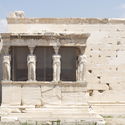
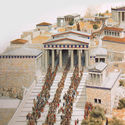
The Parthenon, perhaps the most celebrated example of Classical Greek architecture, was only the first of a series of remarkable buildings to be constructed atop the Athenian Acropolis in the wake of the Persian Wars. Led by the renowned statesman Pericles, the city-state embarked on an ambitious rebuilding program which replaced all that had been razed by the Persians. The new complex, while dedicated to the gods and the legends that surrounded the Acropolis, were as much a declaration of Athens’ glory as they were places of worship – monuments to a people who had risen from the ashes of a war to become the most powerful and prosperous state in the ancient world.
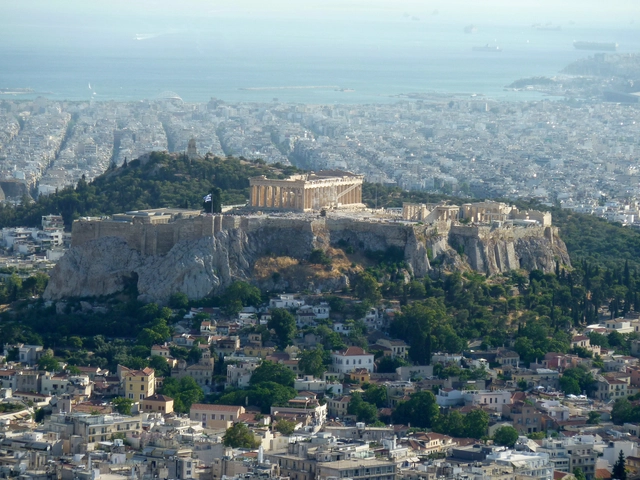
The Acropolis, the plateau on which the Parthenon stands, served as a fortified citadel in Athens’ Mycenaean past. ImageCourtesy of Flickr user Konstantinos Dafalias (licensed under CC BY 2.0)
It is unsurprising that Athens, the city widely considered to be the cradle of Western civilization, would have made as celebrated a contribution to architecture as it has to countless other human pursuits. Built on a hilltop above the contemporary city, the weathered marble complex known as the Acropolis stands as a faded remnant from the former city-state’s ancient glory years, surrounded by the products of the centuries that followed. The greatest of these landmarks, the Parthenon, captures an age long past when Athens was the wealthiest and most powerful city-state in Greece and beyond.